



Question: 1. For the first resistor (nominally around 1.5k - you can choose other values within a few hundred ohms), measure it with the ohmmeter and
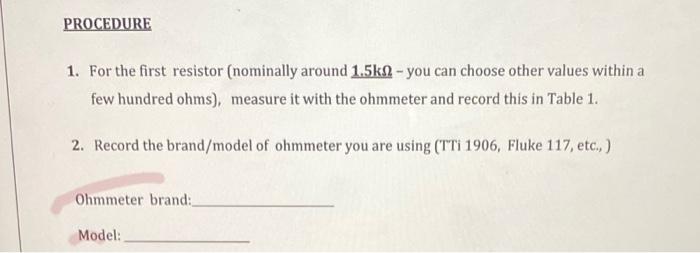
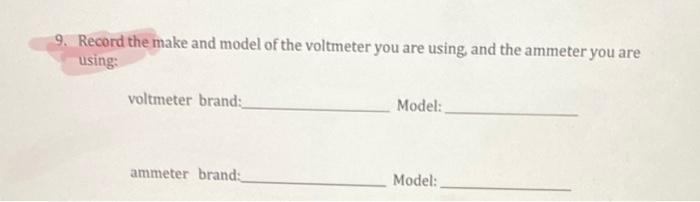

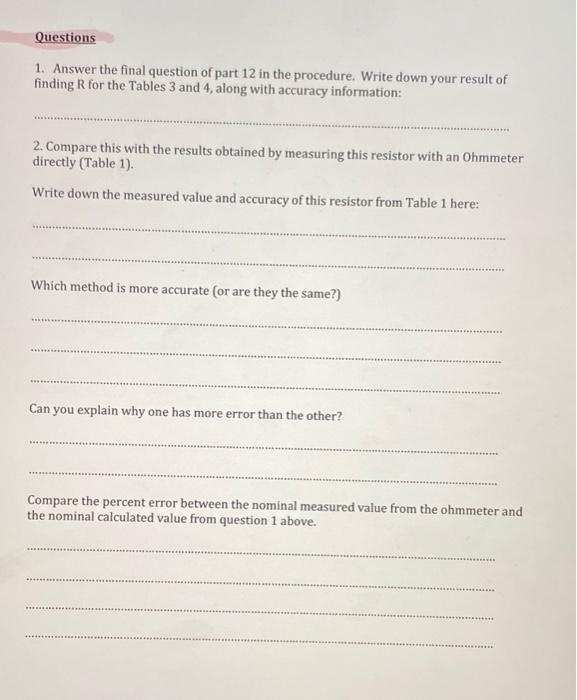
1. For the first resistor (nominally around 1.5k - you can choose other values within a few hundred ohms), measure it with the ohmmeter and record this in Table 1. 2. Record the brand/model of ohmmeter you are using (TTi 1906, Fluke 117, etc.,) Ohmmeter brand: Model: 9. Record the make and model of the voltmeter you are using, and the ammeter you are using: voltmeter brand: Model: ammeter brand: Model: 12. Use Ohm's law to find the resistance and accuracy. But how do we determine the accuracy? 1. Answer the final question of part 12 in the procedure. Write down your result of finding R for the Tables 3 and 4 , along with accuracy information: 2. Compare this with the results obtained by measuring this resistor with an Ohmmeter directly (Table 1). Write down the measured value and accuracy of this resistor from Table 1 here: Which method is more accurate (or are they the same?) Can you explain why one has more error than the other? Compare the percent error between the nominal measured value from the ohmmeter and the nominal calculated value from question 1 above
Step by Step Solution
There are 3 Steps involved in it

Get step-by-step solutions from verified subject matter experts