



Question: 1. f(x) =-x3+ 4x2 a) Use the Leading Coefficient Test to determine the graph's end behavior. The graph will b) Find the x-intercepts by setting
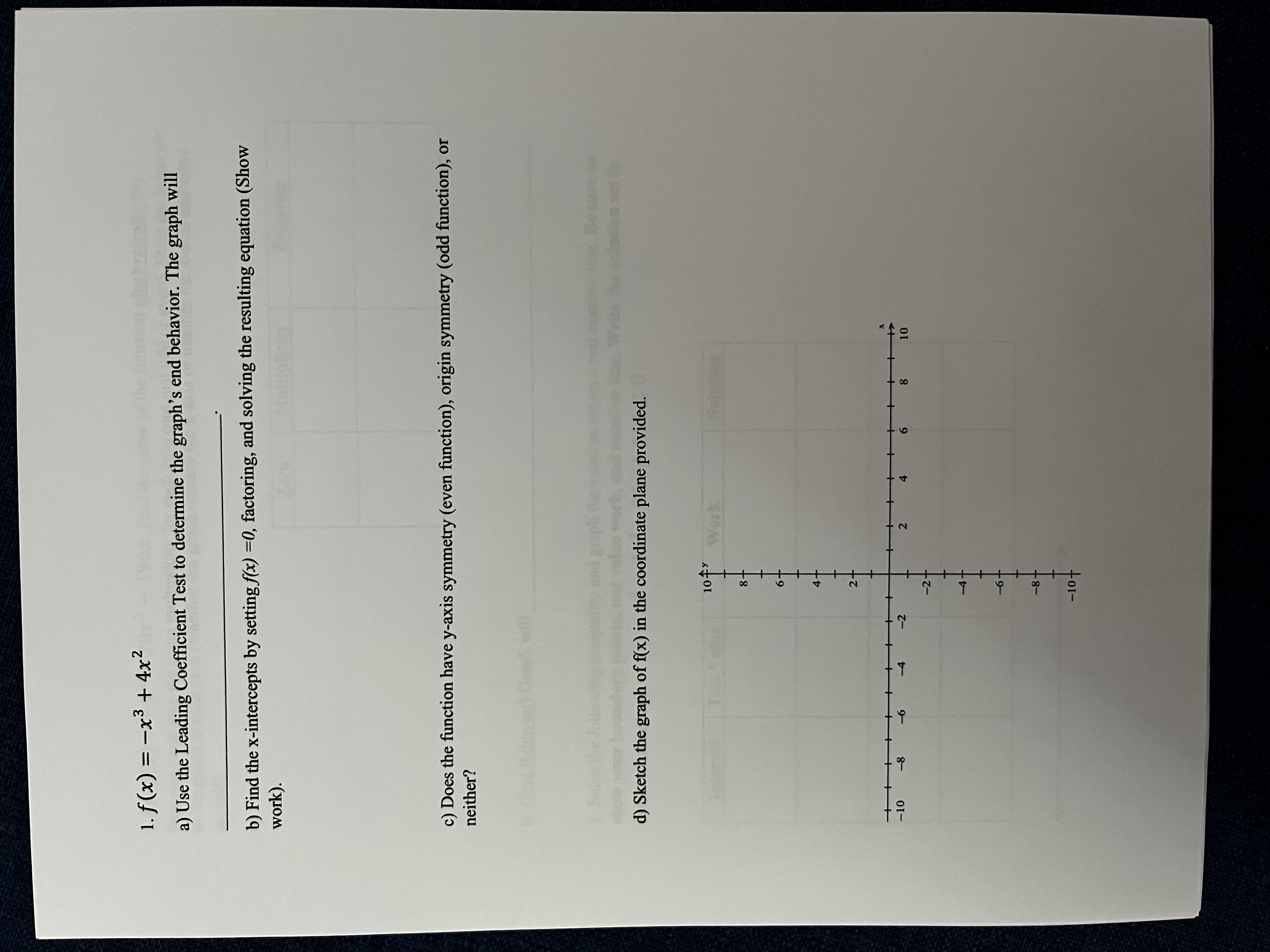
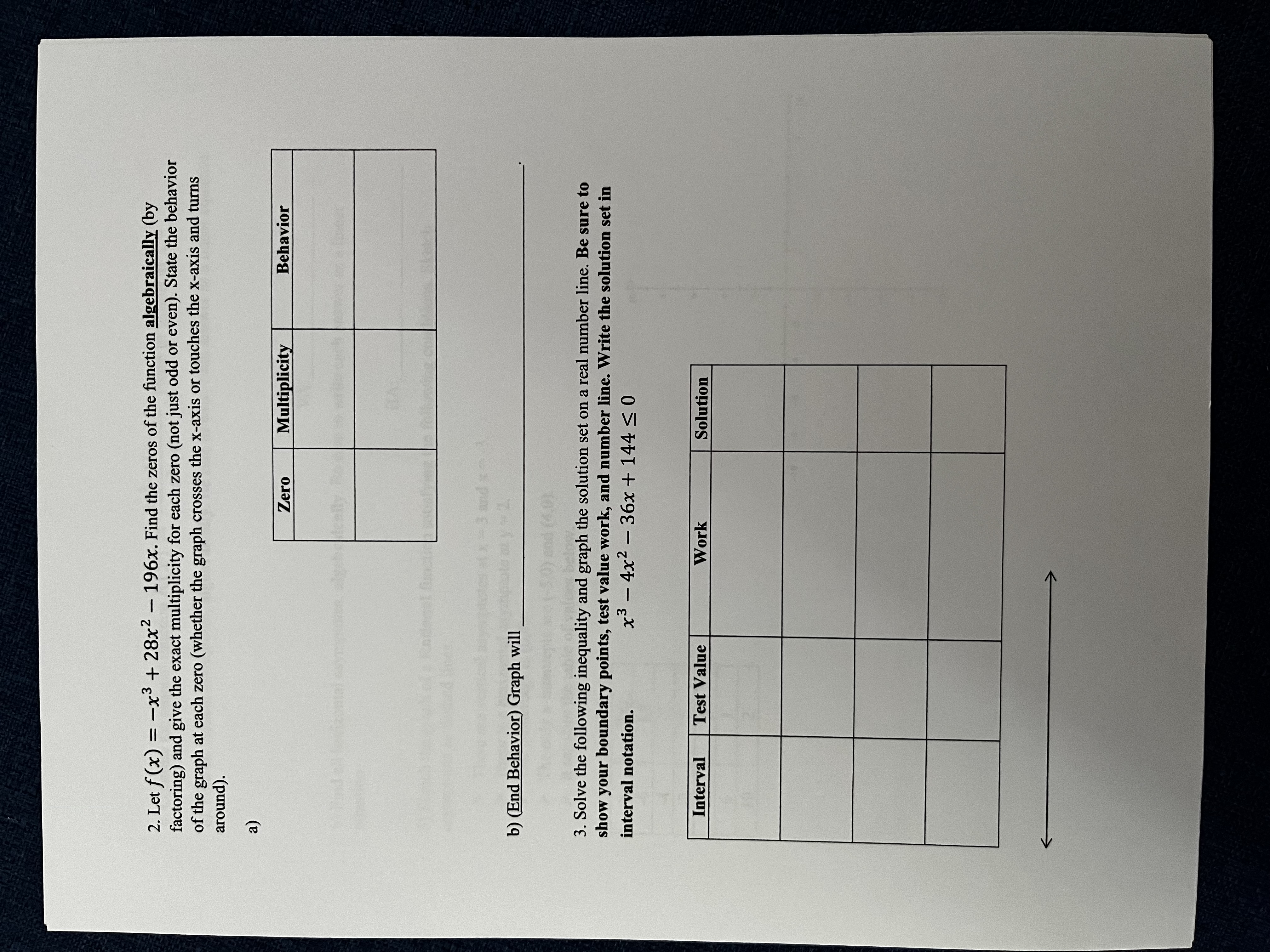
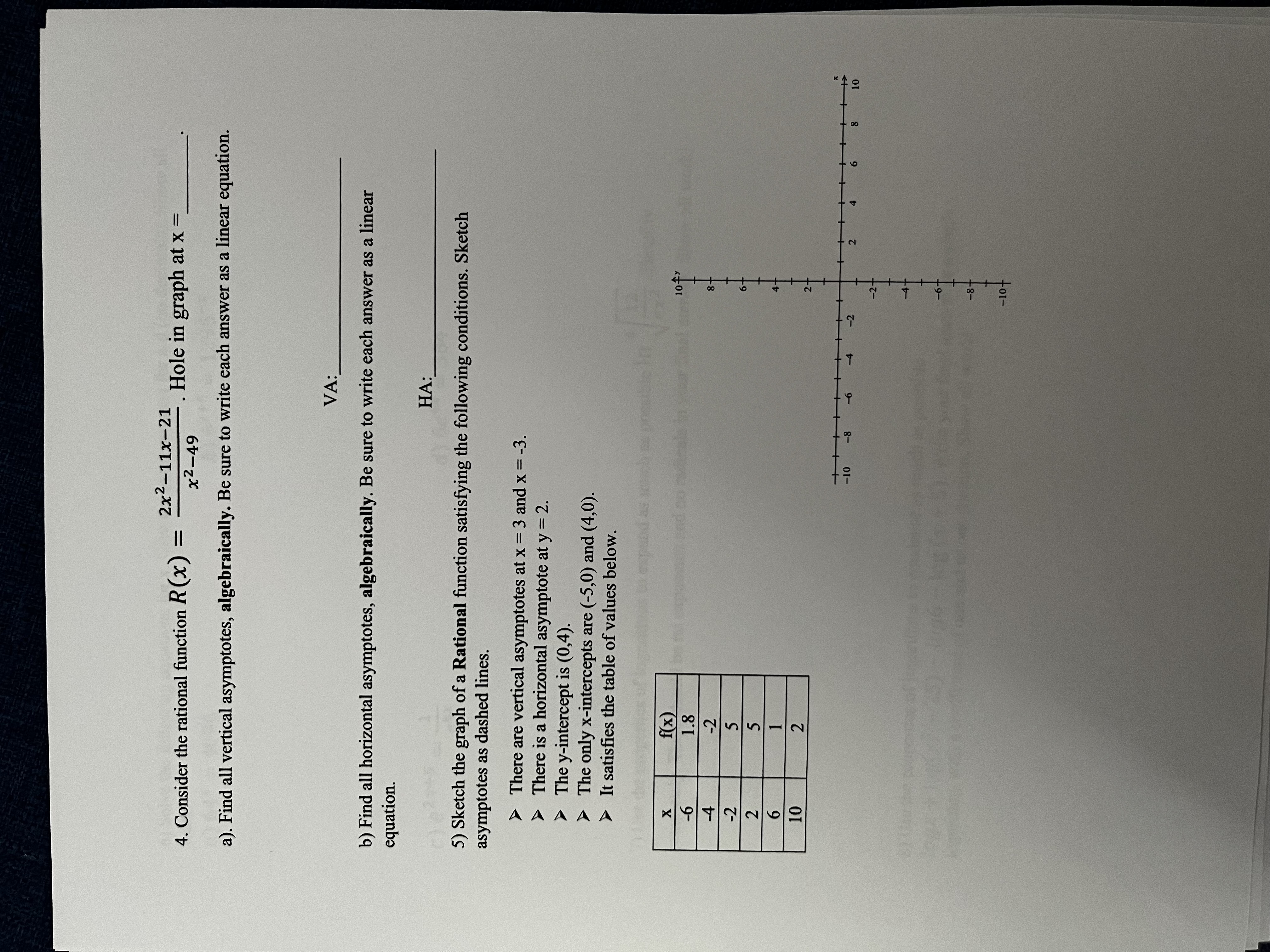
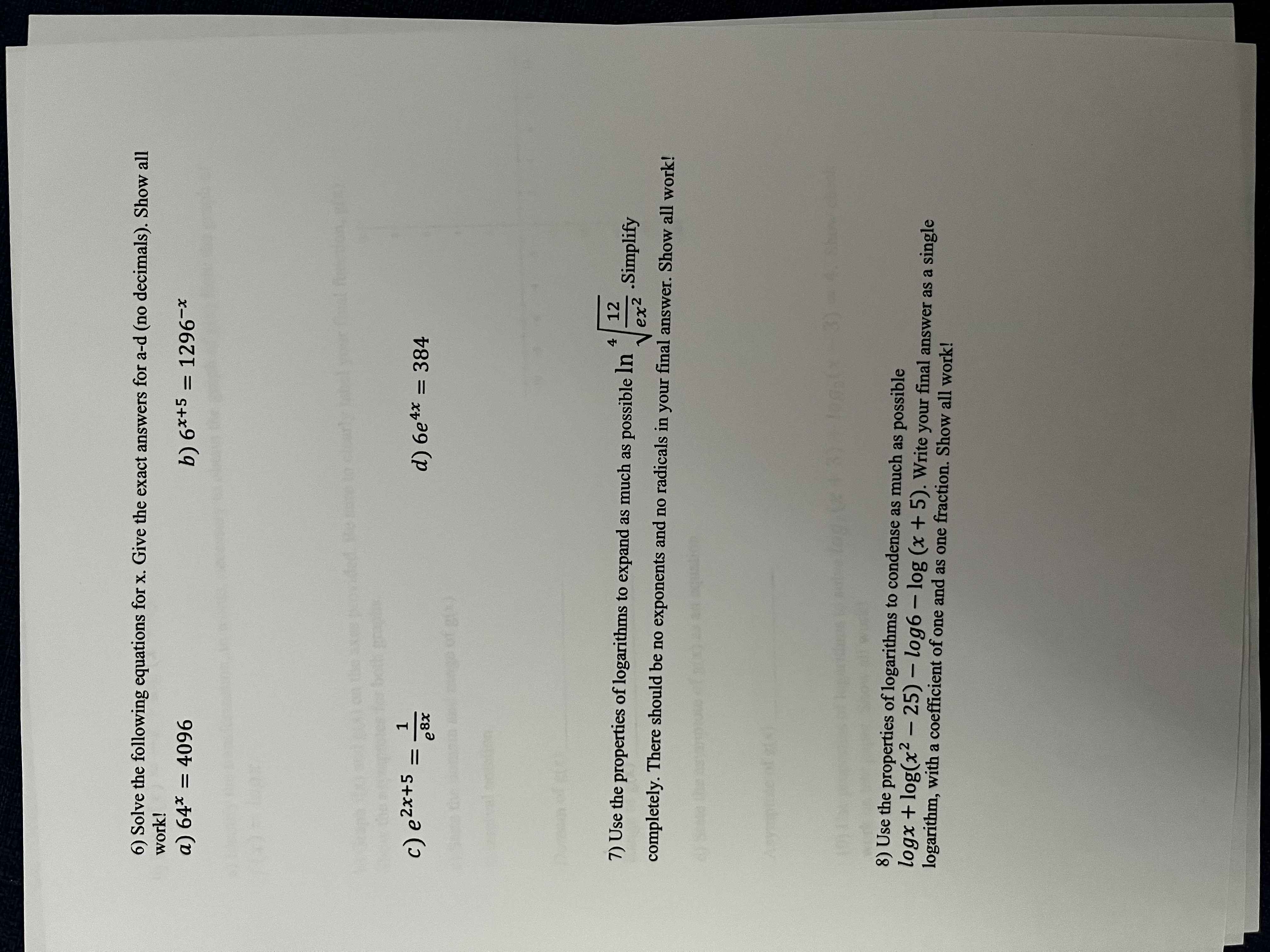
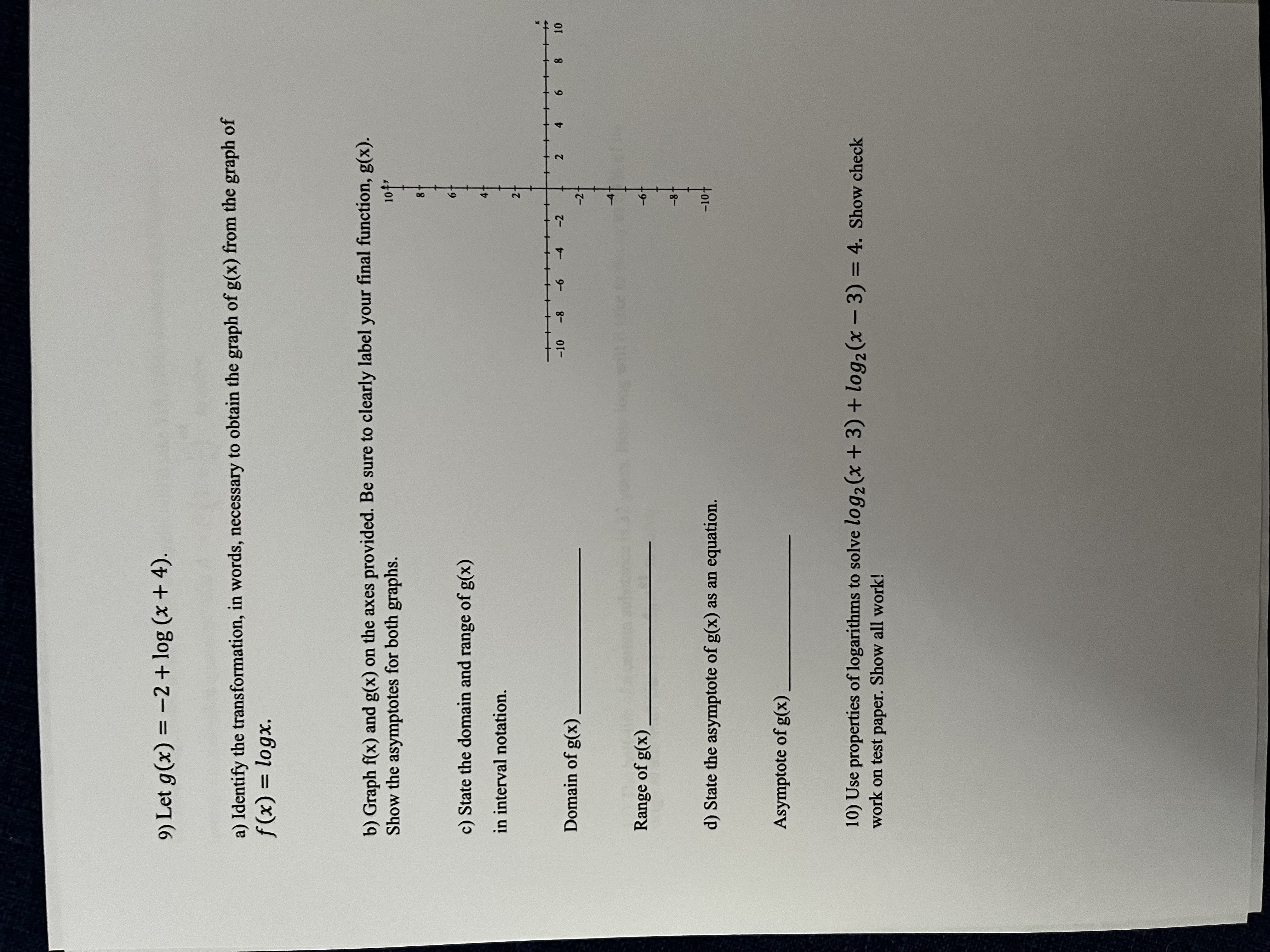

1. f(x) =-x3+ 4x2 a) Use the Leading Coefficient Test to determine the graph's end behavior. The graph will b) Find the x-intercepts by setting f(x) =0, factoring, and solving the resulting equation (Show work). c) Does the function have y-axis symmetry (even function), origin symmetry (odd function), or neither? d) Sketch the graph of f(x) in the coordinate plane provided. 10 fy Work 8 + -10 - 8 - 6 8 10 - 6- - 8 - -10+2. Let f(x) = -x3 + 28x2 - 196x. Find the zeros of the function algebraically (by factoring) and give the exact multiplicity for each zero (not just odd or even). State the behavior of the graph at each zero (whether the graph crosses the x-axis or touches the x-axis and turns around). a) Zero Multiplicity Behavior el x 3 and b) (End Behavior) Graph will 150) end (40) 3. Solve the following inequality and graph the solution set on a real number line. Be sure to show your boundary points, test value work, and number line. Write the solution set in interval notation. x3 - 4x2 - 36x +144 50 Interval Test Value Work Solution4. Consider the rational function R (x) = 2x2-11x-21 . Hole in graph at x = x2 - 49 a). Find all vertical asymptotes, algebraically. Be sure to write each answer as a linear equation. VA: b) Find all horizontal asymptotes, algebraically. Be sure to write each answer as a linear equation. HA: 5) Sketch the graph of a Rational function satisfying the following conditions. Sketch asymptotes as dashed lines. There are vertical asymptotes at x = 3 and x = -3. There is a horizontal asymptote at y = 2. V The y-intercept is (0,4). The only x-intercepts are (-5,0) and (4,0). It satisfies the table of values below. d as X f(x 10 fy 1.8 -2 8 + 1 N -10 - 6 10 - of -10+6) Solve the following equations for x. Give the exact answers for a-d (no decimals). Show all work! a) 64* = 4096 b) 6*+5 = 1296-x c) e2x+5 = 1 e 8 x d) 6e4x = 384 7) Use the properties of logarithms to expand as much as possible In 4/ 12 Vex2 .Simplify completely. There should be no exponents and no radicals in your final answer. Show all work! 8) Use the properties of logarithms to condense as much as possible logx + log(x2 - 25) - log6 - log (x + 5). Write your final answer as a single logarithm, with a coefficient of one and as one fraction. Show all work!9) Let g(x) = -2 + log (x + 4). a) Identify the transformation, in words, necessary to obtain the graph of g(x) from the graph of f (x) = logx. b) Graph f(x) and g(x) on the axes provided. Be sure to clearly label your final function, g(x). Show the asymptotes for both graphs. 10 f c) State the domain and range of g(x) in interval notation. -10 - 8 10 Domain of g(x) - 2 + Range of g(x) - 8+ d) State the asymptote of g(x) as an equation. -10+ Asymptote of g(x) 10) Use properties of logarithms to solve log2 (x + 3) + log2(x - 3) = 4. Show check work on test paper. Show all work!1 1) How long, to the nearest tenth of a year, will it take $18,000 to double at 6.25% annual interest compounded quarterly? Use A = P (1 + ")" to solve. 12) The half-life of a certain substance is 32 years. How long will it take to decay to 64% of its original amount? Use A = Apekt to solve
Step by Step Solution
There are 3 Steps involved in it

Get step-by-step solutions from verified subject matter experts