







Question: 1. Identify the most important facts surrounding the case. 2. Identify the key issue or issues 3. Specify alternative courses of action 4. Evaluate each
1. Identify the most important facts surrounding the case.
2. Identify the key issue or issues
3. Specify alternative courses of action
4. Evaluate each course of action
5. Recommend the best course of action
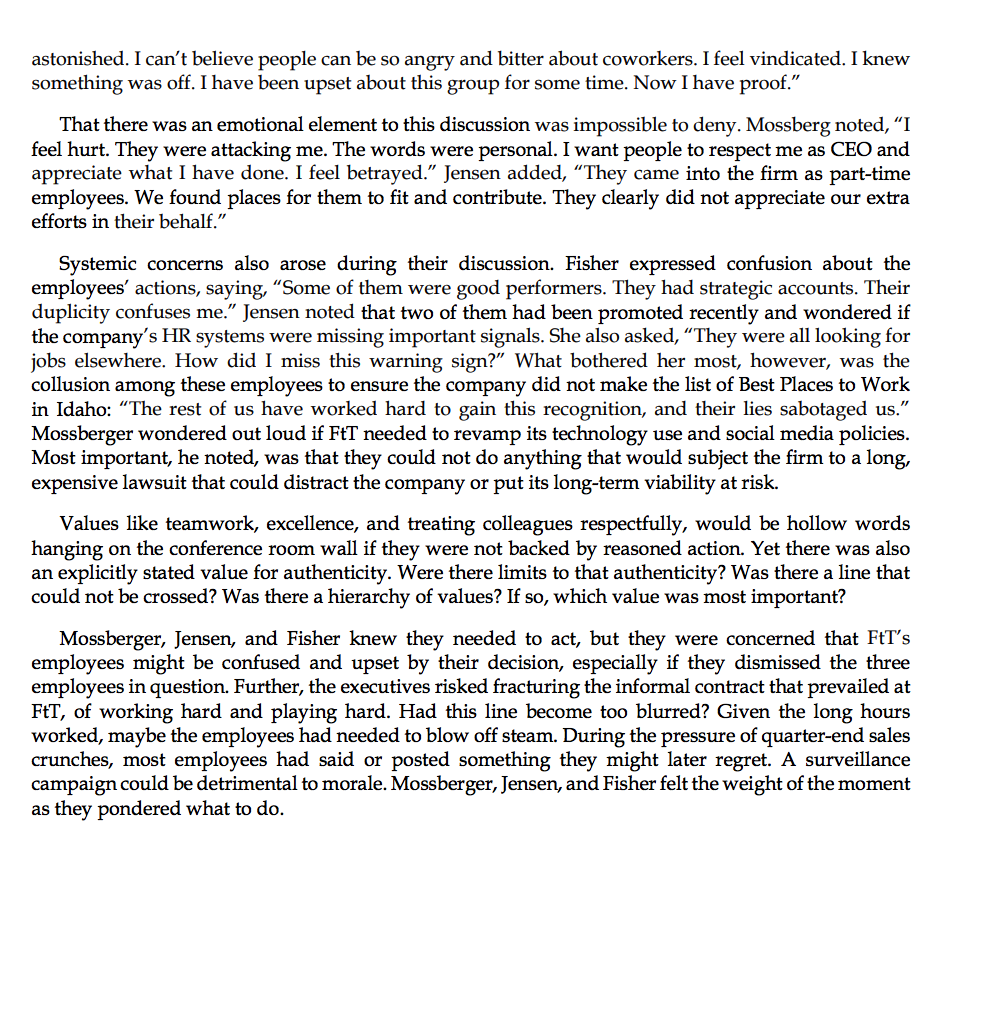
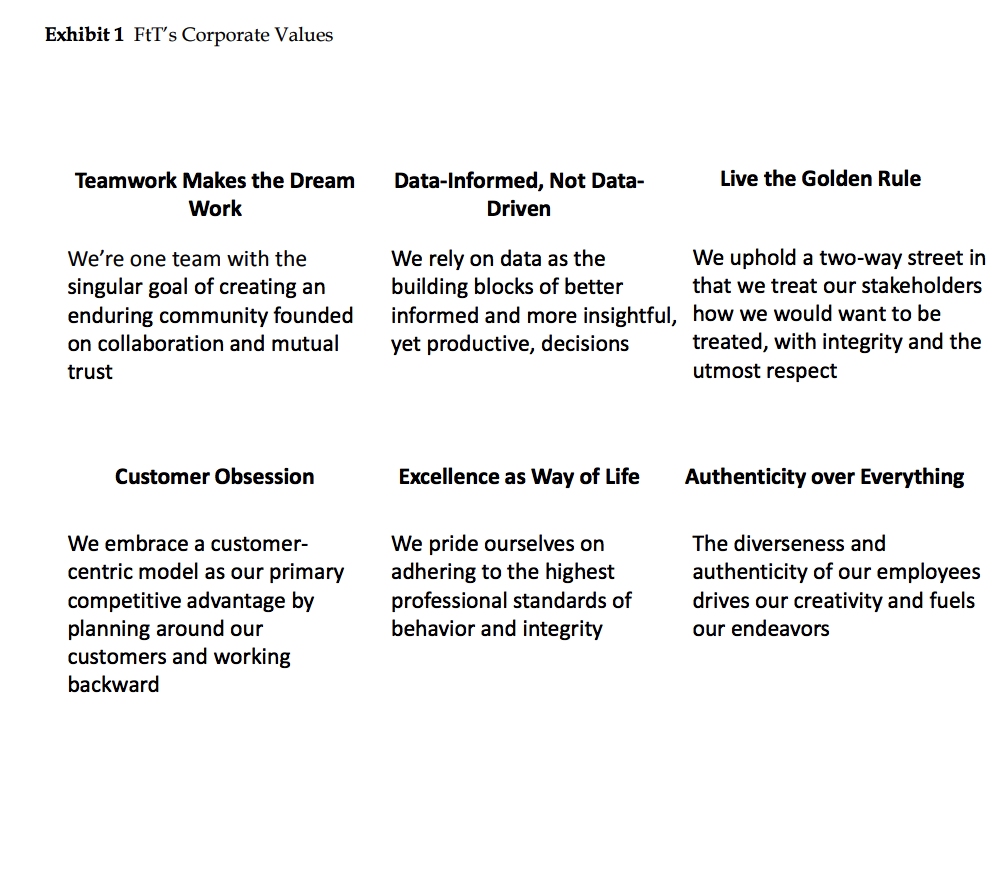
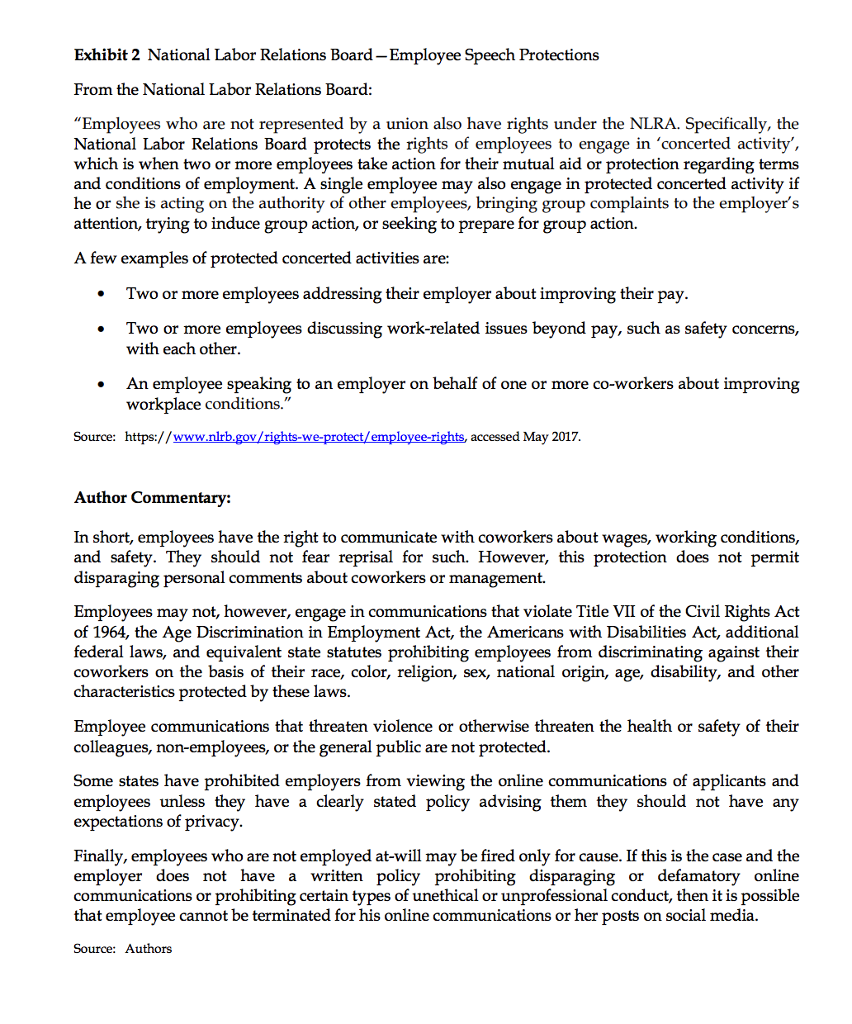
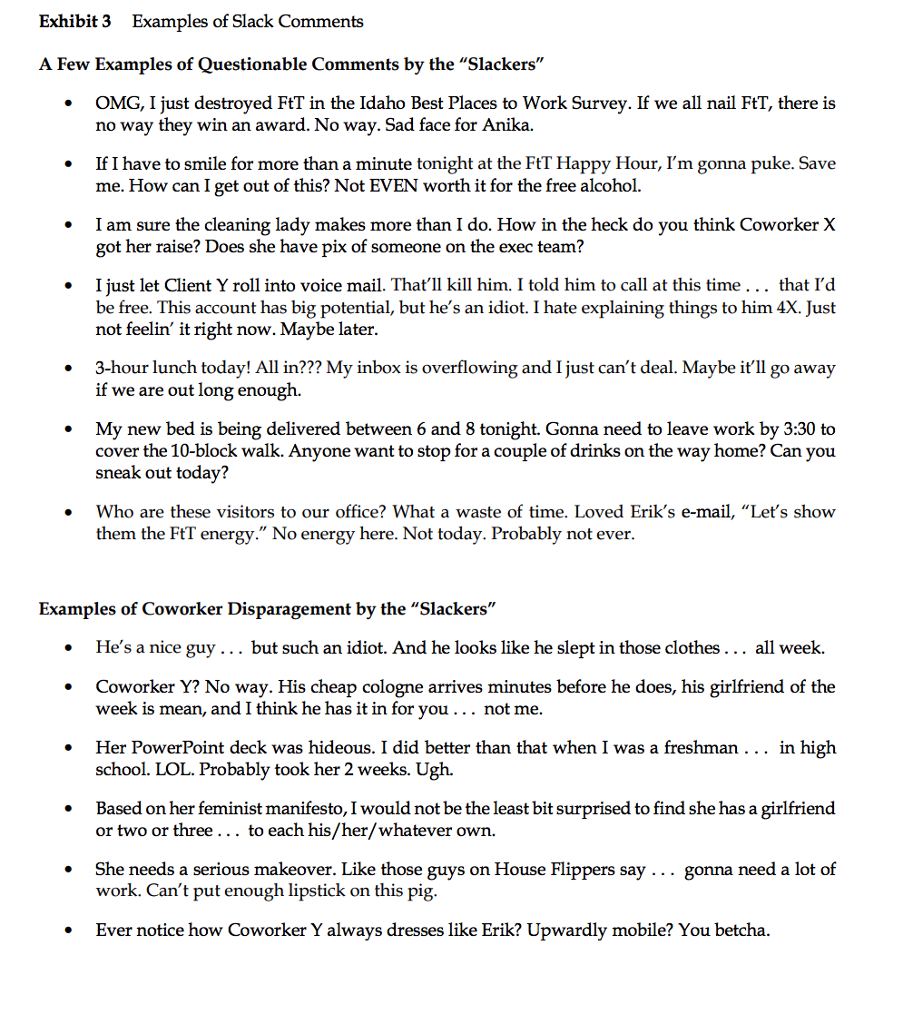
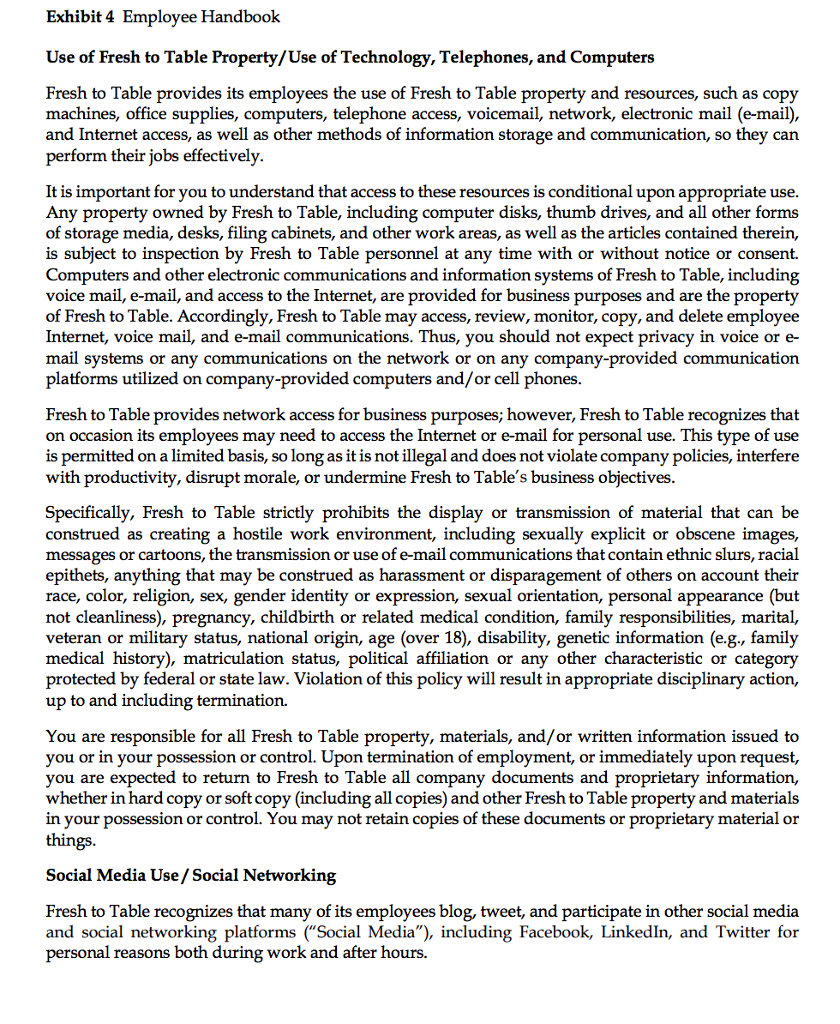
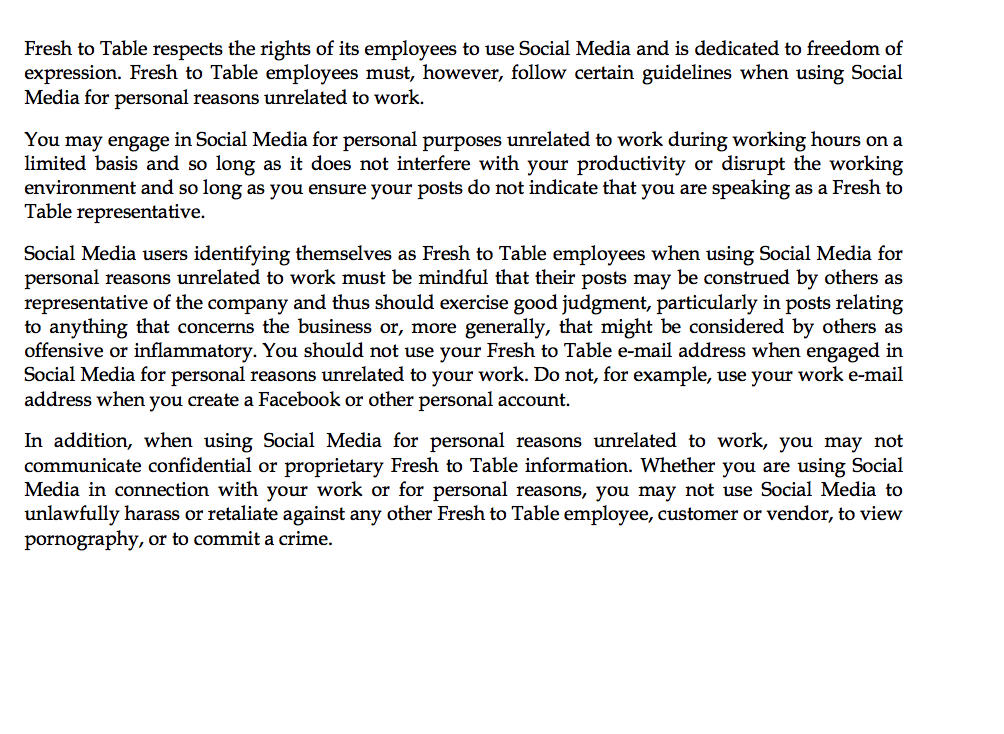
Fresh to Table How had it come to this? Erik Mossberger wondered. It was a cold, crisp Saturday morning in early March 2016. Sunlight streamed through the windows of Fresh to Table's (FtT) boardroom. Mossberger, the company's founder and CEO, was waiting for Anika Jensen, Vice President of Human Resources, and Dwayne Fisher, Chief Operating Officer. Mossberger, Jensen, and Fisher needed to discuss the company's response to a recent development that had caught them by surprise. In late February, FtlT had terminated the office manager, Hillary Showalter. Upon reviewing her internal communications with other employees, Mossberger and Fisher had discovered that Showalter and several key employees, including two who had been promoted recently, had been spending substantial time on Slack1 disparaging other employees, citing days when they skipped work, and referring to other instances of questionable behavior. Mossberger's conviction that the company was a close-knit family was being sorely tested, and he wondered what Jensen, Fisher, and he should do. Should they stop the use of Slack within FtT? Should they revise or reiterate FtT's technology and communications policies? Should they fire the offending employees, or do something less severe, such as put them on a personal improvement plan? In the long term, would these actions align with the values that Mossberger had vowed to maintain when he had founded the firm? (See Exhibit 1 for a statement of FtT's corporate values.) Background Fresh to Table was a four-year-old software-as-a-service (SaaS) company based in Boise, Idaho, that served luxury hotels and restaurants. Mossberger founded the company while he was finishing his MBA program. Initially, FtT helped chefs procure locally sourced ingredients. Over time, it became apparent that there was an opportunity to build restaurant-planning software that could improve both the quality of food and the efficiency of operations. The company responded by creating a product that helped to minimize waste and maximize ingredient freshness in the food-ordering process. Then, after Fresh to Table How had it come to this? Erik Mossberger wondered. It was a cold, crisp Saturday morning in early March 2016. Sunlight streamed through the windows of Fresh to Table's (FtT) boardroom. Mossberger, the company's founder and CEO, was waiting for Anika Jensen, Vice President of Human Resources, and Dwayne Fisher, Chief Operating Officer. Mossberger, Jensen, and Fisher needed to discuss the company's response to a recent development that had caught them by surprise. In late February, FtlT had terminated the office manager, Hillary Showalter. Upon reviewing her internal communications with other employees, Mossberger and Fisher had discovered that Showalter and several key employees, including two who had been promoted recently, had been spending substantial time on Slack1 disparaging other employees, citing days when they skipped work, and referring to other instances of questionable behavior. Mossberger's conviction that the company was a close-knit family was being sorely tested, and he wondered what Jensen, Fisher, and he should do. Should they stop the use of Slack within FtT? Should they revise or reiterate FtT's technology and communications policies? Should they fire the offending employees, or do something less severe, such as put them on a personal improvement plan? In the long term, would these actions align with the values that Mossberger had vowed to maintain when he had founded the firm? (See Exhibit 1 for a statement of FtT's corporate values.) Background Fresh to Table was a four-year-old software-as-a-service (SaaS) company based in Boise, Idaho, that served luxury hotels and restaurants. Mossberger founded the company while he was finishing his MBA program. Initially, FtT helped chefs procure locally sourced ingredients. Over time, it became apparent that there was an opportunity to build restaurant-planning software that could improve both the quality of food and the efficiency of operations. The company responded by creating a product that helped to minimize waste and maximize ingredient freshness in the food-ordering process. Then, after
Step by Step Solution
There are 3 Steps involved in it

Get step-by-step solutions from verified subject matter experts
 Study Help