Question: 1. Identify the most important facts surrounding the case. 2. Identify the key issue or issues. 3. Specify alternative courses of action. 4. Evaluate each
1. Identify the most important facts surrounding the case.
2. Identify the key issue or issues.
3. Specify alternative courses of action.
4. Evaluate each course of action.
5. Recommend the best course of action.
Please read tge case study and answer all the quistion
It is a 40 marks assignment so please prove vide complete ans
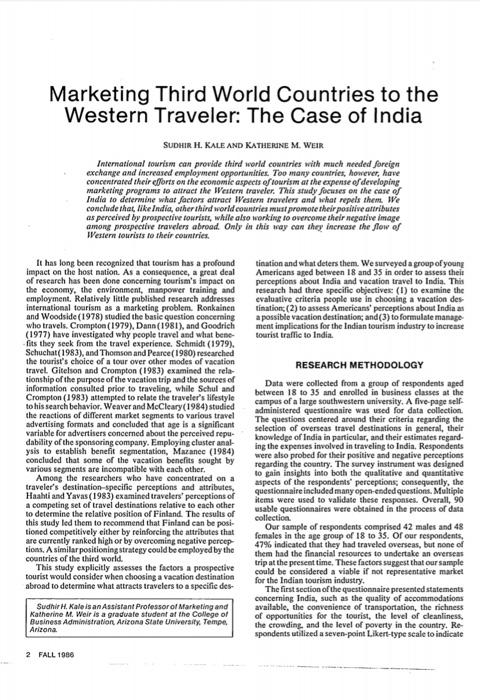
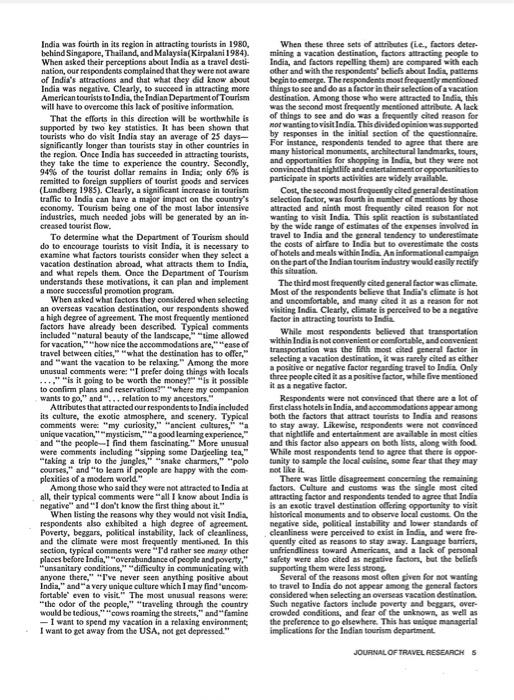
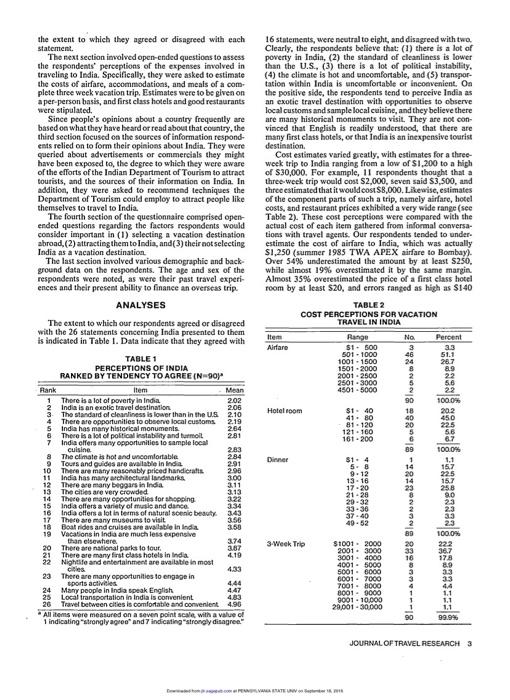
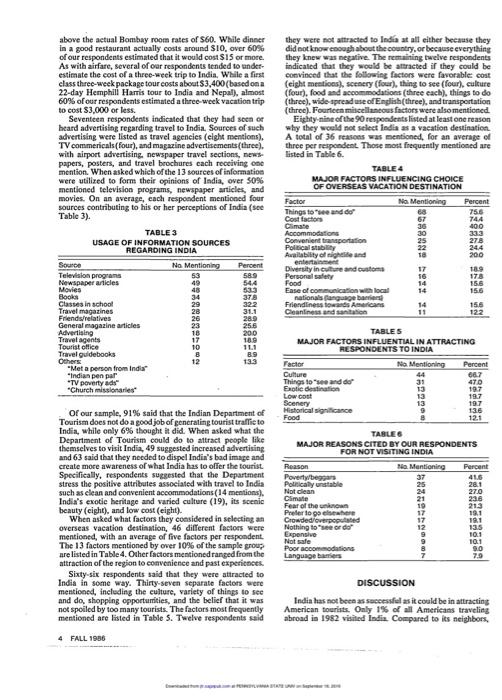
Marketing Third World Countries to the Western Traveler: The Case of India SUDHIR H. KALE AND KATHERINE M. WEIR International tourism can provide third world countries with much needed foreign exchange and increased employment opportunities. Too many countries, however, have concentrated their efforts on the economic aspects of tourism at the expense of developing marketing programs to attract the Western traveler. This study focuses on the case of India to determine what factors attract Western travelers and what repels them. We conclude that like India, other third world countries must promote their positive attributes as perceived by prospective tourists, while also working to overcome their negative image among prospective travelers abroad. Only in this way can they increase the flow of Western tourists to their countries tination and what deters them. We surveyed a group of young Americans aged between 18 and 35 in order to assess theia perceptions about India and vacation travel to India. This research had three specific objectives: (I) to examine the evaluative criteria people use in choosing a vacation des tination (2) to assess Americans' perceptions about India a a possible vacation destination, and (3) to formulate manage ment implications for the Indian tourism industry to increase tourist traffic to India. It has long been recognized that tourism has a profound impact on the host nation. As a consequence, a great deal of research has been done concerning tourism's impact on the economy. the environment, manpower training and employment. Relatively little published research addresses International tourism as a marketing problem. Ronkainen and Woodside (1978) studied the basic question concerning who travels. Crompton (1979), Dann (1981), and Goodrich (1977) have investigated why people travel and what bene- fits they seck from the travel experience. Schmidt (1979), Schuchat(1983), and Thomson and Pearce (1980) researched the tourist's choice of a tour over other modes of vacation travel Gitelson and Crompton (1983) examined the rela tionship of the purpose of the vacation trip and the sources of information consulted prior to traveling, while Schul and Crompton (1983) attempted to relate the traveler's lifestyle to his search behavior. Weaver and McCleary(1984) studied the reactions of different market segments to various travel advertising formats and concluded that age is a significant variable for advertisers concerned about the perceived repu dability of the sponsoring company. Employing cluster anal ysis to establish benefit segmentation. Mazanec (1984) concluded that some of the vacation benefits sought by various segments are incompatible with each other. Among the researchers who have concentrated on a traveler's destination-specific perceptions and attributes, Haahti and Yavas (1983) examined travelers' perceptions of a competing set of travel destinations relative to each other to determine the relative position of Finland. The results of this study led them to recommend that Finland can be posi- tioned competitively either by reinforcing the attributes that are currently ranked high or by overcoming negative percep tions. A similar positioning strategy could be employed by the countries of the third world. This study explicitly assesses the factors a prospective tourist would consider when choosing a vacation destination abroad to determine what attracts travelers to a specific des RESEARCH METHODOLOGY Data were collected from a group of respondents aged between 18 to 35 and enrolled in business classes at the campus of a large southwestern university. A five-page self administered questionnaire was used for data collection The questions centered around their criteria regarding the selection of overseas travel destinations in general, their knowledge of India in particular, and their estimates regard- ing the expenses involved in traveling to India. Respondents were also probed for their positive and negative perceptions regarding the country. The survey instrument was designed to pain insights into both the qualitative and quantitative aspects of the respondents' perceptions, consequently, the questionnaire included many open-ended questions. Multiple items were used to validate these responses. Overall, 90 usable questionnaires were obtained in the process of data collection Our sample of respondents comprised 42 males and 48 females in the age group of 18 to 35. of our respondents, 47% indicated that they had traveled overseas, but none of them had the financial resources to undertake an overseas trip at the present time. These factors suggest that our Sample could be considered a viable if not representative market for the Indian tourism industry, The first section of the questionnaire presented statements concerning India, such as the quality of accommodations available, the convenience of transportation, the richness of opportunities for the tourist, the level of cleanliness, the crowding, and the level of poverty in the country. Re- spondents utilized a seven-point Likert-type scale to indicate Sudhir H. Kalo is an Assistant Professor of Marketing and Katherine M. Weir is a graduate student at the College of Business Administration Arizona State University, Tempe, Arizona 2 FALL 1000 the extent to which they agreed or disagreed with each statement The next section involved open-ended questions to assess the respondents' perceptions of the expenses involved in traveling to India. Specifically, they were asked to estimate the costs of airfarc, accommodations, and meals of a com- plete three week vacation trip. Estimates were to be given on aper-person basis, and first class hotels and good restaurants were stipulated Since people's opinions about a country frequently are based on what they have heard or read about that country, the third section focused on the sources of information respond- ents relied on to form their opinions about India. They were queried about advertisements or commercials they might have been exposed to the degree to which they were aware of the efforts of the Indian Department of Tourism to attract tourists, and the sources of their information on India. In addition, they were asked to recommend techniques the Department of Tourism could employ to attract people like themselves to travel to India. The fourth section of the questionnaire comprised open ended questions regarding the factors respondents would consider important in (1) selecting a vacation destination abroad.(2) attracting them to India, and (3) their not selecting India as a vacation destination. The last section involved various demographic and back ground data on the respondents. The age and sex of the respondents were noted, as were their past travel experi- ences and their present ability to finance an overseas trip. ANALYSES The extent to which our respondents agreed or disagreed with the 26 statements concerning India presented to them is indicated in Table 1. Data indicate that they agreed with TABLE 1 PERCEPTIONS OF INDIA RANKED BY TENDENCY TO AGREE (N90 Rank Mean There is a lot of poverty in India 2.02 India is an exotic travel destination 2.06 3 The standard of cleanliness is lower than in the US 2.10 4 There are opportunities to observe local customs 2.19 5 India has many historical monuments. 2.64 6 There is a lot of political instability and turmoil 281 7 India olfers many opportunities to sample local cuisine 2.83 a The climate is hot and uncomfortable 284 9 Tours and guides are available in India 2.91 10 There are many reasonably priced handicrafts 2.98 11 India has many architectural landmarks 300 12 There are many beggars in India 3.11 13 The cities are very crowded 14 There are many opportunities for shopping 322 15 Inda offers a variety of music and dance 334 16 India offers a lot in terms of natural scenic beauty 343 17 There are many museums to visit 3.56 18 Boat rides and cruises are available in India 3.50 19 Vacations in India are much less expensive than elsewhere 3.74 20 There are national parks to four 3.87 21 There are many first class hotels in India 4.19 22 Nights and entertainment are available in most cities 4.33 23 There are many opportunities to engage in sports activities 4.44 24 Many people in India speak English 4.47 25 Local transportation in India is convenient 4.83 26 Travel between cities is comfortable and convenient 4.96 All items were measured on a seven point scale with a value o! 1 indicating strongly agree and indicating strongly disagree 16 statements, were neutralto eight, and disagreed with two Clearly, the respondents believe that: (1) there is a lot of poverty in India, (2) the standard of cleanliness is lower than the U.S., (3) there is a lot of political instability, (4) the climate is hot and uncomfortable, and (5) transpor- tation within India is uncomfortable or inconvenient. On the positive side, the respondents tend to perceive India as an exotic travel destination with opportunities to observe local customs and sample local cuisine, and they believe there are many historical monuments to visit. They are not con- vinced that English is readily understood, that there are many first class hotels, or that India is an inexpensive tourist destination Cost estimates varied greatly, with estimates for a three- week trip to India ranging from a low of $1,200 to a high of $30,000. For example, 11 respondents thought that a three-week trip would cost $2,000, seven said $3,500, and three estimated that it would cost $8,000. Likewise, estimates of the component parts of such a trip, namely airfare, hotel costs, and restaurant prices exhibited a very wide range (see Table 2). These cost perceptions were compared with the actual cost of each item gathered from informal conversa- tions with travel agents. Our respondents tended to under estimate the cost of airfare to India, which was actually $1,250 (summer 1985 TWA APEX airfare to Bombay) Over 54% underestimated the amount by at least $250. while almost 19% overestimated it by the same margin. Almost 35% overestimated the price of a first class hotel room by at least 520, and errors ranged as high as $140 TABLE 2 COST PERCEPTIONS FOR VACATION TRAVEL IN INDIA Item Range No Percent Airfare $1.500 3 3.3 501-1000 46 1001 - 1500 24 1501 - 2000 8 267 8.9 2001 - 2500 2 22 2501 - 3000 5 5,6 4501 - 5000 2 22 100.0% Hotel room $1.40 18 202 41.80 40 450 81 - 120 225 121. 100 56 161.200 6.7 100.0% $14 1,1 5-6 14 15.7 9-12 20 225 13-16 14 15.7 17.20 21.28 8 9.0 29-32 23 33-30 37.40 49.52 23 100.0% 3 Week Trip $1001 - 2000 2001 - 3000 36.7 3001 - 4000 178 4001 - 5000 8.9 5001 - 6000 23 6001 - 7000 23 7001 - 8000 4.4 8001 - 9000 1.1 9001.10.000 29001 - 30000 1,1 99.90 51.1 Them Dinner 81-8 BINNE-SIX 258 JO OF IR EL RESEARCH 3 above the actual Bombay room rates of $60. While dinner in a good restaurant actually costs around $10, over 60% of our respondents estimated that it would cost $15 or more As with airfare, several of our respondents tended to under estimate the cost of a three-week trip to India, While a first class three-week package tour costs about $3,400 (based on a 22-day Hemphill Harris tour to India and Nepal), almost 60% of our respondents estimated a three-week vacation trip to cost $3.000 or less. Seventeen respondents indicated that they had seen or heard advertising regarding travel to India. Sources of such advertising were listed as travel agencies (eight mentions), TV commericals (four), and magazine advertisements (three). with airport advertising newspaper travel sections, new papers, posters, and travel brochures cach receiving one mention. When asked which of the 13 sources of information were utilized to form their opinions of India, over 50% mentioned television programs, newspaper articles, and movies. On an average, cach respondent mentioned four sources contributing to his or her perceptions of India (see Table 3). TABLE 3 USAGE OF INFORMATION SOURCES REGARDING INDIA Source No Mentioning Percent Television programs 53 589 Newspaper articles 49 544 Movies 48 53:3 Books 34 378 Classes in school 29 322 Travel magazines 28 31.1 Friends/relatives 26 General magazine articles 23 Advertising 25.6 18 200 Travel agents 17 Tourist office 10 Travel guidebooks Others 12 13.3 "Met a person from India Indian pen pal *TV poverty aids *Church missionaries they were not attracted to India at all either because they did not know enough about the country or because everything they knew was negative. The remaining twelve respondents indicated that they would be attracted if they could be convinced that the following factors were favorable cost (eight mentions), scenery (four), thing to see (four), culture (four), food and accommodations (three cach), things to do (three) widespread use of English(three), and transportation (three). Fourteen miscellaneous factors were also mentioned Eighty-nine of the respondents listed at least one reason why they would not select India as a vacation destination A total of 36 reasons was mentioned, for an average of three per respondent. Those most frequently mentioned are listed in Table 6. TABLE4 MAJOR FACTORS INFLUENCING CHOICE OF OVERSEAS VACATION DESTINATION Factor No Mentioning Percent Things to see and do 75.6 Contacto 744 Climate 400 Accommodations 333 Convenient transportation 278 Political stability 244 Ausilability of life and 200 entertainment Diversity in culture and custom 17 189 Personal safety 16 178 Food 14 15.6 Ease of communication with local 14 15.6 nationals angunge barriere Friendliness to Americans 14 156 Cleanliness and sanitation 11 122 **** NO8898 522 TABLES MAJOR FACTORS INFLUENTIAL IN ATTRACTING RESPONDENTS TO INDIA Factor No Mentioning Percent Culture 44 667 Things to see and de 410 Exotic destination 13 197 Low Cost 19.7 Scenery 197 Historical significance 136 Food 12.1 TABLES MAJOR REASONS CITED BY OUR RESPONDENTS FOR NOT VISITING INDIA Reason The Mentioning Percent Povertybes 37 41.6 Politically unstable Not clean 270 Climate 21 236 Fear of the unknown 19 213 Prefer to go there 17 10.1 Crowded overpopulated 191 Nothing to order 135 Expensive 10.1 Not Sale 10.1 Poor accommodations 90 Language barriers 79 of our sample, 91% said that the Indian Department of Tourism does not do a good job of generating tourist traffic to India, while only 6% thought it did. When asked what the Department of Tourism could do to attract people like themselves to visit India. 49 suggested increased advertising and 63 said that they needed to dispel India's bad image and create more awareness of what India has to offer the tourist Specifically, respondents suggested that the Department stress the positive attributes associated with travel to India such as clean and convenient accommodations (14 mentions) India's exotic heritage and varied culture (19), its scenic beauty (cight), and low cost (eight). When asked what factors they considered in selecting an overseas vacation destination, 46 different factors were mentioned, with an average of five factors per respondent The 13 factors mentioned by over 10% of the sample group are listed in Table 4. Other factors mentioned ranged from the attraction of the region to convenience and past experiences Sixty-six respondents said that they were attracted to India in some way. Thirty-seven separate factors were mentioned, including the culture, variety of things to see and do, shopping opportunities, and the belief that it was not spoiled by too many tourists. The factors most frequently mentioned are listed in Table 5. Twelve respondents said 287 DISCUSSION India has not been assful as it could be in attracting American tourists. Only 1% of all Americans traveling abroad in 1982 visited India Compared to its neighbors, 4 FALL 1956 India was fourth in its region in attracting tourists in 1980. behind Singapore, Thailand, and Malaysia (Kirpalani 1984). When asked their perceptions about India as a travel desti- nation, our respondents complained that they were not aware of India's attractions and that what they did know about India was negative. Clearly, to succeed in attracting more American tourists to India, the Indian Department of Tourism will have to overcome this lack of positive information That the efforts in this direction will be worthwhile is supported by two key statistics. It has been shown that tourists who do visit India stay an average of 25 days- significantly longer than tourists stay in other countries in the region. Once India has succeeded in attracting tourists, they take the time to experience the country. Secondly, 9496 of the tourist dollar remains in India only 6% is remitted to foreign suppliers of tourist goods and services (Lundberg 1985). Clearly, a significant increase in tourism traffic to India can have a major impact on the country's economy. Tourism being one of the most labor intensive industries, much needed jobs will be generated by an in- creased tourist flow. To determine what the Department of Tourism should do to encourage tourists to visit India, it is necessary to examine what factors tourists consider when they select a vacation destination abroad, what attracts them to India. and what repels them. Once the Department of Tourism understands these motivations, it can plan and implement a more successful promotion program, When asked what factors they considered when selecting an overseas vacation destination, our respondents showed a high degree of agreement. The most frequently mentioned factors have already been described. Typical comments included "natural beauty of the landscape." "time allowed for vacation," "how nice the accommodations are," "ease of travel between cities," "what the destination has to offer." and want the vacation to be relaxing." Among the more unusual comments were: "I prefer doing things with locals .... "is it going to be worth the money?" "Is it possible to confirm plans and reservations?" "where my companion wants to go." and "... relation to my ancestors. Attributes that attracted our respondents to India included its culture, the exotic atmosphere, and scenery. Typical comments were my curiosity." "ancient cultures, unique vacation," "mysticism," "a good learning experience, and the people-1 find them fascinating " More unusual were comments including "sipping some Darjeeling tea." "taking a trip to the jungles, "snake charmers," "polo courses," and "to leam if people are happy with the com plexities of a modem world Among those who said they were not attracted to India at all their typical comments were all I know about India is negative" and "I don't know the first thing about it." When listing the reasons why they would not visit India, respondents also exhibited a high degree of agreement Poverty, beggars, political instability, Inck of cleanliness, and the climate were most frequently mentioned. In this section, typical comments were I'd rather see many other places before India." "overabundance of people and poverty." "unsanitary conditions," "difficulty in communicating with anyone there." "I've never seen anything positive about India." and "a very unique culture which I may find "uncom fortable even to visit." The most unusual reasons were "the odor of the people," "traveling through the country would be tedious, " cows roaming the streets," and "famine - I want to spend my vacation in a relaxing environment I want to get away from the USA, not get depressed." When these three sets of attributes (ie, factors deter- mining a vacation destination, factors attracting people to India, and factors repelling them) are compared with each other and with the respondents' beliefs about India, Patterns begin to emerge. The respondents most frequently mentioned things to see and do as a factor in their selection of a vacation destination. Among those who were attracted to India, this was the second most frequently mentioned attribute. A lack of things to see and do was a frequently cited reason for not wanting to visit India. This divided opinion was supported by responses in the initial section of the questionnaire For instance, respondents tended to apree that there are many historical monuments, architectural landmarks, tours, and opportunities for shopping in India, but they were not convinced that nightlife and entertainment or opportunities to participate in sports activities are widely available Cost, the second most frequently cited general destination selection factor, was fourth in number of mentions by those attracted and ninth most frequently cited reason for not wanting to visit India. This split reaction is substantiated by the wide range of estimates of the expenses involved in travel to India and the general tendency to underestimate the costs of airfare to India but to overestimate the costs of hotels and meals within India. An informational campaign on the part of the Indian tourism industry would easy rectify this situation The third most frequently cited general factor was climate. Most of the respondents believe that India's climate is hot and uncomfortable, and many cited it as a reason for not visiting India. Clearly, climate is perceived to be a negative factor in attracting tourists to India While most respondents believed that transportation within India is not convenient or comfortable, and convenient transportation was the fifth most cited general factor in selecting a vacation destination, it was rarely cited as either a positive or negative factor regarding travel to India Only three people cited it as a positive factor, while five mentioned it as a negative factor. Respondents were not convinced that there are a lot of first class hotels in India, and accommodations appear among both the factors that attract tourists to India and reasons to stay away. Likewise, respondents were not convinced that nightlife and entertainment are available in most cities and this factor also appears on both lists, along with food While most respondents tend to agree that there is oppor- tunity to sample the local cuisine, some fear that they may not like it There was little disagreement concerning the remaining factors. Culture and customs was the single most cited attracting factor and respondents tended to agree that India is an exotic travel destination offering opportunity to visit historical monuments and to observe local customs On the negative side, political instability and lower standards of cleanliness were perceived to exist in India, and were fre quently cited as reasons to stay away. Language barriers, unfriendliness toward Americans, and a lack of personal Safety were also cited as negative factors, but the beliefs supporting them were less strong Several of the reasons most often given for not wanting to travel to India do not appear among the general factors considered when selecting an overseas vacation destination Such negative factors include poverty and beggars, over- crowded conditions, and fear of the unknown, as well as the preference to go elsewhere. This has enige managerial implications for the Indian tourism department JOURNAL OF TRAVEL RESEARCH S









 Study Help