







Question: 1) Imagine a server application that receives multiple client requests simultaneously. How can thread management be used to handle these requests efficiently? 2) Consider
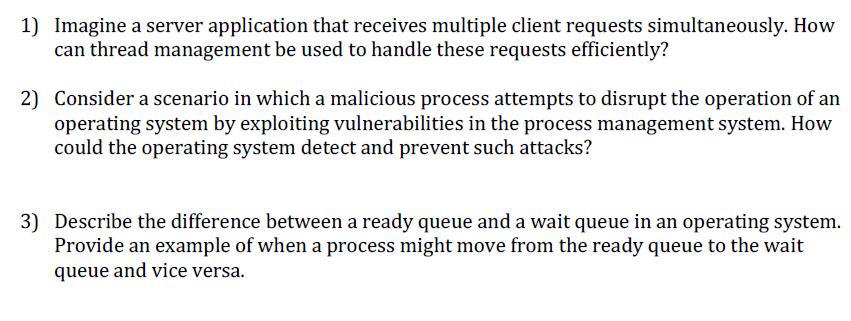
1) Imagine a server application that receives multiple client requests simultaneously. How can thread management be used to handle these requests efficiently? 2) Consider a scenario in which a malicious process attempts to disrupt the operation of an operating system by exploiting vulnerabilities in the process management system. How could the operating system detect and prevent such attacks? 3) Describe the difference between a ready queue and a wait queue in an operating system. Provide an example of when a process might move from the ready queue to the wait queue and vice versa. 1) Imagine a server application that receives multiple client requests simultaneously. How can thread management be used to handle these requests efficiently? 2) Consider a scenario in which a malicious process attempts to disrupt the operation of an operating system by exploiting vulnerabilities in the process management system. How could the operating system detect and prevent such attacks? 3) Describe the difference between a ready queue and a wait queue in an operating system. Provide an example of when a process might move from the ready queue to the wait queue and vice versa.
Step by Step Solution
There are 3 Steps involved in it
To use thread management to handle multiple client requests simultaneously in a server applicationyou can follow these steps Create a thread poolThis is a collection of threads that are available to h... View full answer

Get step-by-step solutions from verified subject matter experts
 Study Help