







Question: 1. Prepare a CSV OR ARFF format data file of the data. Add a screenshot of the prepared dataset. 2. Load the dataset in Weka.
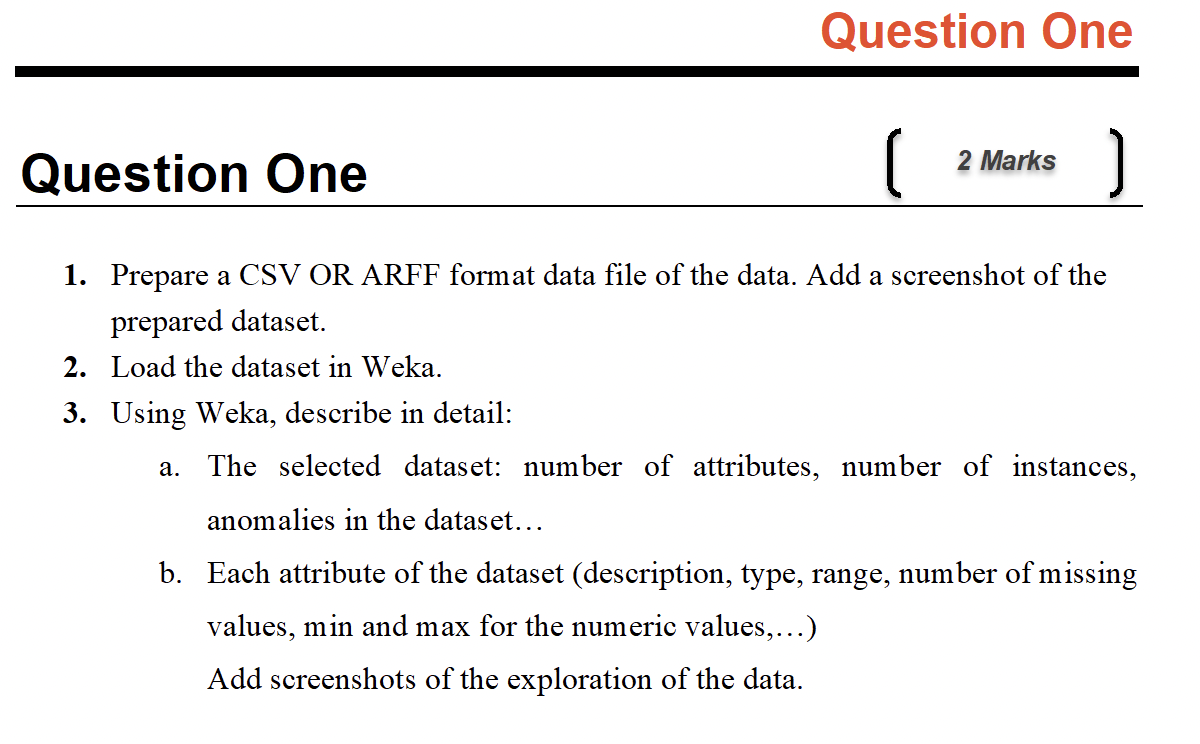
1. Prepare a CSV OR ARFF format data file of the data. Add a screenshot of the prepared dataset.
2. Load the dataset in Weka.
3. Using Weka, describe in detail:
a. The selected dataset: number of attributes, number of instances, anomalies in the dataset
b. Each attribute of the dataset (description, type, range, number of missing values, min and max for the numeric values,)
Add screenshots of the exploration of the data.
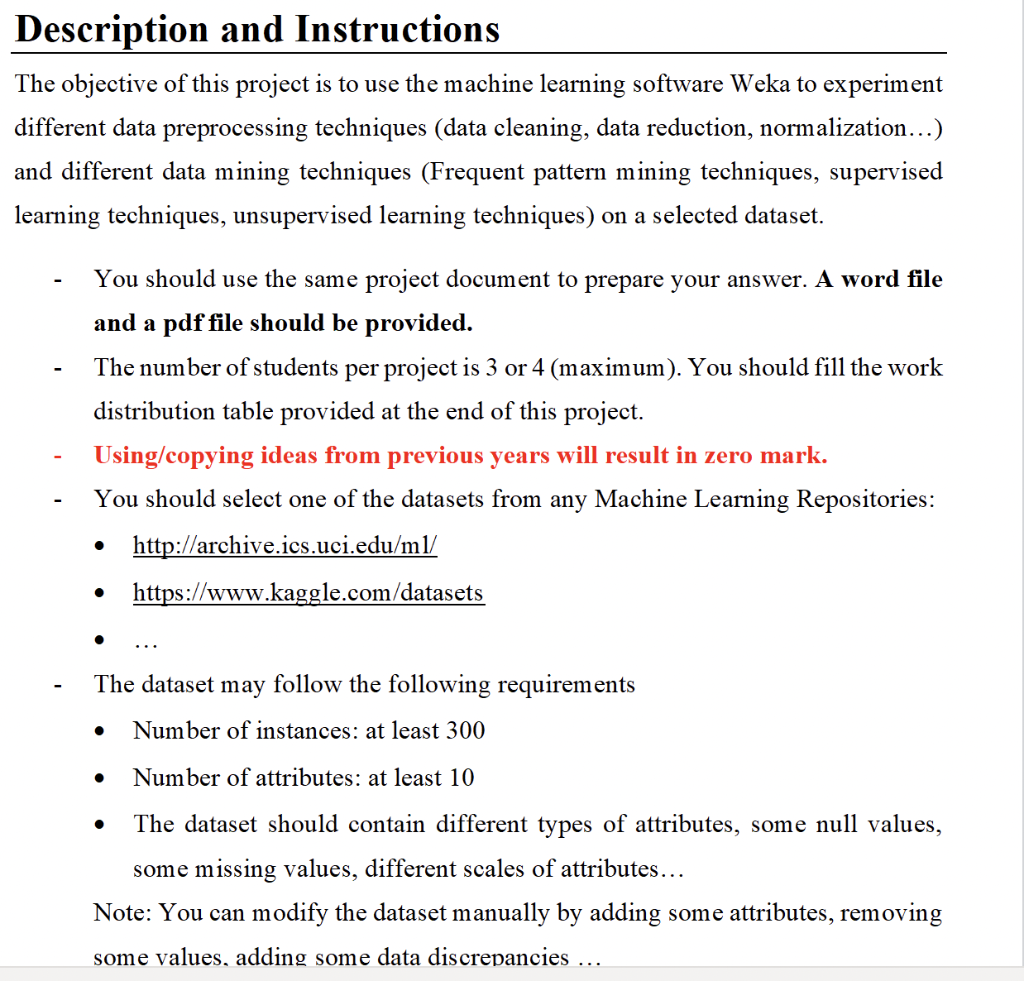
The objective of this project is to use the machine learning software Weka to experiment different data preprocessing techniques (data cleaning, data reduction, normalization...) and different data mining techniques (Frequent pattern mining techniques, supervised learning techniques, unsupervised learning techniques) on a selected dataset. - You should use the same project document to prepare your answer. A word file and a pdf file should be provided. - The number of students per project is 3 or 4 (maximum). You should fill the work distribution table provided at the end of this project. - Using/copying ideas from previous years will result in zero mark. - You should select one of the datasets from any Machine Learning Repositories: - http://archive.ics.uci.edu/ml - https://www.kaggle.com/datasets - - - The dataset may follow the following requirements - Number of instances: at least 300 - Number of attributes: at least 10 - The dataset should contain different types of attributes, some null values, some missing values, different scales of attributes... Note: You can modify the dataset manually by adding some attributes, removing some values, adding some data discrepancies ... 1. Prepare a CSV OR ARFF format data file of the data. Add a screenshot of the prepared dataset. 2. Load the dataset in Weka. 3. Using Weka, describe in detail: a. The selected dataset: number of attributes, number of instances, anomalies in the dataset... b. Each attribute of the dataset (description, type, range, number of missing values, min and max for the numeric values, ..) Add screenshots of the exploration of the data
Step by Step Solution
There are 3 Steps involved in it

Get step-by-step solutions from verified subject matter experts
 Study Help