







Question: 1. ________ research is typically more formal and structured than ________ research. A) Exploratory; conclusive B) Conclusive; exploratory C) Exploratory; descriptive D) Subjective; observational E)
1. ________ research is typically more formal and structured than ________ research.
A) Exploratory; conclusive B) Conclusive; exploratory C) Exploratory; descriptive
D) Subjective; observational
E) Lead; supporting
2. Jerry and the team working on the Roger Tire Company marketing research project are developing ways to test their hypothesis that drivers of larger trucks prefer dual belted radial tires. What type of research are they conducting? A) simple research B) exploratory research
C) descriptive research
D) causal research
3. Joan needs to determine which variables and relationships she should examine further as part of the research she is conducting for the Flager Truck Company. Joan is about to embark on what type of research?
A) simple research B) exploratory research
C) descriptive research
D) causal research
4. ________ is research designed to assist the decision maker in determining, evaluating, and selecting the best course of action to take in a given situation.
A) Exploratory research B) Conclusive research
C) Complex research D) Problem-identification research
5. Which of the following is NOT an example of a source of secondary data?
A) trade organizations B) Census Bureau C) Internet
D) industry associations
E) survey data
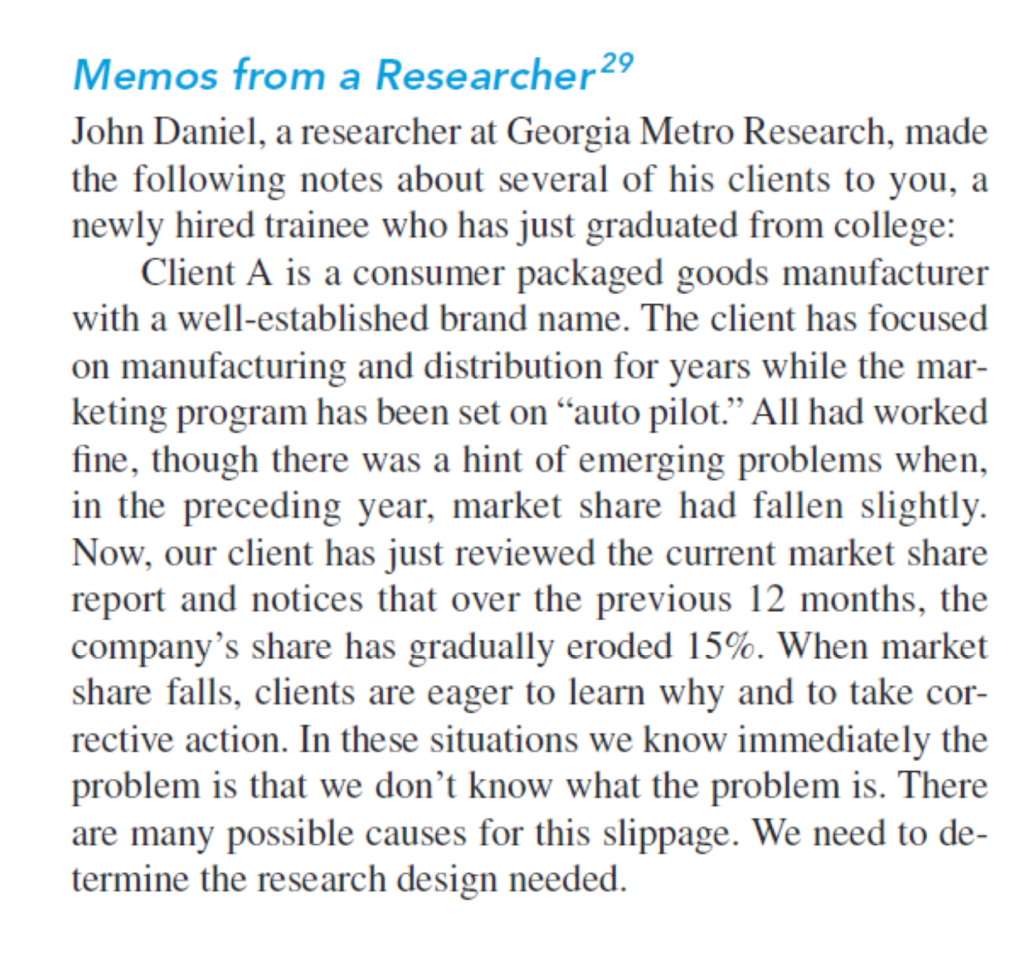
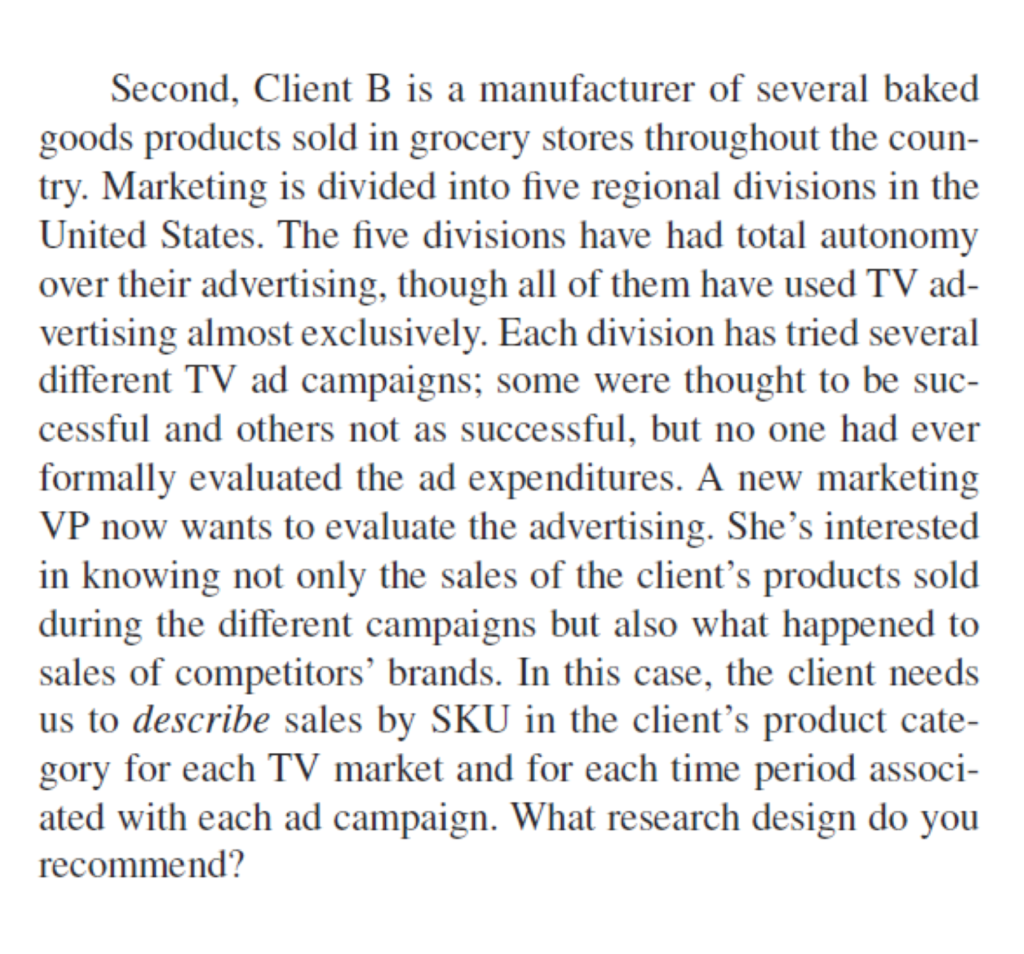
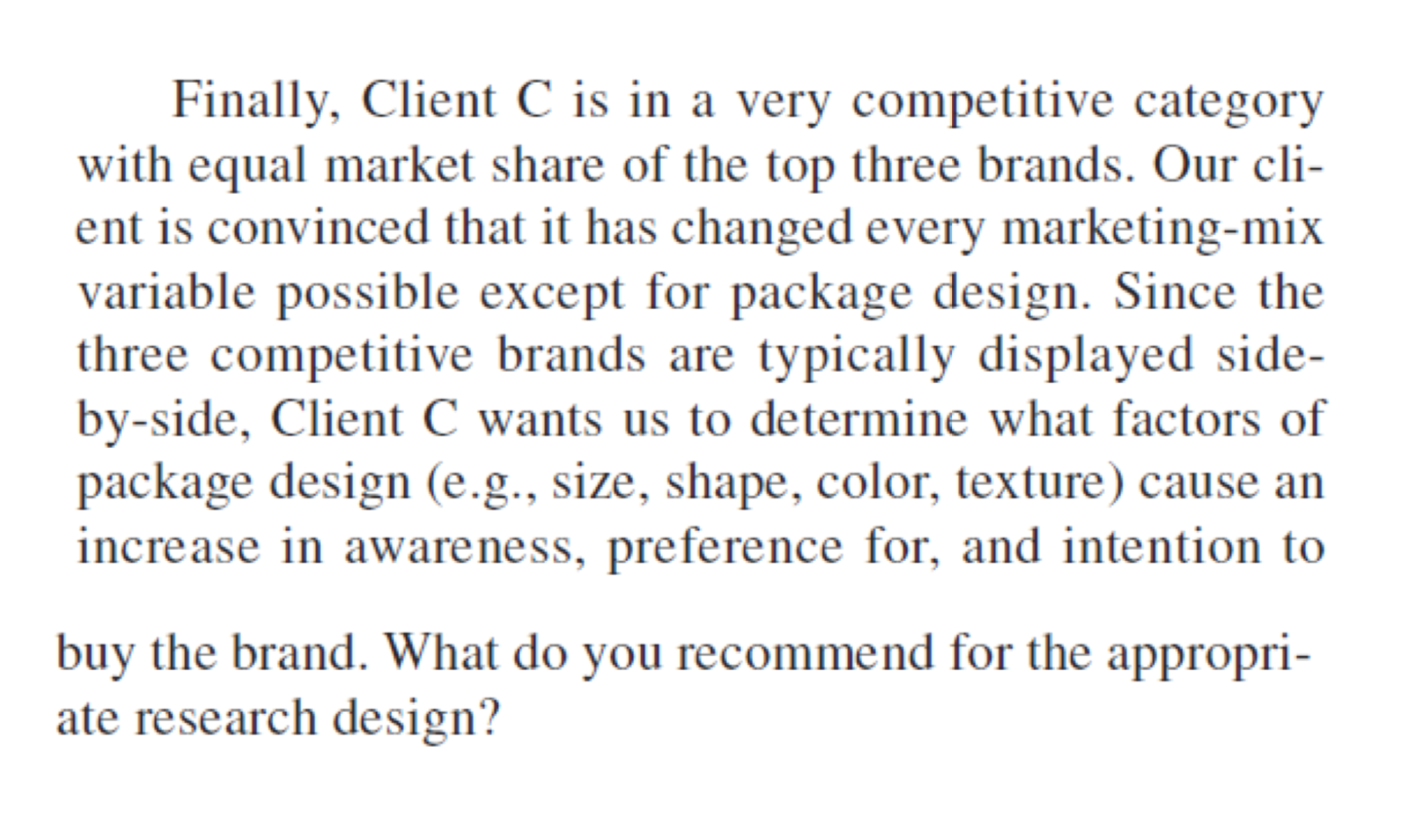
Memos from a Researcher29 John Daniel, a researcher at Georgia Metro Research, made the following notes about several of his clients to you, a newly hired trainee who has just graduated from college: Client A is a consumer packaged goods manufacturer with a well-established brand name. The client has focused on manufacturing and distribution for years while the mar- keting program has been set on auto pilot." All had worked fine, though there was a hint of emerging problems when, in the preceding year, market share had fallen slightly. Now, our client has just reviewed the current market share report and notices that over the previous 12 months, the company's share has gradually eroded 15%. When market share falls, clients are eager to learn why and to take cor- rective action. In these situations we know immediately the are many possible causes for this slippage. We need to de- termine the research design needed. Second, Client B is a manufacturer of several baked goods products sold in grocery stores throughout the coun- try. Marketing is divided into five regional divisions in the United States. The five divisions have had total autonomy over their advertising, though all of them have used TV ad- vertising almost exclusively. Each division has tried several different TV ad campaigns; some were thought to be suc- cessful and others not as successful, but no one had ever formally evaluated the ad expenditures. A new marketing VP now wants to evaluate the advertising. She's interested in knowing not only the sales of the client's products sold during the different campaigns but also what happened to sales of competitors' brands. In this case, the client needs us to describe sales by SKU in the client's product cate- gory for each TV market and for each time period associ- ated with each ad campaign. What research design do you recommend? Finally, Client C is in a very competitive category with equal market share of the top three brands. Our cli- ent is convinced that it has changed every marketing-mix variable possible except for package design. Since the three competitive brands are typically displayed side- by-side, Client C wants us to determine what factors of package design (e.g., size, shape, color, texture) cause an increase in awareness, preference for, and intention to buy the brand. What do you recommend for the appropri- ate research designStep by Step Solution
There are 3 Steps involved in it

Get step-by-step solutions from verified subject matter experts
 Study Help