







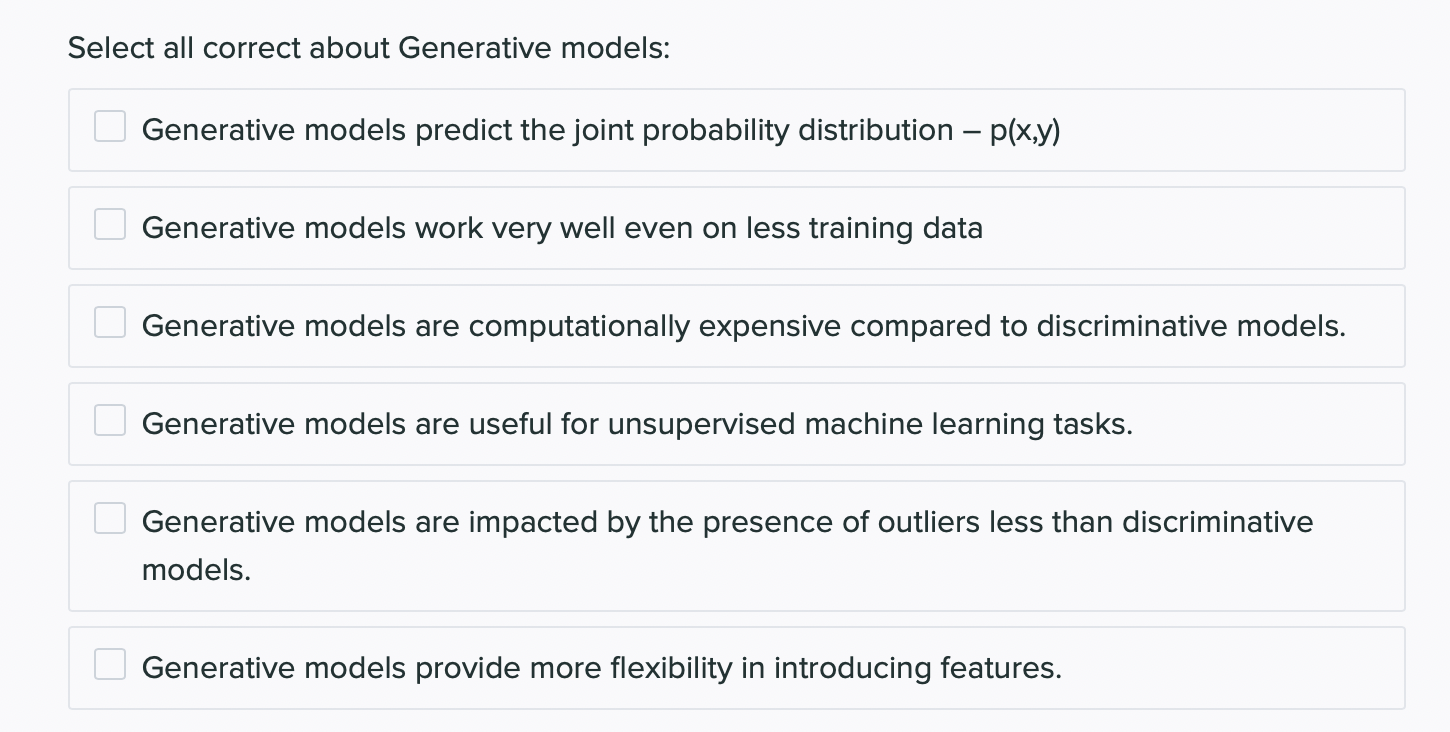
Question: 1: Select all correct about Generative models: Generative models predict the joint probability distribution p(x,y) Generative models work very well even on less training data

1:
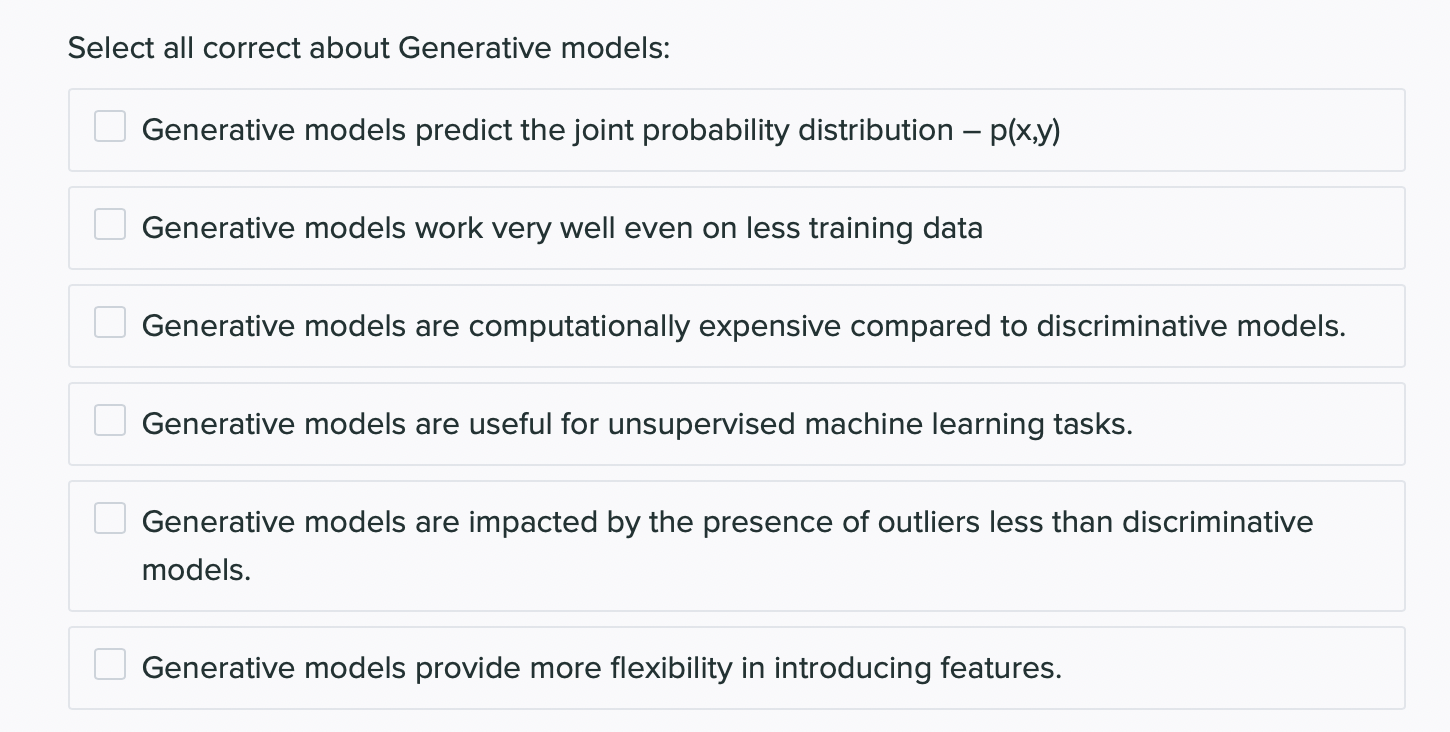

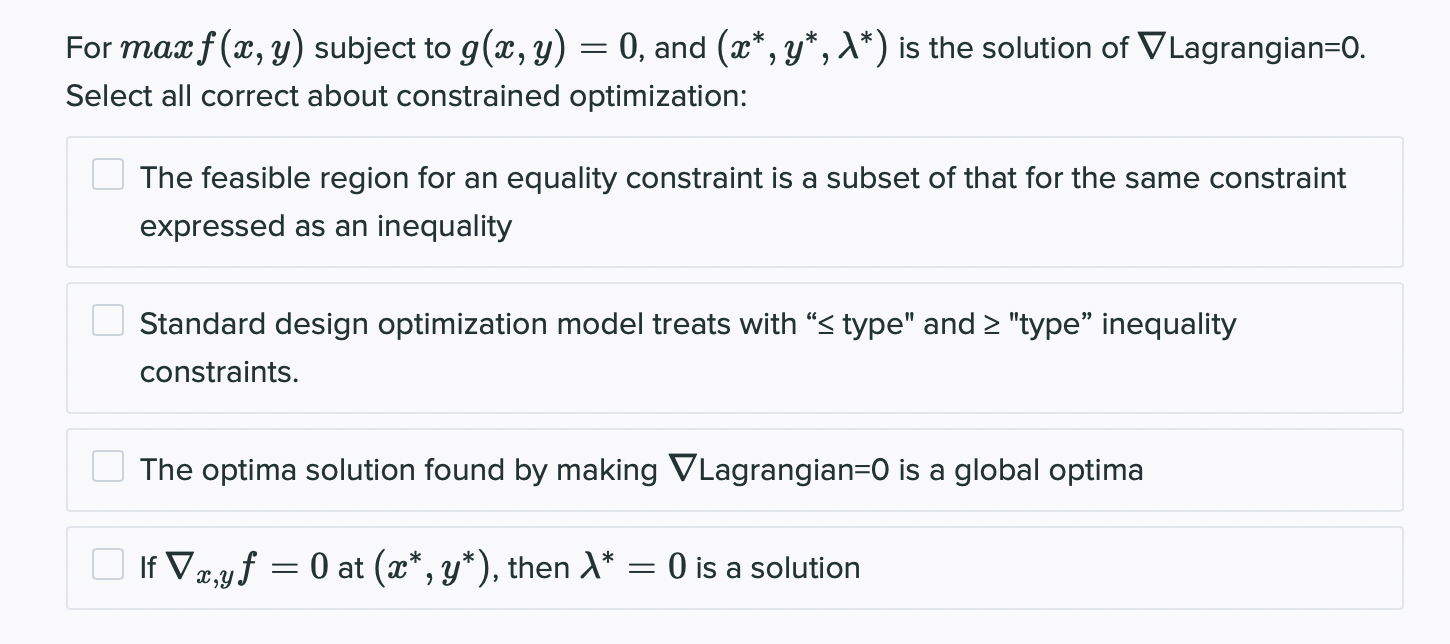
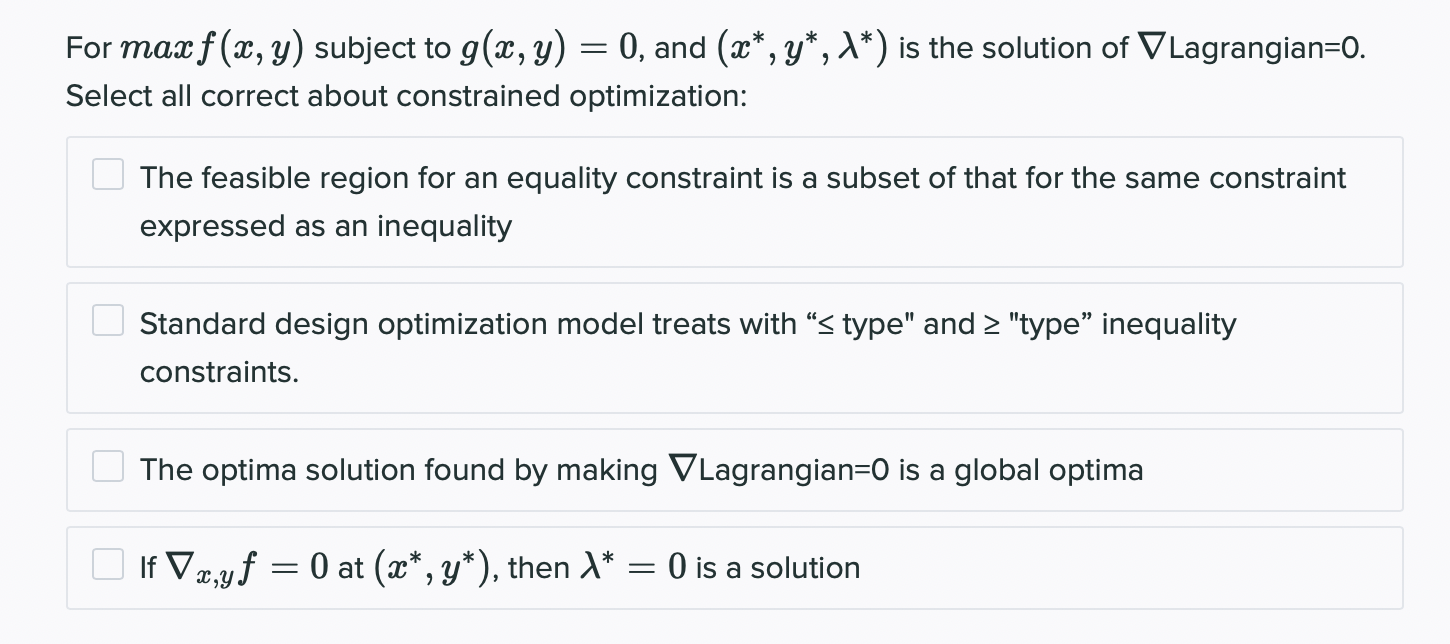
Select all correct about Generative models: Generative models predict the joint probability distribution p(x,y) Generative models work very well even on less training data Generative models are computationally expensive compared to discriminative models. Generative models are useful for unsupervised machine learning tasks. Generative models are impacted by the presence of outliers less than discriminative models. Generative models provide more flexibility in introducing features. z = m2 + y2 53y + 4 i 2y subject to the constraint y = 2m + 100. Find the the optimum value of 2 subject to the given constraint. Enter your answer here For max f (x, y) subject to g(x, y) = 0, and (a*, y*, )* ) is the solution of VLagrangian=0. Select all correct about constrained optimization: The feasible region for an equality constraint is a subset of that for the same constraint expressed as an inequality O Standard design optimization model treats with "
Step by Step Solution
There are 3 Steps involved in it

Get step-by-step solutions from verified subject matter experts
 Study Help