







Question: 1. Suppose that f is a differentiable function such that f (2) = 5 and f'(2) = 1. Use either the product rule or the
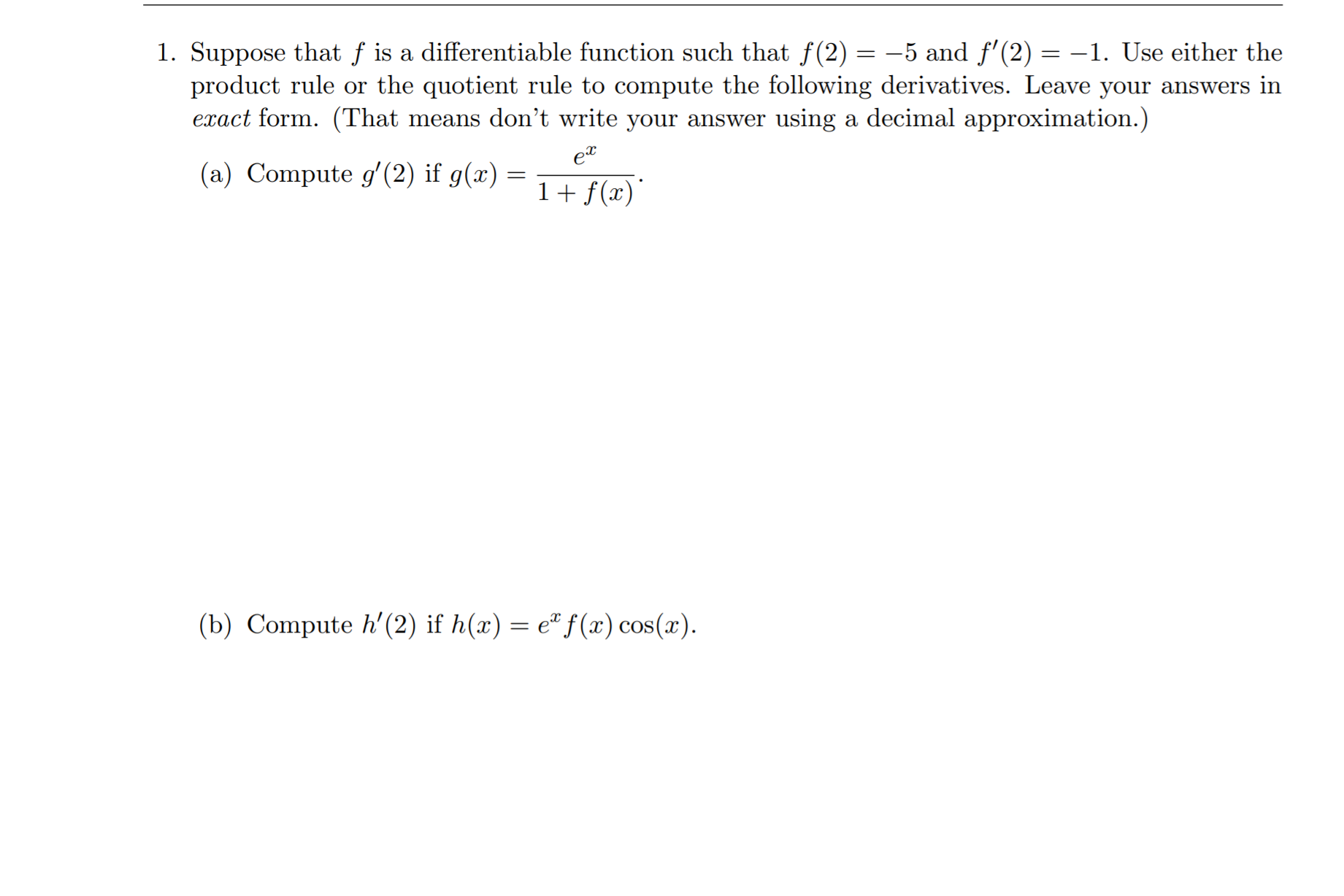
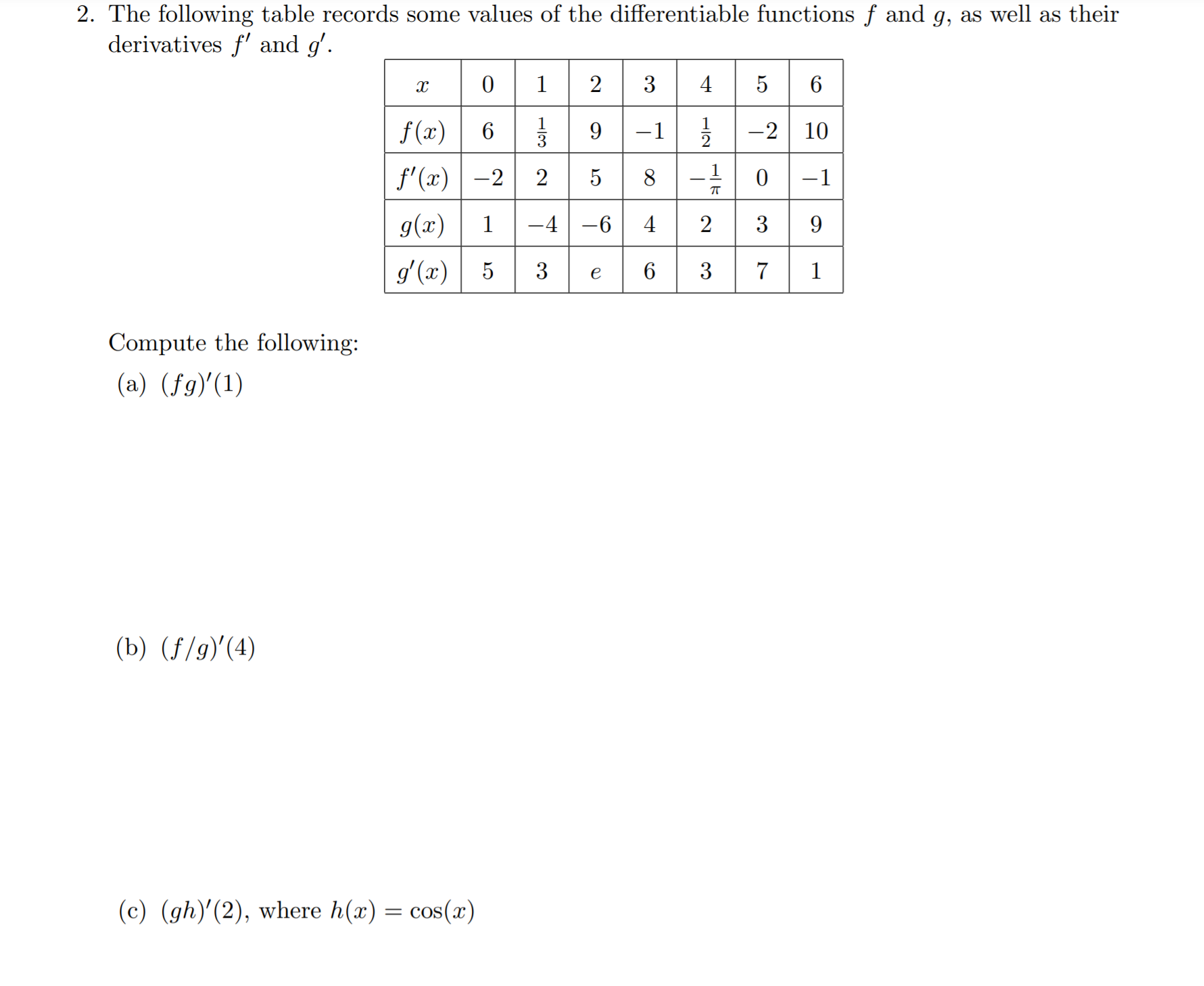
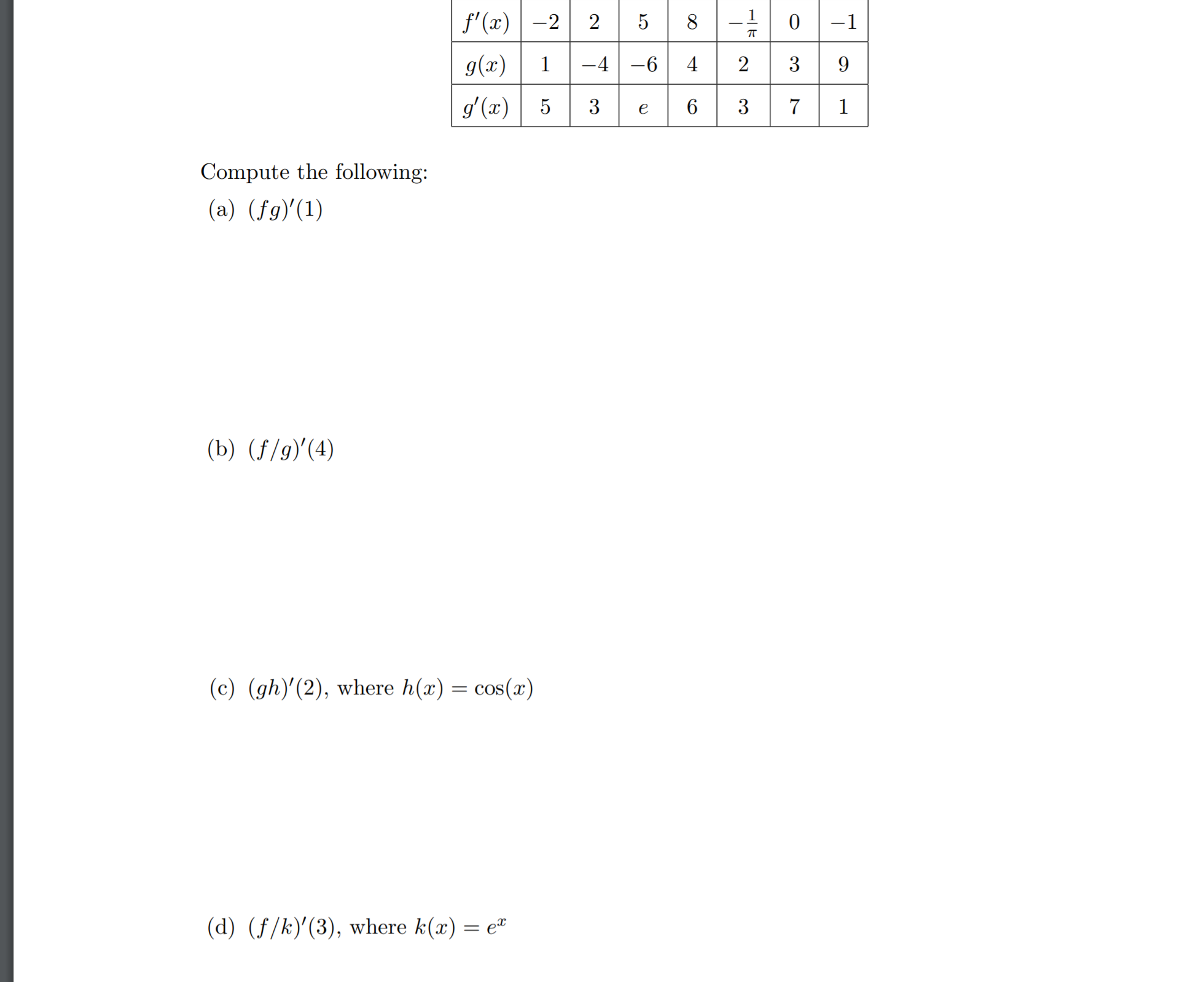
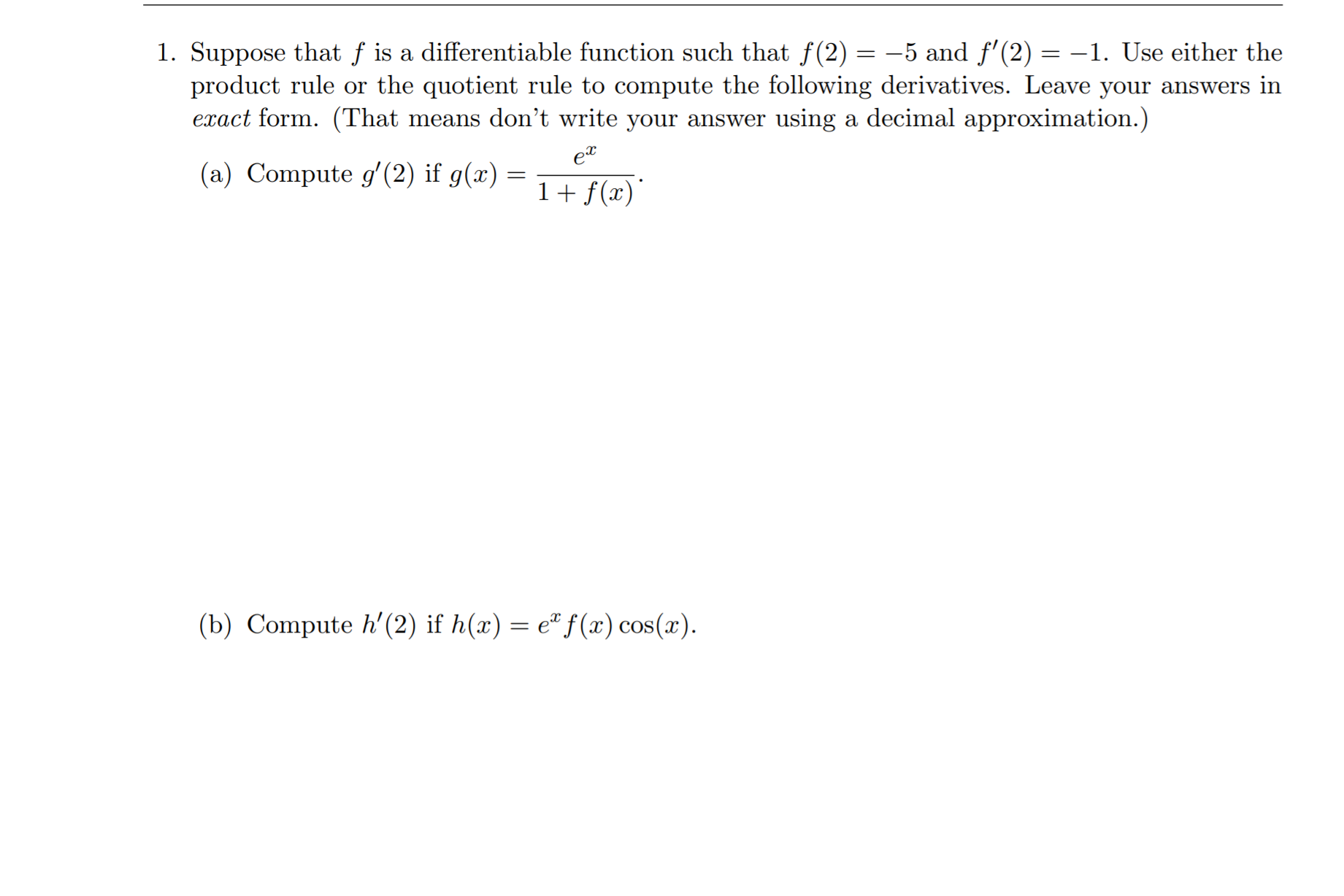
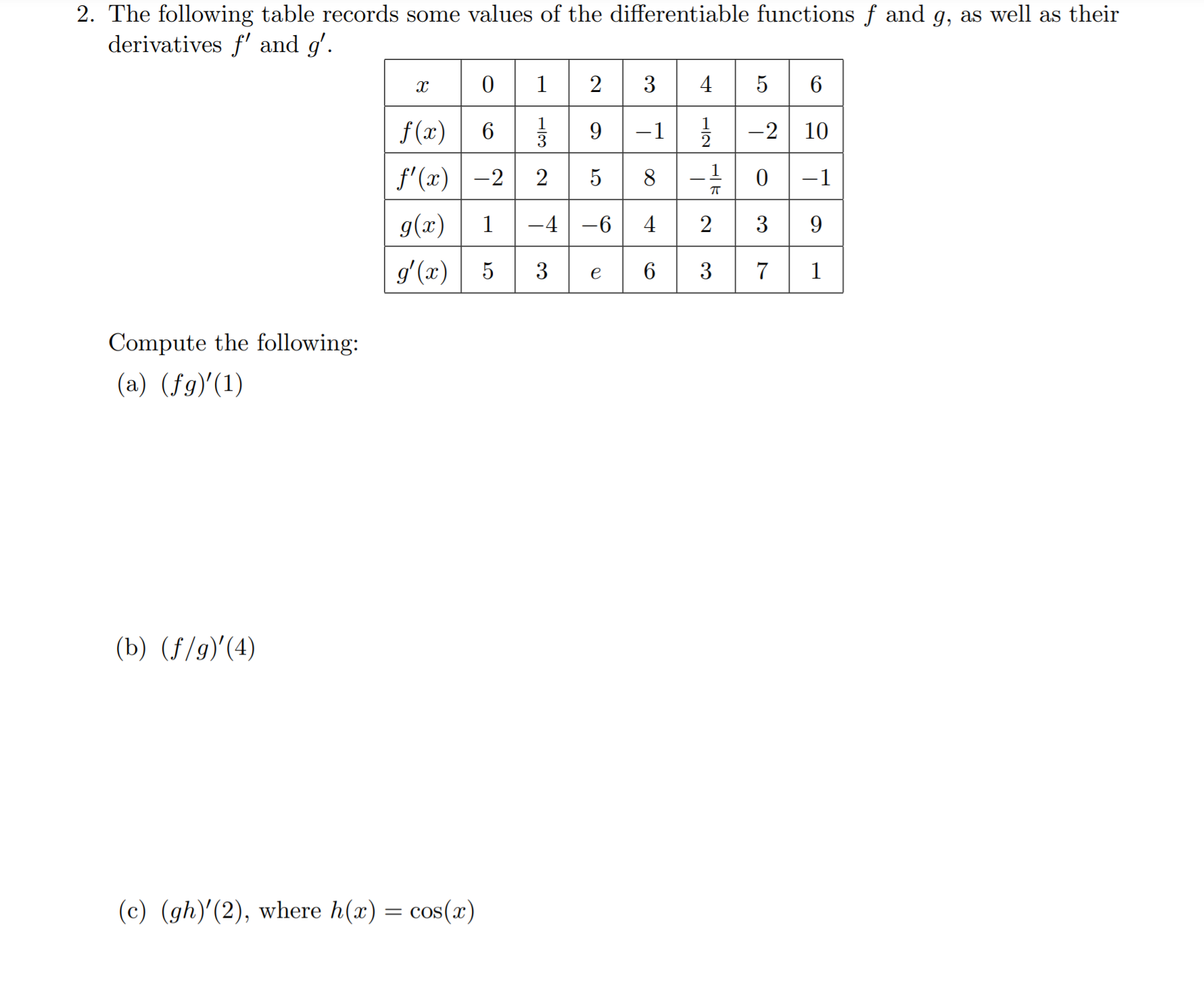
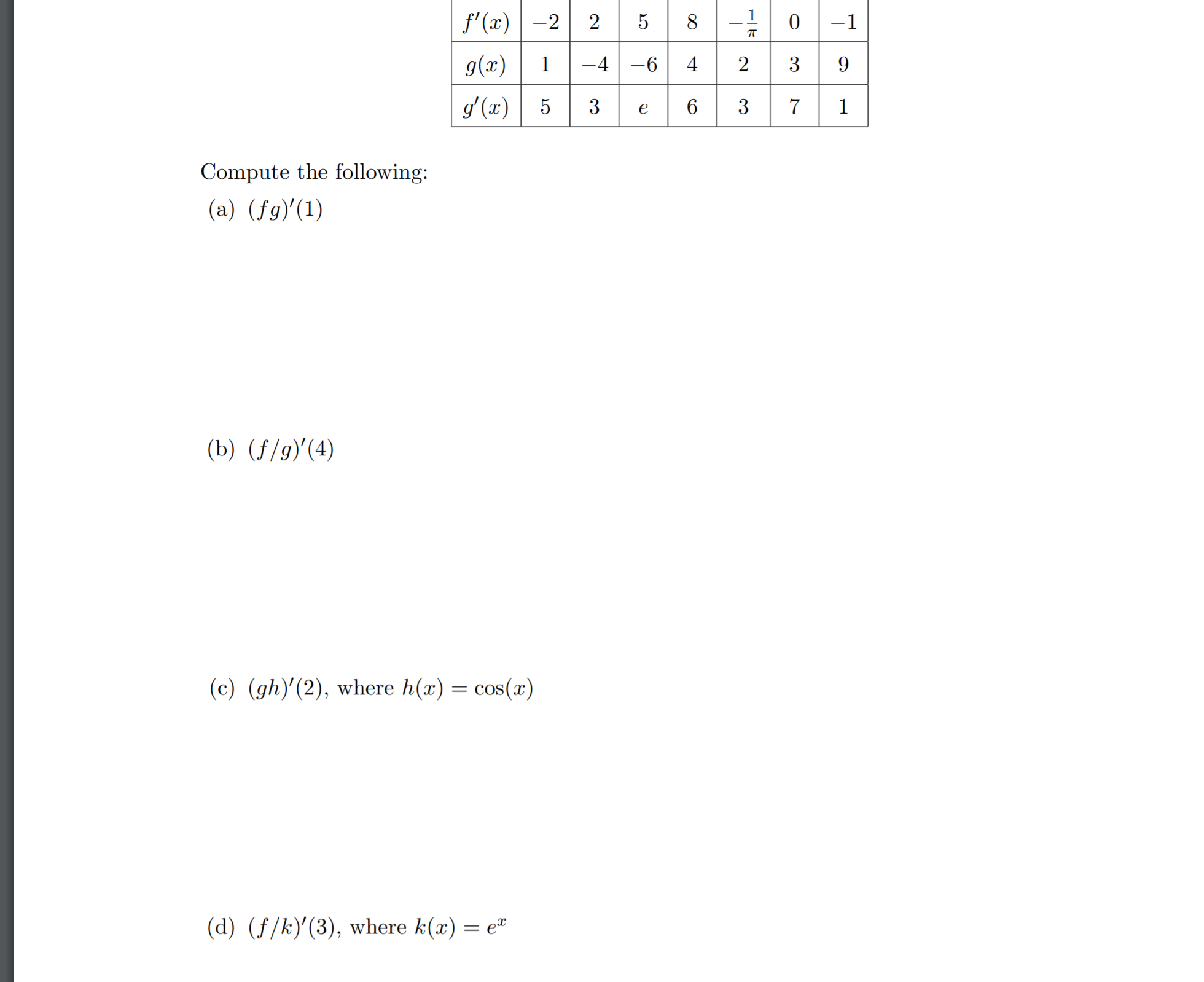
1. Suppose that f is a differentiable function such that f (2) = 5 and f'(2) = 1. Use either the product rule or the quotient rule to compute the following derivatives. Leave your answers in ewact form. (That means don't write your answer using a decimal approximation.) 61' (a) Compute g'(2) if g(:.3) = m. (b) Compute h'(2) if h(x) = emx) 008(1'). 2. The following table records some values of the differentiable functions f and g, as well as their derivatives f' and g'. 0 2 3 4 5 6 f (ac ) 6 Col O -2 10 f' (a) -2 2 5 O g(x) 1 -4 -6 4 2 3 9 g (x) 5 3 e 3 7 Compute the following: (a) (fg)'(1) (b) (f/g)' (4) (c) (gh)'(2), where h(x) = cos(x)f' (x - 2 5 0 g x 1 - 4 4 3 9 g x 5 3 P 3 7 1 Compute the following: (a) (fg)'(1) (b) (f/g)' (4) (c) (gh)'(2), where h(x) = cos(2) (d) (f/k)'(3), where k(a) = ex
Step by Step Solution
There are 3 Steps involved in it

Get step-by-step solutions from verified subject matter experts
 Study Help