



Question: 1. The lymphatic system collects excess tissue uid and returns it to the bloodstream at the veins. 2. Pathogens in the lymph are often detected
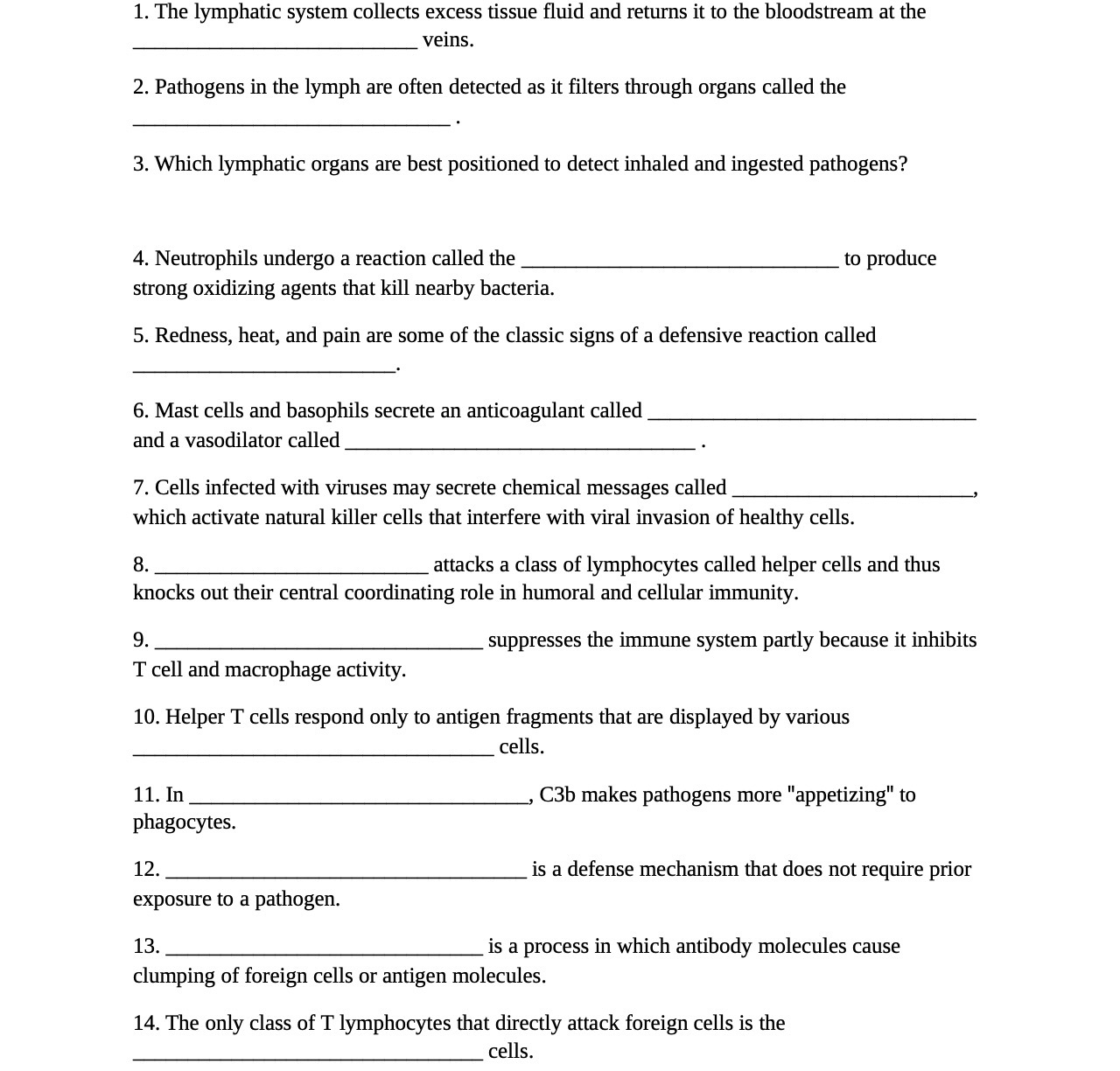
1. The lymphatic system collects excess tissue uid and returns it to the bloodstream at the veins. 2. Pathogens in the lymph are often detected as it lters through organs called the 3. Which lymphatic organs are best positioned to detect inhaled and ingested pathogens? 4. Neutrophils undergo a reaction called the to produce strong oxidizing agents that kill nearby bacteria. 5. Redness, heat, and pain are some of the classic signs of a defensive reaction called 6. Mast cells and basophils secrete an anticoagulant called and a vasodilator called 7. Cells infected with viruses may secrete chemical messages called which activate natural killer cells that interfere with viral invasion of healthy cells. 8. attacks a class of lymphocytes called helper cells and thus knocks out their central coordinating role in humoral and cellular immunity. 9. suppresses the immune system partly because it inhibits T cell and macrophage activity. 10. Helper T cells respond only to antigen fragments that are displayed by various cells. 11. In C3b makes pathogens more "appetizing" to phagocytes. 12. is a defense mechanism that does not require prior exposure to a pathogen. 13. is a process in which antibody molecules cause clumping of foreign cells or antigen molecules. 14. The only class of T lymphocytes that directly attack foreign cells is the cells
Step by Step Solution
There are 3 Steps involved in it

Get step-by-step solutions from verified subject matter experts