



Question: 1. This problem provides an example of real options. One advantage of using staged financing in the venture capital industry is that the venture capitalists
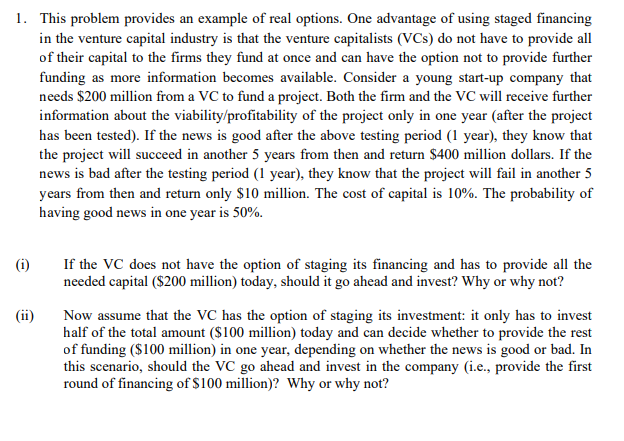
1. This problem provides an example of real options. One advantage of using staged financing in the venture capital industry is that the venture capitalists (VCs) do not have to provide all of their capital to the firms they fund at once and can have the option not to provide further funding as more information becomes available. Consider a young start-up company that needs $200 million from a VC to fund a project. Both the firm and the VC will receive further information about the viability/profitability of the project only in one year (after the project has been tested). If the news is good after the above testing period (1 year), they know that the project will succeed in another 5 years from then and return $400 million dollars. If the news is bad after the testing period (1 year), they know that the project will fail in another 5 years from then and return only $10 million. The cost of capital is 10%. The probability of having good news in one year is 50%. (1) (ii) If the VC does not have the option of staging its financing and has to provide all the needed capital ($200 million) today, should it go ahead and invest? Why or why not? Now assume that the VC has the option of staging its investment: it only has to invest half of the total amount ($100 million) today and can decide whether to provide the rest of funding ($100 million) in one year, depending on whether the news is good or bad. In this scenario, should the VC go ahead and invest in the company (i.e., provide the first round of financing of $100 million)? Why or why not
Step by Step Solution
There are 3 Steps involved in it

Get step-by-step solutions from verified subject matter experts