







Question: 1. Was it a problem or opportunity that PRX identified that led it to initiate market research? Provide details. 2. What research questions did PRX

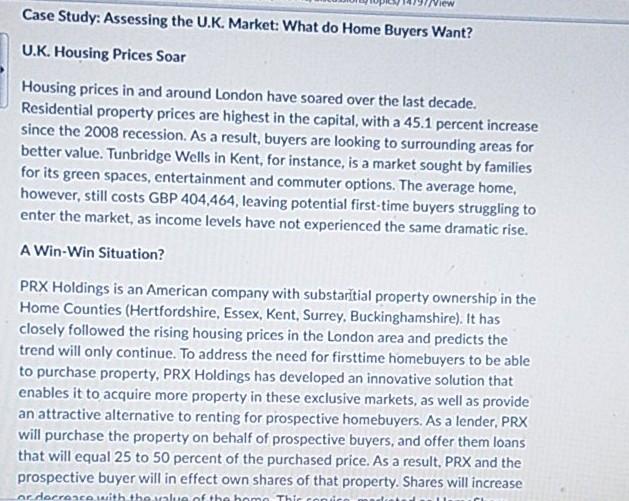
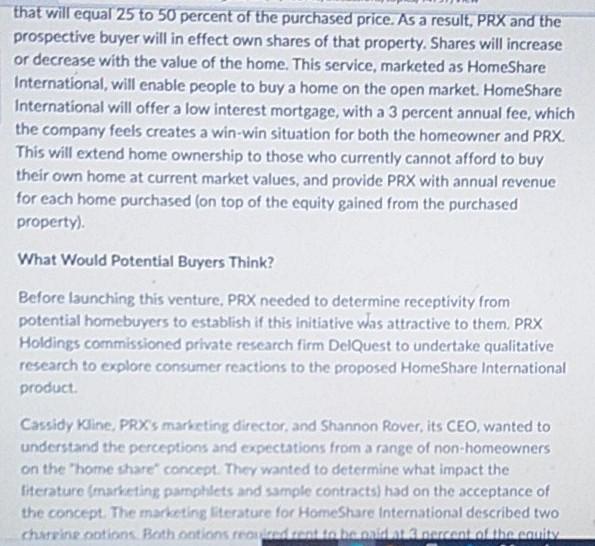
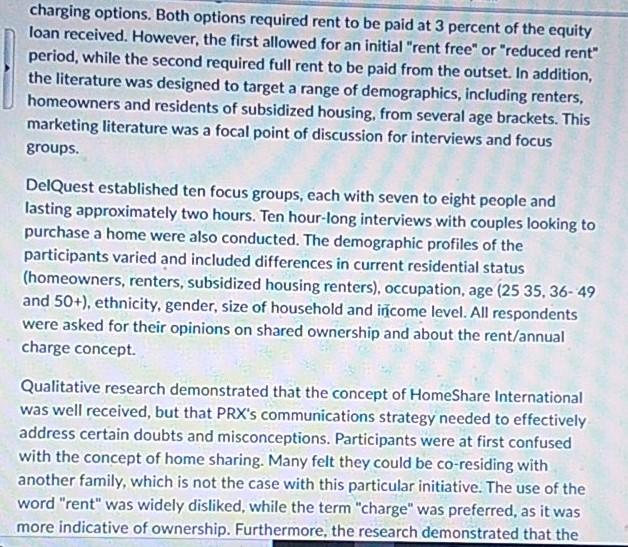
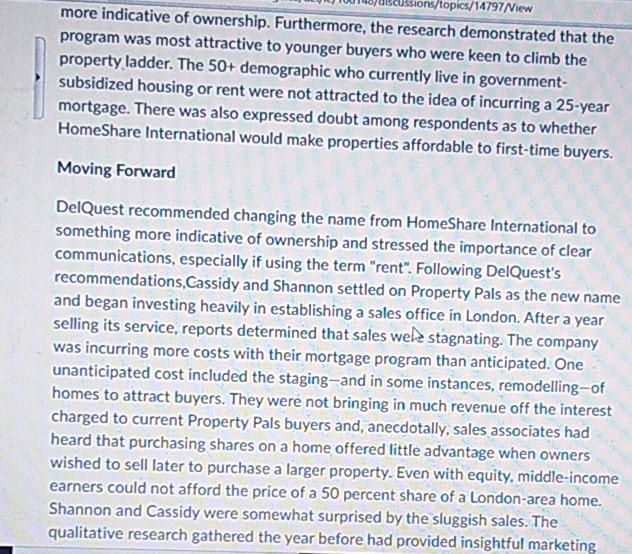
1. Was it a problem or opportunity that PRX identified that led it to initiate market research? Provide details. 2. What research questions did PRX want answered in the original qualitative research project? 3. Which data collection techniques did DelQuest use? 4. What additional research data would have helped PRX determine the suitability of its product for the target market? 5. If PRX decides to fund another round of research to better understand its difficulties, decide whether primary or secondary research should take precedence and explain why Case Study: Assessing the U.K. Market: What do Home Buyers Want? U.K. Housing Prices Soar Housing prices in and around London have soared over the last decade. Residential property prices are highest in the capital, with a 45.1 percent increase since the 2008 recession. As a result, buyers are looking to surrounding areas for better value. Tunbridge Wells in Kent, for instance, is a market sought by families for its green spaces, entertainment and commuter options. The average home, however, still costs GBP 404,464, leaving potential first-time buyers struggling to enter the market, as income levels have not experienced the same dramatic rise. A Win-Win Situation? PRX Holdings is an American company with substartial property ownership in the Home Counties (Hertfordshire, Essex, Kent, Surrey, Buckinghamshire). It has closely followed the rising housing prices in the London area and predicts the trend will only continue. To address the need for firsttime homebuyers to be able to purchase property, PRX Holdings has developed an innovative solution that enables it to acquire more property in these exclusive markets, as well as provide an attractive alternative to renting for prospective homebuyers. As a lender, PRX will purchase the property on behalf of prospective buyers, and offer them loans that will equal 25 to 50 percent of the purchased price. As a result, PRX and the prospective buyer will in effect own shares of that property. Shares will increase ardocroace with the sale of the home Thir that will equal 25 to 50 percent of the purchased price. As a result, PRX and the prospective buyer will in effect own shares of that property. Shares will increase or decrease with the value of the home. This service, marketed as HomeShare International, will enable people to buy a home on the open market. HomeShare International will offer a low interest mortgage, with a 3 percent annual fee, which the company feels creates a win-win situation for both the homeowner and PRX. This will extend home ownership to those who currently cannot afford to buy their own home at current market values, and provide PRX with annual revenue for each home purchased (on top of the equity gained from the purchased property). What Would Potential Buyers Think? Before launching this venture, PRX needed to determine receptivity from potential homebuyers to establish if this initiative was attractive to them. PRX Holdings commissioned private research firm DelQuest to undertake qualitative research to explore consumer reactions to the proposed HomeShare International product. Cassidy Kline, PRX's marketing director, and Shannon Rover, its CEO, wanted to understand the perceptions and expectations from a range of non-homeowners on the home share" concept. They wanted to determine what impact the literature (marketing pamphlets and sample contracts) had on the acceptance of the concept. The marketing literature for HomeShare International described two charine options. Both ontions relation be madaktarccontotheamit charging options. Both options required rent to be paid at 3 percent of the equity loan received. However, the first allowed for an initial "rent free" or "reduced rent" period, while the second required full rent to be paid from the outset. In addition, the literature was designed to target a range of demographics, including renters, homeowners and residents of subsidized housing, from several age brackets. This marketing literature was a focal point of discussion for interviews and focus groups. DelQuest established ten focus groups, each with seven to eight people and lasting approximately two hours. Ten hour-long interviews with couples looking to purchase a home were also conducted. The demographic profiles of the participants varied and included differences in current residential status (homeowners, renters, subsidized housing renters), occupation, age (25 35, 36-49 and 50+), ethnicity, gender, size of household and income level. All respondents were asked for their opinions on shared ownership and about the rent/annual charge concept. Qualitative research demonstrated that the concept of HomeShare International was well received, but that PRX's communications strategy needed to effectively address certain doubts and misconceptions. Participants were at first confused with the concept of home sharing. Many felt they could be co-residing with another family, which is not the case with this particular initiative. The use of the word "rent" was widely disliked, while the term "charge" was preferred, as it was more indicative of ownership. Furthermore, the research demonstrated that the ns/topics/14797Niew more indicative of ownership. Furthermore, the research demonstrated that the program was most attractive to younger buyers who were keen to climb the property ladder. The 50+ demographic who currently live in government- subsidized housing or rent were not attracted to the idea of incurring a 25-year mortgage. There was also expressed doubt among respondents as to whether HomeShare International would make properties affordable to first-time buyers. Moving Forward DelQuest recommended changing the name from HomeShare International to something more indicative of ownership and stressed the importance of clear communications, especially if using the term "rent". Following DelQuest's recommendations, Cassidy and Shannon settled on Property Pals as the new name and began investing heavily in establishing a sales office in London. After a year selling its service, reports determined that sales were stagnating. The company was incurring more costs with their mortgage program than anticipated. One unanticipated cost included the staging-and in some instances, remodelling-of homes to attract buyers. They were not bringing in much revenue off the interest charged to current Property Pals buyers and, anecdotally, sales associates had heard that purchasing shares on a home offered little advantage when owners wished to sell later to purchase a larger property. Even with equity, middle-income earners could not afford the price of a 50 percent share of a London-area home. Shannon and Cassidy were somewhat surprised by the sluggish sales. The qualitative research gathered the year before had provided insightful marketing
Step by Step Solution
There are 3 Steps involved in it
1 Expert Approved Answer
Step: 1 Unlock

Question Has Been Solved by an Expert!
Get step-by-step solutions from verified subject matter experts
Step: 2 Unlock
Step: 3 Unlock
 Study Help