



Question: 1) Watch the collision. Without any numbers, describe the effect the collision had on the velocity of the left glider. 2) Without any numbers, describe
1) Watch the collision. Without any numbers, describe the effect the collision had on the velocity of the left glider. 2) Without any numbers, describe the effect the collision had on the velocity of the right glider. 3) One way to think about collisions is that the left glider was able to transfer something to the right glider during the collision. What are some quantities that might be transferring during a collision? **Id appreciate if you can help with the questions below as well. I always rate on effort! Thank you!
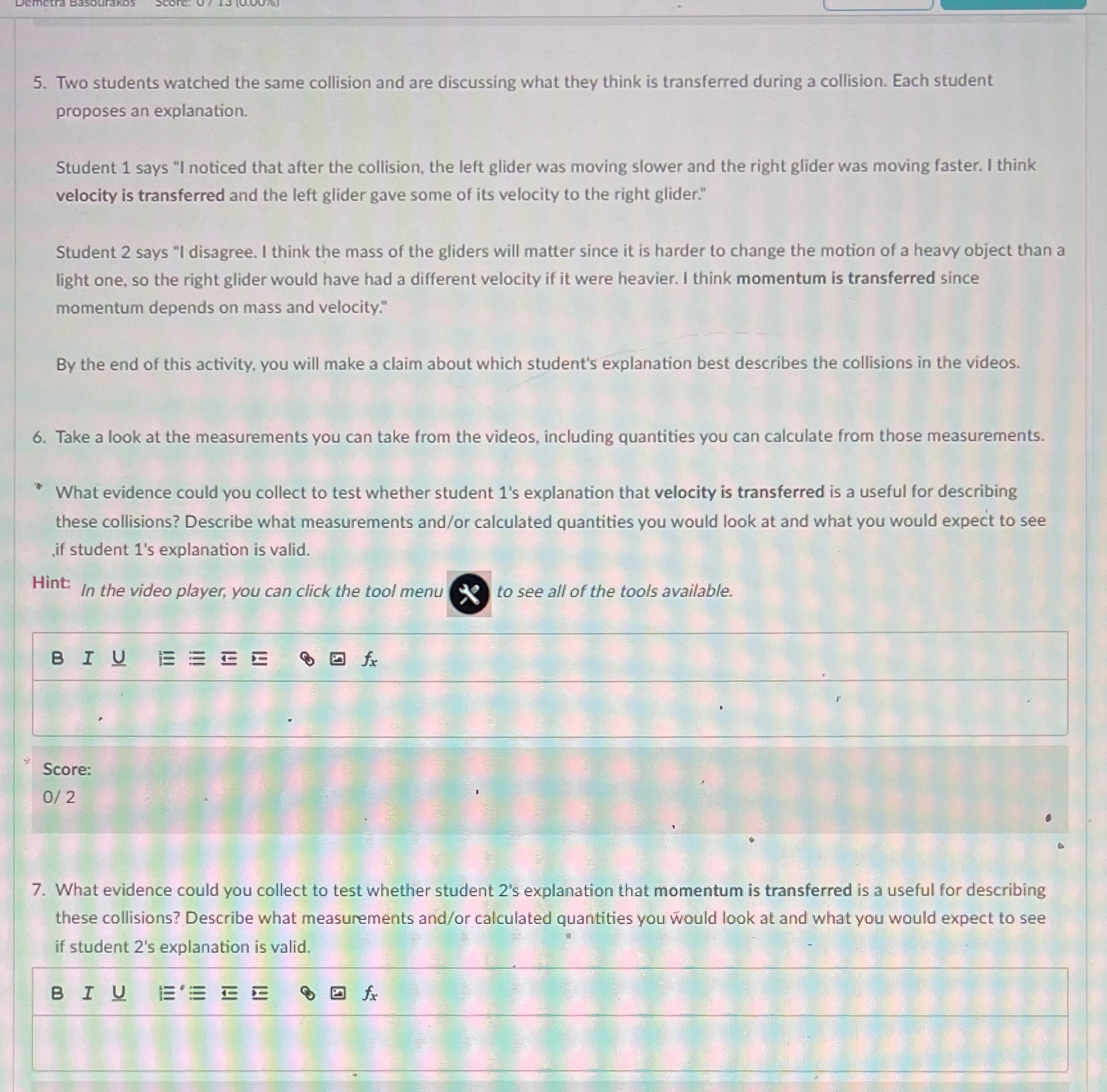
5. Two students watched the same collision and are discussing what they think is transferred during a collision. Each student proposes an explanation. Student 1 says "I noticed that after the collision, the left glider was moving slower and the right glider was moving faster. I think velocity is transferred and the left glider gave some of its velocity to the right glider." Student 2 says "I disagree. I think the mass of the gliders will matter since it is harder to change the motion of a heavy object than a light one, so the right glider would have had a different velocity if it were heavier. I think momentum is transferred since momentum depends on mass and velocity." By the end of this activity, you will make a claim about which student's explanation best describes the collisions in the videos. 6. Take a look at the measurements you can take from the videos, including quantities you can calculate from those measurements. What evidence could you collect to test whether student 1's explanation that velocity is transferred is a useful for describing these collisions? Describe what measurements and/or calculated quantities you would look at and what you would expect to see if student 1's explanation is valid. Hint: In the video player, you can click the tool menu to see all of the tools available. BIV BEEF SEA Score: 0/ 2 7. What evidence could you collect to test whether student 2's explanation that momentum is transferred is a useful for describing these collisions? Describe what measurements and/or calculated quantities you would look at and what you would expect to see if student 2's explanation is valid. BIV FEFE Of
Step by Step Solution
There are 3 Steps involved in it

Get step-by-step solutions from verified subject matter experts