



Question: 1. What are two electron carriers discussed in class? Give the oxidized and reduced forms of each. A. B. Oxidized Reduced 2. Why are
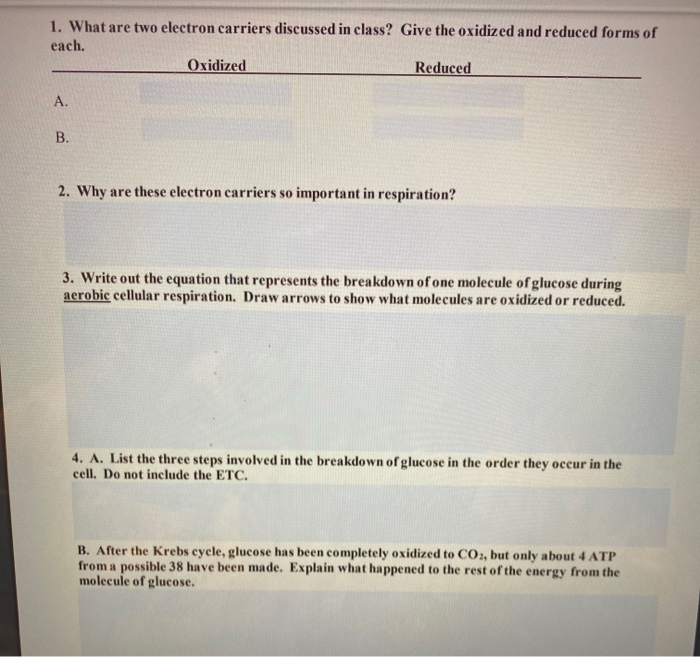
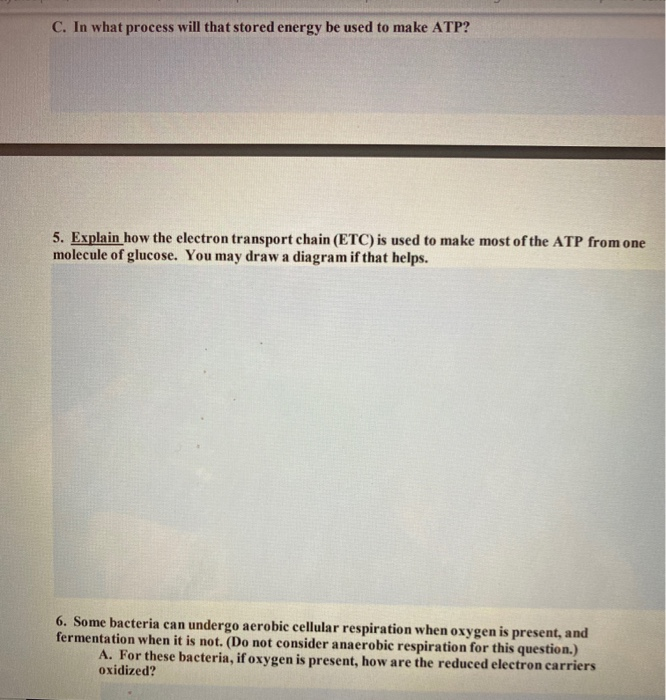
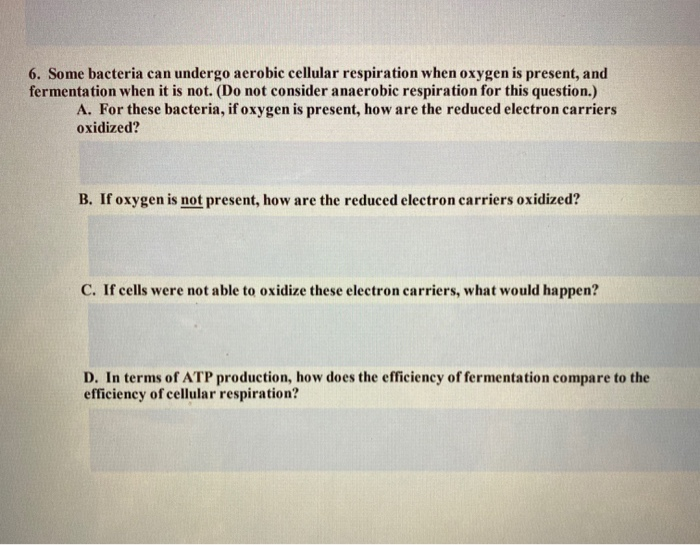
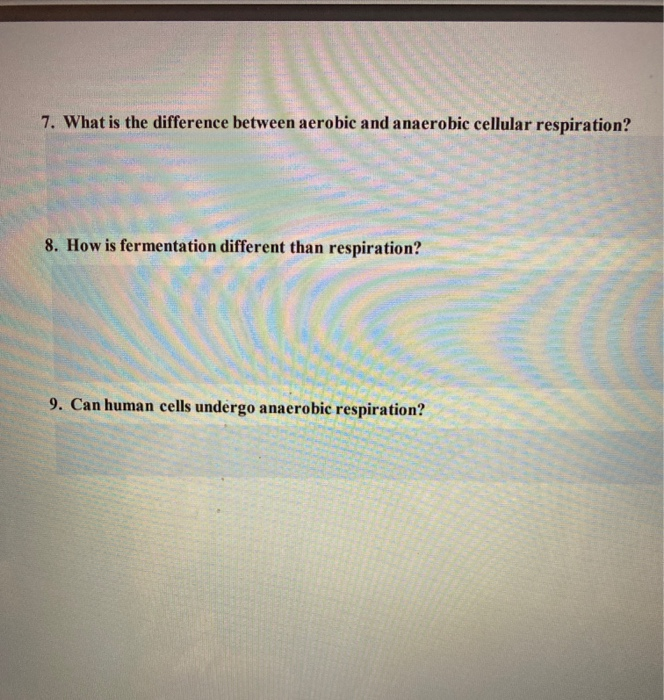
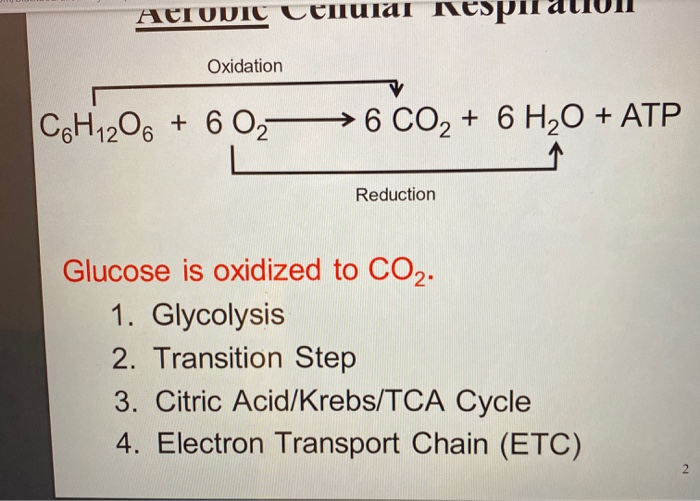
1. What are two electron carriers discussed in class? Give the oxidized and reduced forms of each. A. B. Oxidized Reduced 2. Why are these electron carriers so important in respiration? 3. Write out the equation that represents the breakdown of one molecule of glucose during aerobic cellular respiration. Draw arrows to show what molecules are oxidized or reduced. 4. A. List the three steps involved in the breakdown of glucose in the order they occur in the cell. Do not include the ETC. B. After the Krebs cycle, glucose has been completely oxidized to CO2, but only about 4 ATP from a possible 38 have been made. Explain what happened to the rest of the energy from the molecule of glucose. C. In what process will that stored energy be used to make ATP? 5. Explain how the electron transport chain (ETC) is used to make most of the ATP from one molecule of glucose. You may draw a diagram if that helps. 6. Some bacteria can undergo aerobic cellular respiration when oxygen is present, and fermentation when it is not. (Do not consider anaerobic respiration for this question.) A. For these bacteria, if oxygen is present, how are the reduced electron carriers oxidized? 6. Some bacteria can undergo aerobic cellular respiration when oxygen is present, and fermentation when it is not. (Do not consider anaerobic respiration for this question.) A. For these bacteria, if oxygen is present, how are the reduced electron carriers oxidized? B. If oxygen is not present, how are the reduced electron carriers oxidized? C. If cells were not able to oxidize these electron carriers, what would happen? D. In terms of ATP production, how does the efficiency of fermentation compare to the efficiency of cellular respiration? 7. What is the difference between aerobic and anaerobic cellular respiration? 8. How is fermentation different than respiration? NIC 9. Can human cells undergo anaerobic respiration? Aerobic Central Respi Oxidation C6H12O6 + 6 02- > 6 CO, + 6 H,O +ATP Reduction Glucose is oxidized to CO. 1. Glycolysis 2. Transition Step 3. Citric Acid/Krebs/TCA Cycle 4. Electron Transport Chain (ETC) 2
Step by Step Solution
There are 3 Steps involved in it

Get step-by-step solutions from verified subject matter experts