







Question: 1. What dates will Sage 50 enter as the default fiscal start, fiscal end and earliest transaction date when you create a new company file
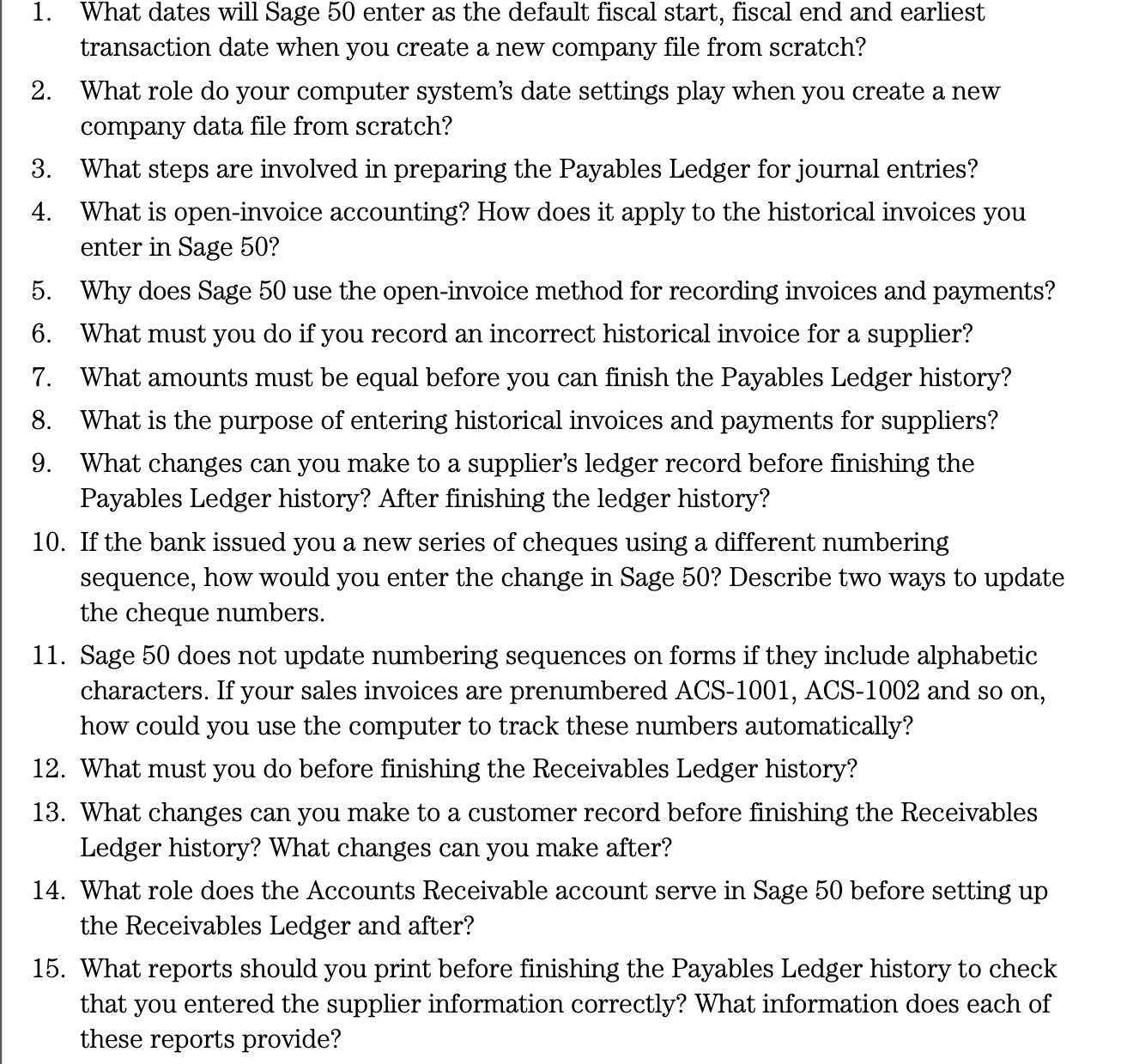
1. What dates will Sage 50 enter as the default fiscal start, fiscal end and earliest transaction date when you create a new company file from scratch? 2. What role do your computer system's date settings play when you create a new company data file from scratch? 3. What steps are involved in preparing the Payables Ledger for journal entries? 4. What is open-invoice accounting? How does it apply to the historical invoices you enter in Sage 50? 5. Why does Sage 50 use the open-invoice method for recording invoices and payments? 6. What must you do if you record an incorrect historical invoice for a supplier? 7. What amounts must be equal before you can finish the Payables Ledger history? 8. What is the purpose of entering historical invoices and payments for suppliers? 9. What changes can you make to a supplier's ledger record before finishing the Payables Ledger history? After finishing the ledger history? 10. If the bank issued you a new series of cheques using a different numbering sequence, how would you enter the change in Sage 50? Describe two ways to update the cheque numbers. 11. Sage 50 does not update numbering sequences on forms if they include alphabetic characters. If your sales invoices are prenumbered ACS-1001, ACS-1002 and so on, how could you use the computer to track these numbers automatically? 12. What must you do before finishing the Receivables Ledger history? 13. What changes can you make to a customer record before finishing the Receivables Ledger history? What changes can you make after? 14. What role does the Accounts Receivable account serve in Sage 50 before setting up the Receivables Ledger and after? 15. What reports should you print before finishing the Payables Ledger history to check that you entered the supplier information correctly? What information does each of these reports provide
Step by Step Solution
There are 3 Steps involved in it

Get step-by-step solutions from verified subject matter experts
 Study Help