







Question: 1. Why might a non-admin need access to a vSphere environment? 2. Are permissions set globally or on individual objects? 3. What does VMware
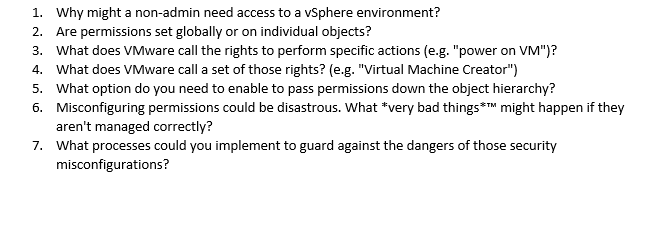
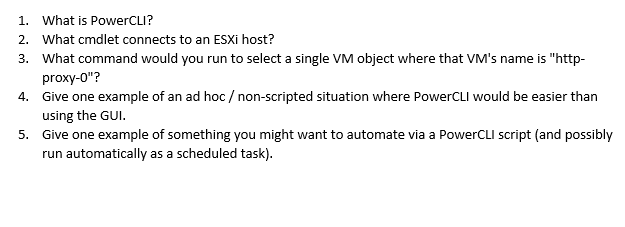
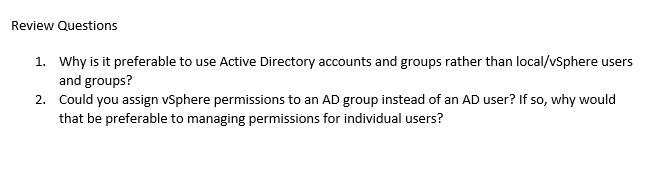
1. Why might a non-admin need access to a vSphere environment? 2. Are permissions set globally or on individual objects? 3. What does VMware call the rights to perform specific actions (e.g. "power on VM")? 4. What does VMware call a set of those rights? (e.g. "Virtual Machine Creator") 5. What option do you need to enable to pass permissions down the object hierarchy? 6. Misconfiguring permissions could be disastrous. What *very bad things* might happen if they aren't managed correctly? 7. What processes could you implement to guard against the dangers of those security misconfigurations? 1. What is PowerCLI? 2. What cmdlet connects to an ESXi host? 3. What command would you run to select a single VM object where that VM's name is "http- proxy-0"? 4. Give one example of an ad hoc / non-scripted situation where PowerCLI would be easier than using the GUI. 5. Give one example of something you might want to automate via a PowerCLI script (and possibly run automatically as a scheduled task). Review Questions 1. Why is it preferable to use Active Directory accounts and groups rather than local/vSphere users and groups? 2. Could you assign vSphere permissions to an AD group instead of an AD user? If so, why would that be preferable to managing permissions for individual users?
Step by Step Solution
There are 3 Steps involved in it

Get step-by-step solutions from verified subject matter experts
 Study Help