Question: 10:31 LTE Assignment 1.docx CASE 1.2. MNC (Multinational Corporation) Collaboration in Social Responsibility Although several high-profile MNCs such as Nike and Gap now work regularly
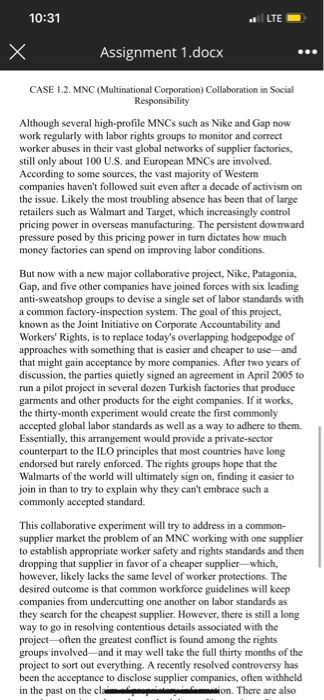
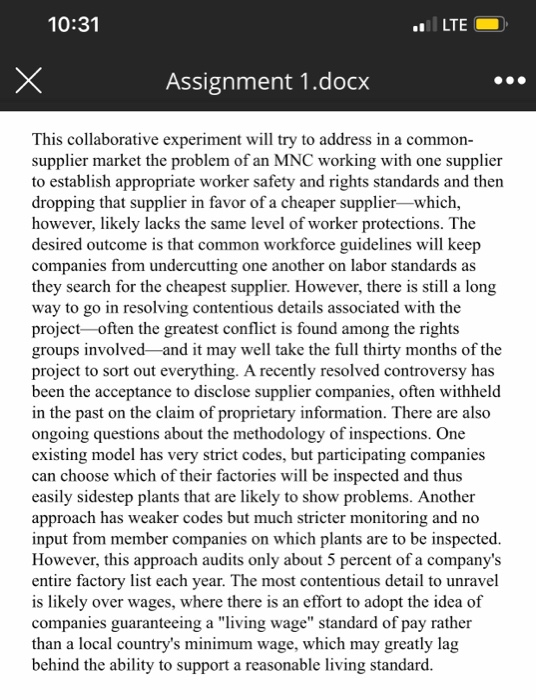
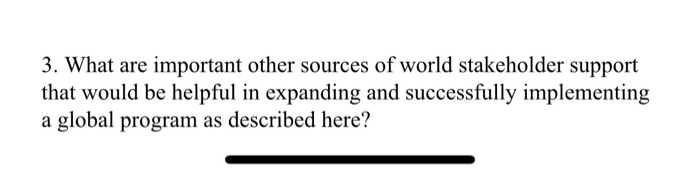
10:31 LTE Assignment 1.docx CASE 1.2. MNC (Multinational Corporation) Collaboration in Social Responsibility Although several high-profile MNCs such as Nike and Gap now work regularly with labor rights groups to monitor and correct worker abuses in their vast global networks of supplier factories, still only about 100 U.S. and European MNCs are involved. According to some sources, the vast majority of Western companies haven't followed suit even after a decade of activism on the issue. Likely the most troubling absence has been that of large retailers such as Walmart and Target, which increasingly control pricing power in overseas manufacturing. The persistent downward pressure posed by this pricing power in turn dictates how much money factories can spend on improving labor conditions But now with a new major collaborative project, Nike, Patagonia, Gap, and five other companies have joined forces with six leading anti-sweatshop groups to devise a single set of labor standards with a common factory-inspection system. The goal of this project, known as the Joint Initiative on Corporate Accountability and Workers' Rights, is to replace today's overlapping hodgepodge of approaches with something that is easier and cheaper to use and that might gain acceptance by more companies. After two years of discussion, the parties quietly signed an agreement in April 2005 to run a pilot project in several dozen Turkish factories that produce garments and other products for the eight companies. If it works, the thirty-month experiment would create the first commonly accepted global labor standards as well as a way to adhere to them. Essentially, this arrangement would provide a private sector counterpart to the ILO principles that most countries have long endorsed but rarely enforced. The rights groups hope that the Walmarts of the world will ultimately sign on, finding it easier to join in than to try to explain why they can't embrace such a commonly accepted standard. This collaborative experiment will try to address in a common- supplier market the problem of an MNC working with one supplier to establish appropriate worker safety and rights standards and then dropping that supplier in favor of a cheaper supplierwhich, however, likely lacks the same level of worker protections. The desired outcome is that common workforce guidelines will keep companies from undercutting one another on labor standards as they search for the cheapest supplier. However, there is still a long way to go in resolving contentious details associated with the project often the greatest conflict is found among the rights groups involved and it may well take the full thirty months of the project to sort out everything. A recently resolved controversy has been the acceptance to disclose supplier companies, often withheld in the past on the cla o n. There are also 10:31 LTE Assignment 1.docx This collaborative experiment will try to address in a common- supplier market the problem of an MNC working with one supplier to establish appropriate worker safety and rights standards and then dropping that supplier in favor of a cheaper supplier which, however, likely lacks the same level of worker protections. The desired outcome is that common workforce guidelines will keep companies from undercutting one another on labor standards as they search for the cheapest supplier. However, there is still a long way to go in resolving contentious details associated with the project-often the greatest conflict is found among the rights groups involved and it may well take the full thirty months of the project to sort out everything. A recently resolved controversy has been the acceptance to disclose supplier companies, often withheld in the past on the claim of proprietary information. There are also ongoing questions about the methodology of inspections. One existing model has very strict codes, but participating companies can choose which of their factories will be inspected and thus easily sidestep plants that are likely to show problems. Another approach has weaker codes but much stricter monitoring and no input from member companies on which plants are to be inspected. However, this approach audits only about 5 percent of a company's entire factory list each year. The most contentious detail to unravel is likely over wages, where there is an effort to adopt the idea of companies guaranteeing a "living wage" standard of pay rather than a local country's minimum wage, which may greatly lag behind the ability to support a reasonable living standard. 3. What are important other sources of world stakeholder support that would be helpful in expanding and successfully implementing a global program as described here









 Study Help