







Question: 10.Problem 10-10 (Capital Budgeting Methods) Project 5 has a cost of $10,000 and is expected to produce benets (cash flows) of $3,000 per year for
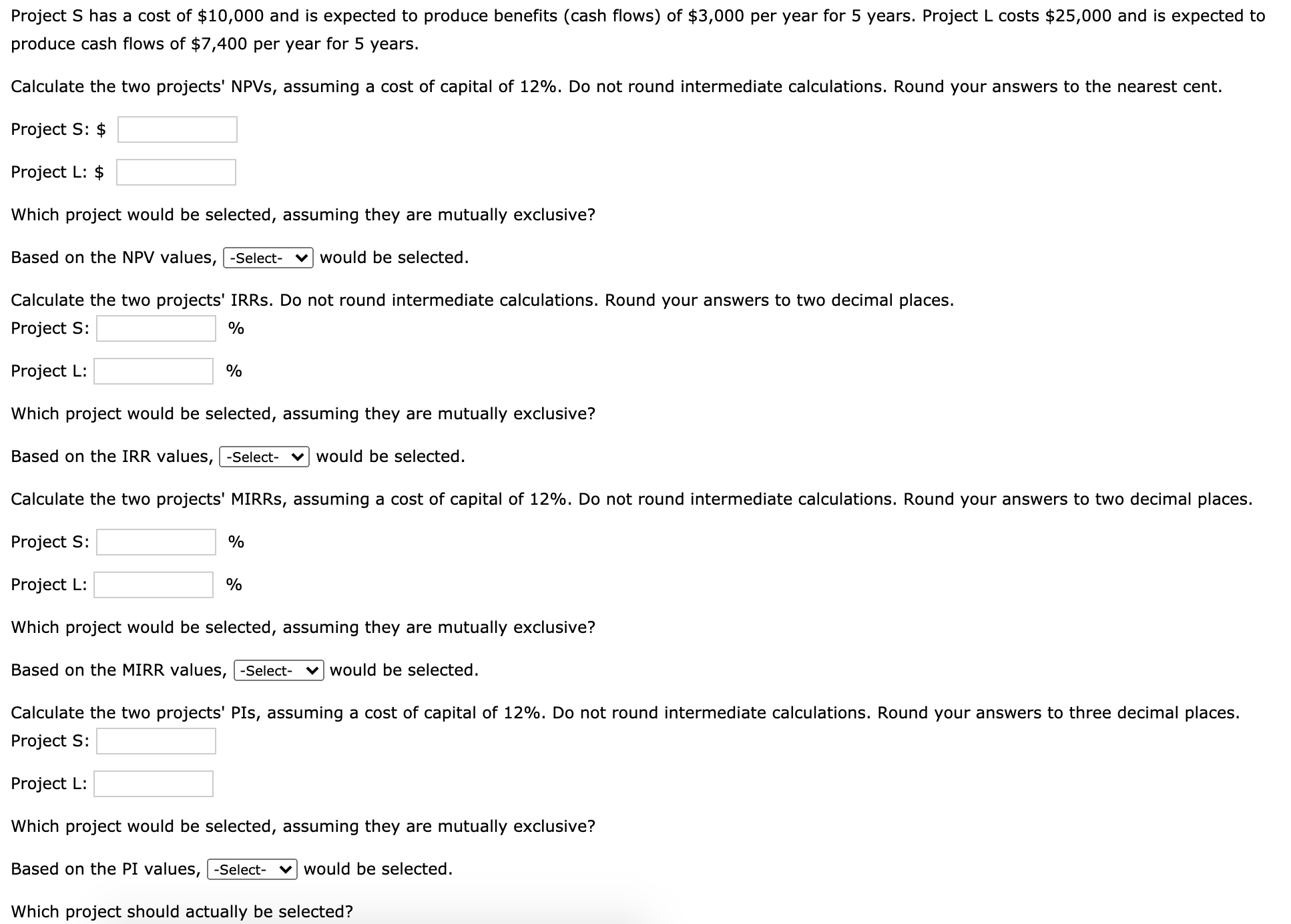
10.Problem 10-10 (Capital Budgeting Methods)
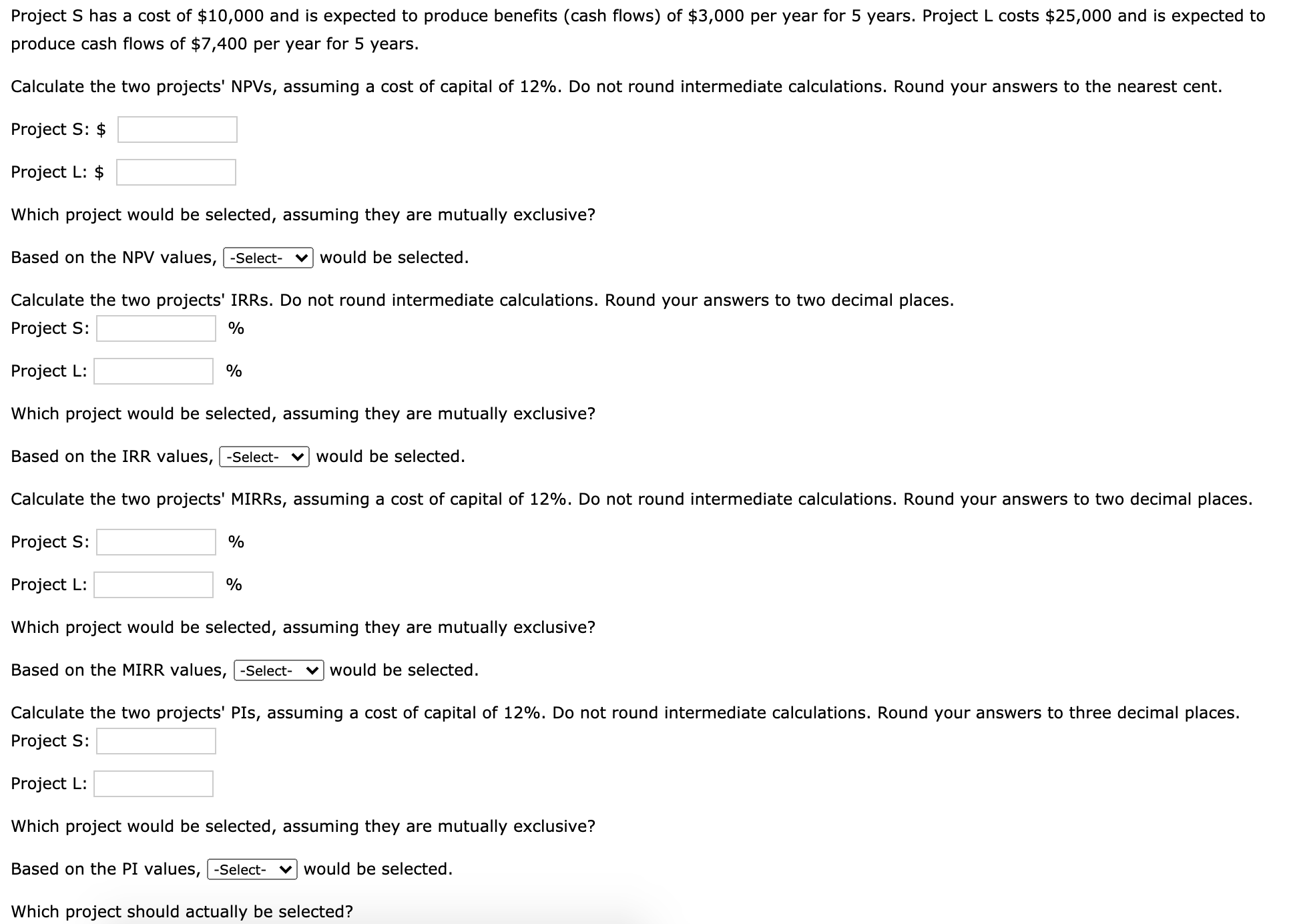
Project 5 has a cost of $10,000 and is expected to produce benets (cash flows) of $3,000 per year for 5 years. Project L costs $25,000 and is expected to produce cash flows of $7,400 per year for 5 years. Calculate the two projects' NPVs, assuming a cost of capital of 12%. Do not round intermediate calculations. Round your answers to the nearest cent. Project 5: $ Project L: 3; Which project would be selected, assuming they are mutually exclusive? Based on the NPV values, -Select- v would be selected. Calculate the two projects' IRRs. Do not round intermediate calculations. Round your answers to two decimal places. Project 5: % Project L: % Which project would be selected, assuming they are mutually exclusive? Based on the IRR values, would be selected. Calculate the two projects' MIRRs, assuming a cost of capital of 12%. Do not round intermediate calculations. Round your answers to two decimal places. Project 5: % Project L: % Which project would be selected, assuming they are mutually exclusive? Based on the MIRR values, -Select v would be selected. Calculate the two projects' PIs, assuming a cost of capital of 12%. Do not round intermediate calculations. Round your answers to three decimal places. Project 5: Project L: Which project would be selected, assuming they are mutually exclusive? Based on the PI values, would be selected. Which project should actually be selected
Step by Step Solution
There are 3 Steps involved in it

Get step-by-step solutions from verified subject matter experts
 Study Help