







Question: (( 12 papers ) ) for the project )) International Marketing Main Project Guidelines This is a full semester cultural, economic and marketing plan project
(( 12 papers ) ) for the project )) 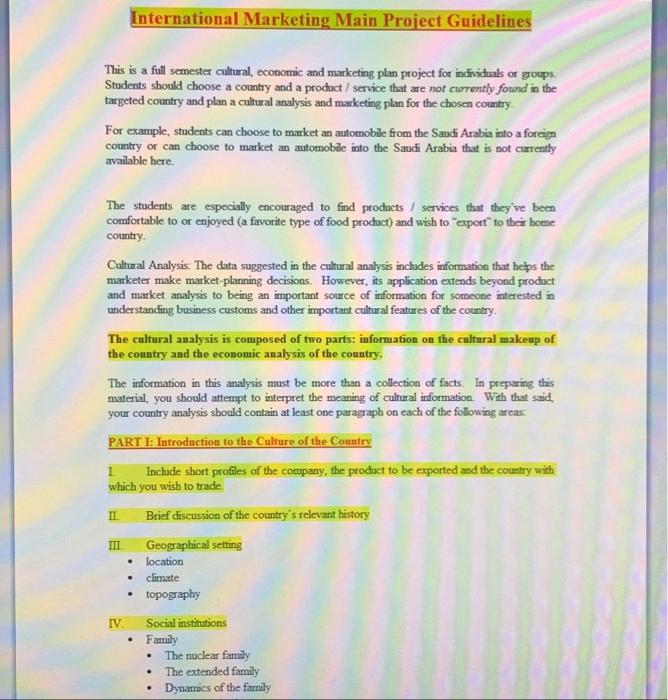
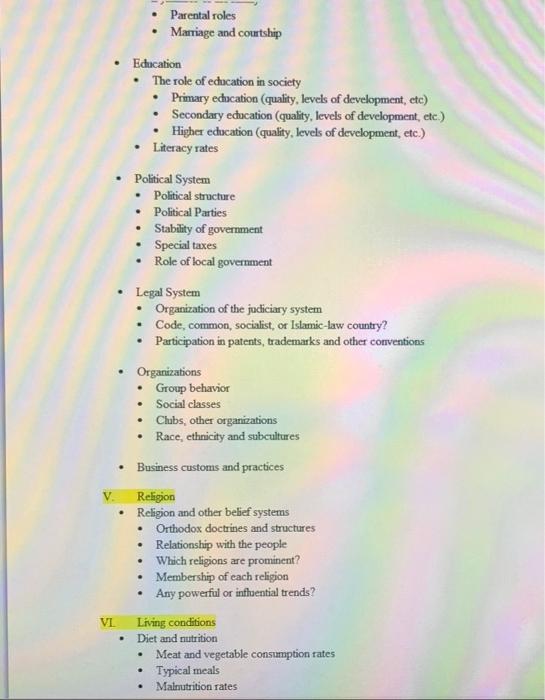
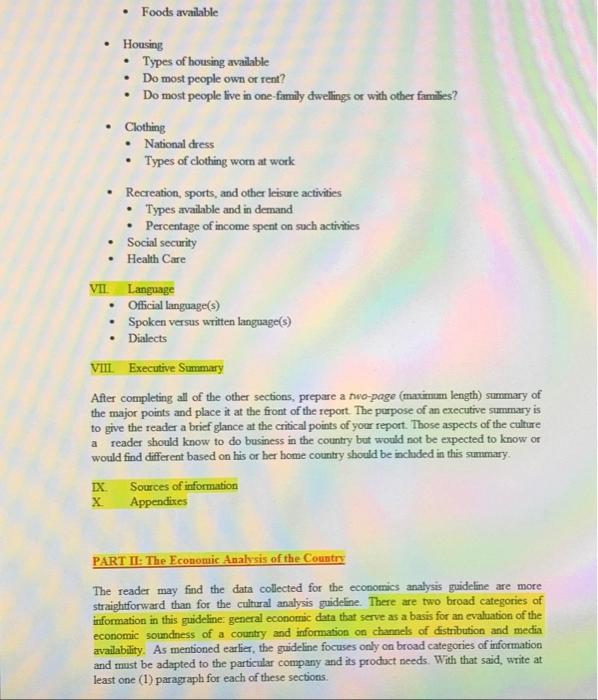
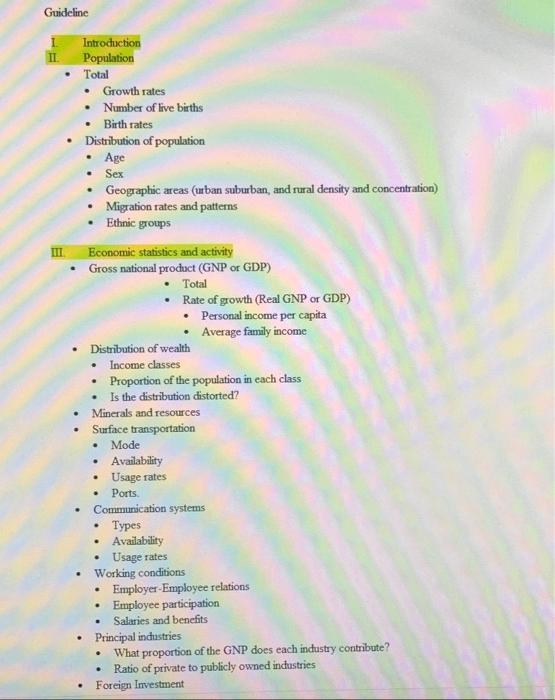
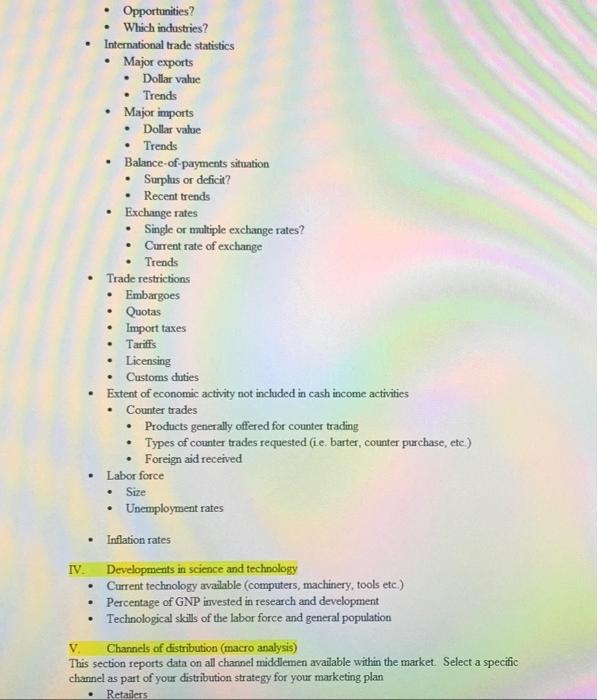
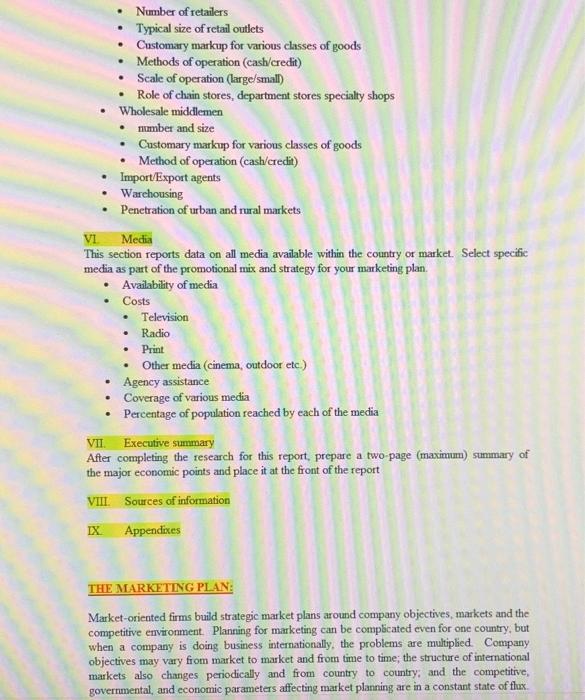
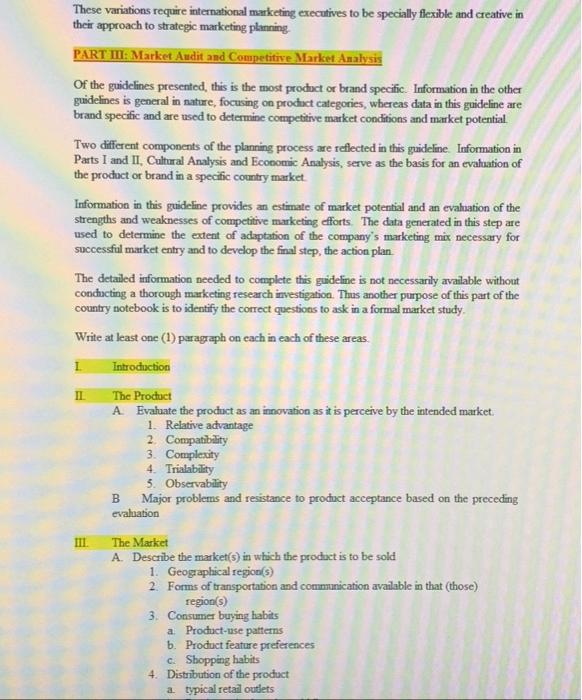
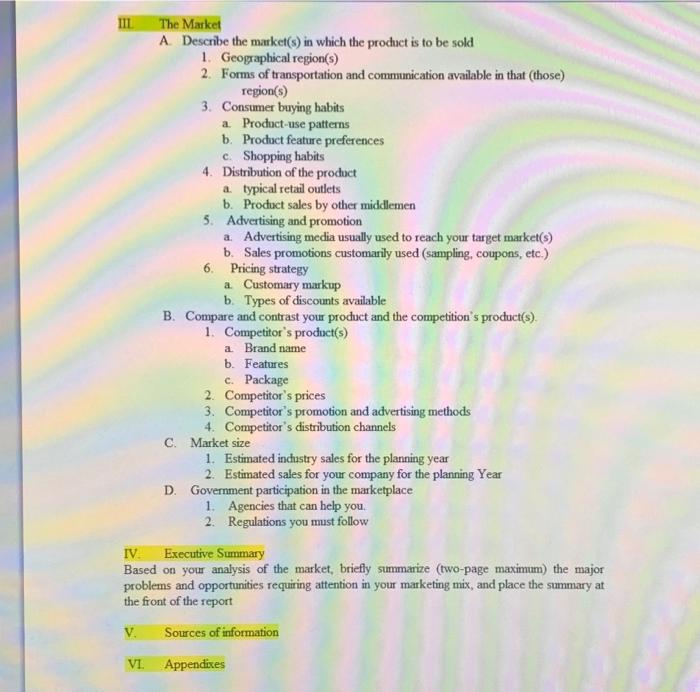
International Marketing Main Project Guidelines This is a full semester cultural, economic and marketing plan project for individuals or groups Students should choose a country and a product / service that are not currently found in the targeted country and plan a cultural analysis and marketing plan for the chosen country For example, students can choose to market an automobile from the Saudi Arabia into a foreign country or can choose to market an automobile into the Saudi Arabia that is not currently available here. The students are especially encouraged to find products/services that they've been comfortable to or enjoyed (a favorite type of food product) and wish to "export to their home country Cultural Analysis. The data suggested in the cultural analysis inchades information that helps the marketer make market-planning decisions. However, its application extends beyond product and market analysis to being an important source of information for someone interested in understanding business customs and other important cultural features of the country. The cultural analysis is composed of two parts: information on the cultural makeup of the country and the economic analysis of the country. The information in this analysis must be more than a collection of facts. In preparing this material, you should attempt to interpret the meaning of cultural information With that said, your country analysis should contain at least one paragraph on each of the following areas PART 1: Introduction to the Culture of the Country Include short profiles of the company, the product to be exported and the country with which you wish to trade II. III Brief discussion of the country's relevant history Geographical setting location climate topography . . IV. Social institutions Family The nuclear family The extended family Dynamics of the family . . Parental roles Marriage and courtship Education The role of education in society Primary echocation quality, levels of development, etc) Secondary education (quality, levels of development, etc.) Higher education (quality, levels of development, etc.) Literacy rates Political System Political structure Political Parties Stability of government Special taxes Role of local government . . . . Legal System Organization of the judiciary system Code, common, socialist, or Islamic-law country? Participation in patents, trademarks and other conventions Organizations Group behavior Social classes Clubs, other organizations Race, ethnicity and subcultures Business customs and practices Religion Religion and other belief systems Orthodox doctrines and structures Relationship with the people Which religions are prominent? Membership of each religion Any powerful or influential trends? Living conditions Diet and nutrition Meat and vegetable consumption rates Typical meals Malnutrition rates . VI . . Foods available Housing Types of housing available Do most people own or rent? Do most people live in one-family dwellings or with other families? Clothing National dress Types of clothing worn at work Recreation, sports, and other leisure activities Types available and in demand Percentage of income spent on such activities Social security Health Care . VIL Language Official language(s) Spoken versus written language(s) Dialects VII. Executive Summary After completing all of the other sections, prepare a tvo-page (maximum length) summary of the major points and place it at the front of the report. The purpose of an executive summary is to give the reader a brief glance at the critical points of your report. Those aspects of the culture reader should know to do business in the country but would not be expected to know or would find different based on his or her home country should be included in this summary: EX Sources of information X Appendixes a PART II: The Economic Analysis of the Country The reader may find the data collected for the economics analysis guideline are more straightforward than for the cultural analysis guideline. There are two broad categories of information in this guideline: general economic data that serve as a basis for an evaluation of the economic soundness of a country and information on channels of distribution and media availability. As mentioned earlier the guideline focuses only on broad categories of information and must be adapted to the particular company and its product needs. With that said, write at least one (1) paragraph for each of these sections. Guideline 1 II . Introduction Population Total Growth rates Number of live births Birth rates Distribution of population Age Sex Geographic areas (mban suburban, and rural density and concentration) Migration rates and patterns Ethnic groups Economic statistics and activity Gross national product (GNP or GDP) Total Rate of growth (Real GNP or GDP) Personal income per capita Average family income Distribution of wealth Income classes Proportion of the population in each class Is the distribution distorted? Minerals and resources Surface transportation Mode Availability Usage rates Ports Communication systems Types Availability Usage rates Working conditions Employer-Employee relations Employee participation Salaries and benefits Principal industries What proportion of the GNP does each industry contribute? Ratio of private to publicly owned industries Foreign Investment . . . . . Opportunities? Which inclustries? International trade statistics Major exports Dollar value Trends Major imports Dollar value Trends Balance-of-payments situation Surplus or deficit? Recent trends Exchange rates Single or multiple exchange rates? Current rate of exchange Trends Trade restrictions Embargoes Quotas Import taxes Tariffs Licensing Customs duties Extent of economic activity not included in cash income activities Counter trades Products generally offered for counter trading Types of counter trades requested (ie barter, counter purchase, etc.) Foreign aid received Labor force Size Unemployment rates . Inflation rates IV Developments in science and technology Current technology available (computers, machinery, tools etc.) Percentage of GNP invested in research and development Technological skills of the labor force and general population V Channels of distribution (macro analysis) This section reports data on all channel middlemen available within the market. Select a specific channel as part of your distribution strategy for your marketing plan Retailers . . . . Number of retailers Typical size of retail outlets Customary markup for various classes of goods Methods of operation (cash/credit) Scale of operation (large/small Role of chain stores, department stores specialty shops Wholesale middlemen number and size Customary markup for various classes of goods Method of operation (cash/eredit) Import/Export agents Warehousing Penetration of urban and rural markets VI Media This section reports data on all media available within the country of market. Select specific media as part of the promotional mix and strategy for your marketing plan. Availability of media Costs Television Radio Print Other media (cinema, outdoor etc.) Agency assistance Coverage of various media Percentage of population reached by each of the media VII. Executive summary After completing the research for this report, prepare a two-page (maximum) summary of the major economic points and place it at the front of the report VIII. Sources of information IX Appendixes . . THE MARKETING PLAN: Market-oriented firms build strategic market plans around company objectives, markets and the competitive environment Planning for marketing can be complicated even for one country, but when a company is doing business internationally, the problems are multiplied Company objectives may vary from market to market and from time to time; the structure of international markets also changes periodically and from country to country, and the competitive, governmental and economic parameters affecting market planning are in a constant state of flux These variations require international marketing executives to be specially flexible and creative in their approach to strategic marketing planning PART M: Market Audit and Competitive Market Analysis of the guidelines presented, this is the most product or brand specific. Information in the other guidelines is general in nature, focusing on product categories, whereas data in this guideline are brand specific and are used to determine competitive market conditions and market potential Two different components of the planning process are reflected in this guideline. Information in Parts I and II, Cultural Analysis and Economic Analysis, serve as the basis for an evaluation of the product or brand in a specific country market Information in this guideline provides an estimate of market potential and an evaluation of the strengths and weaknesses of competitive marketing efforts. The data generated in this step are used to determine the extent of adaptation of the company's marketing mix necessary for successful market entry and to develop the final step, the action plan The detailed information needed to complete this guideline is not necessarily available without conducting a thorough marketing research investigation. Thus another purpose of this part of the country notebook is to identify the correct questions to ask in a formal market study. Write at least one (1) paragraph on each in each of these areas 1 Introduction The Product A Evaluate the prochact as an imovation as it is perceive by the intended market 1. Relative advantage 2. Compatibility 3. Complexity 4. Trialability 5. Observability Major problems and resistance to product acceptance based on the preceding evaluation II B 11. TIL The Market A Describe the market(s) in which the product is to be sold 1. Geographical region(s) 2. Forms of transportation and communication available in that (those) regions 3. Consumer buying habits a Prochuct-use patterns b. Product feature preferences c. Shopping habits 4. Distribution of the product a typical retail outlets The Market A Describe the market(s) in which the prochoct is to be sold 1. Geographical region(s) 2. Forms of transportation and communication available in that those) region(s) 3. Consumer buying habits a. Product-use patterns b. Prochact feature preferences c. Shopping habits 4. Distribution of the product a typical retail outlets b. Product sales by other middlemen 5. Advertising and promotion a Advertising media usually used to reach your target market() b. Sales promotions customarily used (sampling, coupons, etc.) 6. Pricing strategy a Customary markup b. Types of discounts available B. Compare and contrast your product and the competition's product(s). 1. Competitor's product(s) a Brand name b. Features c. Package 2. Competitor's prices 3. Competitor's promotion and advertising methods 4. Competitor's distribution channels C. Market size 1. Estimated industry sales for the planning year 2. Estimated sales for your company for the planning Year D. Government participation in the marketplace 1. Agencies that can help you. 2. Regulations you must follow IV. Executive Summary Based on your analysis of the market, briefly summarize (two-page maximum) the major problems and opportunities requiring attention in your marketing mix, and place the summary at the front of the report V. Sources of information VI. Appendixes
Step by Step Solution
There are 3 Steps involved in it
1 Expert Approved Answer
Step: 1 Unlock

Question Has Been Solved by an Expert!
Get step-by-step solutions from verified subject matter experts
Step: 2 Unlock
Step: 3 Unlock
 Study Help