







Question: 15. A doubly linked list is one in which each node points not just to the next node in the linked list, but also
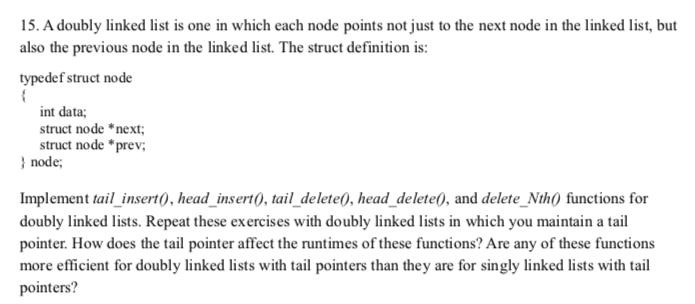
15. A doubly linked list is one in which each node points not just to the next node in the linked list, but also the previous node in the linked list. The struct definition is: typedef struct node int data; struct node *next; struct node *prev; node; Implement tail_insert(), head_insert(), tail_delete(), head_delete(), and delete Nth() functions for doubly linked lists. Repeat these exercises with doubly linked lists in which you maintain a tail pointer. How does the tail pointer affect the runtimes of these functions? Are any of these functions more efficient for doubly linked lists with tail pointers than they are for singly linked lists with tail pointers?
Step by Step Solution
There are 3 Steps involved in it

Get step-by-step solutions from verified subject matter experts
 Study Help