







Question: 16. The size declarator must be a(n) with a value greater than 17. Each element of an array is accessed and indexed by a number
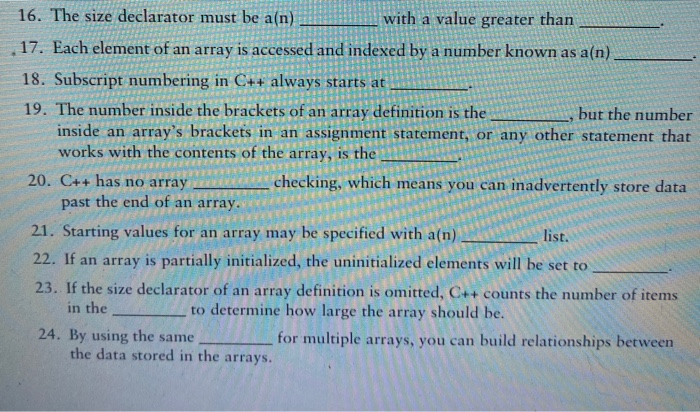
16. The size declarator must be a(n) with a value greater than 17. Each element of an array is accessed and indexed by a number known as a(n). 18. Subscript numbering in C++ always starts at 19. The number inside the brackets of an array definition is the , but the number inside an array's brackets in an assignment statement, or any other statement that works with the contents of the array, is the INTER 20. C++ has no array checking, which means you can inadvertently store data past the end of an array, 21. Starting values for an array may be specified with an) list. 22. If an array is partially initialized, the uninitialized elements will be set to 23. If the size declarator of an array definition is omitted, C++ counts the number of items in the to determine how large the array should be 24. By using the same for multiple arrays, you can build relationships between the data stored in the arrays
Step by Step Solution
There are 3 Steps involved in it

Get step-by-step solutions from verified subject matter experts
 Study Help