







Question: 1a. According to the case, which of the following characterizes Whole Foods organization before Amazon entered the picture? a)centralized decision making at the level of
1a. According to the case, which of the following characterizes Whole Foods organization before Amazon entered the picture?
a)centralized decision making at the level of a corporate head office
b)a very simple organizational structure
c)an organizational structure in which large amounts of work are done by partner companies
d)decentralized decision making at the level of individual stores
e) a very complicated organizational structure
1b) Which of the following things Amazon did, as explained in the case, most likely contributed to the new environment being incredibly stressful and negative for some Whole Foods employees?
a)Amazon and its employees utilized demanding performance management practices.
b)It also used its strengths in data and data analysis to determine appropriate product mixes and bring efficiencies to many processes.
c)The hopes and goals of the merger were to bring Amazons efficiencies and operating prowess to Whole Foods unique approach and loyal customers
d)In addition to plastering its logo everywhere in Whole Foods stores
e)In the eyes of Amazon, customers were faceless digital profiles of purchasing history and preferences.
1c) Which of the following best represents what Amazon hoped would happen as a result of the merger?
a)increase marketing expenditures for both companies
b)use Amazons efficiencies and operational advantages to Whole Foods, enabling it to grow
c)generate publicity for Whole Foods
d)merge Whole Foods brand image with that of Amazon
e)reduce Amazons business units to a selective few
1d) Which of the following best represents organizational climate for Whole Foods employees after the merger?
a)the degree to which Amazon allows Whole Foods to operate independently
b)Whole Foods internal forecast about future profits and revenues
c)changes to Whole Foods organizational structure as a result of the merger
d)Whole Foods employees beliefs about the organizations new post-merger policies, practices, and procedures
e)Whole Foods employees attitudes about their colleagues
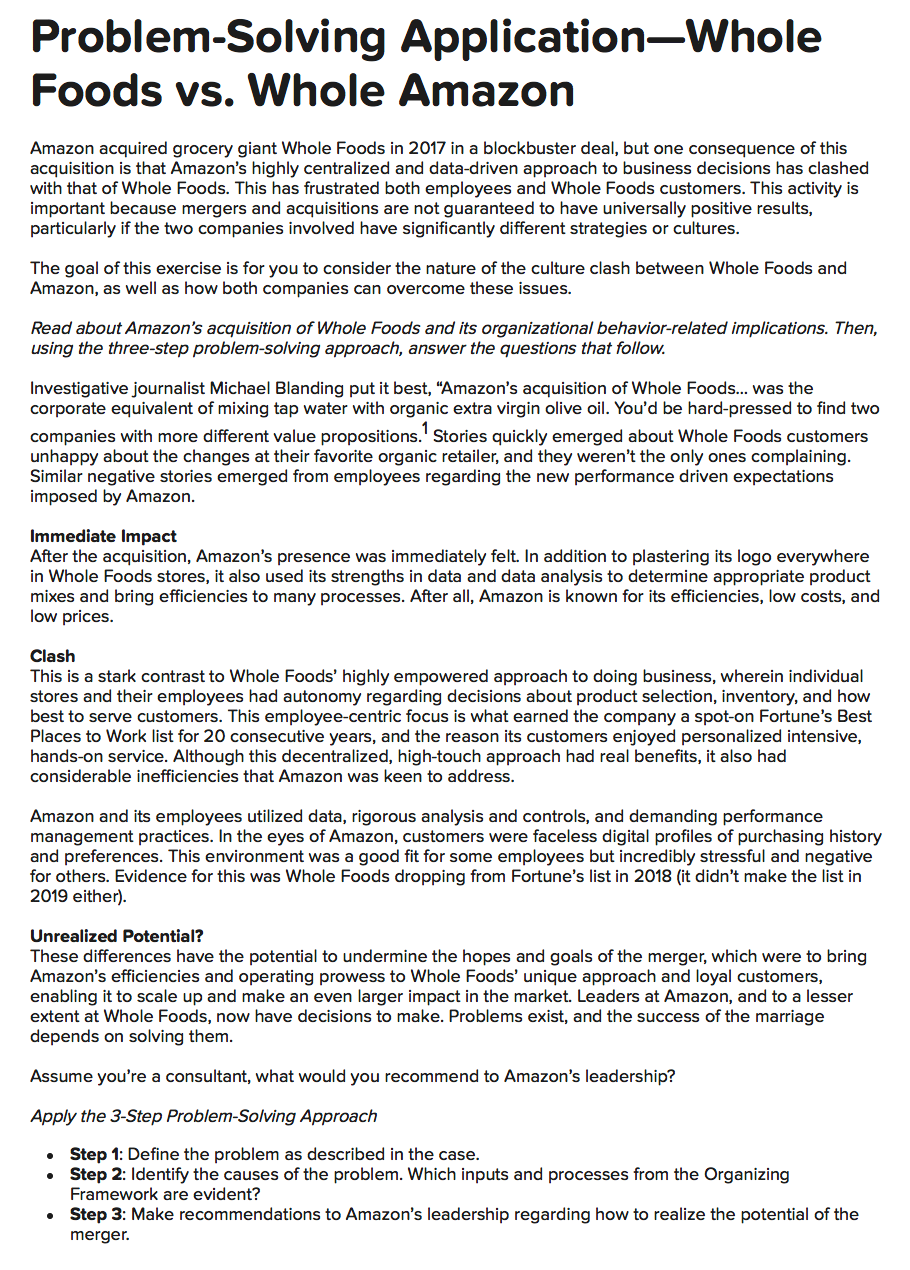
Problem Solving ApplicationWhole Foods vs. Whole Amazon Amazon acquired grocery giant Whole Foods in 2017 in a blockbuster deal, but one consequence of this acquisition is that Amazon's highly centralized and data-driven approach to business decisions has clashed with that of Whole Foods. This has frustrated both employees and Whole Foods customers. This activity is important because mergers and acquisitions are not guaranteed to have universally positive results, particularly if the two companies involved have significantly different strategies or cultures. The goal of this exercise is for you to consider the nature of the culture clash between Whole Foods and Amazon, as well as how both companies can overcome these issues. Read about Amazon's acquisition of Whole Foods and its organizational behavior-related implications. Then, using the three-step problem-solving approach, answer the questions that follow. Investigative journalist Michael Blanding put it best, "Amazon's acquisition of Whole Foods... was the corporate equivalent of mixing tap water with organic extra virgin olive oil. You'd be hard-pressed to find two companies with more different value propositions.' Stories quickly emerged about Whole Foods customers unhappy about the changes at their favorite organic retailer, and they weren't the only ones complaining. Similar negative stories emerged from employees regarding the new performance driven expectations imposed by Amazon. Immediate Impact After the acquisition, Amazon's presence was immediately felt. In addition to plastering its logo everywhere in Whole Foods stores, it also used its strengths in data and data analysis to determine appropriate product mixes and bring efficiencies to many processes. After all, Amazon is known for its efficiencies, low costs, and low prices. Clash This is a stark contrast to Whole Foods' highly empowered approach to doing business, wherein individual stores and their employees had autonomy regarding decisions about product selection, inventory, and how best to serve customers. This employee-centric focus is what earned the company a spot-on Fortune's Best Places to Work list for 20 consecutive years, and the reason its customers enjoyed personalized intensive, hands-on service. Although this decentralized, high-touch approach had real benefits, it also had considerable inefficiencies that Amazon was keen to address. Amazon and its employees utilized data, rigorous analysis and controls, and demanding performance management practices. In the eyes of Amazon, customers were faceless digital profiles of purchasing history and preferences. This environment was a good fit for some employees but incredibly stressful and negative for others. Evidence for this was Whole Foods dropping from Fortune's list in 2018 (it didn't make the list in 2019 either). Unrealized Potential? These differences have the potential to undermine the hopes and goals of the merger, which were to bring Amazon's efficiencies and operating prowess to Whole Foods' unique approach and loyal customers, enabling it to scale up and make an even larger impact in the market. Leaders at Amazon, and to a lesser extent at Whole Foods, now have decisions to make. Problems exist, and the success of the marriage depends on solving them. Assume you're a consultant, what would you recommend to Amazon's leadership? Apply the 3-Step Problem-Solving Approach Step 1: Define the problem as described in the case. Step 2: Identify the causes of the problem. Which inputs and processes from the Organizing Framework are evident? Step 3: Make recommendations to Amazon's leadership regarding how to realize the potential of the mergerStep by Step Solution
There are 3 Steps involved in it

Get step-by-step solutions from verified subject matter experts
 Study Help