







Question: 1a. Given the descriptions just given, do you consider yourself to be equity sensitive? In other words, do you believe that employees should be rewarded
1a. Given the descriptions just given, do you consider yourself to be equity sensitive? In other words, do you believe that employees should be rewarded relative to their contributions?
1b. Explain why overpayment satisfies employees regardless of whether they are equity sensitive or not.
1c. Why is it important for a manager to consider the equity sensitivity of their followers?
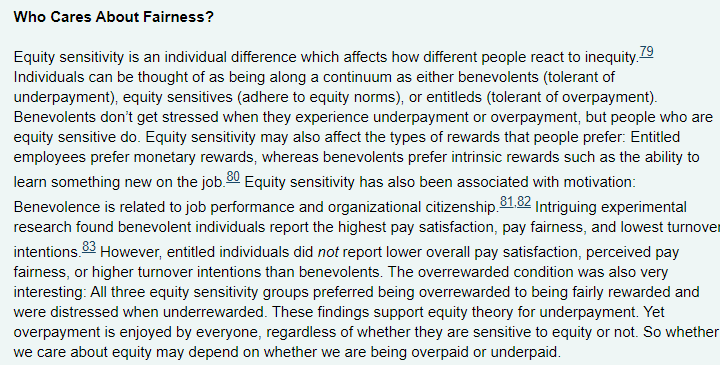
Who Cares About Fairness? Equity sensitivity is an individual difference which affects how different people react to inequity.79 Individuals can be thought of as being along a continuum as either benevolents (tolerant of underpayment), equity sensitives (adhere to equity norms), or entitleds (tolerant of overpayment). Benevolents don't get stressed when they experience underpayment or overpayment, but people who are equity sensitive do. Equity sensitivity may also affect the types of rewards that people prefer: Entitled employees prefer monetary rewards, whereas benevolents prefer intrinsic rewards such as the ability to learn something new on the job. 80 Equity sensitivity has also been associated with motivation: Benevolence is related to job performance and organizational citizenship. 81,82 Intriguing experimental research found benevolent individuals report the highest pay satisfaction, pay fairness, and lowest turnover intentions. 83 However, entitled individuals did not report lower overall pay satisfaction, perceived pay fairness, or higher turnover intentions than benevolents. The overrewarded condition was also very interesting: All three equity sensitivity groups preferred being overrewarded to being fairly rewarded and were distressed when underrewarded. These findings support equity theory for underpayment. Yet overpayment is enjoyed by everyone, regardless of whether they are sensitive to equity or not. So whether we care about equity may depend on whether we are being overpaid or underpaidStep by Step Solution
There are 3 Steps involved in it
1 Expert Approved Answer
Step: 1 Unlock

Question Has Been Solved by an Expert!
Get step-by-step solutions from verified subject matter experts
Step: 2 Unlock
Step: 3 Unlock
 Study Help