



Question: 1)identify all the pertinent issues that need to be addressed ? 2) purpose an action plan and set of recommendations for addressed issues Kase Study

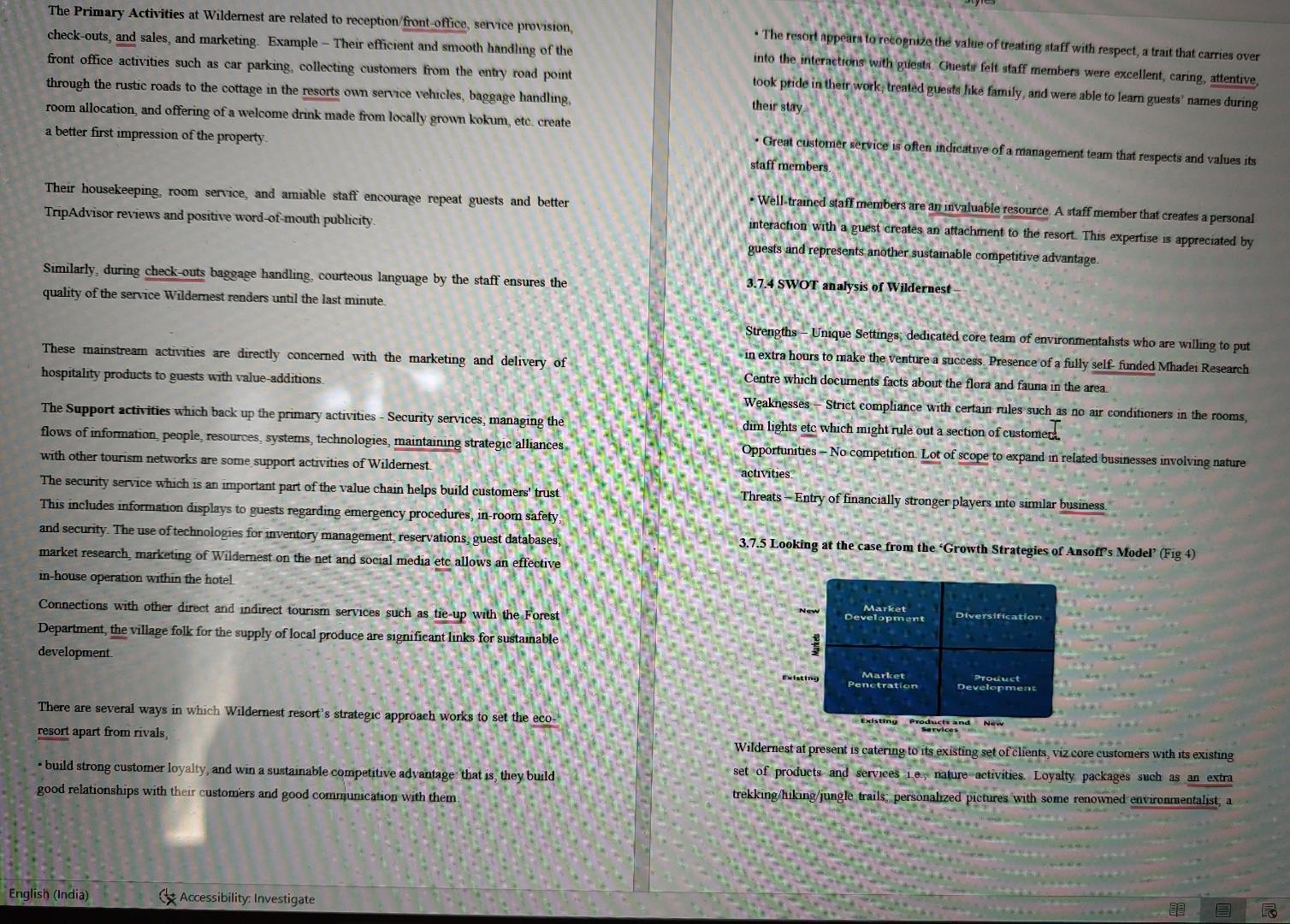
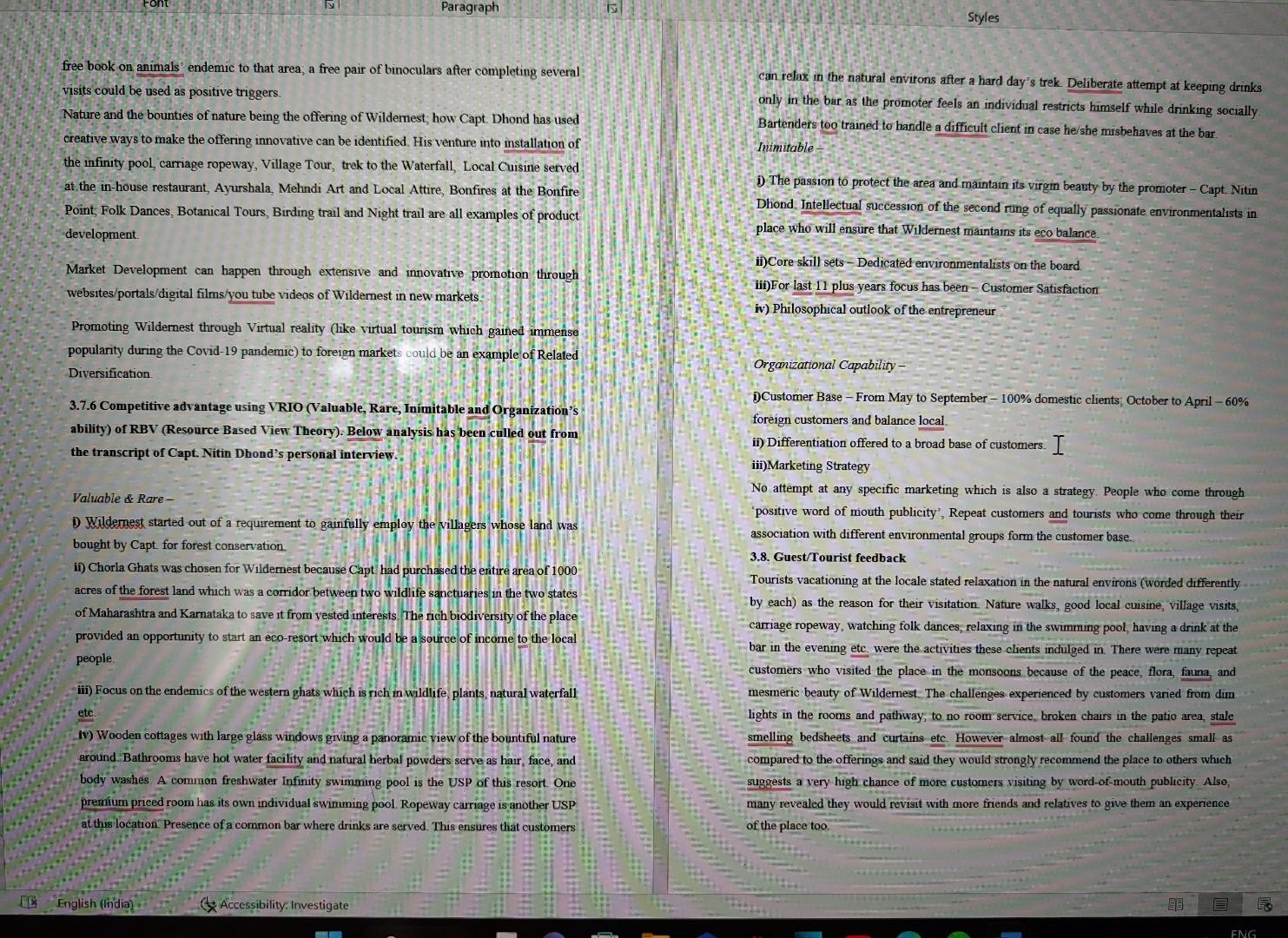
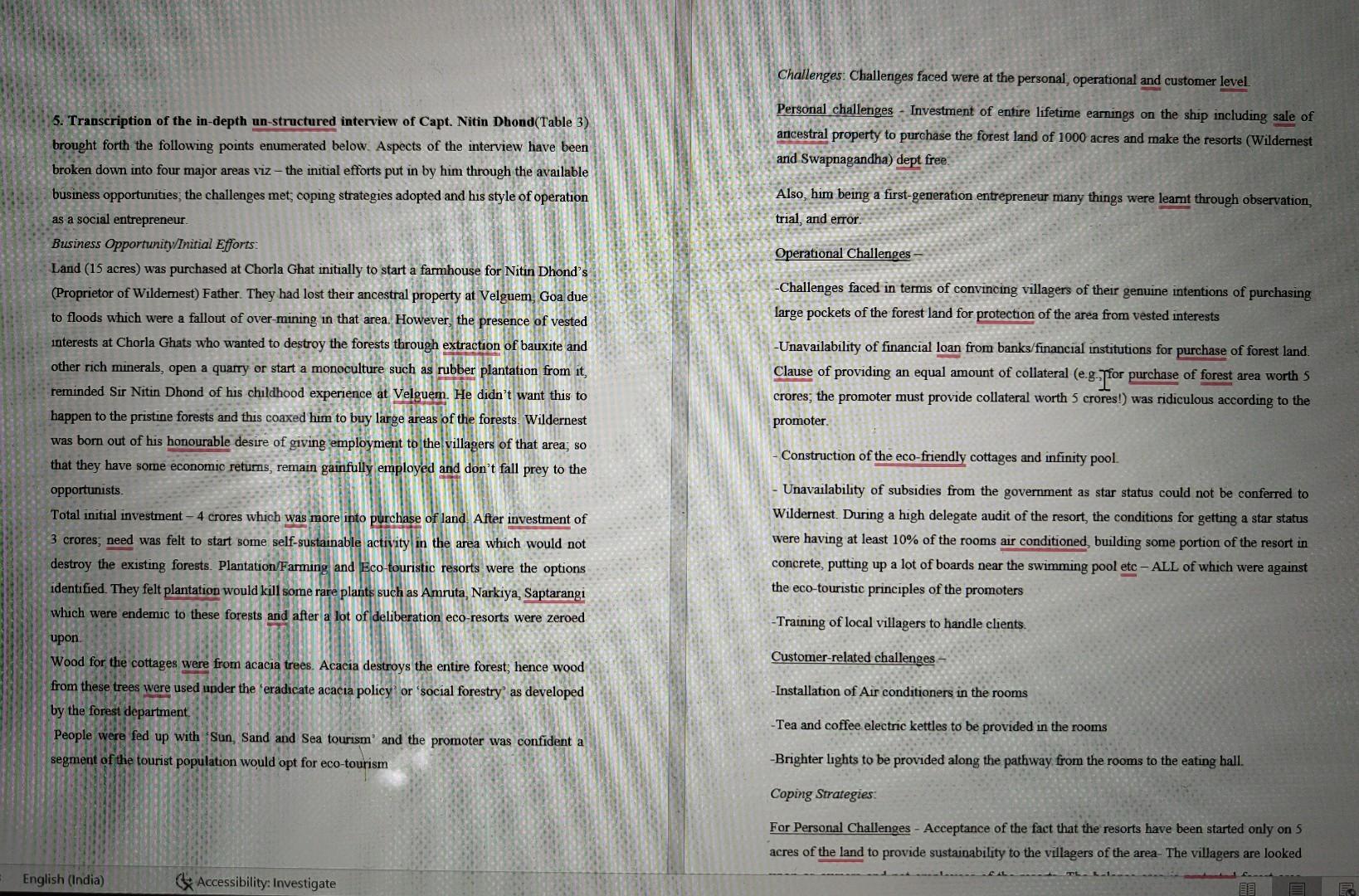
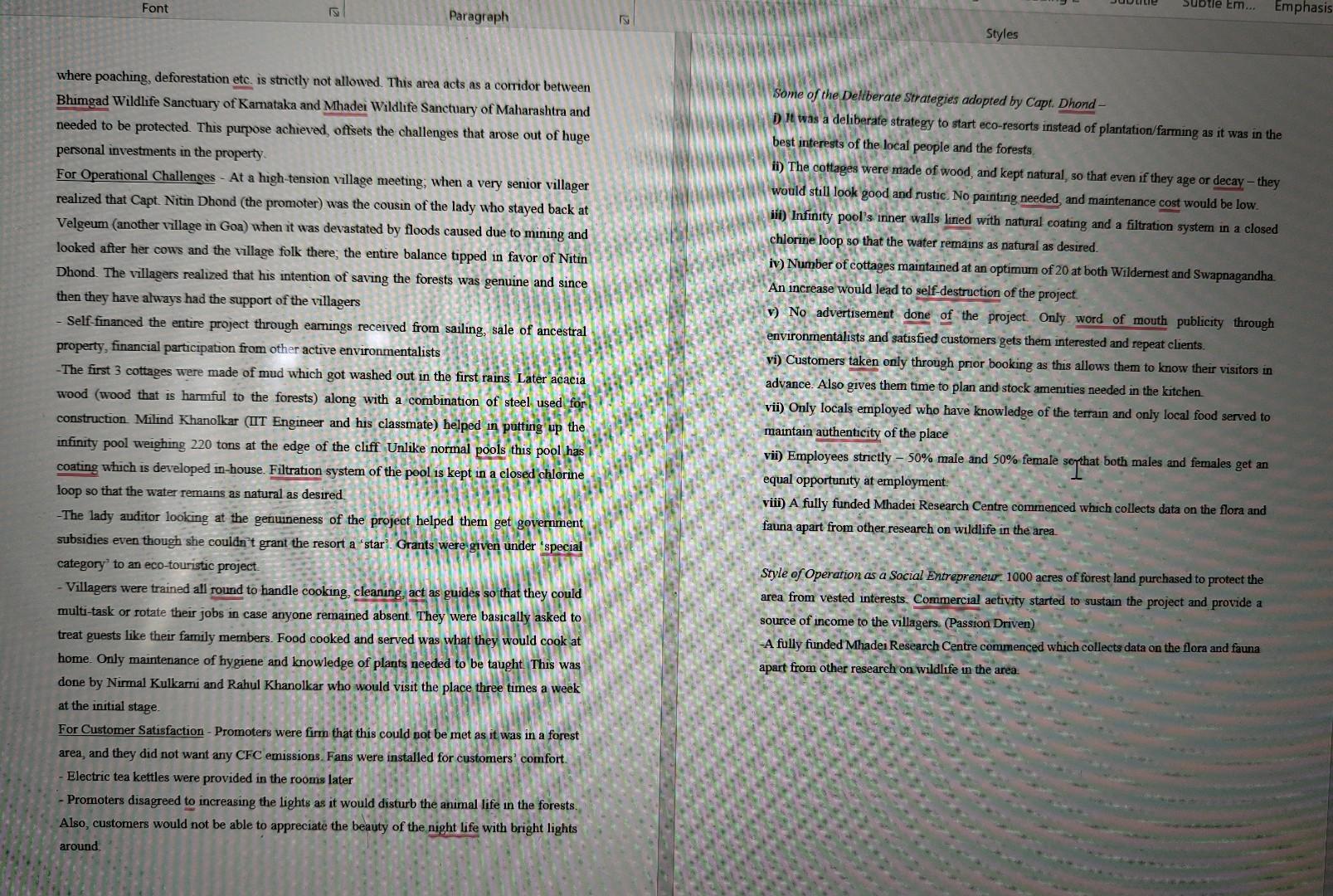
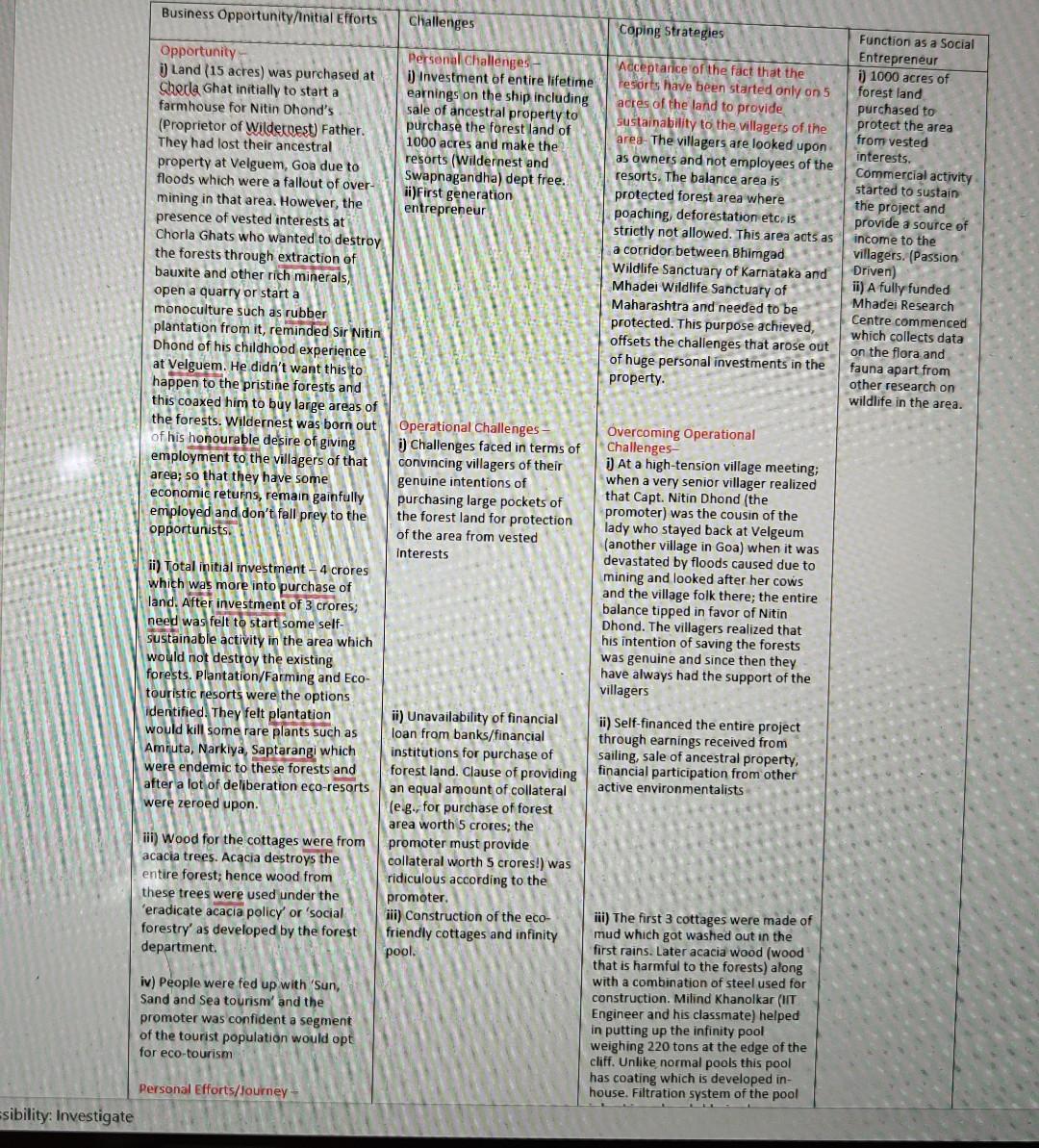
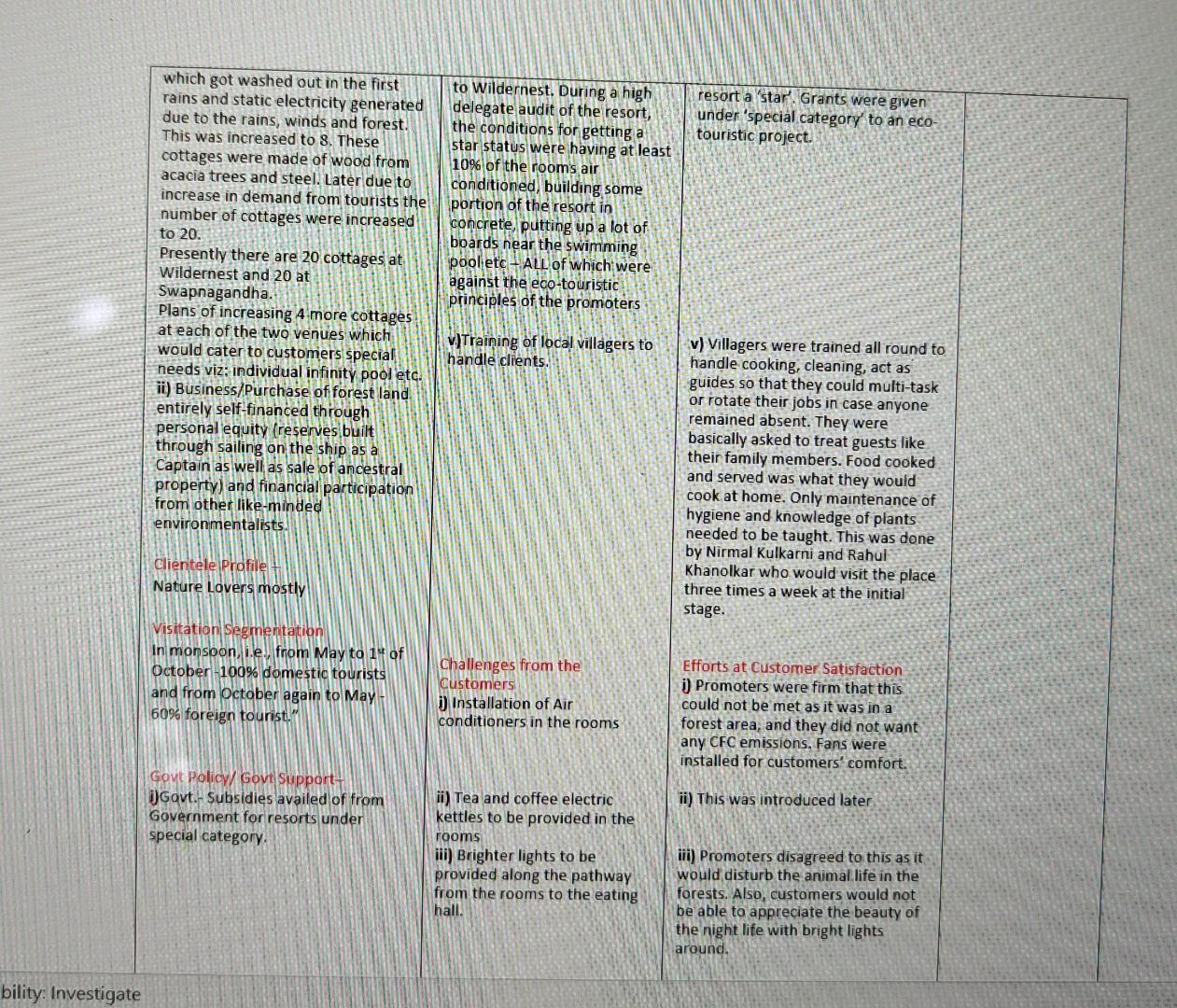
1)identify all the pertinent issues that need to be addressed ? 2) purpose an action plan and set of recommendations for addressed issues
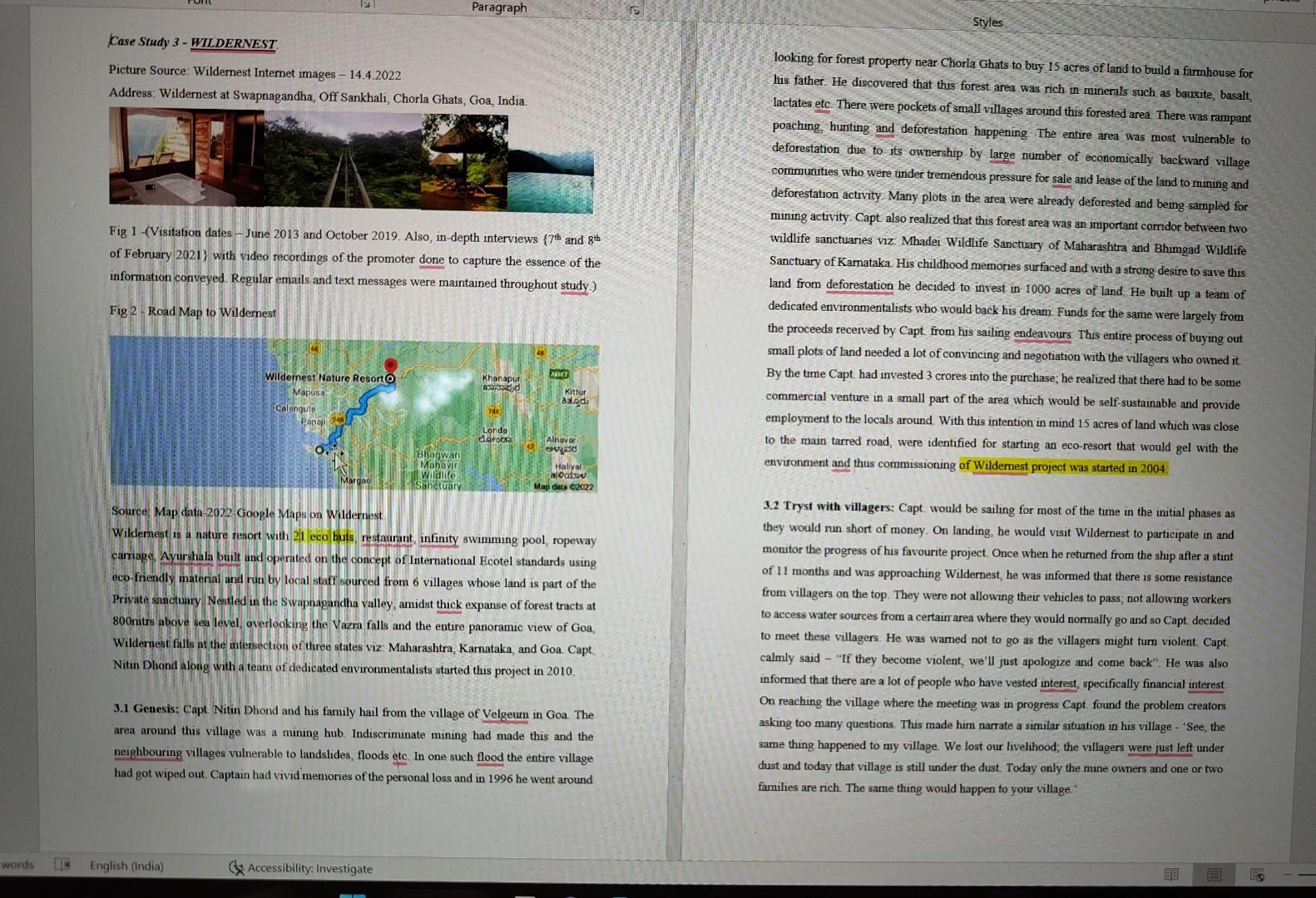
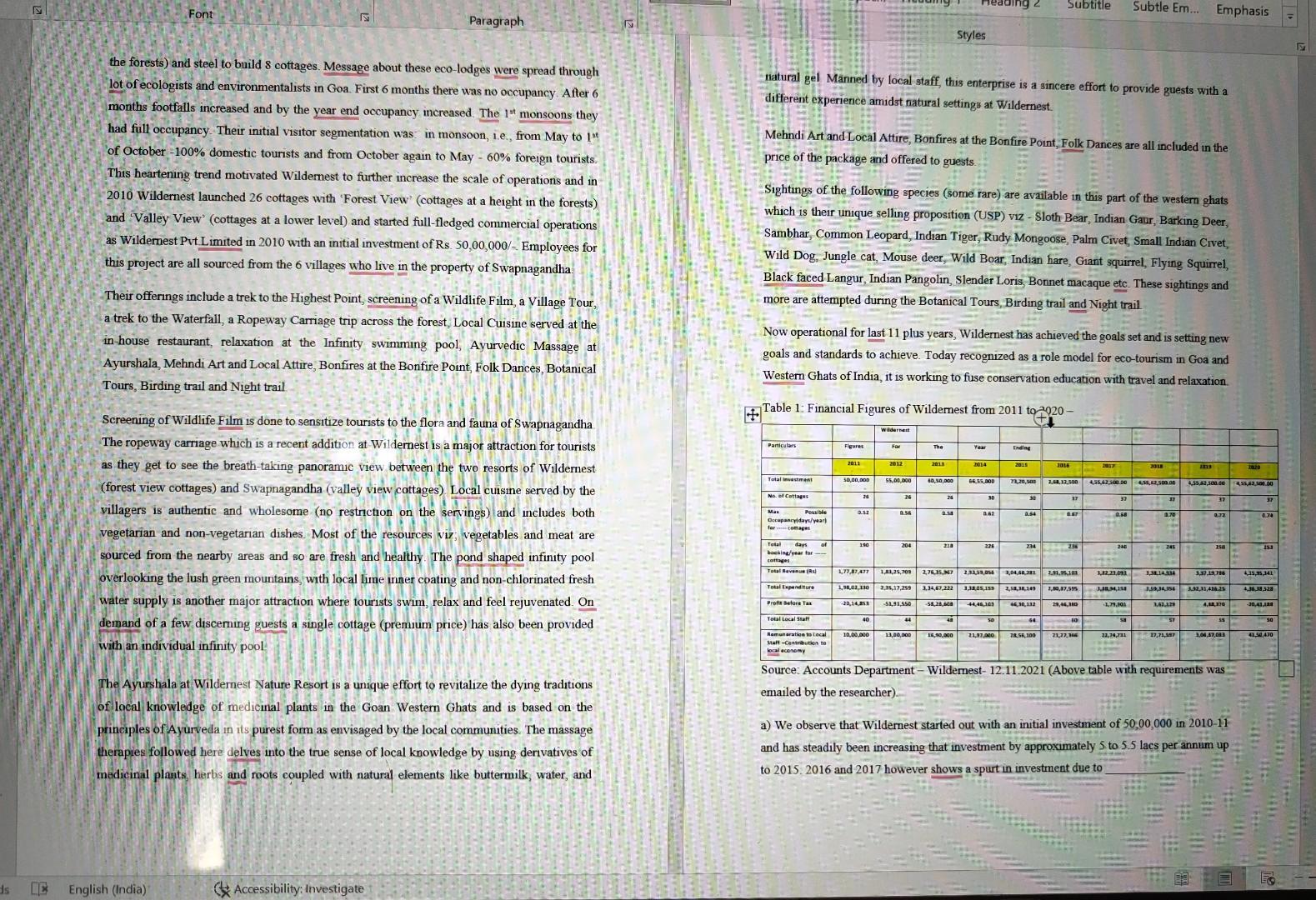
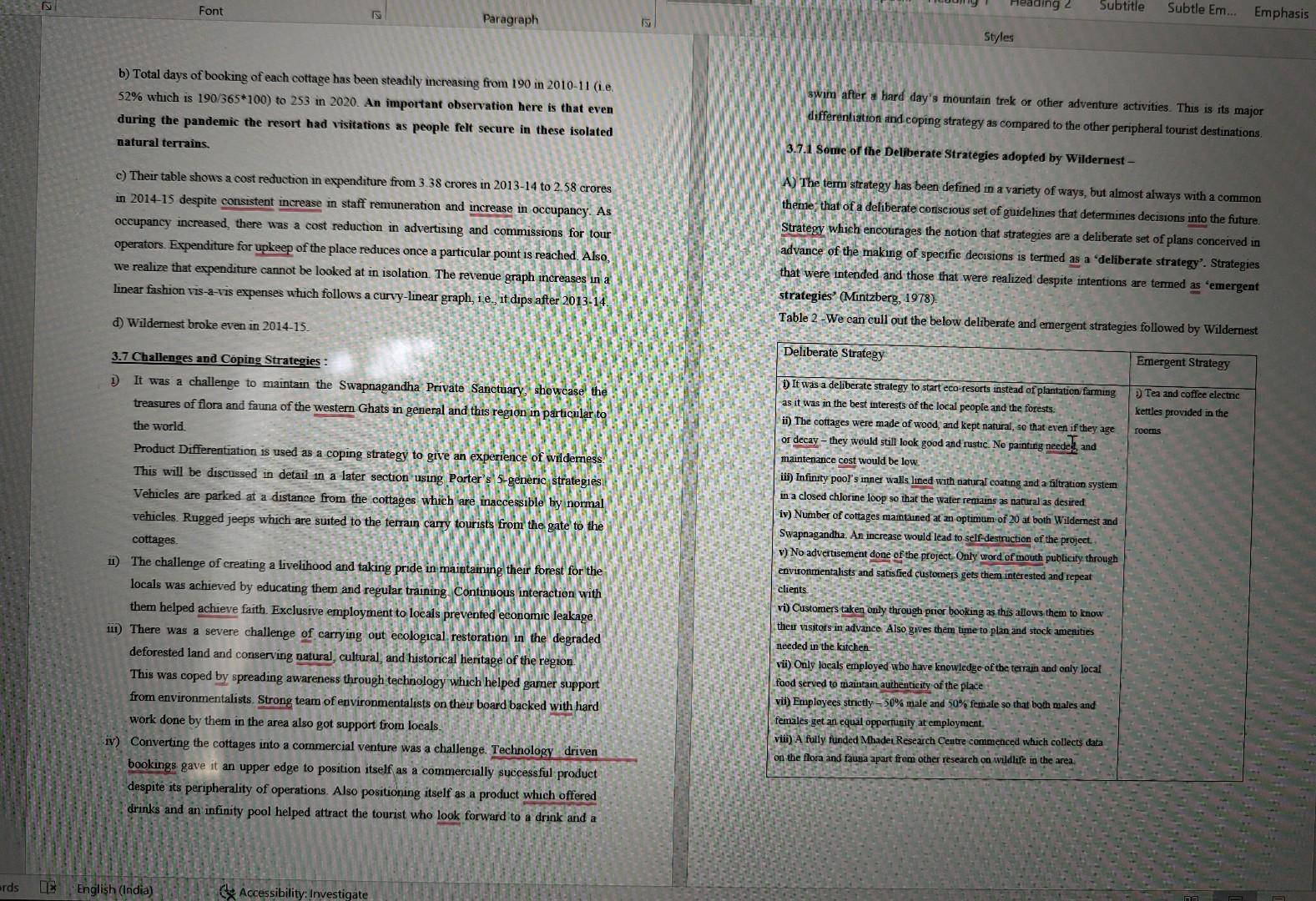
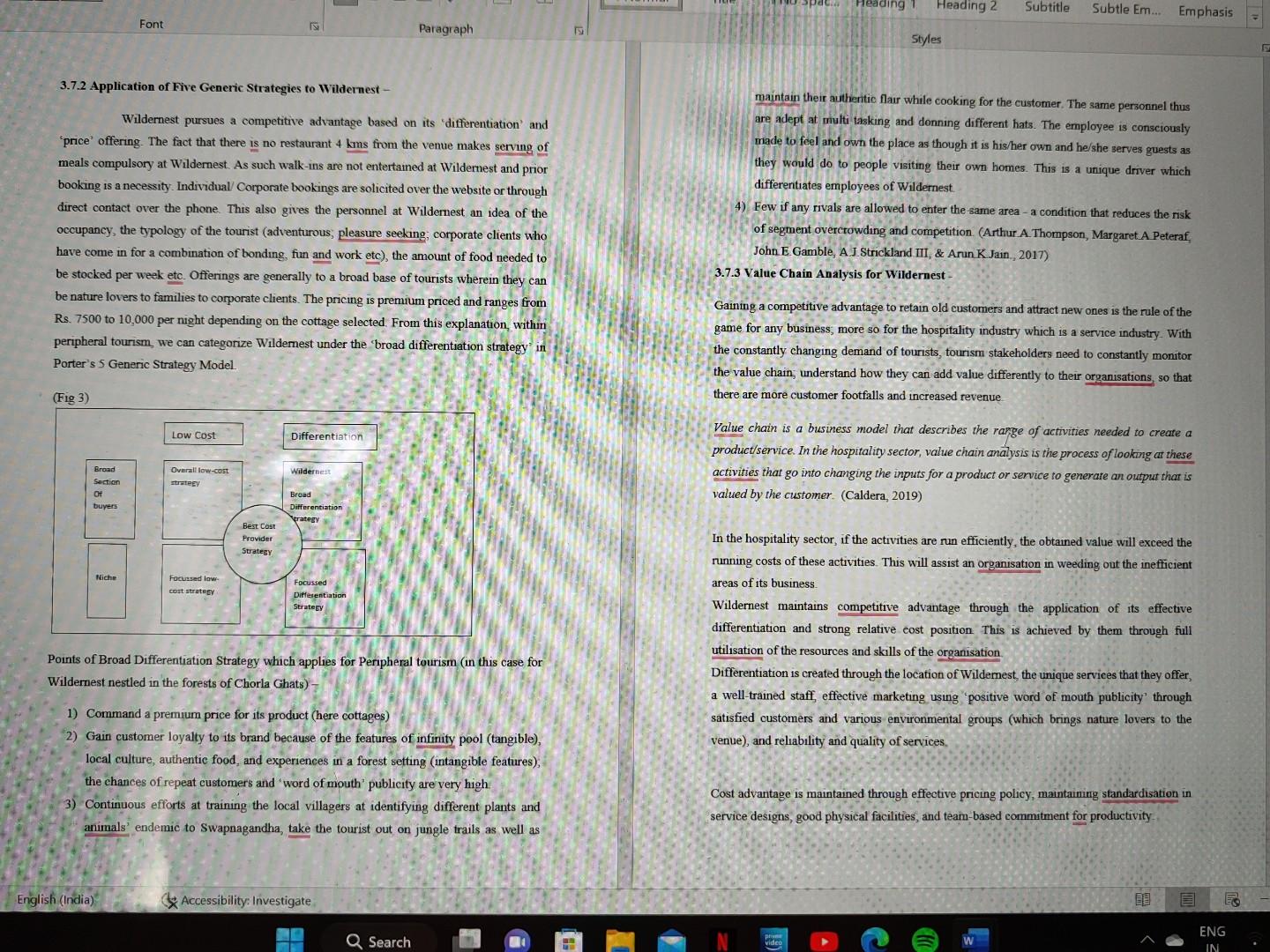
Kase Study 3 - WILDERNEST. Picture Source: Wildernest Internet images - 14.4.2022 looking for forest property near Chorla Ghats to buy 15 acres of land to build a farmhouse for Address: Wildernest at Swapnagandha, Off Sankhali, Chorla Ghats. Goa India lis father. He discovered that this forest area was rich in minerals such as bauxite, basalt, lactates etc. There were pockets of small villages around this forested area. There was rampant poaching, hunting and deforestation happening. The entire area was most vulnerable to deforestation due to its ownership by large number of economically backward village communities who were under tremendous pressure for sale and lease of the land to mining and deforestation activity Many plots in the area were already deforested and being sampled for mining activity. Capt also realized that this forest area was an important comdor between two Fig 1 - -(Visitation dates - June 2013 and October 2019. Also, in-depth interviews {7th and 8th wildlife sanctuaries viz. Mhadei Wildlife Sanctuary of Maharashtra and Bhimgad Wildlife of February 2021\} with video recordings of the promoter done to capture the essence of the information conveyed. Regular emails and text messages were maintained throughout study.) Sanctuary of Karnataka His childhood memories surfaced and with a strong desire to save this land from deforestation he decided to invest in 1000 acres of land He built up a team of Fig 2. Road Map to Wildernest dedicated environmentalists who would back his dream . Funds for the same were largely from the proceeds received by Capt. from his sailing endeavours. This entire process of buying out small plots of land needed a lot of convincing and negotiation with the villagers who owned it By the time Capt. had invested 3 crores into the purchase, he realized that there had to be some commercial venture in a small part of the area which would be self-sustainable and provide employment to the locals around. With this intention in mind 15 acres of land which was close to the main tarred road, were identified for starting an eco-resort that would gel with the environment and thus commissioning of Wildemest project was started in 2004. Source, Map data 2022 Google Maps on Wildernest 3,2 Tryst with villagers: Capt. would be sailing for most of the time in the initial phases as Wildemest is a nature resort with 21 eco huls, restaurant, infinity swimming pool, ropeway carriage, Ayurshala buitt and operated on the concept of International Ecotel standards using eco-friendly material and run ty local staff sourced from 6 villages whose land is part of the Private sanctuary Nestled in the Sivapnagandha valley, amidst thick expanse of forest tracts at 800nitrs above sea level, overlooking the Vazra falls and the entire panoramic view of Goa, they would run short of money. On landing, he would visit Wildernest to participate in and monitor the progress of his favourite project. Once when he returned from the ship after a stint of 11 months and was approaching Wildernest, he was informed that there is some resistance from villagers on the top. They were not allowing their vehicles to pass, not allowing workers Wildernest fills at the intersection of tiree states viz: Maharashtra, Karnataka, and Goa. Capt, to access water sources from a certain area where they would normally go and so Capt decided Nitin Dhond along with a team of dedicated environmentalists started this project in 2010. to meet these villagers. He was wamed not to go as the villagers might turn violent Capt. calmly said - "If they become violent, we'll just apologize and come back". He was also informed that there are a lot of people who have vested interest, specifically financial interest. 3.1 Genesis: Capt Nitin Dhond and his family hail from the village of Velgeum in Goa The On reaching the village where the meeting was in progress Capt. found the problem creators area around this village was a mining hub. Indiscriminate mining had made this and the asking too many questions. This made him narrate a similar situation in his village - 'See, the neighbouring villages vulnerable to landslides, floods etc. In one such flood the entire village same thing happened to my village. We lost our livelihood; the villagers were just left under had got wiped out. Captain had vivid memories of the personal loss and in 1996 he went around dust and today that village is still under the dust. Today only the mine owners and one or two families are rich. The same thing would happen to your village.' Capt narrates - 'Suddenly one person got up from there and said "Dhond, mhanje Velgele Dhond te tumgele konn? Ti Baijhya konn tumgeli'?" be safe from the jackals. This is the kind of ecosystem in which Capt. grew and he feels both Baijhya was Capt.'s unmarried cousin sister who stayed back in the village post the floods with humans and wildlife start adapting to each other. whatever piece of land which remained. She stood her ground and stayed back when the disaster occurred. 3.4 The main aim of Wildernest: To protect 450 acres of Western Ghats Forest wedged between Mhadei Wildlife Sanctuary and reserve forests of Maharashtra and Wildlife Sanctuary Capt explained to the elderly villager that Baijhya was his cousin. At this the villager of Bhimgad of Karnataka. The area was most vulnerable for mining and deforestation activities, exclaimed - "Hoy, amchya ghara yeun dhudh ghaltali2 " Capt explains that his cousin had as backward village communities privately owned it. 'turned into a milkmaid! She loved her buffaloes so much, that she lived with her buffaloes' and the farm, earning a living, and making her livelhood out of selling milk to the people and 3.5 People involved in the project: Capt. Nitin Dhond (Managing Director) along with his residents of Chowgule colony 23. father Panduranga Narahari Dhond (affectionately known as Baba Dhond) are the pioneers of Wildernest Nirmal Kulkarni and Rahul Khanolkar, both environmentalists, ably provide According to Capt that revelation changed the entire scenario of that meeting The elderly villager informed the rest - "Hanv minin kaam karta, hanv zaana kidey zaata te. Hanv tumka technical knowhow about the wilderness and its protection Sudhir Naik (MBA finance) leads sangta kashe zaale te 4.n and he narrated the entire story of Velguem village. strategic planning initiatives, expansion plans, and development of significant operating and According to Capt that was the turning point in that crucial meeting That entire village at Chorla Ghat agreed that their decision to sell their properties to mine owners was not correct and that they should go with Capt. project budgets for Wildernest. Sameer takes care of all electrical activity and repair works of pumps etc at the site. 3.3 Childhood Incidents that shaped Capt. Nitin Dhond: Captain credits his childhood days for his love towards nature and how nature teaches one to be self-sustainable Post the Velgeum incident they had moved to Mumbai for better prospects.The family relocated to Goa in 1971 when his father was commissioned the task of setting up one of the first multinational companies - Ciba Geigy at Corlim, Goa He remembers that the place was completely uninhabited and forested! There was nothing theref Capt Dhond's family along with three other families lived there. When the place got its streetlights, grasshoppers and crickets came circling 3.6 The Project: Swapnagandha was most vulnerable to deforestation due to its ownership by large number of economically backward village communities who were under tremendous pressure for sale and lease of the land to mining and deforestation activity. Many plots in the area were already deforested and being sampled for mining activity because of its rich deposits of bauxite, exposed deposits of lactates and basalt, foret wood for timber, poaching and hunting. around the lights. These insects next attracted jackals who would come in front of their garden and start eating them. It was very good feed for them. Thus, the inhabitants got used to the jackals in their colony (as one would of stray dogs!) and vice versa Capt also remembers that they had a freshwater lake in their garden where both children and crocodiles would swim together!t These crocodiles would also lay their eggs in their garden as it was fenced and would To counter these threats, it was planned to buy the land from the villagers and convert it into a private sanctuary blocking all access to balance forest, there by fending off mining and deforestation activity. Complete efforts were made to educate villagers about ill effects of deforestation and to find livelihood for them other than poaching or sale of their land for deforestation Capt. Nitin Dhond put in all his life's earnings and kept sailing and pouring his salary to purchase the area bit by bit, whereas Nirmal Kulkarni, a trained ecologist worked in the forest and villages to bring in ecological awareness. It took five years (19972002) to purehase the area in small portions to form Swapnagandha. Strategic planning, expansions and financial aspects of operations and project budgeting were handled by Sudhir Naik for Wildernest, "Translation of acript - "Dhond meang, how are the Dhond's from Velguem related to you' How is Bajbya related to you?" 3 A colony of residents who worked at Chowgule miness. The Project was commissioned in 2004 with 3 mud and stone cottages which got washed off in the first rains, These were then upscaled using local acacia wood (wood which is harmful to the forests) and steel to build 8 cottages. Message about these eco-lodges were spread through lot of ecologists and environmentalists in Goa. First 6 months there was no occupancy. After 6 natural gel Manned by local staff, this enterprise is a sincere effort to provide guests with a months footfalls increased and by the year end occupancy increased. The 1st monsoons they different experience amidst natural settings at Wildernest. had full occupancy. Their initial visitor segmentation was: in monsoon, i.e., from May to 1t of October 100% domestic tourists and from October again to May - 60% foreign tourists. Mehndi Art and Local Attire, Bonfires at the Bonfire Point, Folk Dances are all included in the This heartening trend motivated Wildernest to further increase the scale of operations and in price of the package and offered to guests. 2010 Wildernest launched 26 cottages with 'Forest View' (cottages at a height in the forests) Sightings of the following species (some rare) are available in this part of the western ghats and 'Valley View' (cottages at a lower level) and started full-fledged commercial operations which is their unique selling proposition (USP) viz - Sloth Bear, Indian Gaur, Barking Deer, as Wildernest Pvt Limited in 2010 with an initial investment of Rs. 50,00,000/. Employees for Sambhar, Common Leopard, Indian Tiger, Rudy Mongoose, Palm Civet, Small Indian Civet, this project are all sourced from the 6 villages who live in the property of Swapnagandha. Wild Dog, Jungle cat, Mouse deer, Wild Boar, Indian hare, Giant squirrel, Flying Squirrel, Their offerings include a trek to the Highest Point screening of a Wildlife Film, a Village Tour, Black faced Langur, Indian Pangolin, Slender Loris, Bonnet macaque etc. These sightings and a trek to the Waterfall, a Ropeway Carriage trip across the forest, Local Cuisine served at the more are attempted during the Botanical Tours, Birding trail and Night trail. in-house restaurant, relaxation at the Infinity swimming pool, Ayurvedic Massage at Now operational for last 11 plus years, Wildernest has achieved the goals set and is setting new Ayurshala, Mehndi Art and Local Attire, Bonfires at the Bonfire Point, Folk Dances, Botanical goals and standards to achieve. Today recognized as a role model for eco-tourism in Goa and Tours, Birding trail and Night trail Western Ghats of India, it is working to fuse conservation education with travel and relaxation. Screening of Wildlife Film is done to sensitize tourists to the flora and fauna of Swapnagandha - Table 1: Financial Fionres of Wildarnest from 3011 tnamon The ropeway carriage which is a recent addition at Wildernest is a major attraction for tourists as they get to see the breath-taking panoramic view between the two resorts of Wildernest (forest view cottages) and Swapnagandha (valley view cottages) Local cuisine served by the villagers is authentic and wholesome (no restriction on the servings) and includes both vegetarian and non-vegetarian dishes. Most of the resources viz; vegetables and meat are sourced from the nearby areas and so are fresh and healthy. The pond shaped infinity pool overlooking the lush green mountains, with local lime inner coating and non-chlorinated fresh water supply is another major attraction where tourists swim, relax and feel rejuvenated. On demand of a few discerning guests a single cottage (premuum price) has also been provided with an individual infinity pool The Ayurshala at Wildernest Nature Resort is a unique effort to revitalize the dying traditions Source: Accounts Department- Wildernest- 12.11:2021 (Above table with requirements was of local knowledge of medicinal plants in the Goan Western Ghats and is based on the emailed by the researcher) prineiples of Ayurveda in its purest form as envisaged by the local communities. The massage a) We observe that Wildernest started out with an initial investment of 50,00,000 in 2010-11 therapies followed here delves into the true sense of local knowledge by using derivatives of and has steadily been increasing that investment by approximately 5.5 to 5.5 lacs per annum up madicinal plants, herbs and roots coupled with natural elements like buttermilk; water, and to 2015.2016 and 2017 however shows a spurt in investment due to b) Total days of booking of each cottage has been steadily increasing from 190 in 2010-11 (i.e. 52% which is 190/365*100) to 253 in 2020. An important observation here is that even during the pandemic the resort had visitations as people felt secure in these isolated swim after a hard day's mountain trek or other adventure activities. This is its major natural terrains. differentiation and coping strategy as compared to the other peripheral tourist destinations. 3.7.1 Some of the Deliberate Strategies adopted by Wildernest - c) Their table shows a cost reduction in expenditure from 3.38 crores in 2013-14 to 2.58 crores A) The term strategy has been defined in a variety of ways, but almost always with a common in 2014-15 despite consistent increase in staff remuneration and increase in occupancy. As theme; that of a deliberate conscious set of guidelines that determines decisions into the future. occupancy increased, there was a cost reduction in advertising and commissions for tour Strategy which encourages the notion that strategies are a deliberate set of plans conceived in linear fashion vis-a-vis expenses which follows a curvy-linear graph, 1e, it dips after 2013-14. 17 . d) Wildernest broke even in 2014-15. Table 2 -We can cull out the below deliberate and emergent strategies followed by Wildernest 3.7 Challenges and Coping Strategies: i) It was a challenge to maintain the Swapnagandha Private Sanctuary? showcase the : treasures of flora and fauna of the western Ghats in general and this region in particular to the world. Product Differentiation is used as a coping strategy to give an experience of wilderness. This will be discussed in detail in a later section using Porter's 5-generic strategies. Vehicles are parked at a distance from the cottages which are inaccessible by normal vehicles. Rugged jeeps which are suited to the terrain cary tourists from the gate to the cottages. ii) The challenge of creating a livelihood and taking pride in maintaining their forest for the locals was achieved by educating them and regular training. Continuous interaction with them helped achieve faith. Exclusive employment to locals prevented economic leakage. iii) There was a severe challenge of carrying out ecological restoration in the degraded deforested land and conserving natural, cultural, and historical heritage of the region. This was coped by spreading awareness through technology which helped gamer support from environmentalists. Strong team of environmentalists on their board backed with hard work done by them in the area also got support from locals. iv) Converting the cottages into a commercial venture was a challenge. Technology driven bookings gave it an upper edge to position itself as a commercially successful product despite its peripherality of operations. Also positioning itself as a product which offered drinks and an infinity pool helped attract the tourist who look forward to a drink and a 3.7.2 Application of Five Generic Strategies to Wildernest - maintain their autheritio flair while cooking for the customer. The same personnel thus Wildernest pursues a competitive advantage based on its 'differentiation' and are adept at multi tasking and donning different hats. The employee is consciously 'price' offering. The fact that there is no restaurant 4kms from the venue makes serving of made to feel and own the place as though it is his/her own and he/she serves guests as meals compulsory at Wildernest. As such walk-ins are not entertained at Wildernest and prior they would do to people visiting their own homes. This is a unique driver which booking is a necessity. Individual/ Corporate bookings are solicited over the website or through differentiates employees of Wildernest. direct contact over the phone. This also gives the personnel at Wildernest an idea of the 4) Few if any rivals are allowed to enter the same area - a condition that reduces the risk occupancy, the typology of the tourist (adventurous; pleasure seeking; corporate clients who of segment overcrowding and competition. (Arthur A. Thompson, Margaret A Peteraf, have come in for a combination of bonding, fun and work etc), the amount of food needed to John E Gamble, A J Strickland III, \& Arun K Jain., 2017) be stocked per week etc. Offerings are generally to a broad base of tourists wherein they can be nature lovers to families to corporate clients. The pricing is premium priced and ranges from Rs. 7500 to 10,000 per night depending on the cottage selected. From this explanation, within peripheral tourism, we can categorize Wildernest under the 'broad differentiation strategy' in Porter's 5 Generic Strategy Model. 3.7.3 Value Chain Analysis for Wildernest - Gaining a competitive advantage to retain old customers and attract new ones is the rule of the game for any business, more so for the hospitality industry which is a service industry. With the constantly changing demand of tourists, tourism stakeholders need to constantly monitor the value chain, understand how they can add value differently to their organisations, so that there are more customer footfalls and increased revenue Value chain is a business model that describes the rapge of activities needed to create a product/service. In the hospitality sector, value chain analysis is the process of looking at these activities that go into changing the inputs for a product or senvice to generate an output that is valued by the customer. (Caldera, 2019) In the hospitality sector, if the activities are run efficiently, the obtained value will exceed the running costs of these activities. This will assist an organisation in weeding out the inefficient areas of its business. Wildernest maintains competitive advantage through the application of its effective differentiation and strong relative cost position. This is achieved by them through full Points of Broad Differentiation Strategy which applies for Peripheral tourism (in this case for utilisation of the resources and skills of the organisation. Wildernest nestled in the forests of Chorla Ghats) Differentiation is created through the location of Wildernest, the unique services that they offer, 1) Command a premium price for its product (here cottages) a well-trained staff, effective marketing, using 'positive word of mouth publicity' through 2) Gain customer loyalty to its brand because of the features of infinity pool (tangible), satisfied customers and various environmental groups (which brings nature lovers to the local culture, authentic food, and experiences in a forest setting (intangible features); the chances of repeat customers and 'word of mouth' publicity are very high 3) Continuous efforts at training the local villagers at identifying different plants and venue), and reliability and quality of services. animals' endemic to Swapnagandha, take the tourist out on jungle trails as well as Cost advantage is maintained through effective pricing policy, maintaining standardisation in service designs, good physical facilities, and team-based commitment for productivity. The Primary Activities at Wildernest are related to reception/font-office, service provision, check-outs, and sales, and marketing. Example - Their efficient and smooth handling of the front office activities such as car parking, collecting customers from the entry road point through the rustic roads to the cottage in the resorts own service vehicles, baggage handling, - The resort appeara to recognize the value of treating staff with respect, a trait that carries over into the interactions with griests. Givesty felt staff members were excellent, caring, attentive, room allocation, and offering of a welcome drink made from locally grown kokum, etc. create took pride in their work; treated guests fike family, and were able to learn guests' names during a better first impression of the property. their stay - Great customer service is often indicative of a management team that respects and values its staff members. Their housekeeping, room service, and amiable staff encourage repeat guests and better TripAdvisor reviews and positive word-of-mouth publicity. - Well-trained staff members are an invaluable resource. A staff member that creates a personal interaction with a guest creates an attachment to the resort. This expertise is appreciated by guests and represents another sustainable competitive advantage. Similarly, during check-outs baggage handling, courteous language by the staff ensures the 3.7.4 SWOT analysis of Wildernest quality of the service Wildernest renders until the last minute. Strengths - Unique Settings; dedicated core team of environmentalists who are willing to put These mainstream activities are directly concerned with the marketing and delivery of hospitality products to guests with value-additions. in extra hours to make the venture a success. Presence of a fully self- funded Mhadei Research Centre which documents facts about the flora and fauna in the area. The Support activities which back up the primary activities - Security services, managing the Weaknesses - Strict compliance with certain rules such as no air conditioners in the rooms, flows of information, people, resources, systems, technologies, maintaining strategic alliances dim lights etc which might rule out a section of customer. with other tourism networks are some support activities of Wildernest. Opportunities - No competition. Lot of scope to expand in related businesses involving nature The security service which is an important part of the value chain helps build customers' trust. activities: This includes information displays to guests regarding emergency procedures, in-room safety, and security. The use of technologies for inventory management, reservations, guest databases, market research, marketing of Wildemest on the net and social media etc allows an effective in-house operation within the hotel. Connections with other direct and indirect tourism services such as tie-up with the Forest Department, the village folk for the supply of local produce are significant links for sustainable development There are several ways in which Wildernest resort's strategic approach works to set the ecoresort apart from rivals, Threats - Entry of financially stronger players inte simlar business. - build strong customer loyalty, and win a sustainable competitive advantage that is, they build Wildernest at present is catering to its existing set of clients, viz core customers with its existing good relationships with their customers and good communication with them. set of products and serviees 1, nature aetivities. Loyalty packages such as an extra trekking/hiking/jungle trails: personalized pictures with some renowned environmentalist, a free book on animals' endemic to that area, a free pair of binoculars after completing several can relax in the natural environs after a hard day's trek. Deliberate attempt at keeping drinks visits could be used as positive triggers. only in the bar as the promoter feels an individual restricts himself while drinking socially. Nature and the bounties of nature being the offering of Wildemest; how Capt. Dhond has used Bartenders too trained to handle a difficult client in case he/she misbehaves at the bar. creative ways to make the offering innovative can be identified. His venture into installation of Inimitable the infinity pool, carriage ropeway, Village Tour, trek to the Waterfall, Local Cuisine served at the in-house restaurant, Ayurshala, Mehndi Art and Local Attire, Bonfires at the Bonfire j The passion to protect the area and maintain its virgin beauty by the promoter - Capt. Nitin Point, Folk Dances, Botanical Tours, Birding trail and Night trail are all examples of product Dhond. Intellectual succession of the second rung of equally passionate environmentalists in development. place who will ensure that Wildernest maintains its eco balance. Market Development can happen through extensive and innovative promotion through ii)Core skill sets - Dedicated environmentalists on the board. websites/portals/digital films/you tube videos of Wildernest in new markets. iii)For last 11 plus years focus has been-Customer Satisfaction Promoting Wildernest through Virtual reality (like virtual tourism which gained immense popularity during the Covid-19 pandemic) to foreign markets could be an example of Related Diversification. iv) Philosophical outlook of the entrepreneur 3.7.6 Competitive advantage using VRIO (Valuable, Rare, Inimitable and Organization's Organizational Capability ability) of RBV (Resource Based View Theory). Below analysis has been culled out from jCustomer Base - From May to September - 100\% domestic clients; October to April - 60% the transcript of Capt. Nitin Dhond's personal interview. foreign customers and balance local. ii) Differentiation offered to a broad base of customers. iii)Marketing Strategy Valuable \& Rare - No attempt at any specific marketing which is also a strategy. People who come through i) Wildernest started out of a requirement to gainfully employ the villagers whose land was 'positive word of mouth publicity', Repeat customers and tourists who come through their bought by Capt for forest conservation. association with different environmental groups form the customer base. ii) Chorla Ghats was chosen for Wildernest because Capt had purchased the entire area of 1000 3.8. Guest/Tourist feedback acres of the forest land which was a corridor between two wildlife sanctuaries in the two states Tourists vacationing at the locale stated relaxation in the natural environs (worded differently of Maharashtra and Karnataka to save it from vested interests. The rich biodiversity of the place by each) as the reason for their visitation Nature walks, good local cuisine, village visits, provided an opportunity to start an eco-resort which would be a source of income to the local carriage ropeway, watching folk dances, relaxing in the swimming pool, having a drink at the people. bar in the evening etc. were the activities these clients indulged in. There were many repeat iii) Focus on the endemics of the western ghats which is rich in wildlife, plants, natural waterfall customers who visited the place in the monsoons because of the peace, flora, fauna, and etc. mesmeric beauty of Wildernest. The challenges experienced by customers varied from dim iv) Wooden cottages with large glass windows giving a panoramic view of the bountiful nature lights in the rooms and pathway, to no room service, broken chairs in the patio area, stale around. Bathrooms have hot water facility and natural herbal powders serve as hair, face, and body washes A common freshwater Infinity swimming pool is the USP of this resort. One premium priced room has its own individual swimming pool. Ropeway carriage is another USP at this location Presence of a common bar where drinks are served. This ensures that customers smelling bedsheets and curtains etc. However almost all found the challenges small as compared to the offerings and said they would strongly recommend the place to others which suggests a very high chance of more customers visiting by word-of-mouth publicity. Also, many revealed they would revisit with more friends and relatives to give them an experience of the place too. Challenges: Challenges faced were at the personal, operational and customer level. 5. Transcription of the in-depth un-structured interview of Capt. Nitin Dhond(Table 3) Personal challenges - Investment of entire lifetime earnings on the ship including sale of brought forth the following points enumerated below. Aspects of the interview have been ancestral property to purchase the forest land of 1000 acres and make the resorts (Wildernest broken down into four major areas viz - the initial efforts put in by him through the available and Swapnagandha) dept free business opportunities; the challenges met; coping strategies adopted and his style of operation Also, him being a first-generation entrepreneur many things were learnt through observation, as a social entrepreneur. trial, and error: Business Opportunity/Initial Efforts: Operational Challenges - Land (15 acres) was purchased at Chorla Ghat initially to start a farmhouse for Nitin Dhond's (Proprietor of Wildernest) Father. They had lost their ancestral property at Velguem Goa due -Challenges faced in terms of convincing villagers of their genuine intentions of purchasing to floods which were a fallout of over-mining in that area. However, the presence of vested large pockets of the forest land for protection of the area from vested interests interests at Chorla Ghats who wanted to destroy the forests through extraction of bauxite and -Unavailability of financial loan from banks/financial institutions for purchase of forest land. other rich minerals, open a quarry or start a monoculture such as rubber plantation from it, reminded Sir Nitin Dhond of his childhood experience at Velguem. He didn't want this to Clause of providing an equal amount of collateral (e.g.)for purchase of forest area worth 5 happen to the pristine forests and this coaxed him to buy large areas of the forests. Wildernest crores; the promoter must provide collateral worth 5 crores!) was ridiculous according to the promoter. was born out of his honourable desire of giving employment to the villagers of that area; so that they have some economic retums, remain gainfully employed and don't fall prey to the - Construction of the eco-friendly cottages and infinity pool. opportunists. - Unavailability of subsidies from the government as star status could not be conferred to Total initial investment 4 crores which was more into purchase of land. After investment of Wildernest. During a high delegate audit of the resort, the conditions for getting a star status 3 crores; need was felt to start some self-sustainable activity in the area which would not were having at least 10% of the rooms air conditioned, building some portion of the resort in destroy the existing forests. Plantation/Farming and Bco-touristic resorts were the options concrete, putting up a lot of boards near the swimming pool etc - ALL of which were against identified. They felt plantation would kill some rare plants such as Amruta, Narkiya, Saptarangi the eco-touristic principles of the promoters which were endemic to these forests and after a lot of deliberation eco-resorts were zeroed -Training of local villagers to handle clients. upon. Wood for the cottages were from acacia trees. Acacia destroys the entire forest, hence wood Customer-related challenges from these trees were used under the 'eradicate acacia policy' or 'social forestry, as developed -Installation of Air conditioners in the rooms by the forest department. People were fed up with 'Sun, Sand and Sea tourism' and the promoter was confident a - Tea and coffee electric kettles to be provided in the rooms segment of the tourist population would opt for eco-tourism -Brighter lights to be provided along the pathway from the rooms to the eating hall. Coping Strategies: For Personal Challenges - Acceptance of the fact that the resorts have been started only on 5 acres of the land to provide sustainability to the villagers of the area-The villagers are looked where poaching, deforestation etc. is strictly not allowed. This area acts as a corridor between Bhimgad Wildlife Sanctuary of Karnataka and Mhadei Wildlife Sanctuary of Maharashtra and needed to be protected. This purpose achieved, offisets the challenges that arose out of huge personal investments in the property. Some of the Deliberate Strategies adopted by Capt. Dhond - i) it was a deliberafe strategy to start eco-resorts instead of plantation/farming as it was in the best interests of the local people and the forests For Operational Challenges - At a high-tension village meeting; when a very senior villager ii) The cottages were made of wood, and kept natural, so that even if they age or decay - they realized that Capt. Nitin Dhond (the promoter) was the cousin of the lady who stayed back at Velgeum (another village in Goa) when it was devastated by floods caused due to mining and would still look good and rustic. No painting needed, and maintenance cost would be low. looked after her cows and the village folk there; the entire balance tipped in favor of Nitin iii) Infinity pool's inner walls lined with natural coating and a filtration system in a closed Dhond. The villagers realized that his intention of saving the forests was genuine and since chlorine loop so that the water remains as natural as desired. then they have always had the support of the villagers iv) Number of cottages maintained at an optimum of 20 at both Wildernest and Swapnagandha. - Self-financed the entire project through earnings received from sailing, sale of ancestral An increase would lead to self-destruction of the project. property, financial participation from other active environmentalists v) No advertisement done of the project. Only word of mouth publicity through -The first 3 cottages were made of mud which got washed out in the first rains. Later acacia environmentalists and satisfied customers gets them interested and repeat clients. wood (wood that is harmful to the forests) along with a combination of steel used for vi) Customers taken only through prior booking as this allows them to know their visitors in construction. Milind Khanolkar (IIT Engineer and his classmate) helped in putting up the infinity pool weighing 220 tons at the edge of the cliff Unlike normal pools this pool has i coating which is developed in-house. Filtration system of the pool is kept in a closed chlorine loop so that the water remains as natural as desired. advance. Also gives them time to plan and stock amenities needed in the kitchen. -The lady auditor looking at the genuineness of the project helped them get government subsidies even though she couldn't grant the resort a 'star'. Grants were given under 'special category' to an eco-touristic project. - Villagers were trained all round to handle cooking, cleaning, act as guides so that they could multi-task or rotate their jobs in case anyone remained absent. They were basically asked to treat guests like their family members. Food cooked and served was what they would cook at home. Only maintenance of hygiene and knowledge of plants needed to be taught This was vii) Only locals employed who have knowledge of the terrain and only local food served to maintain authenticity of the place done by Nirmal Kulkarni and Rahul Khanolkar who would visit the place three times a week at the initial stage. For Customer Satisfaction - Promoters were firm that this could not be met as it was in a forest area, and they did not want any CFC emissions. Fans were installed for customers' comfort. - Electric tea kettles were provided in the rooms later - Promoters disagreed to increasing the lights as it would disturb the animal life in the forests. Also, customers would not be able to appreciate the beauty of the night life with bright lights around. bility: InvestigateStep by Step Solution
There are 3 Steps involved in it
1 Expert Approved Answer
Step: 1 Unlock

Question Has Been Solved by an Expert!
Get step-by-step solutions from verified subject matter experts
Step: 2 Unlock
Step: 3 Unlock