







Question: 1.in this article, go to the references list and identify the three most influential articles and rank them in order . (to determine how influential
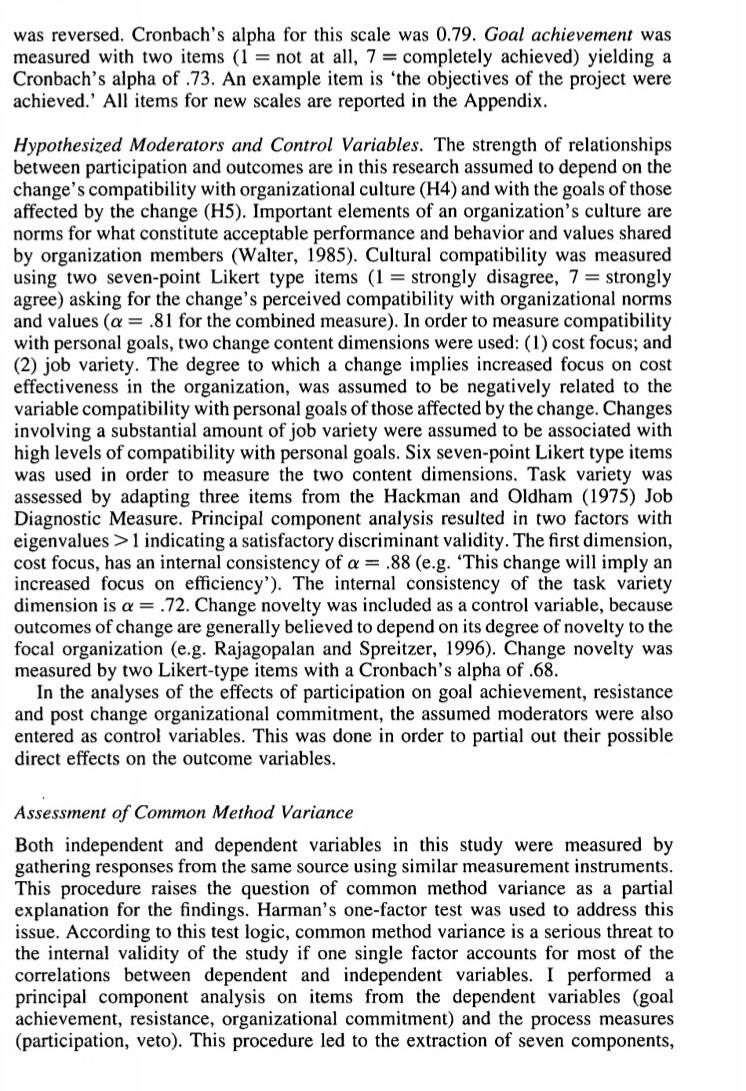
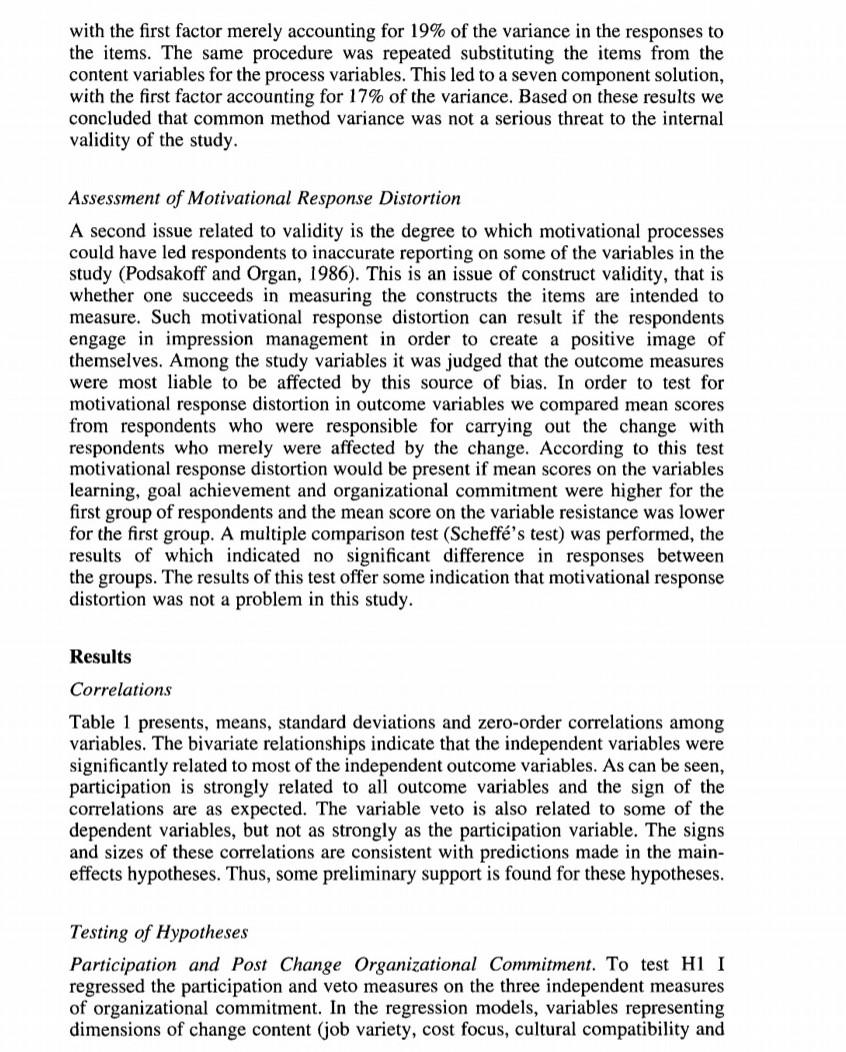
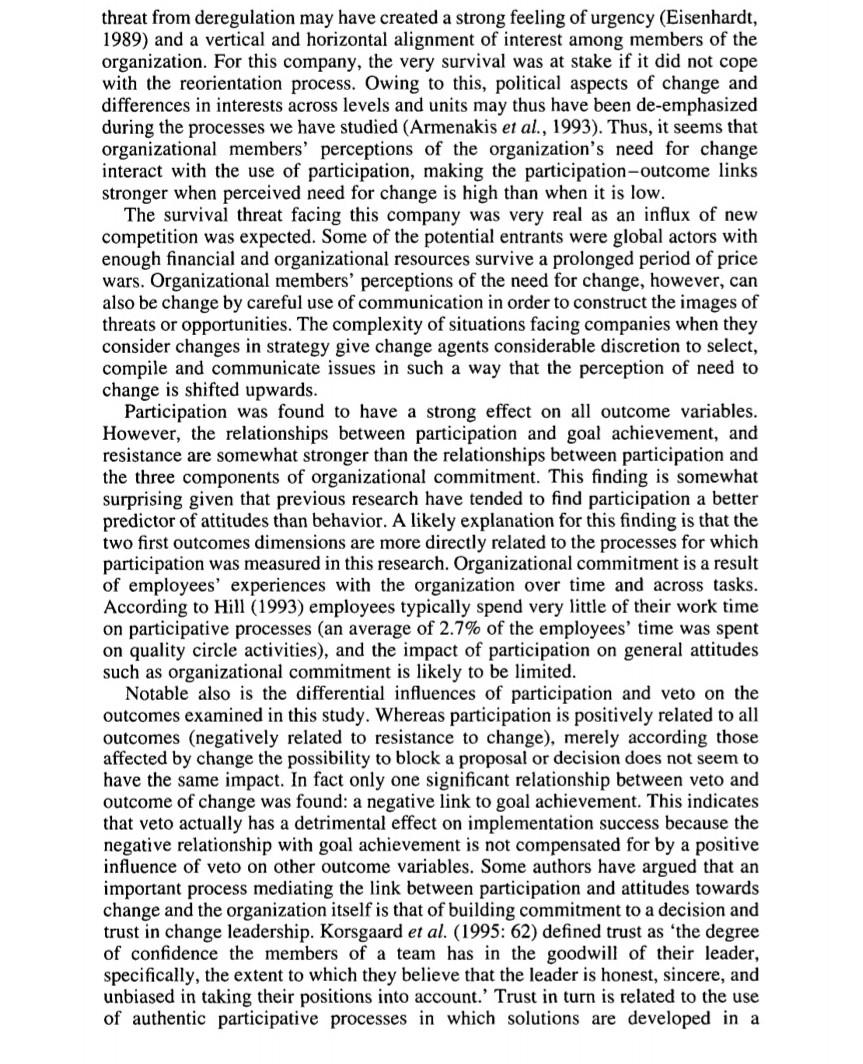
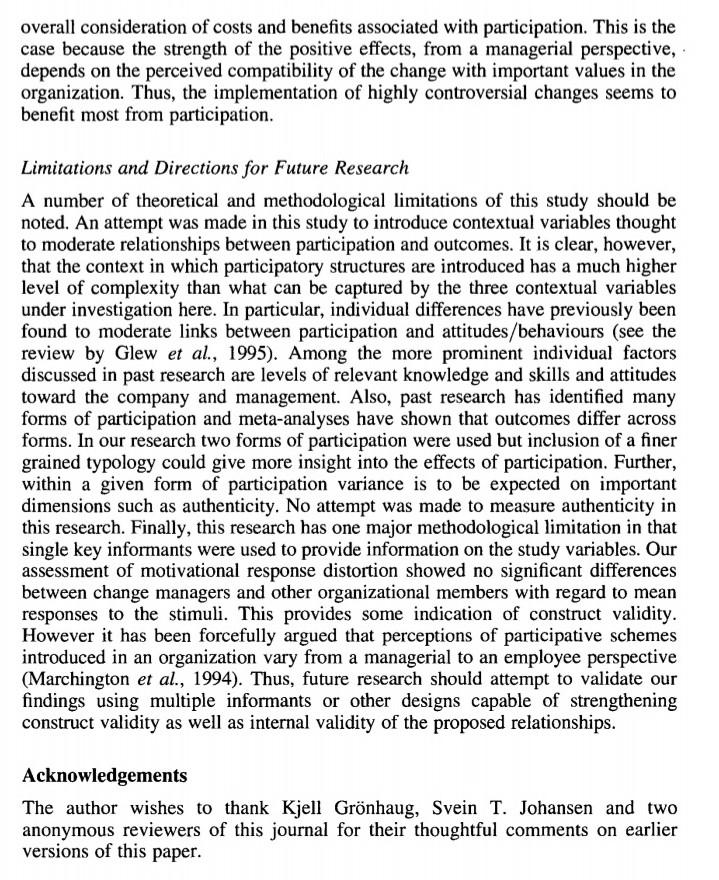
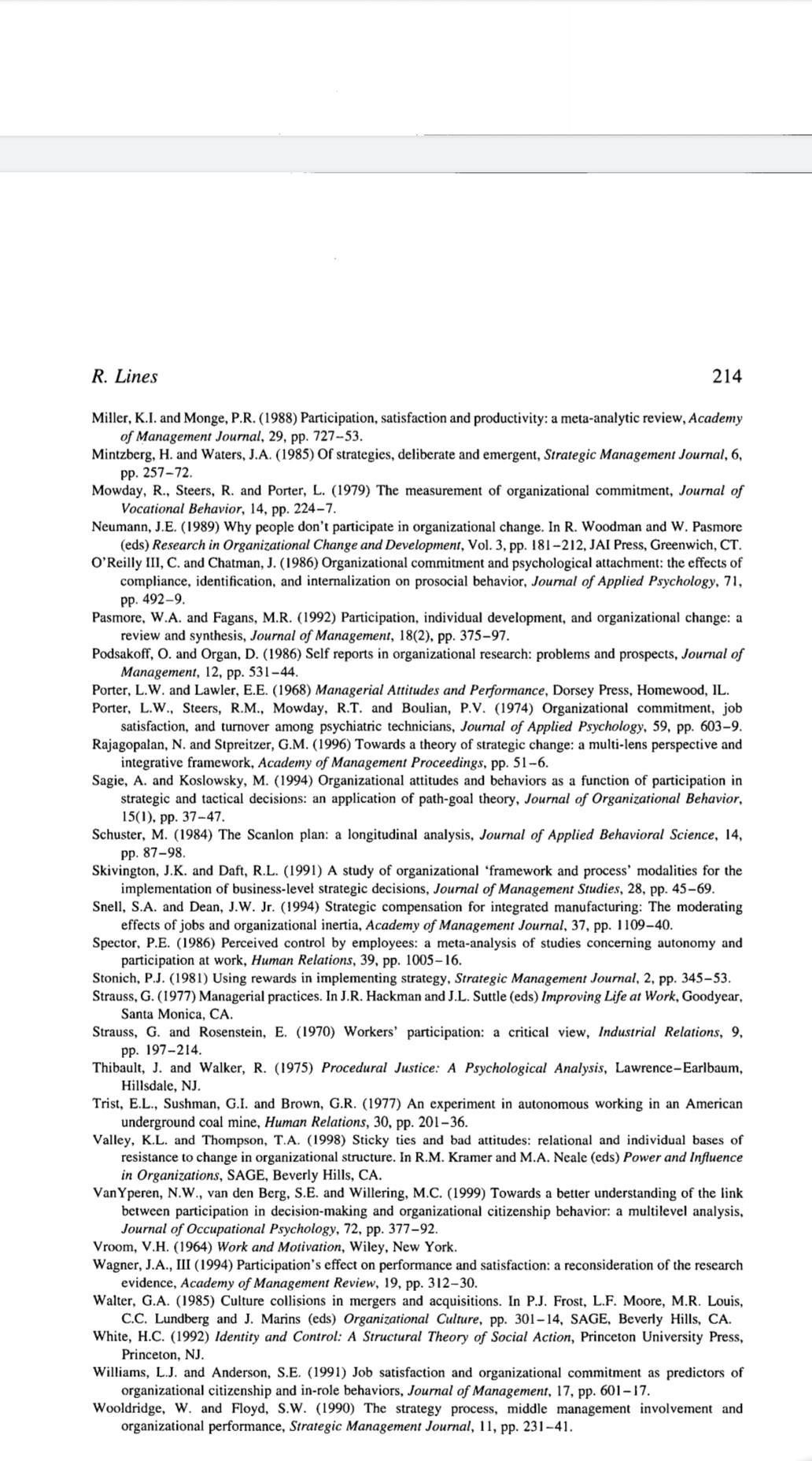
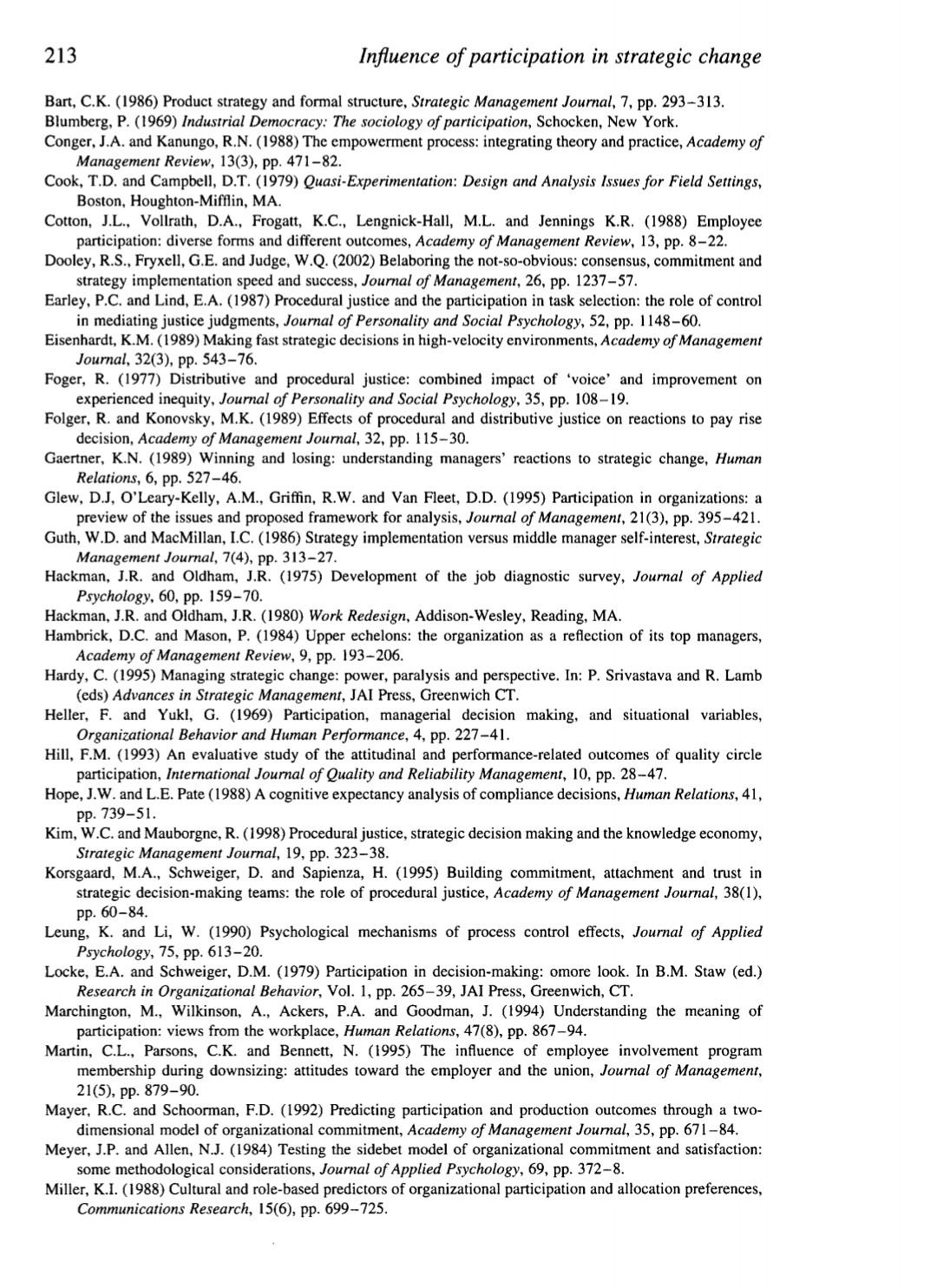
1.in this article, go to the references list and identify the three most influential articles and rank them in order . (to determine how influential articles is to check Google scholar to see how many times each article has been cited the one that has been cited the most is the most influential and the one that has been cited the second, is the second most influential. ) 2. and tell why u picked these three and why u ranked them the way u did.
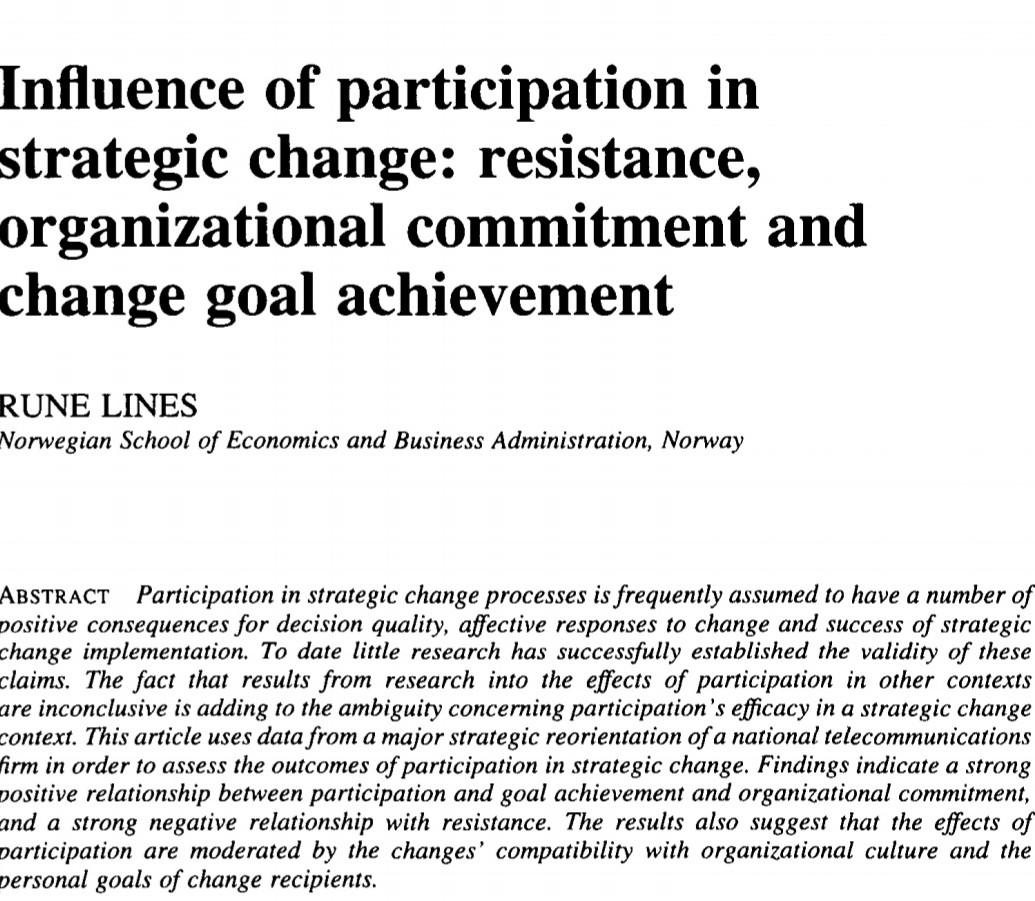
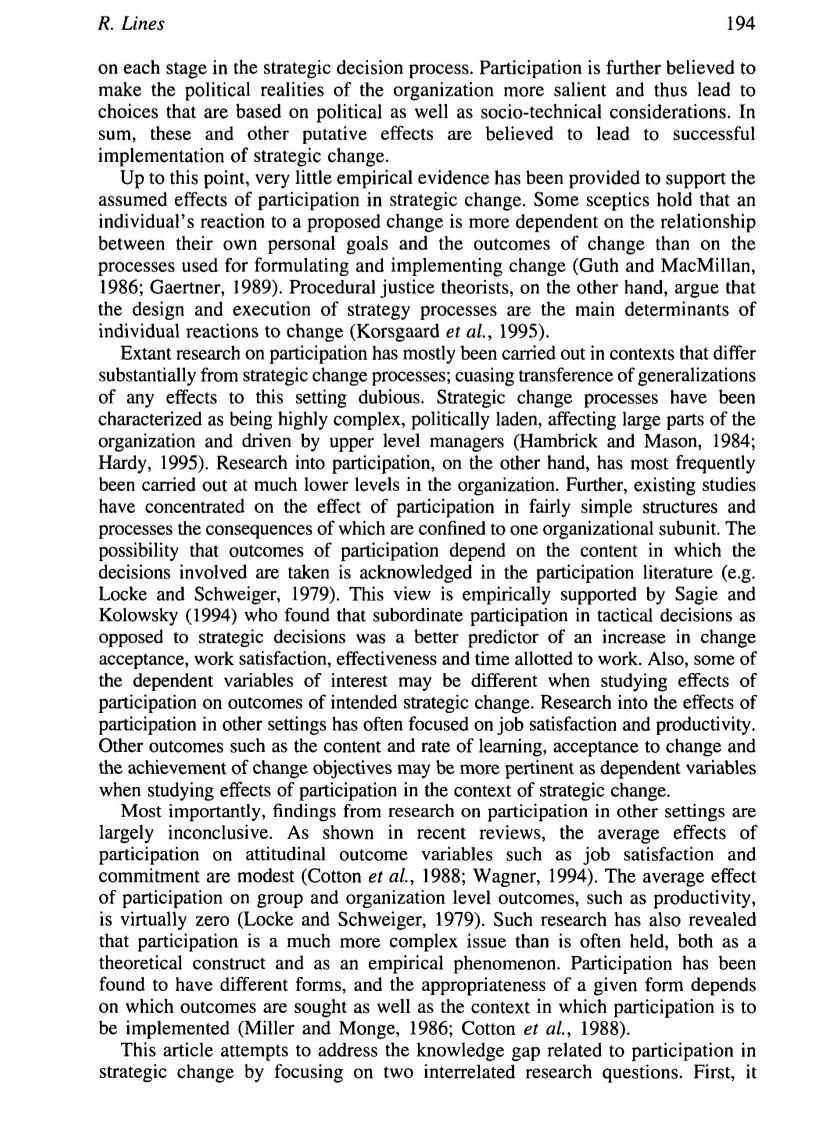
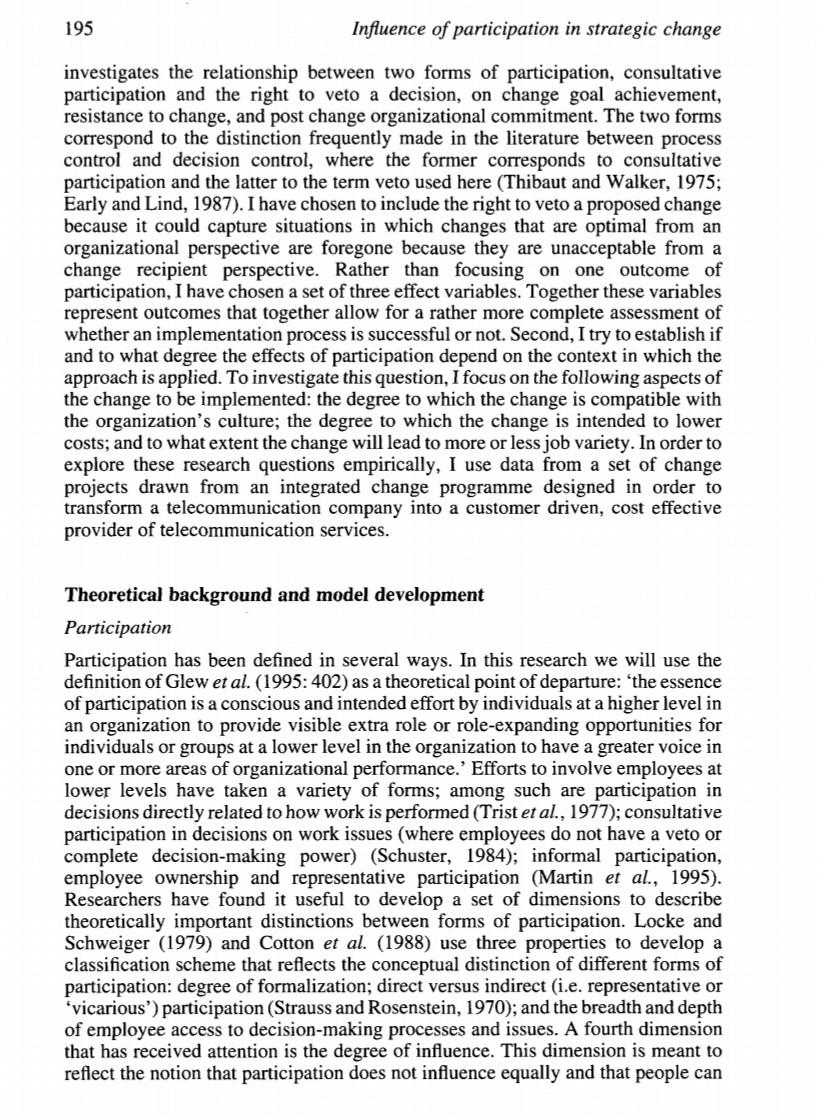
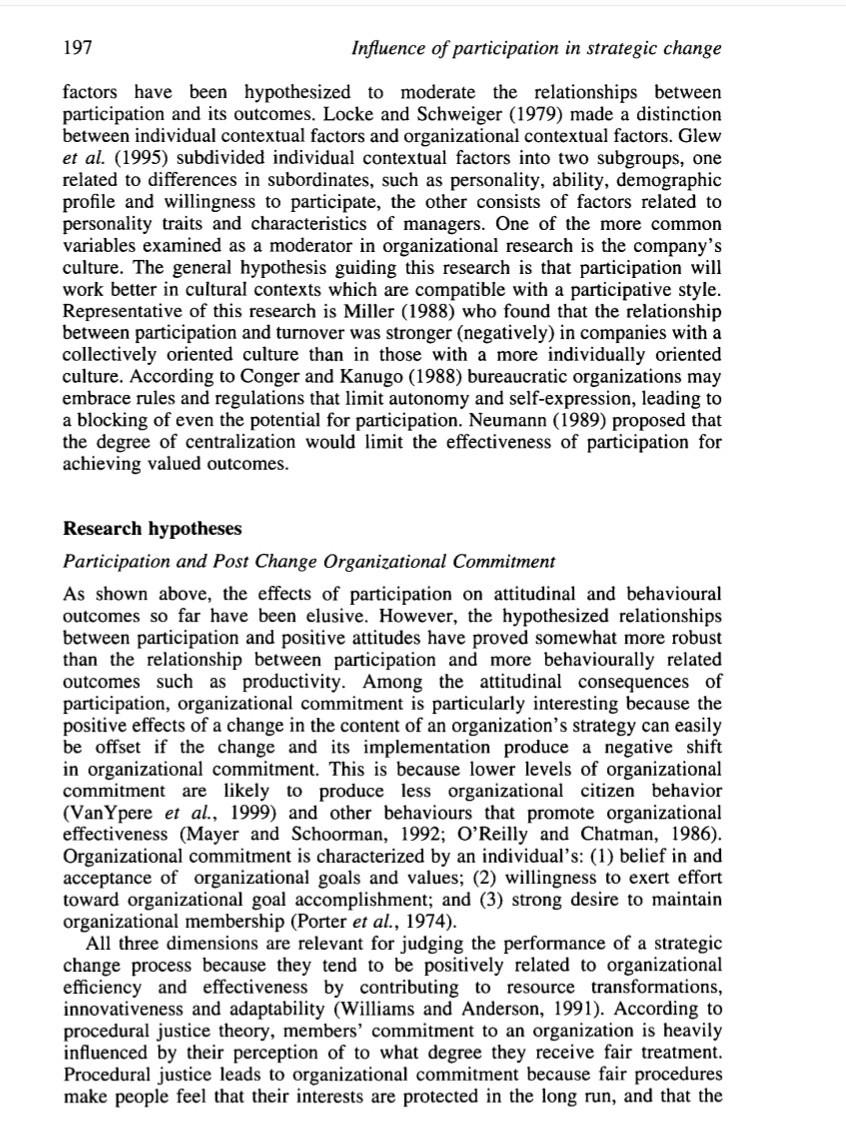
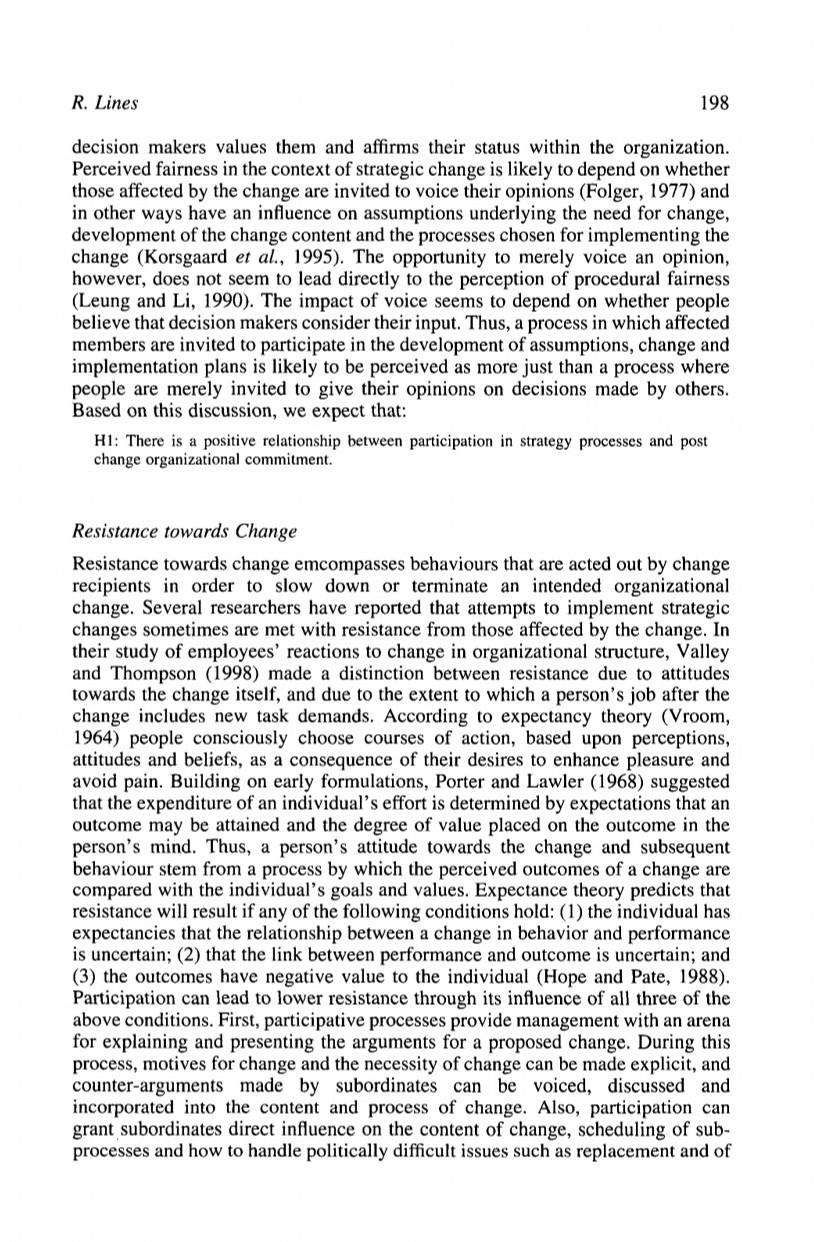
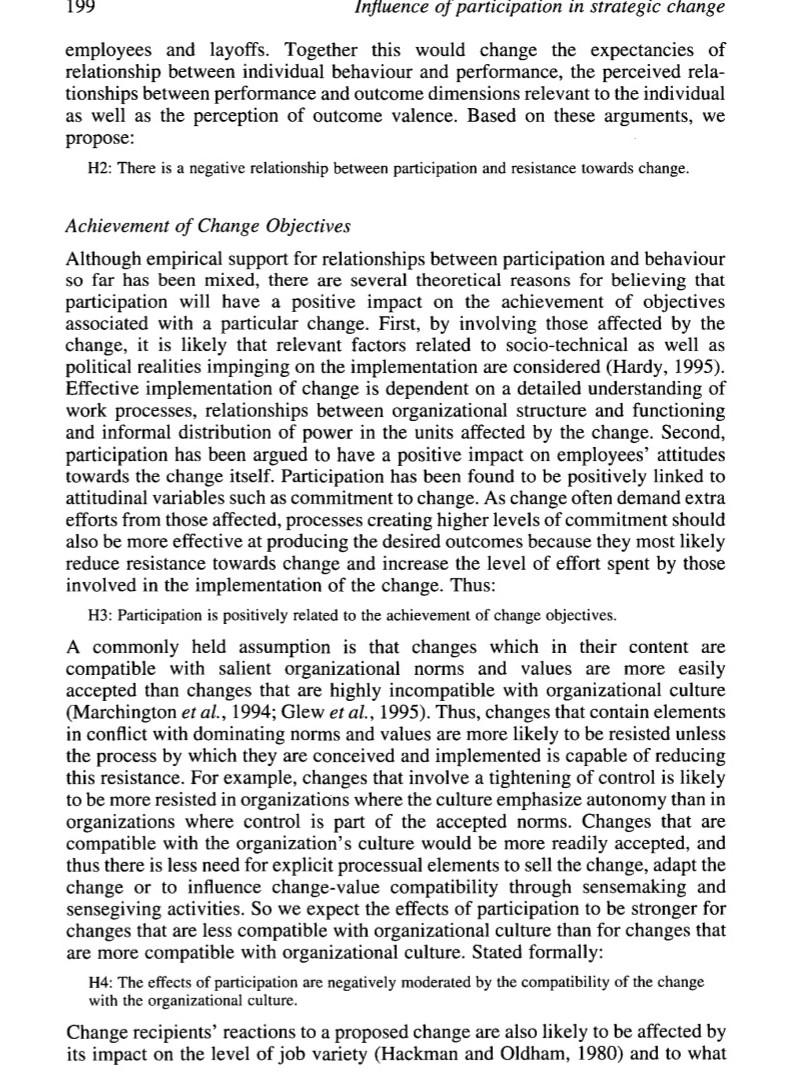
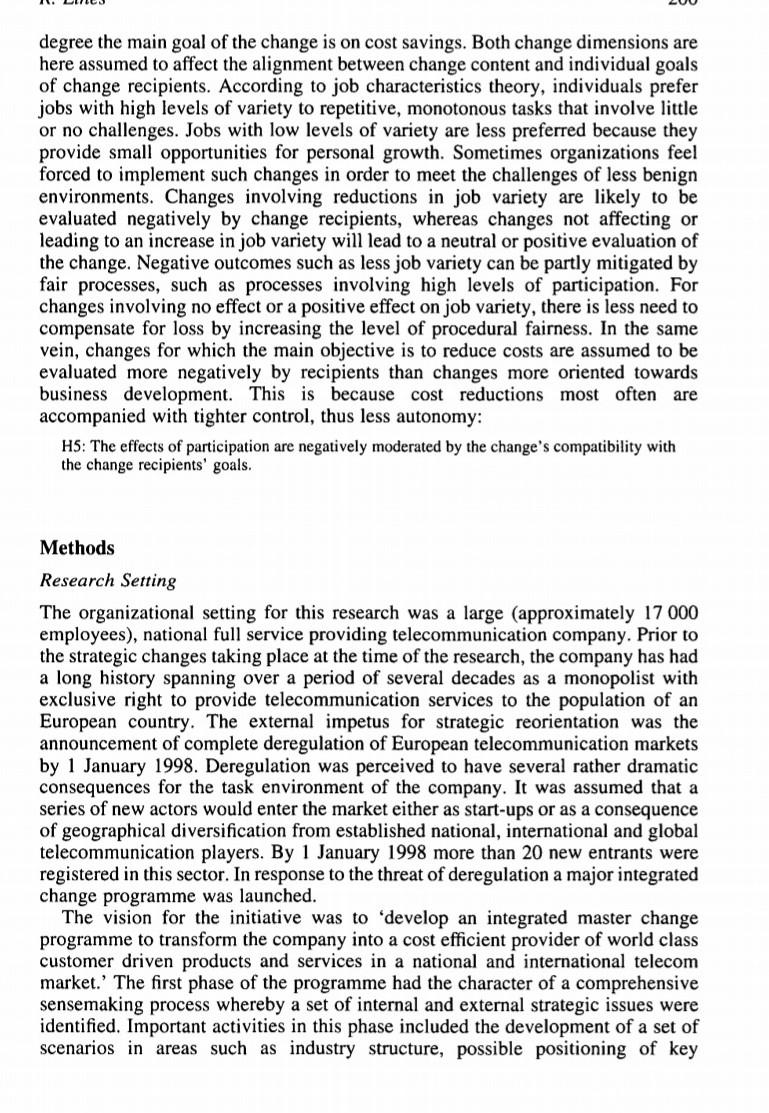
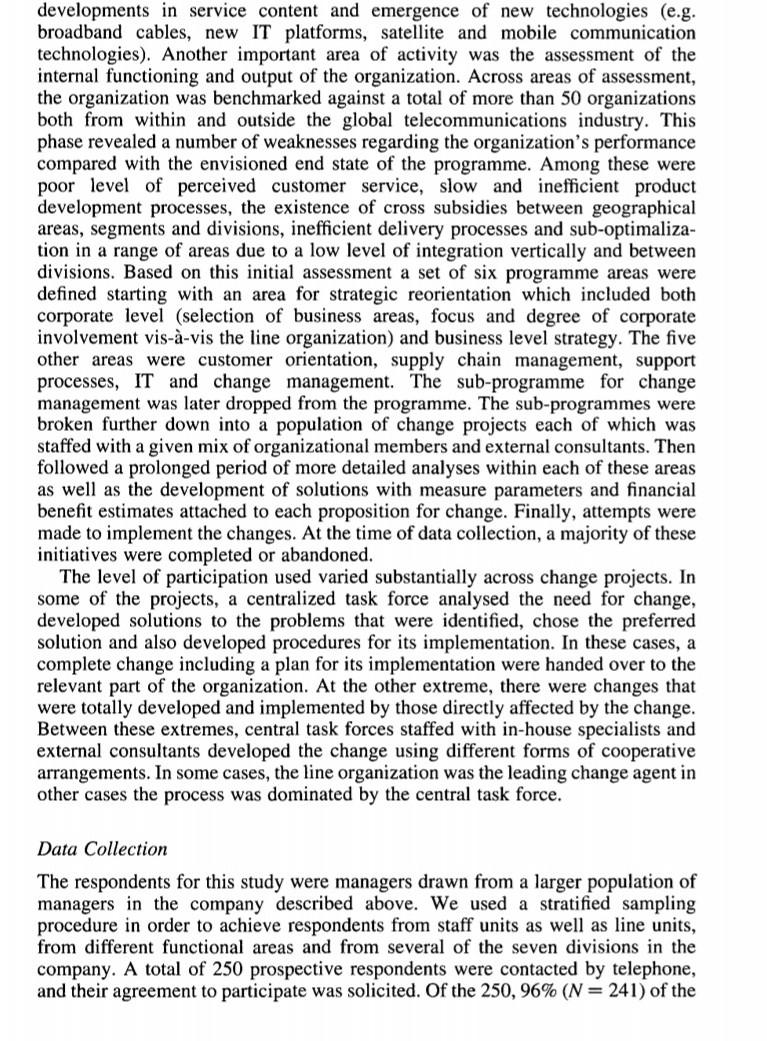
Influence of participation in strategic change: resistance, organizational commitment and change goal achievement RUNE LINES Norwegian School of Economics and Business Administration, Norway ABSTRACT Participation in strategic change processes is frequently assumed to have a number of positive consequences for decision quality, affective responses to change and success of strategic change implementation. To date little research has successfully established the validity of these claims. The fact that results from research into the effects of participation in other contexts are inconclusive is adding to the ambiguity concerning participation's efficacy in a strategic change context. This article uses data from a major strategic reorientation of a national telecommunications firm in order to assess the outcomes of participation in strategic change. Findings indicate a strong positive relationship between participation and goal achievement and organizational commitment, and a strong negative relationship with resistance. The results also suggest that the effects of participation are moderated by the changes' compatibility with organizational culture and the personal goals of change recipients. R. Lines 194 on each stage in the strategic decision process. Participation is further believed to make the political realities of the organization more salient and thus lead to choices that are based on political as well as socio-technical considerations. In sum, these and other putative effects are believed to lead to successful implementation of strategic change. Up to this point, very little empirical evidence has been provided to support the assumed effects of participation in strategic change. Some sceptics hold that an individual's reaction to a proposed change is more dependent on the relationship between their own personal goals and the outcomes of change than on the processes used for formulating and implementing change (Guth and MacMillan, 1986; Gaertner, 1989). Procedural justice theorists, on the other hand, argue that the design and execution of strategy processes are the main determinants of individual reactions to change (Korsgaard et al., 1995). Extant research on participation has mostly been carried out in contexts that differ substantially from strategic change processes; cuasing transference of generalizations of any effects to this setting dubious. Strategic change processes have been characterized as being highly complex, politically laden, affecting large parts of the organization and driven by upper level managers (Hambrick and Mason, 1984; Hardy, 1995). ch into participation, on other hand, most frequently been carried out at much lower levels in the organization. Further, existing studies have concentrated on the effect of participation in fairly simple structures and processes the consequences of which are confined to one organizational subunit. The possibility that outcomes of participation depend on the content in which the decisions involved are taken is acknowledged in the participation literature (e.g. Locke and Schweiger, 1979). This view is empirically supported by Sagie and Kolowsky (1994) who found that subordinate participation in tactical decisions as opposed to strategic decisions was a better predictor of an increase in change acceptance, work satisfaction, effectiveness and time allotted to work. Also, some of the dependent variables of interest may be different when studying effects of participation on outcomes of intended strategic change. Research into the effects of participation in other settings has often focused on job satisfaction and productivity. Other outcomes such as the content and rate of learning, acceptance to change and the achievement of change objectives may be more pertinent as dependent variables when studying effects of participation in the context of strategic change. Most importantly, findings from research on participation in other settings are largely inconclusive. As shown in recent reviews, the average effects of participation on attitudinal outcome variables such as job satisfaction and commitment are modest (Cotton et al., 1988; Wagner, 1994). The average effect of participation on group and organization level outcomes, such as productivity, is virtually zero (Locke and Schweiger, 1979). Such research has also revealed that participation is a much more complex issue than is often held, both as a theoretical construct and as an empirical phenomenon. Participation has been found to have different forms, and the appropriateness of a given form depends on which outcomes are sought as well as the context in which participation is to be implemented (Miller and Monge, 1986; Cotton et al., 1988). This article attempts to address the knowledge gap related to participation in strategic change by focusing on two interrelated research questions. First, it 197 Influence of participation in strategic change factors have been hypothesized to moderate the relationships between participation and its outcomes. Locke and Schweiger (1979) made a distinction between individual contextual factors and organizational contextual factors. Glew et al. (1995) subdivided individual contextual factors into two subgroups, one related to differences in subordinates, such as personality, ability, demographic profile and willingness to participate, the other consists of factors related to personality traits and characteristics of managers. One of the more common variables examined as a moderator in organizational research is the company's culture. The general hypothesis guiding this research is that participation will work better in cultural contexts which are compatible with a participative style. Representative of this research is Miller (1988) who found that the relationship between participation and turnover was stronger (negatively) in companies with a collectively oriented culture than in those with a more individually oriented culture. According to Conger and Kanugo (1988) bureaucratic organizations may embrace rules and regulations that limit autonomy and self-expression, leading to a blocking of even the potential for participation. Neumann (1989) proposed that the degree of centralization would limit the effectiveness of participation for achieving valued outcomes. Research hypotheses Participation and Post Change Organizational Commitment As shown above, the effects of participation on attitudinal and behavioural outcomes so far have been elusive. However, the hypothesized relationships between participation and positive attitudes have proved somewhat more robust than the relationship between participation and more behaviourally related outcomes such as productivity. Among the attitudinal consequences of participation, organizational commitment is particularly interesting because the positive effects of a change in the content of an organization's strategy can easily be offset if the change and its implementation produce a negative shift in organizational commitment. This is because lower levels of organizational commitment are likely to produce less organizational citizen behavior (Van Ypere et al., 1999) and other behaviours that promote organizational effectiveness (Mayer and Schoorman, 1992; O'Reilly and Chatman, 1986). Organizational commitment is characterized by an individual's: (1) belief in and acceptance of organizational goals and values; (2) willingness to exert effort toward organizational goal accomplishment; and (3) strong desire to maintain organizational membership (Porter et al., 1974). All three dimensions are relevant for judging the performance of a strategic change process because they tend to be positively related to organizational efficiency and effectiveness by contributing to resource transformations, innovativeness and adaptability (Williams and Anderson, 1991). According to procedural justice theory, members' commitment to an organization is heavily influenced by their perception of to what degree they receive fair treatment. Procedural justice leads to organizational commitment because fair procedures make people feel that their interests are protected in the long run, and that the R. Lines 198 decision makers values them and affirms their status within the organization. Perceived fairness in the context of strategic change is likely to depend on whether those affected by the change are invited to voice their opinions (Folger, 1977) and in other ways have an influence on assumptions underlying the need for change, development of the change content and the processes chosen for implementing the change (Korsgaard et al., 1995). The opportunity to merely voice an opinion, however, does not seem to lead directly to the perception of procedural fairness (Leung and Li, 1990). The impact of voice seems to depend on whether people believe that decision makers consider their input. Thus, a process in which affected members are invited to participate in the development of assumptions, change and implementation plans is likely to be perceived more just than a process where people are merely invited to give their opinions on decisions made by others. Based on this discussion, we expect that: H1: There is a positive relationship between participation in strategy processes and post change organizational commitment. Resistance towards Change Resistance towards change emcompasses behaviours that are acted out by change recipients in order to slow down or terminate an intended organizational change. Several researchers have reported that attempts to implement strategic changes sometimes are met with resistance from those affected by the change. In their study of employees' reactions to change in organizational structure, Valley and Thompson (1998) made a distinction between resistance due to attitudes towards the change itself, and due to the extent to which a person's job after the change includes new task demands. According to expectancy theory (Vroom, 1964) people consciously choose courses of action, based upon perceptions, attitudes and beliefs, as a consequence of their desires to enhance pleasure and avoid pain. Building on early formulations, Porter and Lawler (1968) suggested that the expenditure of an individual's effort is determined by expectations that an outcome may be attained and the degree of value placed on the outcome in the person's mind. Thus, a person's attitude towards the change and subsequent behaviour stem from a process by which the perceived outcomes of a change are compared with the individual's goals and values. Expectance theory predicts that resistance will result if any of the following conditions hold: (1) the individual has expectancies that the relationship between a change in behavior and performance is uncertain; (2) that the link between performance and outcome is uncertain; and (3) the outcomes have negative value to the individual (Hope and Pate, 1988). Participation can lead to lower resistance through its influence of all three of the above conditions. First, participative processes provide management with an arena for explaining and presenting the arguments for a proposed change. During this process, motives for change and the necessity of change can be made explicit, and counter-arguments made by subordinates can be voiced, discussed and incorporated into the content and process of change. Also, participation can grant subordinates direct influence on the content of change, scheduling of sub- processes and how to handle politically difficult issues such as replacement and of 199 Influence of participation in strategic change employees and layoffs. Together this would change the expectancies of relationship between individual behaviour and performance, the perceived rela- tionships between performance and outcome dimensions relevant to the individual as well as the perception of outcome valence. Based on these arguments, we propose: H2: There is a negative relationship between participation and resistance towards change. Achievement of Change Objectives Although empirical support for relationships between participation and behaviour so far has been mixed, there are several theoretical reasons for believing that participation will have a positive impact on the achievement of objectives associated with a particular change. First, by involving those affected by the change, it is likely that relevant factors related to socio-technical as well as political realities impinging on the implementation are considered (Hardy, 1995). Effective implementation of change is dependent on a detailed understanding of work processes, relationships between organizational structure and functioning and informal distribution of power in the units affected by the change. Second, participation has been argued to have a positive impact on employees' attitudes towards the change itself. Participation has been found to be positively linked to attitudinal variables such as commitment to change. As change often demand extra efforts from those affected, processes creating higher levels of commitment should also be more effective at producing the desired outcomes because they most likely reduce resistance towards change and increase the level of effort spent by those involved in the implementation of the change. Thus: H3: Participation is positively related to the achievement of change objectives. A commonly held assumption is that changes which in their content are compatible with salient organizational norms and values are more easily accepted than changes that are highly incompatible with organizational culture (Marchington et al., 1994; Glew et al., 1995). Thus, changes that contain elements in conflict with dominating norms and values are more likely to be resisted unless the process by which they are conceived and implemented is capable of reducing this resistance. For example, changes that involve a tightening of control is likely to be more resisted in organizations where the culture emphasize autonomy than in organizations where control is part of the accepted norms. Changes that are compatible with the organization's culture would be more readily accepted, and thus there is less need for explicit processual elements to sell the change, adapt the change or to influence change-value compatibility through sensemaking and sensegiving activities. So we expect the effects of participation to be stronger for changes that are less compatible with organizational culture than for changes that are more compatible with organizational culture. Stated formally: H4: The effects of participation are negatively moderated by the compatibility of the change with the organizational culture. Change recipients' reactions to a proposed change are also likely to be affected by its impact on the level of job variety (Hackman and Oldham, 1980) and to what degree the main goal of the change is on cost savings. Both change dimensions are here assumed to affect the alignment between change content and individual goals of change recipients. According to job characteristics theory, individuals prefer jobs with high levels of variety to repetitive, monotonous tasks that involve little or no challenges. Jobs with low levels of variety are less preferred because they provide small opportunities for personal growth. Sometimes organizations feel forced to implement such changes in order to meet the challenges of less benign environments. Changes involving reductions in job variety are likely to be evaluated negatively by change recipients, whereas changes not affecting or leading to an increase in job variety will lead to a neutral or positive evaluation of the change. Negative outcomes such as less job variety can be partly mitigated by fair processes, such as processes involving high levels of participation. For changes involving no effect or a positive effect on job variety, there is less need to compensate for loss by increasing the level of procedural fairness. In the same vein, changes for which the main objective is to reduce costs are assumed to be evaluated more negatively by recipients than changes more oriented towards business development. This is because cost reductions most often are accompanied with tighter control, thus less autonomy: HS: The effects of participation are negatively moderated by the change's compatibility with the change recipients' goals. Methods Research Setting The organizational setting for this research was a large (approximately 17 000 employees), national full service providing telecommunication company. Prior to the strategic changes taking place at the time of the research, the company has had a long history spanning over a period of several decades as a monopolist with exclusive right to provide telecommunication services to the population of an European country. The external impetus for strategic reorientation was the announcement of complete deregulation of European telecommunication markets by 1 January 1998. Deregulation was perceived to have several rather dramatic consequences for the task environment of the company. It was assumed that a series of new actors would enter the market either as start-ups or as a consequence of geographical diversification from established national, international and global telecommunication players. By 1 January 1998 more than 20 new entrants were registered in this sector. In response to the threat deregulation a major integrated change programme was launched. The vision for the initiative was to develop an integrated master change programme to transform the company into a cost efficient provider of world class customer driven products and services in a national and international telecom market. The first phase of the programme had the character of a comprehensive sensemaking process whereby a set of internal and external strategic issues were identified. Important activities in this phase included the development of a set of scenarios in areas such as industry structure, possible positioning of key developments in service content and emergence of new technologies (e.g. broadband cables, new IT platforms, satellite and mobile communication technologies). Another important area of activity was the assessment of the internal functioning and output of the organization. Across areas of assessment, the organization was benchmarked against a total of more than 50 organizations both from within and outside the global telecommunications industry. This phase revealed a number of weaknesses regarding the organization's performance compared with the envisioned end state of the programme. Among these were poor level of perceived customer service, slow and inefficient product development processes, the existence of cross subsidies between geographical areas, segments and divisions, inefficient delivery processes and sub-optimaliza- tion in a range of areas due to a low level of integration vertically and between divisions. Based on this initial assessment a set of six programme areas were defined starting with an area for strategic reorientation which included both corporate level (selection of business areas, focus and degree of corporate involvement vis--vis the line organization) and business level strategy. The five other areas were customer orientation, supply chain management, support processes, IT and change management. The sub-programme for change management was later dropped from the programme. The sub-programmes were broken further down into a population of change projects each of which was staffed with a given mix of organizational members and external consultants. Then followed a prolonged period of more detailed analyses within each of these areas as well as the development of solutions with measure parameters and financial benefit estimates attached to each proposition for change. Finally, attempts were made to implement the changes. At the time of data collection, a majority of these initiatives were completed or abandoned. The level of participation used varied substantially across change projects. In some of the projects, a centralized task force analysed the need for change, developed solutions to the problems that were identified, chose the preferred solution and also developed procedures for its implementation. In these cases, a complete change including a plan for its implementation were handed over to the relevant part of the organization. At the other extreme, there were changes that were totally developed and implemented by those directly affected by the change. Between these extremes, central task forces staffed with in-house specialists and external consultants developed the change using different forms of cooperative arrangements. In some cases, the line organization was the leading change agent in other cases the process was dominated by the central task force. Data Collection The respondents for this study were managers drawn from a larger population of managers in the company described above. We used a stratified sampling procedure in order to achieve respondents from staff units as well as line units, from different functional areas and from several of the seven divisions in the company. A total of 250 prospective respondents were contacted by telephone, and their agreement to participate was solicited. Of the 250,96% (N = 241) of the was reversed. Cronbach's alpha for this scale was 0.79. Goal achievement was measured with two items (1 = not at all, 7 = completely achieved) yielding a Cronbach's alpha of 73. An example item is the objectives of the project were achieved.' All items for new scales are reported in the Appendix. Hypothesized Moderators and Control Variables. The strength of relationships between participation and outcomes are in this research assumed to depend on the change's compatibility with organizational culture (H4) and with the goals of those affected by the change (H5). Important elements of an organization's culture are norms for what constitute acceptable performance and behavior and values shared by organization members (Walter, 1985). Cultural compatibility was measured using two seven-point Likert type items (1 = strongly disagree, 7 = strongly agree) asking for the change's perceived compatibility with organizational norms and values (a = .81 for the combined measure). In order to measure compatibility with personal goals, two change content dimensions were used: (1) cost focus; and (2) job variety. The degree to which a change implies increased focus on cost effectiveness in the organization, was assumed to be negatively related to the variable compatibility with personal goals of those affected by the change. Changes involving a substantial amount of job variety were assumed to be associated with high levels of compatibility with personal goals. Six seven-point Likert type items was used in order to measure the two content dimensions. Task variety was assessed by adapting three items from the Hackman and Oldham (1975) Job Diagnostic Measure. Principal component analysis resulted in two factors with eigenvalues >1 indicating a satisfactory discriminant validity. The first dimension, cost focus, has an internal consistency of a = .88 (e.g. 'This change will imply an increased focus on efficiency'). The internal consistency of the task variety dimension is a = .72. Change novelty was included as a control variable, because outcomes of change are generally believed to depend on its degree of novelty to the focal organization (e.g. Rajagopalan and Spreitzer, 1996). Change novelty was measured by two Likert-type items with a Cronbach's alpha of .68. In the analyses of the effects of participation on goal achievement, resistance and post change organizational commitment, the assumed moderators were also entered as control variables. This was done in order to partial out their possible direct effects on the outcome variables. Assessment of Common Method Variance Both independent and dependent variables in this study were measured by gathering responses from the same source using similar measurement instruments. This procedure raises the question of common method variance as a partial explanation for the findings. Harman's one-factor test was used to address this issue. According to this test logic, common method variance is a serious threat to the internal validity of the study if one single factor accounts for most of the correlations between dependent and independent variables. I performed a principal component analysis on items from the dependent variables (goal achievement, resistance, organizational commitment) and the process measures (participation, veto). This procedure led to the extraction of seven components, with the first factor merely accounting for 19% of the variance in the responses to the items. The same procedure was repeated substituting the items from the content variables for the process variables. This led to a seven component solution, with the first factor accounting for 17% of the variance. Based on these results we concluded that common method variance was not a serious threat to the internal validity of the study. Assessment of Motivational Response Distortion A second issue related to validity is the degree to which motivational processes could have led respondents to inaccurate reporting on some of the variables in the study (Podsakoff and Organ, 1986). This is an issue of construct validity, that is whether one succeeds in measuring the constructs the items are intended to measure. Such motivational response distortion can result if the respondents engage in impression management in order to create a positive image of themselves. Among the study variables it was judged that the outcome measures were most liable to be affected by this source of bias. In order to test for motivational response distortion in outcome variables we compared mean scores from respondents who were responsible for carrying out the change with respondents who merely were affected by the change. According to this test motivational response distortion would be present if mean scores on the variables learning, goal achievement and organizational commitment were higher for the first group of respondents and the mean score on the variable resistance was lower for the first group. A multiple comparison test (Scheff's test) was performed, the results of which indicated no significant difference in responses between the groups. The results of this test offer some indication that motivational response distortion was not a problem in this study. Results Correlations Table 1 presents, means, standard deviations and zero-order correlations among variables. The bivariate relationships indicate that the independent variables were significantly related to most of the independent outcome variables. As can be seen, participation is strongly related to all outcome variables and the sign of the correlations are as expected. The variable veto is also related to some of the dependent variables, but not as strongly as the participation variable. The signs and sizes of these correlations are consistent with predictions made in the main- effects hypotheses. Thus, some eliminary support found for these hypotheses. Testing of Hypotheses Participation and Post Change Organizational Commitment. To test Hi I regressed the participation and veto measures on the three independent measures of organizational commitment. In the regression models, variables representing dimensions of change content (job variety, cost focus, cultural compatibility and threat from deregulation may have created a strong feeling of urgency (Eisenhardt, 1989) and a vertical and horizontal alignment of interest among members of the organization. For this company, the very survival was at stake if it did not cope with the reorientation process. Owing to this, political aspects of change and differences in interests across levels and units may thus have been de-emphasized during the processes we have studied (Armenakis et al., 1993). Thus, it seems that organizational members' perceptions of the organization's need for change interact with the use of participation, making the participation-outcome links stronger when perceived need for change is high than when it is low. The survival threat facing this company was very real as an influx of new competition was expected. Some of the potential entrants were global actors with enough financial and organizational resources survive a prolonged period of price wars. Organizational members' perceptions of the need for change, however, can also be change by careful use of communication in order to construct the images of threats or opportunities. The complexity of situations facing companies when they consider changes in strategy give change agents considerable discretion to select, compile and communicate issues in such a way that the perception of need to change is shifted upwards. Participation was found to have a strong effect on all outcome variables. However, the relationships between participation and goal achievement, and resistance are somewhat stronger than the relationships between participation and the three components of organizational commitment. This finding is somewhat surprising given that previous research have tended to find participation a better predictor of attitudes than behavior. A likely explanation for this finding is that the two first outcomes dimensions are more directly related to the processes for which participation was measured in this research. Organizational commitment is a result of employees' experiences with the organization over time and across tasks. According to Hill (1993) employees typically spend very little of their work time on participative processes an average of 2.7% of the employees' time was spent on quality circle activities), and the impact of participation on general attitudes such as organizational commitment is likely to be limited. Notable also is the differential influences of participation and veto on the outcomes examined in this study. Whereas participation is positively related to all outcomes (negatively related to resistance to change), merely according those affected by change the possibility to block a proposal or decision does not seem to have the same impact. In fact only one significant relationship between veto and outcome of change was found: a negative link to goal achievement. This indicates that veto actually has a detrimental effect on implementation success because the negative relationship with goal achievement is not compensated for by a positive influence of veto on other outcome variables. Some authors have argued that an important process mediating the link between participation and attitudes towards change and the organization itself is that of building commitment to a decision and trust in change leadership. Korsgaard et al. (1995: 62) defined trust as 'the degree of confidence the members of a team has in the goodwill of their leader, specifically, the extent to which they believe that the leader is honest, sincere, and unbiased in taking their positions into account.' Trust in turn is related to the use of authentic participative processes in which solutions are developed in a overall consideration of costs and benefits associated with participation. This is the case because the strength of the positive effects, from a managerial perspective, depends on the perceived compatibility of the change with important values in the organization. Thus, the implementation of highly controversial changes seems to benefit most from participation. Limitations and Directions for Future Research A number of theoretical and methodological limitations of this study should be noted. An attempt was made in this study to introduce contextual variables thought to moderate relationships between participation and outcomes. It is clear, however, that the context in which participatory structures are introduced has a much higher level of complexity than what can be captured by the three contextual variables under investigation here. In particular, individual differences have previously been found to moderate links between participation and attitudes/behaviours (see the review by Glew et al., 1995). Among the more prominent individual factors discussed in past research are levels of relevant knowledge and skills and attitudes toward the company and management. Also, past research has identified many forms of participation and meta-analyses have shown that outcomes differ across forms. In our research two forms of participation were used but inclusion of a finer grained typology could give more insight into the effects of participation. Further, within a given form of participation variance is to be expected on important dimensions such as authenticity. No attempt was made to measure authenticity in this research. Finally, this research has one major methodological limitation in that single key informants were used to provide information on the study variables. Our assessment of motivational response distortion showed no significant differences between change managers and other organizational members with regard to mean responses to the stimuli. This provides some indication of construct validity. However it has been forcefully argued that perceptions of participative schemes introduced in an organization vary from a managerial to an employee perspective (Marchington et al., 1994). Thus, future research should attempt to validate our findings using multiple informants or other designs capable of strengthening construct validity as well as internal validity of the proposed relationships. Acknowledgements The author wishes to thank Kjell Grnhaug, Svein T. Johansen and two anonymous reviewers of this journal for their thoughtful comments on earlier versions of this paper. R. Lines 214 Miller, K.I. and Monge, P.R. (1988) Participation, satisfaction and productivity: a meta-analytic review, Academy of Management Journal, 29, pp. 727-53. Mintzberg, H. and Waters, J.A. (1985) Of strategies, deliberate and emergent, Strategic Management Journal, 6, pp. 257-72. Mowday, R., Steers, R. and Porter, L. (1979) The measurement of organizational commitment, Journal of Vocational Behavior, 14, pp. 224-7. Neumann, J.E. (1989) Why people don't participate in organizational change. In R. Woodman and W. Pasmore (eds) Research in Organizational Change and Development, Vol. 3, pp. 181-212, JAI Press, Greenwich, CT. O'Reilly III, C. and Chatman, J. (1986) Organizational commitment and psychological attachment: the effects of compliance, identification, and internalization on prosocial behavior, Journal of Applied Psychology, 71, pp. 492-9. Pasmore, W.A. and Fagans, M.R. (1992) Participation, individual development, and organizational change: a review and synthesis, Journal of Management, 18(2), pp. 375-97. Podsakoff, O. and Organ, D. (1986) Self reports in organizational research: problems and prospects, Journal of Management, 12, pp. 531-44. Porter, L.W. and Lawler, E.E. (1968) Managerial Attitudes and Performance, Dorsey Press, Homewood, IL. Porter, L.W., Steers, R.M., Mowday, R.T. and Boulian, P.V. (1974) Organizational commitment, job satisfaction, and turnover among psychiatric technicians, Journal of Applied Psychology, 59, pp. 603-9. Rajagopalan, N. and Stpreitzer, G.M. (1996) Towards a theory of strategic change: a multi-lens perspective and integrative framework, Academy of Management Proceedings, pp. 51-6. Sagie, A. and Koslowsky, M. (1994) Organizational attitudes and behaviors as a function of participation in strategic and tactical decisions: an application of path-goal theory, Journal of Organizational Behavior, 15(1), pp. 37-47. Schuster, M. (1984) The Scanlon plan: a longitudinal analysis, Journal of Applied Behavioral Science, 14, pp. 87-98. Skivington, J.K. and Daft, R.L. (1991) A study of organizational framework and process modalities for the implementation of business-level strategic decisions, Journal of Management Studies, 28, pp. 45-69. Snell, S.A. and Dean, J.W. Jr. (1994) Strategic compensation for integrated manufacturing: The moderating effects of jobs and organizational inertia, Academy of Management Journal, 37, pp. 1109-40. Spector, P.E. (1986) Perceived control by employees: a meta-analysis of studies concerning autonomy and participation at work, Human Relations, 39, pp. 1005-16. Stonich, P.J. (1981) Using rewards in implementing strategy, Strategic Management Journal, 2, pp. 345-53. Strauss, G. (1977) Managerial practices. In J.R. Hackman and J.L. Suttle (eds) Improving Life at Work, Goodyear, Santa Monica, CA. Strauss, G. and Rosenstein, E. (1970) Workers' participation: a critical view, Industrial Relations, 9, pp. 197-214. Thibault, J. and Walker, R. (1975) Procedural Justice: A Psychological Analysis, Lawrence-Earlbaum, Hillsdale, NJ. Trist, E.L., Sushman, G.I. and Brown, G.R. (1977) An experiment in autonomous working in an American underground coal mine, Human Relations, 30, pp. 201-36. Valley, K.L. and Thompson, T.A. (1998) Sticky ties and bad attitudes: relational and individual bases of resistance to change in organizational structure. In R.M. Kramer and M.A. Neale (eds) Power and Influence in Organizations, SAGE, Beverly Hills, CA. Van Yperen, N.W., van den Berg, S.E. and Willering, M.C. (1999) Towards a better understanding the link between participation in decision-making and organizational citizenship behavior: a multilevel analysis, Journal of Occupational Psychology, 72, pp. 377-92. Vroom, V.H. (1964) Work and Motivation, Wiley, New York. Wagner, J.A., III (1994) Participation's effect on performance and satisfaction: a reconsideration of the research evidence, Academy of Management Review, 19, pp. 312-30. Walter, G.A. (1985) Culture collisions in mergers and acquisitions. In P.J. Frost, L.F. Moore, M.R. Louis, C.C. Lundberg and J. Marins (eds) Organizational Culture, pp. 301-14, SAGE, Beverly Hills, CA. White, H.C. (1992) Identity and Control: A Structural Theory of Social Action, Princeton University Press, Princeton, NJ. Williams, L.J. and Anderson, S.E. (1991) Job satisfaction and organizational commitment as predictors of organizational citizenship and in-role behaviors, Journal of Management, 17, pp. 601-17. Wooldridge, W. and Floyd, S.W. (1990) The strategy process, middle management involvement and organizational performance, Strategic Management Journal, 11, pp. 231-41. 213 Influence of participation in strategic change Bart, C.K. (1986) Product strategy and formal structure, Strategic Management Journal, 7, pp. 293-313. Blumberg, P. (1969) Industrial Democracy: The sociology of participation, Schocken, New York. Conger, J.A. and Kanungo, R.N. (1988) The empowerment process: integrating theory and practice, Academy of Management Review, 13(3), pp. 471-82. Cook, T.D. and Campbell, D.T. (1979) Quasi-Experimentation: Design and Analysis Issues for Field Settings, Boston, Houghton-Mifflin, MA. Cotton, J.L., Vollrath, D.A., Frogatt, K.C., Lengnick-Hall, M.L. and Jennings K.R. (1988) Employee participation: diverse forms and different outcomes, Academy of Management Review, 13, pp. 8-22. Dooley, R.S., Fryxell, G.E. and Judge, W.Q. (2002) Belaboring the not-so-obvious: consensus, commitment and strategy implementation speed and success, Journal of Management, 26, pp. 1237-57. Earley, P.C. and Lind, E.A. (1987) Procedural justice and the participation in task selection: the role of control in mediating justice judgments, Journal of Personality and Social Psychology, 52, pp. 1148-60. Eisenhardt, K.M. (1989) Making fast strategic decisions in high-velocity environments, Academy of Management Journal, 32(3), pp. 543-76. Foger, R. (1977) Distributive and procedural justice: combined impact of 'voice and improvement on experienced inequity, Journal of Personality and Social Psychology, 35, pp. 108-19. Folger, R. and Konovsky, M.K. (1989) Effects of procedural and distributive justice on reactions to pay rise decision, Academy of Management Journal, 32, pp. 115-30. Gaertner, K.N. (1989) Winning and losing: understanding managers' reactions to strategic change, Human Relations, 6, pp. 527-46. Glew, D.J, O'Leary-Kelly, A.M., Griffin, R.W. and Van Fleet, D.D. (1995) Participation in organizations: a preview of the issues and proposed framework for analysis, Journal of Management, 21(3), pp. 395-421. Guth, W.D. and MacMillan, I.C. (1986) Strategy implementation versus middle manager self-interest, Strategic Management Journal, 7(4), pp. 313-27 Hackman, J.R. and Oldham, J.R. (1975) Development of the job diagnostic survey, Journal of Applied Psychology, 60, pp. 159-70. Hackman, J.R. and Oldham, J.R. (1980) Work Redesign, Addison-Wesley, Reading, MA. Hambrick, D.C. and Mason, P. (1984) Upper echelons: the organization as a reflection of its top managers, Academy of Management Review, 9, pp. 193-206. Hardy, C. (1995) Managing strategic change: power, paralysis and perspective. In: P. Srivastava and R. Lamb (eds) Advances in Strategic Management, JAI Press, Greenwich CT. Heller, F. and Yukl, G. (1969) Participation, managerial decision making, and situational variables, Organizational Behavior and Human Performance, 4, pp. 227-41. Hill, F.M. (1993) An evaluative study of the attitudinal and performance-related outcomes of quality circle participation, International Journal of Quality and Reliability Management, 10, pp. 28-47. Hope, J.W. and L.E. Pate (1988) A cognitive expectancy analysis of compliance decisions, Human Relations, 41, pp. 739-51. Kim, W.C. and Mauborgne, R. (1998) Procedural justice, strategic decision making and the knowledge economy, Strategic Management Journal, 19, pp. 32338. Korsgaard, M.A., Schweiger, D. and Sapienza, H. (1995) Building commitment, attachment and trust in strategic decision-making teams: the role of procedural justice, Academy of Management Journal, 38(1), pp. 60-84. Leung, K. and Li, W. (1990) Psychological mechanisms of process control effects, Journal of Applied Psychology, 75, pp. 613-20. Locke, E.A. and Schweiger, D.M. (1979) Participation in decision-making: omore look. In B.M. Staw (ed.) Research in Organizational Behavior, Vol. 1, pp. 26539, JAI Press, Greenwich, CT. Marchington, M., Wilkinson, A., Ackers, P.A. and Goodman, J. (1994) Understanding the meaning of participation: views from the workplace, Human Relations, 47(8), pp. 867-94. Martin, C.L., Parsons, C.K. and Bennett, N. (1995) The influence of employee involvement program membership during downsizing: attitudes toward the employer and the union, Journal of Management, 21(5), pp. 879-90. Mayer, R.C. and Schoorman, F.D. (1992) Predicting participation and production outcomes through a two- dimensional model of organizational commitment, Academy of Management Journal, 35, pp. 671-84. Meyer, J.P. and Allen, N.J. (1984) Testing the sidebet model of organizational commitment and satisfaction: some methodological considerations, Journal of Applied Psychology, 69, pp. 372-8. Miller, K.I. (1988) Cultural and role-based predictors of organizational participation and allocation preferences, Communications Research, 15(6), pp. 699-725Step by Step Solution
There are 3 Steps involved in it
1 Expert Approved Answer
Step: 1 Unlock

Question Has Been Solved by an Expert!
Get step-by-step solutions from verified subject matter experts
Step: 2 Unlock
Step: 3 Unlock
 Study Help