







Question: 1st drop down options: lower or higher 2nd drop down options: lower or higher 3rd drop down options: conservative or aggressive. 4th drop down options:


1st drop down options: lower or higher
2nd drop down options: lower or higher
3rd drop down options: conservative or aggressive.
4th drop down options: less or more
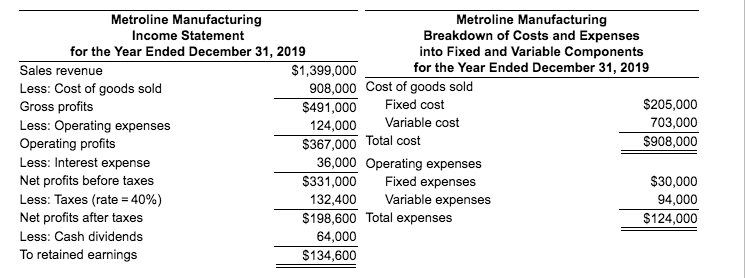
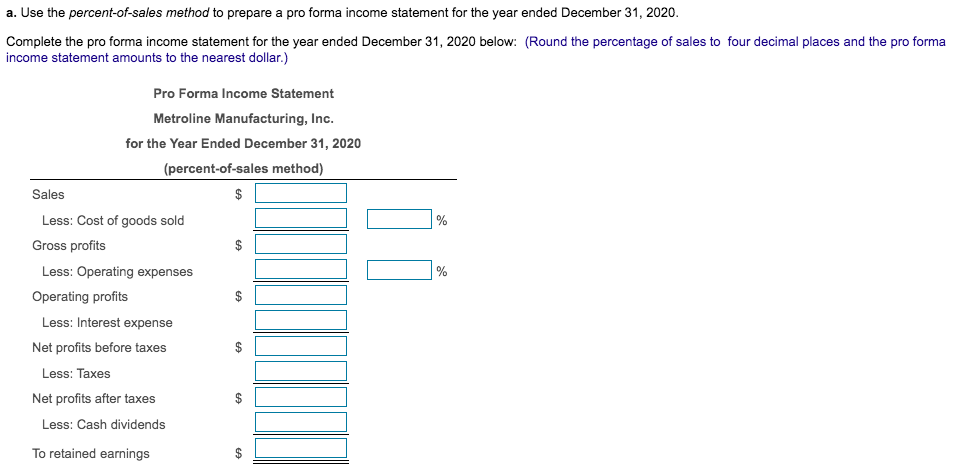
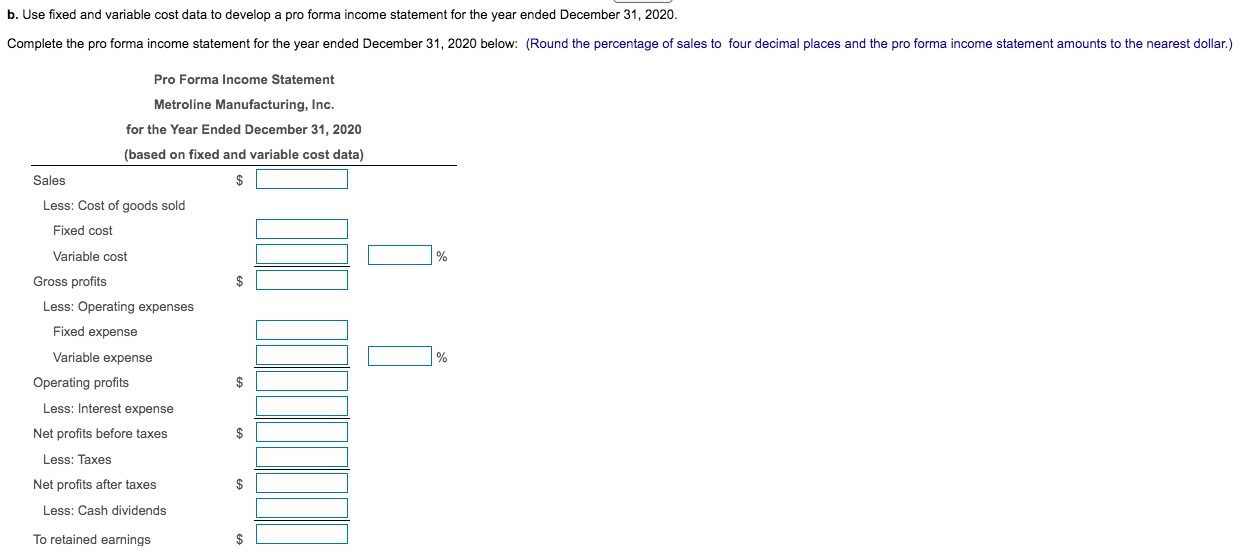
Metroline Manufacturing Metroline Manufacturing Income Statement Breakdown of Costs and Expenses for the Year Ended December 31, 2019 into Fixed and Variable Components Sales revenue $1,399,000 for the Year Ended December 31, 2019 Less: Cost of goods sold 908,000 Cost of goods sold Gross profits $491,000 Fixed cost $205,000 Less: Operating expenses 124,000 Variable cost 703,000 Operating profits $367,000 Total cost $908,000 Less: Interest expense 36,000 Operating expenses Net profits before taxes $331,000 Fixed expenses $30,000 Less: Taxes (rate = 40%) 132,400 Variable expenses 94,000 Net profits after taxes $198,600 Total expenses $124,000 Less: Cash dividends 64,000 To retained earnings $134,600 Pro forma income statement The marketing department of Metroline Manufacturing estimates that its sales in 2020 will be $1.51 million. Interest expense is expected to remain unchanged at $36,000, and the firm plans to pay $70,000 in cash dividends during 2020. Metroline Manufacturing's income statement for the year ended December 31, 2019, is given along with a breakdown of the firm's cost of goods sold and operating expenses into their fixed and variable components. a. Use the percent-of-sales method to prepare pro forma income statement for the year ended December 31, 2020. b. Use fixed and variable cost data to develop a pro forma income statement for the year ended December 31, 2020. c. Compare and contrast the statements developed in parts a. and b. Which statement probably provides the better estimate of 2020 income? Explain why. a. Use the percent-of-sales method to prepare a pro forma income statement for the year ended December 31, 2020. Complete the pro forma income statement for the year ended December 31, 2020 below: (Round the percentage of sales to four decimal places and the pro forma income statement amounts to the nearest dollar.) Pro Forma Income Statement Metroline Manufacturing, Inc. for the Year Ended December 31, 2020 (percent-of-sales method) Sales $ % $ Less: Cost of goods sold Gross profits Less: Operating expenses Operating profits % $ Less: Interest expense Net profits before taxes $ Less: Taxes $ Net profits after taxes Less: Cash dividends To retained earnings $ b. Use fixed and variable cost data to develop a pro forma income statement for the year ended December 31, 2020. Complete the pro forma income statement for the year ended December 31, 2020 below: (Round the percentage of sales to four decimal places and the pro forma income statement amounts to the nearest dollar.) Pro Forma Income Statement Metroline Manufacturing, Inc. for the Year Ended December 31, 2020 (based on fixed and variable cost data) Sales $ Less: Cost of goods sold Fixed cost Variable cost % Gross profits $ Less: Operating expenses Fixed expense Variable expense % Operating profits $ Less: Interest expense Net profits before taxes $ Less: Taxes $ Net profits after taxes Less: Cash dividends To retained earnings $ c. Compare and contrast the statements developed in parts a. and b. Which statement probably provides the better estimate of 2020 income? Explain why. (Select from the drop-down menus.) The pro forma income statement developed using the fixed and variable cost data projects a net profit after taxes due to cost of goods sold and operating expenses. Although the percent-of-sales method projects a more estimate of net profit after taxes, the pro forma income statement that classifies fixed and variable cost is accurate
Step by Step Solution
There are 3 Steps involved in it

Get step-by-step solutions from verified subject matter experts
 Study Help