







Question: 2 0 2 1 Current assets $ 1 , 6 0 0 Net fixed assets 2 , 4 0 0 Total assets $ 4 ,
Current assets $
Net fixed assets
Total assets $
Accounts payable and accruals $
Shortterm debt
Longterm debt
Preferred stock shares
Common stock shares
Retained earnings
Total common equity $
Total liabilities and equity $
Skye's earnings per share last year were $ The common stock sells for $ last year's dividend D was $ and a flotation cost of would be required to sell new common stock. Security analysts are projecting that the common dividend will grow at an annual rate of Skye's preferred stock pays a dividend of $ per share, and its preferred stock sells for $ per share. The firm's beforetax cost of debt is and its marginal tax rate is The firm's currently outstanding annual coupon rate, longterm debt sells at par value. The market risk premium is the riskfree rate is and Skye's beta is The firm's total debt, which is the sum of the company's shortterm debt and longterm debt, equals $ million.
The data has been collected in the Microsoft Excel file below. Download the spreadsheet and perform the required analysis to answer the questions below. Do not round intermediate calculations. Round your answers to two decimal places.
Download spreadsheet Calculating the WACCbxlsx
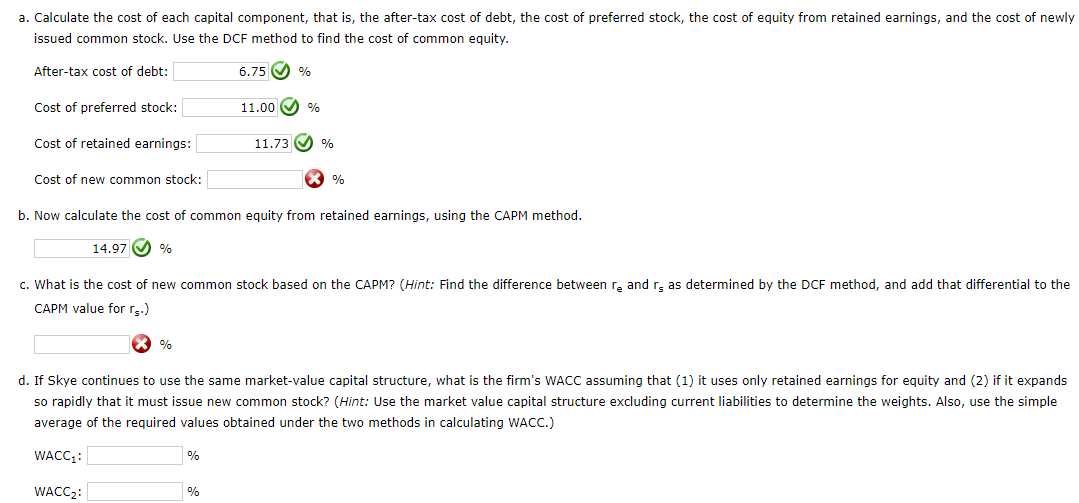
Calculate the cost of each capital component, that is the aftertax cost of debt, the cost of preferred stock, the cost of equity from retained earnings, and the cost of newly issued common stock. Use the DCF method to find the cost of common equity.
Aftertax cost of debt: fill in the blank
Cost of preferred stock: fill in the blank
Cost of retained earnings: fill in the blank
Cost of new common stock: fill in the blank
Now calculate the cost of common equity from retained earnings, using the CAPM method.
fill in the blank
What is the cost of new common stock based on the CAPM? Hint: Find the difference between re and rs as determined by the DCF method, and add that differential to the CAPM value for rs
fill in the blank
If Skye continues to use the same marketvalue capital structure, what is the firm's WACC assuming that it uses only retained earnings for equity and if it expands so rapidly that it must issue new common stock? Hint: Use the market value capital structure excluding current liabilities to determine the weights. Also, use the simple average of the required values obtained under the two methods in calculating WACC.
WACC: fill in the blank
WACC: fill in the blank a Calculate the cost of each capital component, that is the aftertax cost of debt, the cost of preferred stock, the cost of equity from retained earnings, and the cost of newly
issued common stock. Use the DCF method to find the cost of common equity.
Aftertax cost of debt:
D
Cost of preferred stock:
Cost of retained earnings:
Cost of new common stock:
b Now calculate the cost of common equity from retained earnings, using the CAPM method.
c What is the cost of new common stock based on the CAPM? Hint: Find the difference between and as determined by the DCF method, and add that differential to the
CAPM value for
d If Skye continues to use the same marketvalue capital structure, what is the firm's WACC assuming that it uses only retained earnings for equity and if it expands
so rapidly that it must issue new common stock? Hint: Use the market value capital structure excluding current liabilities to determine the weights. Also, use the simple
average of the required values obtained under the two methods in calculating WACC.
WACC :
:
Step by Step Solution
There are 3 Steps involved in it
1 Expert Approved Answer
Step: 1 Unlock

Question Has Been Solved by an Expert!
Get step-by-step solutions from verified subject matter experts
Step: 2 Unlock
Step: 3 Unlock
 Study Help