



Question: 2. (5 points) This question relates to the iron supplementation study covered in class and in your reading (Chong et al., 2016). To begin, consider
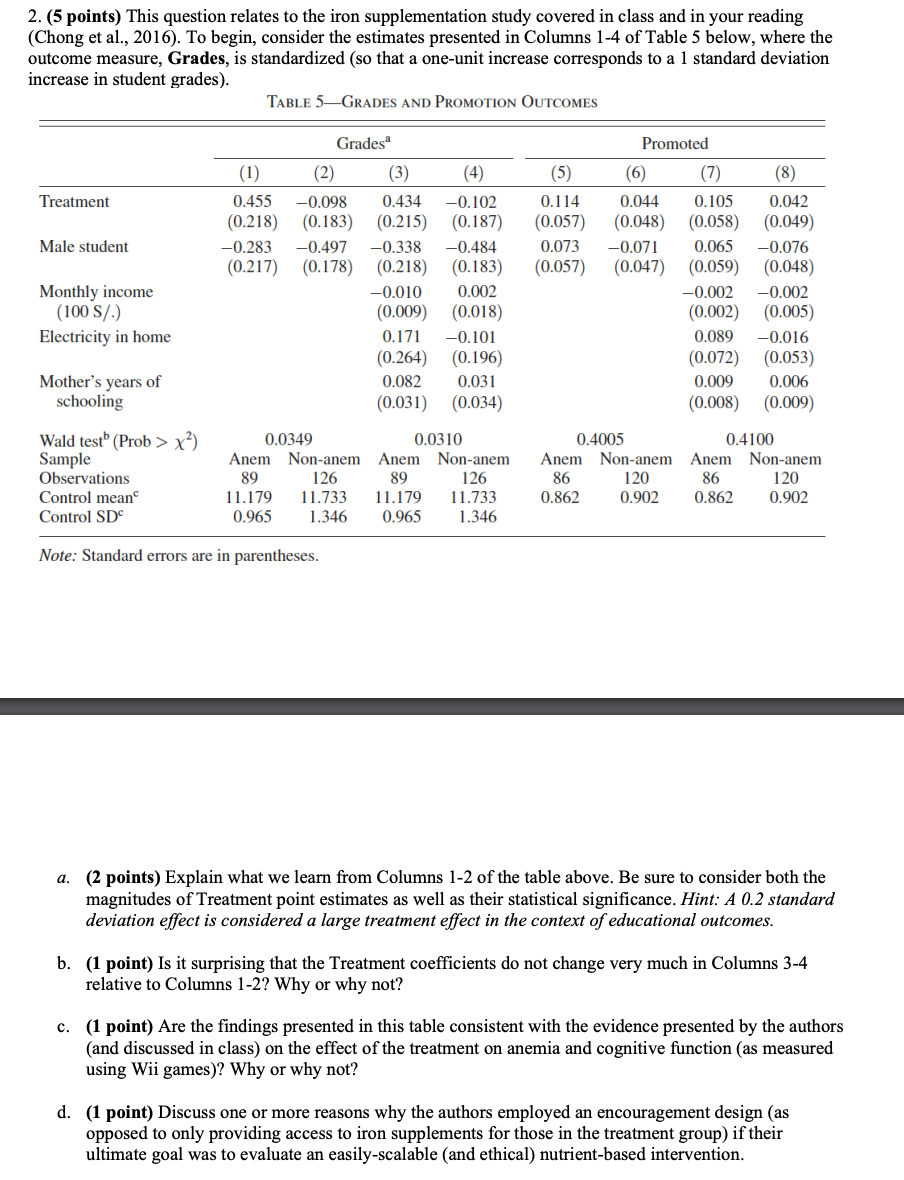
2. (5 points) This question relates to the iron supplementation study covered in class and in your reading (Chong et al., 2016). To begin, consider the estimates presented in Columns 1-4 of Table 5 below, where the outcome measure, Grades, is standardized (so that a one-unit increase corresponds to a 1 standard deviation increase in student grades). TABLE 5GRADES AND PROMOTION OUTCOMES Gradesa Promoted Treatment (1) 0.455 (0.218) -0.283 (0.217) (5) 0.114 (0.057) 0.073 (0.057) (6) 0.044 (0.048) -0.071 (0.047) Male student Monthly income (100 S/.) Electricity in home (2) (3) -0.098 0.434 (0.183) (0.215) -0.497 -0.338 (0.178) (0.218) -0.010 (0.009) 0.171 (0.264) 0.082 (0.031) (4) -0.102 (0.187) -0.484 (0.183) 0.002 (0.018) -0.101 (0.196) 0.031 (0.034) (7) (8) 0.105 0.042 (0.058) (0.049) 0.065 -0.076 (0.059) (0.048) -0.002 -0.002 (0.002) (0.005) 0.089 -0.016 (0.072) (0.053) 0.009 0.006 (0.008) (0.009) Mother's years of schooling Wald test" (Prob > x3) Sample Observations Control mean Control SD 0.0349 0.0310 Anem Non-anem Anem Non-anem 89 126 89 126 11.179 11.733 11.179 11.733 0.965 1.346 0.965 1.346 0.4005 0.4100 Anem Non-anem Anem Non-anem 86 120 86 120 0.862 0.902 0.862 0.902 Note: Standard errors are in parentheses. a. (2 points) Explain what we learn from Columns 1-2 of the table above. Be sure to consider both the magnitudes of Treatment point estimates as well as their statistical significance. Hint: A 0.2 standard deviation effect is considered a large treatment effect in the context of educational outcomes. b. (1 point) Is it surprising that the Treatment coefficients do not change very much in Columns 3-4 relative to Columns 1-2? Why or why not? c. (1 point) Are the findings presented in this table consistent with the evidence presented by the authors (and discussed in class) on the effect of the treatment on anemia and cognitive function (as measured using Wii games)? Why or why not? d. (1 point) Discuss one or more reasons why the authors employed an encouragement design (as opposed to only providing access to iron supplements for those in the treatment group) if their ultimate goal was to evaluate an easily-scalable (and ethical) nutrient-based intervention. 2. (5 points) This question relates to the iron supplementation study covered in class and in your reading (Chong et al., 2016). To begin, consider the estimates presented in Columns 1-4 of Table 5 below, where the outcome measure, Grades, is standardized (so that a one-unit increase corresponds to a 1 standard deviation increase in student grades). TABLE 5GRADES AND PROMOTION OUTCOMES Gradesa Promoted Treatment (1) 0.455 (0.218) -0.283 (0.217) (5) 0.114 (0.057) 0.073 (0.057) (6) 0.044 (0.048) -0.071 (0.047) Male student Monthly income (100 S/.) Electricity in home (2) (3) -0.098 0.434 (0.183) (0.215) -0.497 -0.338 (0.178) (0.218) -0.010 (0.009) 0.171 (0.264) 0.082 (0.031) (4) -0.102 (0.187) -0.484 (0.183) 0.002 (0.018) -0.101 (0.196) 0.031 (0.034) (7) (8) 0.105 0.042 (0.058) (0.049) 0.065 -0.076 (0.059) (0.048) -0.002 -0.002 (0.002) (0.005) 0.089 -0.016 (0.072) (0.053) 0.009 0.006 (0.008) (0.009) Mother's years of schooling Wald test" (Prob > x3) Sample Observations Control mean Control SD 0.0349 0.0310 Anem Non-anem Anem Non-anem 89 126 89 126 11.179 11.733 11.179 11.733 0.965 1.346 0.965 1.346 0.4005 0.4100 Anem Non-anem Anem Non-anem 86 120 86 120 0.862 0.902 0.862 0.902 Note: Standard errors are in parentheses. a. (2 points) Explain what we learn from Columns 1-2 of the table above. Be sure to consider both the magnitudes of Treatment point estimates as well as their statistical significance. Hint: A 0.2 standard deviation effect is considered a large treatment effect in the context of educational outcomes. b. (1 point) Is it surprising that the Treatment coefficients do not change very much in Columns 3-4 relative to Columns 1-2? Why or why not? c. (1 point) Are the findings presented in this table consistent with the evidence presented by the authors (and discussed in class) on the effect of the treatment on anemia and cognitive function (as measured using Wii games)? Why or why not? d. (1 point) Discuss one or more reasons why the authors employed an encouragement design (as opposed to only providing access to iron supplements for those in the treatment group) if their ultimate goal was to evaluate an easily-scalable (and ethical) nutrient-based intervention
Step by Step Solution
There are 3 Steps involved in it

Get step-by-step solutions from verified subject matter experts