





Question: 2. a. c. 3. a. c. 4. a. c. 5. a. c. Ethical egoism provides that ethical decision-making is dependent upon time or place b.
2. a. c. 3. a. c. 4. a. c. 5. a. c. Ethical

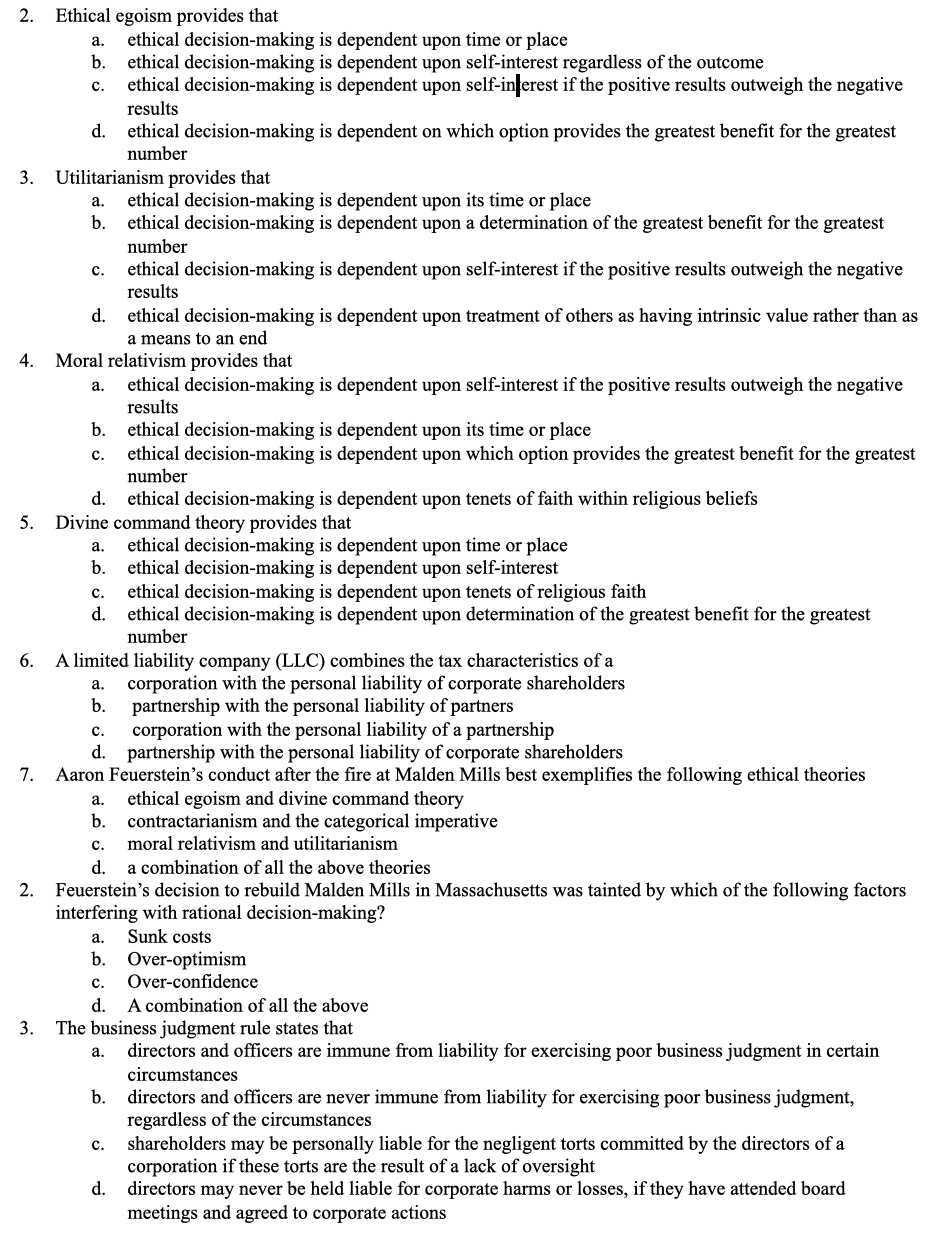
2. a. c. 3. a. c. 4. a. c. 5. a. c. Ethical egoism provides that ethical decision-making is dependent upon time or place b. ethical decision-making is dependent upon self-interest regardless of the outcome ethical decision-making is dependent upon self-interest if the positive results outweigh the negative results d. ethical decision-making is dependent on which option provides the greatest benefit for the greatest number Utilitarianism provides that ethical decision-making is dependent upon its time or place b. ethical decision-making is dependent upon a determination of the greatest benefit for the greatest number ethical decision-making is dependent upon self-interest if the positive results outweigh the negative results d. ethical decision-making is dependent upon treatment of others as having intrinsic value rather than as a means to an end Moral relativism provides that ethical decision-making is dependent upon self-interest if the positive results outweigh the negative results b. ethical decision-making is dependent upon its time or place ethical decision-making is dependent upon which option provides the greatest benefit for the greatest number d. ethical decision-making is dependent upon tenets of faith within religious beliefs Divine command theory provides that ethical decision-making is dependent upon time or place b. ethical decision-making is dependent upon self-interest ethical decision-making is dependent upon tenets of religious faith d. ethical decision-making is dependent upon determination of the greatest benefit for the greatest number A limited liability company (LLC) combines the tax characteristics of a a. corporation with the personal liability of corporate shareholders b. partnership with the personal liability of partners corporation with the personal liability of a partnership d. partnership with the personal liability of corporate shareholders Aaron Feuerstein's conduct after the fire at Malden Mills best exemplifies the following ethical theories ethical egoism and divine command theory b. contractarianism and the categorical imperative moral relativism and utilitarianism d. a combination of all the above theories Feuerstein's decision to rebuild Malden Mills in Massachusetts was tainted by which of the following factors interfering with rational decision-making? Sunk costs b. Over-optimism Over-confidence d. A combination of all the above The business judgment rule states that directors and officers are immune from liability for exercising poor business judgment in certain circumstances b. directors and officers are never immune from liability for exercising poor business judgment, regardless of the circumstances c. shareholders may be personally liable for the negligent torts committed by the directors of a corporation if these torts are the result of a lack of oversight d. directors may never be held liable for corporate harms or losses, if they have attended board meetings and agreed to corporate actions 6. C. 7. a. c. 2. a. c. 3. a

Step by Step Solution

There are 3 Steps involved in it

1 Expert Approved Answer
Step: 1 Unlock blur-text-image

Question Has Been Solved by an Expert!

Get step-by-step solutions from verified subject matter experts

Step: 2 Unlock
Step: 3 Unlock

Students Have Also Explored These Related General Management Questions!