Question: 2. A two-bin system for inventory control eliminates the need for perpetual inventory tracking. 3. An inventory consists of material, parts or stock that are
2. A two-bin system for inventory control eliminates the need for perpetual inventory tracking.
3. An inventory consists of material, parts or stock that are idle, not being used.
4. For a firm that produces items to hold in inventory, in planning the volume to produce setup costs are analogous to ordering costs.
5. Two fundamental decisions that buyers or inventory analysts must make about each item held in the inventory are the timing and size of orders.
6. Forecasting demand and lead time is not a requirement for effective inventory management.
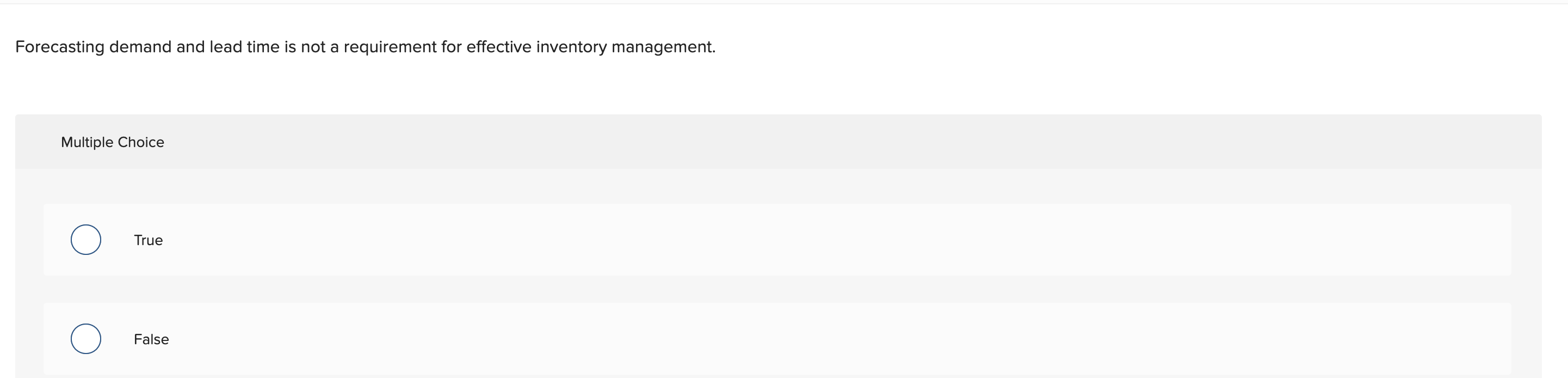
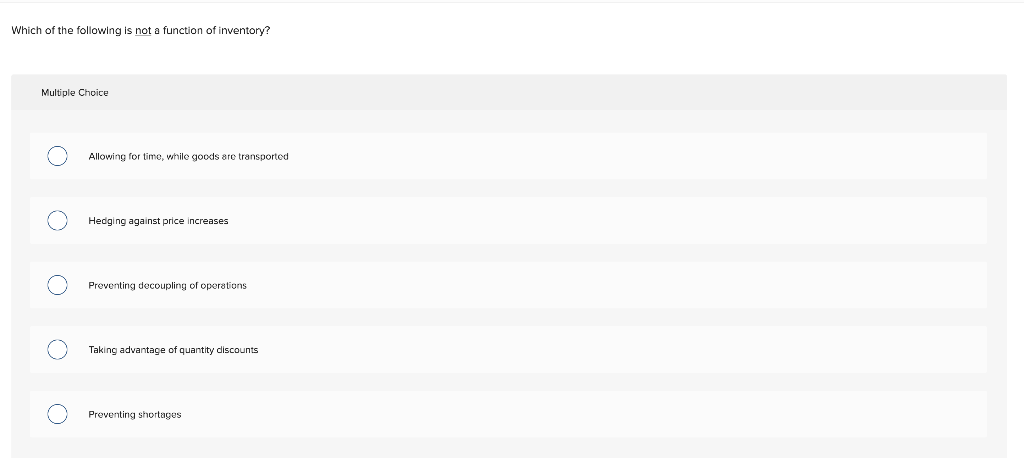
7. Which of the following is not a function of inventory?
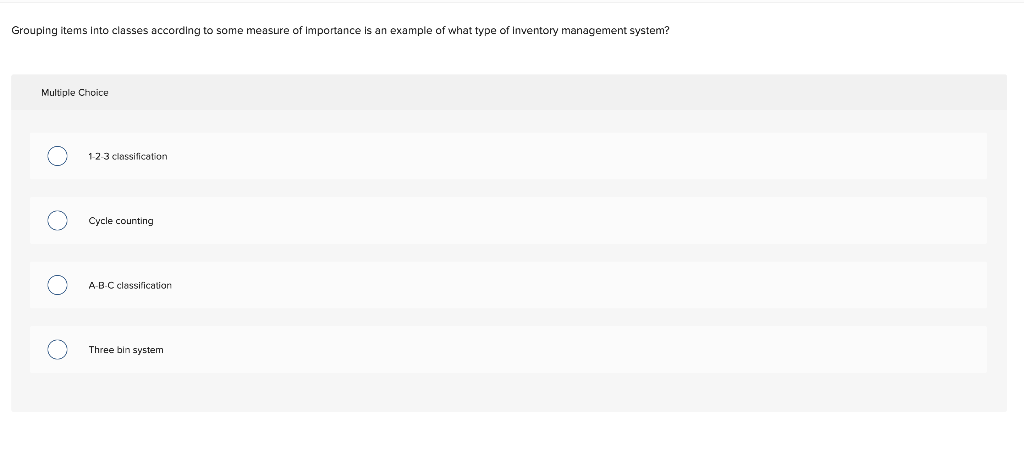
8. Grouping items into classes according to some measure of importance is an example of what type of inventory management system?
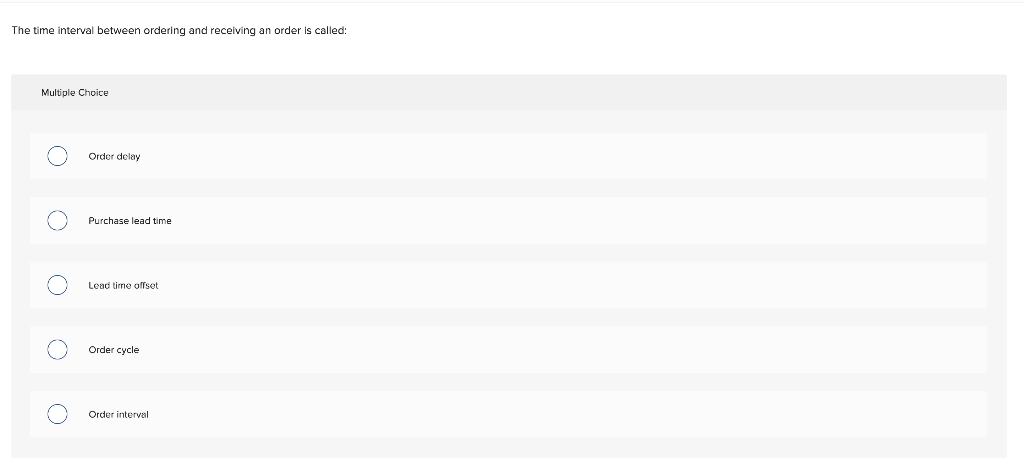
9. The time interval between ordering and receiving an order is called:
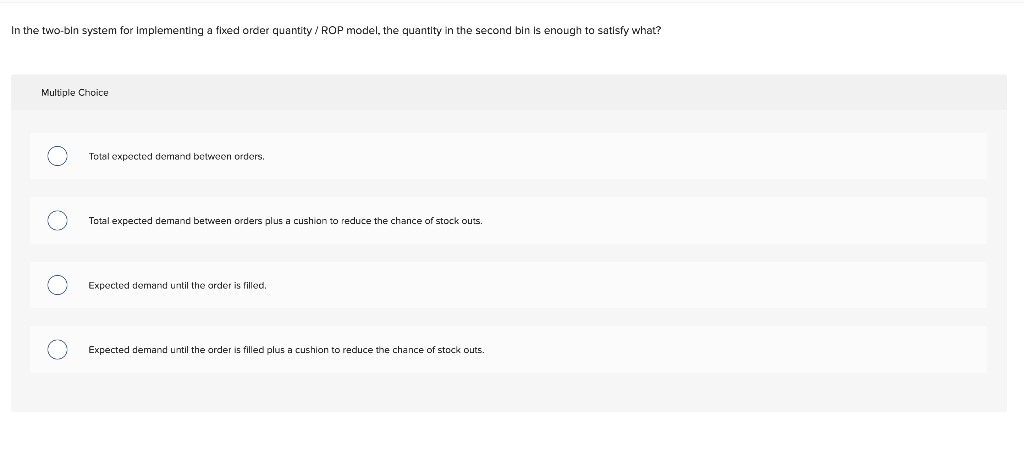
10. In the two-bin system for implementing a fixed order quantity / ROP model, the quantity in the second bin is enough to satisfy what?
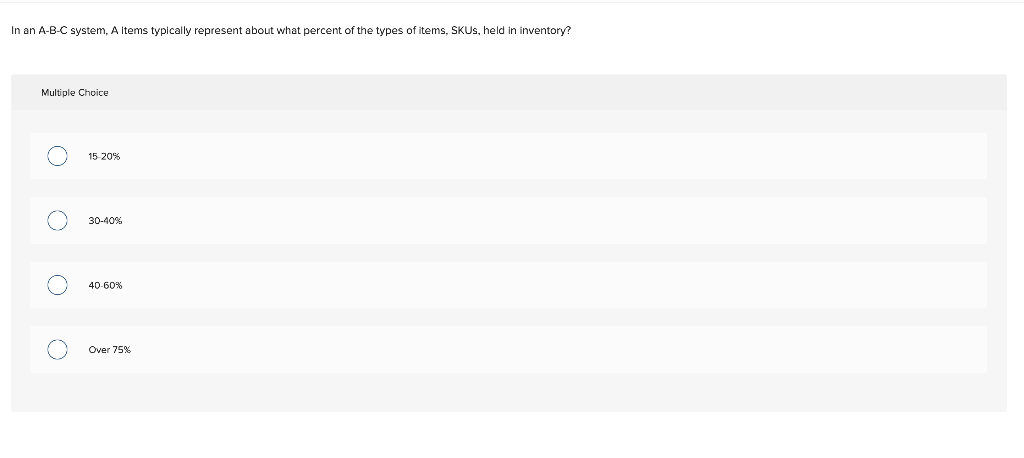
11. In an A-B-C system, A items typically represent about what percent of the types of items, SKUs, held in inventory?
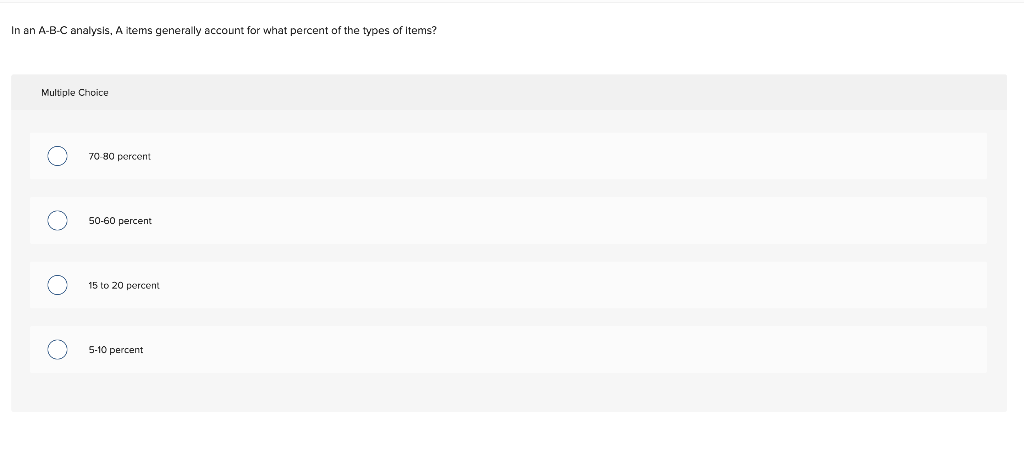
12. In an A-B-C analysis, A items generally account for what percent of the types of items?
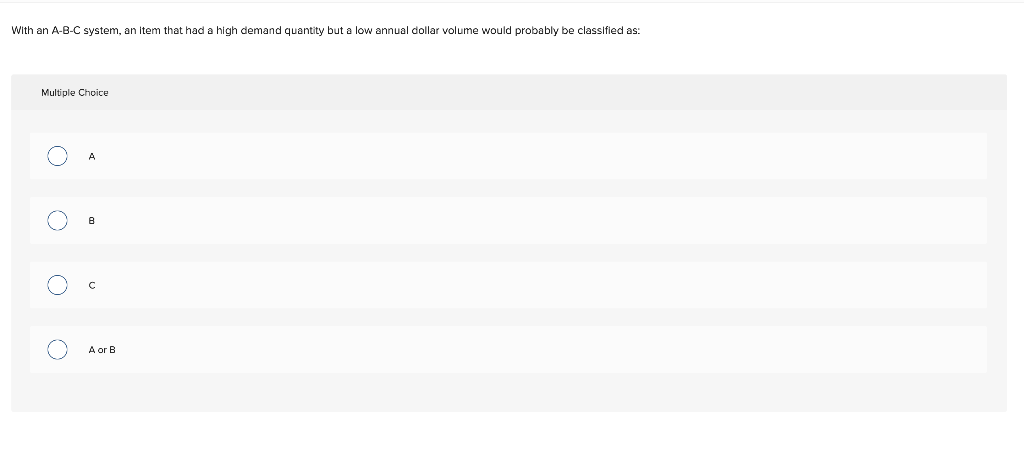
13. With an A-B-C system, an item that had a high demand quantity but a low annual dollar volume would probably be classified as:
14. What function of inventory is the term "anticipation inventory" associated with?
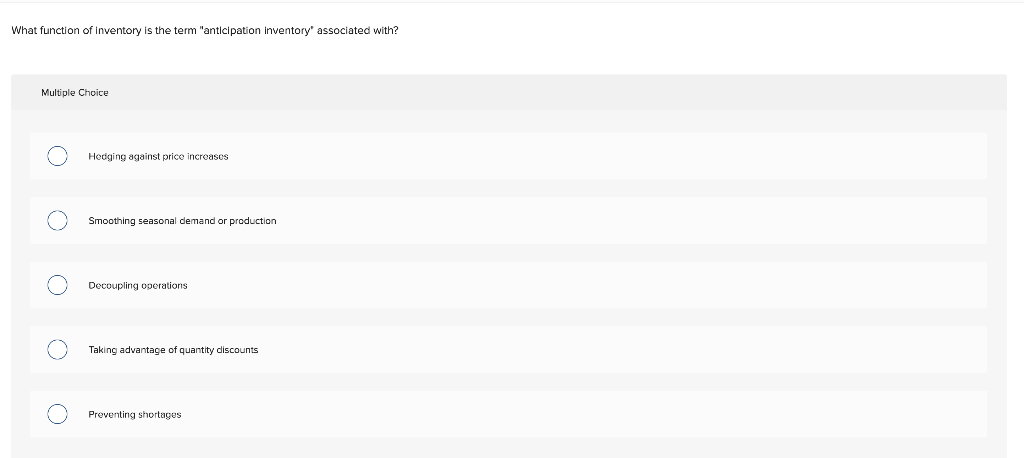
A two-bin system for inventory control eliminates the need for perpetual inventory tracking. True or False True False An inventory consists of material, parts or stock that are idle, not being used. Multiple Choice True False For a firm that produces items to hold in inventory, in planning the volume to produce setup costs are analogous to ordering costs. Multiple Choice True False Two fundamental decisions that buyers or inventory analysts must make about each item held in the inventory are the timing and size of orders. True or False True False Forecasting demand and lead time is not a requirement for effective inventory management. Multiple Choice True False Which of the following is not a function of inventory? Multiple Choice 0 Allowing for time, while goods are transported Hedging against price increases Preventing decoupling of operations 0 Taking advantage of quantity discounts Preventing shortages Grouping items into classes according to some measure of importance is an example of what type of inventory management system? Multiple Choice 1 2 3 classification O Cycle counting O A-B-C classification O Three bin system The time interval between ordering and receiving an order is called: Multiple Choice 0 Order delay O Purchase lead time o Lead time offset o Order cycle O Order interval In the two-bln system for implementing a fixed order quantity / ROP model, the quantity in the second bin is enough to satisfy what? Multiple Choice Total expected demand between orders. 0 Total expected demand between orders plus a cushion to reduce the chance of stock outs. Expected demand until the order is filled. Expected demand until the order is filled plus a cushion to reduce the chance of stock outs. In an A-B-C system. A items typically represent about what percent of the types of items, SKUs, held in inventory? Multiple Choice o 15-20% o 30-40% 40-60% O o Over 75% In an A-B-C analysis, A items generally account for what percent of the types of items? Multiple Choice O 70-80 percent O 50-60 percent O 15 to 20 percent 5-10 percent With an A-B-C system, an item that had a high demand quantity but a low annual dollar volume would probably be classified as: Multiple Choice A O c O A or B What function of inventory is the term "anticipation inventory" associated with? Multiple Choice O Hedging against price increases Smoothing seasonal demand or production Decoupling operations 0 Taking advantage of quantity discounts Preventing shortages









 Study Help