







Question: 2. After seeing your analysis, Cal decides to lower the price of gas from $2.758 to $2.558 per gallon. After this change, the volume sold
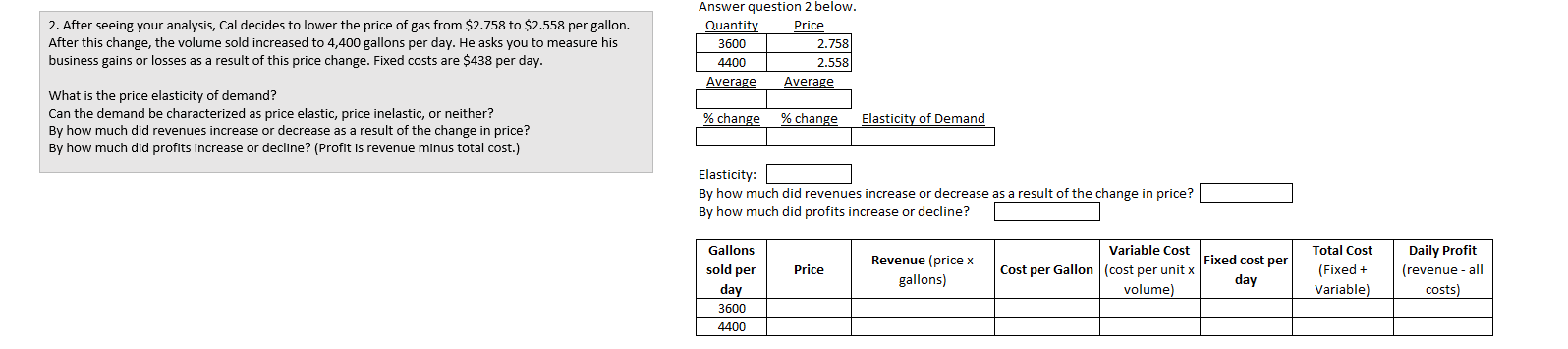
2. After seeing your analysis, Cal decides to lower the price of gas from $2.758 to $2.558 per gallon. After this change, the volume sold increased to 4,400 gallons per day. He asks you to measure his business gains or losses as a result of this price change. Fixed costs are $438 per day.
What is the price elasticity of demand?
Can the demand be characterized as price elastic, price inelastic, or neither?
By how much did revenues increase or decrease as a result of the change in price?
By how much did profits increase or decline? (Profit is revenue minus total cost.)
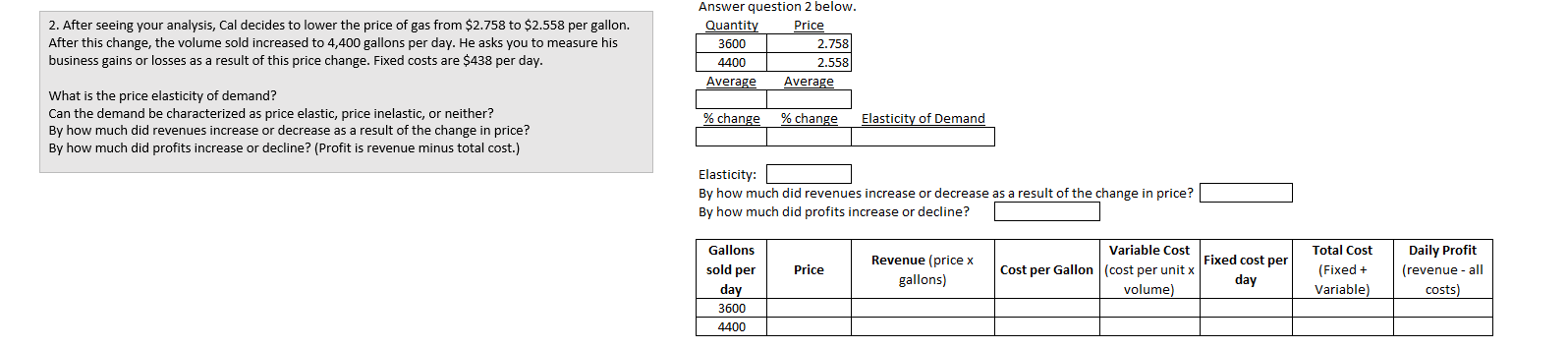
Answer question 2 below. 2. After seeing your analysis, Cal decides to lower the price of gas from $2.758 to $2.558 per gallon. Quantity Price After this change, the volume sold increased to 4,400 gallons per day. He asks you to measure his 3600 2.758 business gains or losses as a result of this price change. Fixed costs are $438 per day. 4400 2.558 Average Average What is the price elasticity of demand? Can the demand be characterized as price elastic, price inelastic, or neither? % change % change Elasticity of Demand By how much did revenues increase or decrease as a result of the change in price? By how much did profits increase or decline? (Profit is revenue minus total cost.) Elasticity: By how much did revenues increase or decrease as a result of the change in price? By how much did profits increase or decline? Gallons Variable Cost Total Cost Daily Profit Revenue (price x Fixed cost per sold per Price Cost per Gallon (cost per unit x (Fixed + (revenue - all gallons) day day volume) Variable) costs) 3600 4400
Step by Step Solution
There are 3 Steps involved in it

Get step-by-step solutions from verified subject matter experts
 Study Help