







Question: 2 . Antilock Braking Systems ( ABS ) allow vehicles to come to an emergency stop under conditions of the static coefficient of friction,
Antilock Braking Systems ABS allow vehicles to come to an emergency stop under conditions of the static coefficient of friction, mumathrms between the tire and the road. Vehicles without ABS will lock up skid the tires under conditions of the dynamic coefficient of friction, muk between the tire and the road.
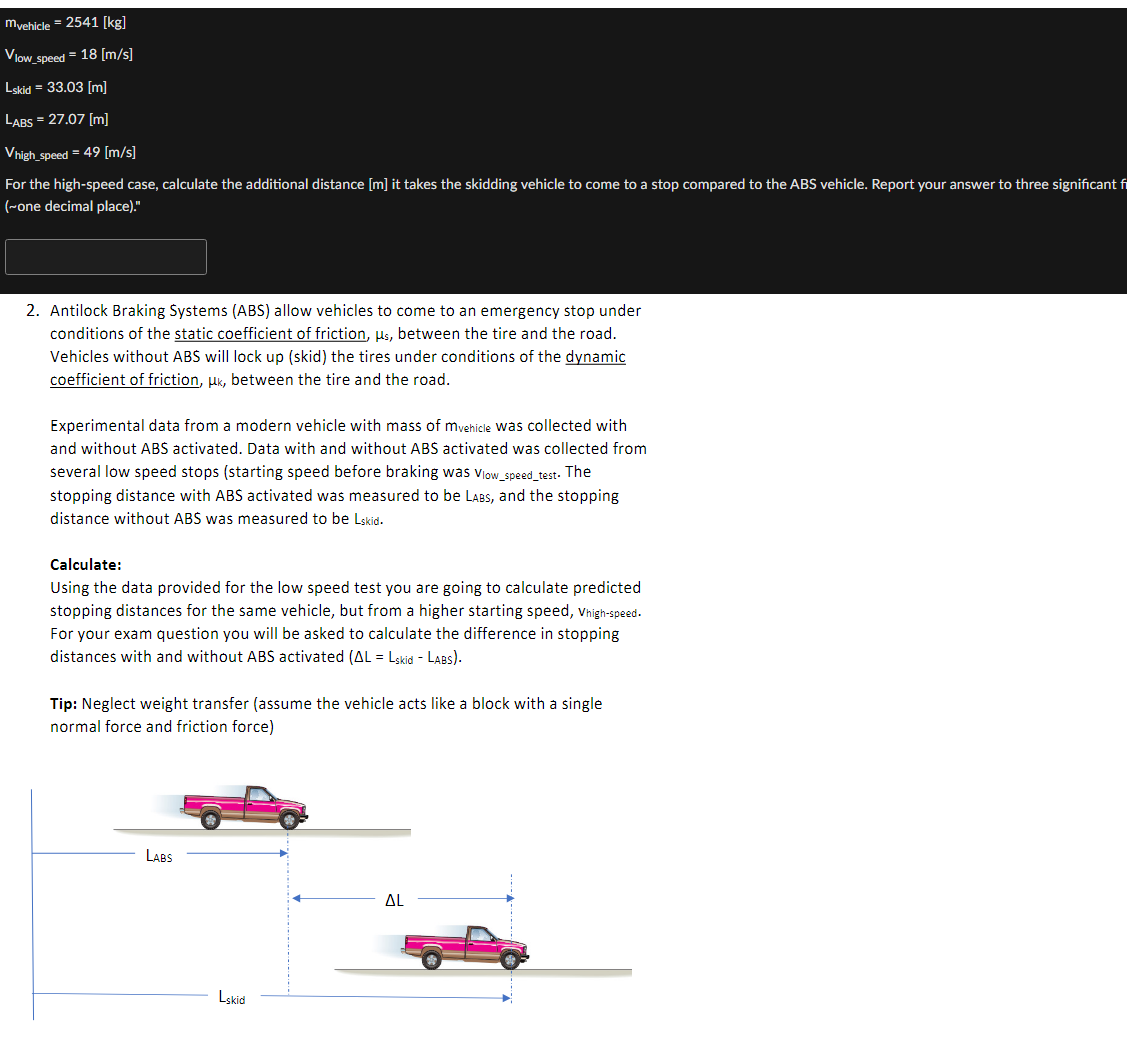
Experimental data from a modern vehicle with mass of mvehicle was collected with and without ABS activated. Data with and without ABS activated was collected from several low speed stops starting speed before braking was viowspeedtest. The stopping distance with ABS activated was measured to be LaBs, and the stopping distance without ABS was measured to be mathrmLtext skid
Calculate:
Using the data provided for the low speed test you are going to calculate predicted stopping distances for the same vehicle, but from a higher starting speed, vhighspeed.
For your exam question you will be asked to calculate the difference in stopping distances with and without A B S activated Delta mathrmLmathrmLtext skid mathrmLmathrmABS
Tip: Neglect weight transfer assume the vehicle acts like a block with a single normal force and friction force
Step by Step Solution
There are 3 Steps involved in it
1 Expert Approved Answer
Step: 1 Unlock

Question Has Been Solved by an Expert!
Get step-by-step solutions from verified subject matter experts
Step: 2 Unlock
Step: 3 Unlock
 Study Help