







Question: 2) Before any training is developed, a training needs assessment must be conducted as an HR manager or trainer. How would you conduct a training
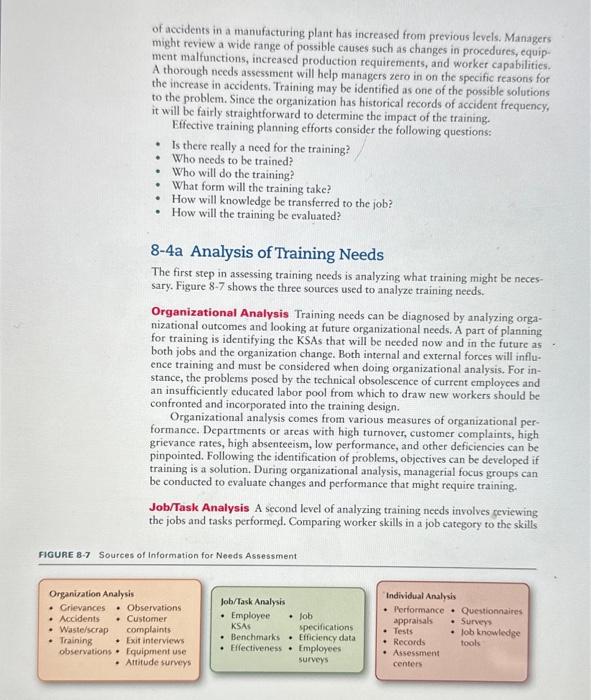
ify three biyses used he training 8-4 Training Needs Assessment Assessing organizational training needs is the diagnostic phase of a training plan. This assessment includes issues related to employee and organizational performance to determine if training can help. Needs assessment measures the competencies of a company, a group, or an individual as they relate to what is required. It is necessary to find out what is happening and what should be happening before deciding if training will help, and if so, what kind of training is needed. Identifying gaps in performance is key to the assessment process. For instance, suppose the frequency of accidents in a manufacturing plant has increased from previous levels. Managers might review a wide range of possible causes such as changes in procedures, equipment malfunctions, increased production requirements, and worker capabilities. A thorough needs assessment will help managers zero in on the specific reasons for the increase in accidents. Training may be identified as one of the possible solutions to the problem. Since the organization has historical records of accident frequency, it will be fairly straightforward to determine the impact of the training. Effective training planning efforts consider the following questions: - Is there really a need for the training? - Who needs to be trained? - Who will do the training? - What form will the training take? - How will knowledge be transferred to the job? - How will the training be evaluated? 8-4a Analysis of Training Needs The first step in assessing training needs is analyzing what training might be necessary. Figure 8-7 shows the three sources used to analyze training needs. Organizational Analysis Training needs can be diagnosed by analyzing organizational outcomes and looking at future organizational needs. A part of planning for training is identifying the KSAs that will be needed now and in the future as both jobs and the organization change. Both internal and external forces will influence training and must be considered when doing organizational analysis. For instance, the problems posed by the technical obsolescence of current employees and an insufficiently educated labor pool from which to draw new workers should be confronted and incorporated into the training design. Organizational analysis comes from various measures of organizational performance. Departments or areas with high turnover, customer complaints, high grievance rates, high absenteeism, low performance, and other deficiencies can be pinpointed. Following the identification of problems, objectives can be developed if training is a solution. During organizational analysis, managerial focus groups can be conducted to evaluate changes and performance that might require training. Job/Task Analysis A second level of analyzing training needs involves geviewing the jobs and rasks performed. Comparing worker skills in a job category to the skills
Step by Step Solution
There are 3 Steps involved in it

Get step-by-step solutions from verified subject matter experts
 Study Help