







Question: 2.) Consider a rm for which production depends on two normal inputs, labor {E} and capital (K). lts production function is f{E, K) = 2E2f3K153
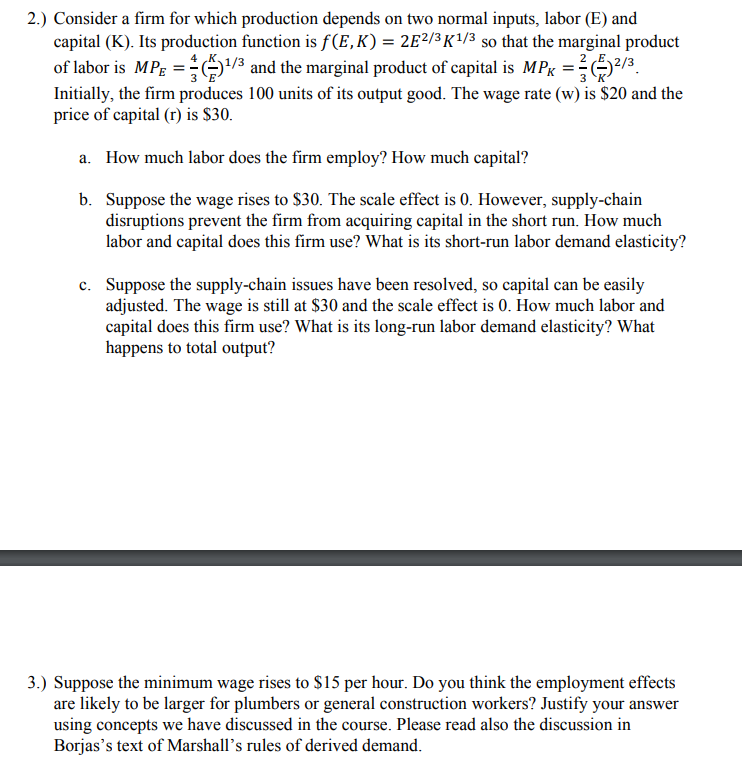
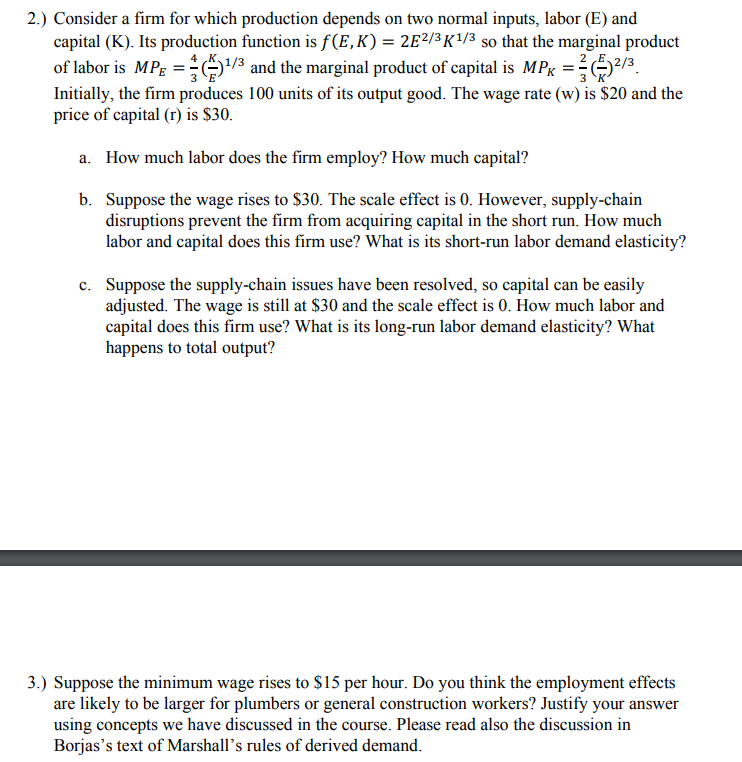
2.) Consider a rm for which production depends on two normal inputs, labor {E} and capital (K). lts production function is f{E, K) = 2E2f3K153 so that the marginal product 0f labor is MP5 = 2%)\"; and the marginal product of capital is MPH = (%)2v'3_ Initially, the firm produces 10!] units of its output good. The wage rate (w) is $20 and the price of capital (r) is $30. a. How much labor does the rm employ? How much capital? 13. Suppose the wage rises to $30. The scale effect is I]. However, supply-chain disruptions prevent the rm from acquiring capital in the short run. How much labor and capital does this firm use? What is its short-run labor demand elasticity? :1. Suppose the supply-chain issues have been resolved, so capital can be easily adjusted. The wage is still at $30 and the scale effect is 0. How much labor and capital does this rm use? What is its long-run labor demand elasticity? TWhat happens to total output? 3.) Suppose the minimum wage rises to S [5 per hour. Do you think the employment effects are likely to be larger for plumbers or general construction workers? Justify your answer using concepts we have discussed in the course. Please read also the discussion in Borjas's text of Marshall's rules of derived demand
Step by Step Solution
There are 3 Steps involved in it

Get step-by-step solutions from verified subject matter experts
 Study Help