Question: #2 exists between solutions developed across 150-plus categories and their need to prioritize and integrate these into a unified whole to excite and engage shoppers,
#2
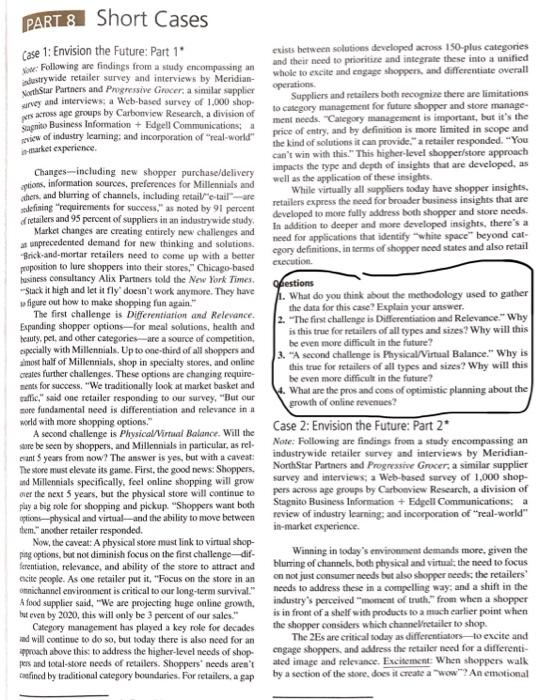
exists between solutions developed across 150-plus categories and their need to prioritize and integrate these into a unified whole to excite and engage shoppers, and differentiate overall operations Suppliers and retailers both recognize there are limitations to category management for future shopper and store manage ment needs. "Category management is important, but it's the price of entry, and by definition is more limited in scope and the kind of solutions it can provide a retailer responded. "You can't win with this." This higher level shopper/store approach impacts the type and depth of insights that are developed, as well as the application of these insights While virtually all suppliers today have shopper insights, retailers express the need for broader business insights that are developed to more fully address both shopper and store needs. In addition to deeper and more developed insights, there's a need for applications that identify "white space" beyond cat- egory definitions, in terms of shopper need states and also retail erection PART 8 Short Cases Case 1: Envision the Future: Part 1 Note: Following are findings from a study encompassing an dustrywide retailer survey and interviews by Meridian- NorthStar Partners and Progressive Grocer, a similar supplier arvey and interviews a Web-based survey of 1.000 shop pers across age groups by Carbonview Research, a division of Sagnito Business Information + Edgell Communications; sview of industry learning and incorporation of "real-world" arket experience Changes-including new shopper purchase/delivery aptions, information sources, preferences for Millennials and athers, and blurring of channels, including retail/e-tail-are defining "requirements for success." as noted by 91 percent d retailers and 95 percent of suppliers in an industrywide study Market changes are creating entirely new challenges and as unprecedented demand for new thinking and solutions Brick-and-mortar retailers need to come up with a better proposition to lure shoppers into their stores, Chicago-based business consultancy Alix Partners told the New York Times. Stack it high and let it fly doesn't work anymore. They have figure out how to make shopping fun again." The first challenge is Differentiation and Relevance. Expanding shopper options for meal solutions, health and beauty, pet, and other categories are a source of competition, specially with Millennials. Up to one-third of all shoppers and zimost half of Millennials, shop in specialty stores, and online creates further challenges. These options are changing require ments for success. "We traditionally look at market basket and tallic," said on retailer responding to our survey, "But our nete fundamental need is differentiation and relevance in a world with more shopping options." A second challenge is Physical/Virtual Balance. Will the Store be seen by shoppers, and Millennials in particular, as rel. esant years from now? The answer is yes, but with a caveat: The store must elevate its game. First, the good news: Shoppers. und Millennials specifically, feel online shopping will grow over the next 5 years, but the physical store will continue to play a big role for shopping and pickup. "Shoppers want both Option-physical and virtual and the ability to move between them." another retailer responded. Now, the caveat: A physical store must link to virtual shop- ping options, but not diminish focus on the first challenge-dif- ferentiation, relevance, and ability of the store to attract and cruite people. As one retailer put it. "Focus on the store in an omnichannel environment is critical to our long-term survival." A food supplier said, "We are projecting huge online growth, but even by 2020, this will only be 3 percent of our sales." Category management has played a key role for decades and will contime to do so, but today there is also need for an approach above this to address the higher level needs of shop- fers and total-store needs of retailers. Shoppers' needs aren't crofined by traditional category boundaries. For retailers, a gap gestions 1. What do you think about the methodology used to gather the data for this case? Explain your answer. 2. The first challenge is Differentiation and Relevance." Why is this true for retailers of all types and sizes? Why will this be even more difficult in the future? 3. "A second challenge is Physical/Vinal Balance." Why is this true for retailers of all types and sizes? Why will this he even more difficult in the future? What are the pros and cons of optimistic planning about the growth of online revenues? Case 2: Envision the Future: Part 2 Note: Following are findings from a study encompassing an industrywide retailer survey and interviews by Meridian- NorthStar Partners and Progressive Grocer, a similar supplier survey and interviews, a Web-based survey of 1,000 shop- pers across age groups by Carbonview Research, a division of Stagnito Business Information + Edgell Communications a review of industry learning, and incorporation of "real-world" in-market experience Winning in today's environment demands more, given the blurring of channels, both physical and virtual, the need to focus on not just consumer needs but also shopper needs, the retailers' needs to address these in a compelling way, and a shift in the industry's perceived moment of truth." from when a shopper is in front of a shelf with products to a much earlier point when the shopper considers which channel/retailer to shop The 2Es are critical today as differentiators to excite and engage shoppers, and address the retailer need for a differenti- ated image and relevance. Excitement: When shoppers walk by a section of the store does it create a wow? An emotional




