Question: 2) Match the terms given below with the denitions or descriptions that follow by placing the appropriate letter in the space provided. 10. meow? Analysis
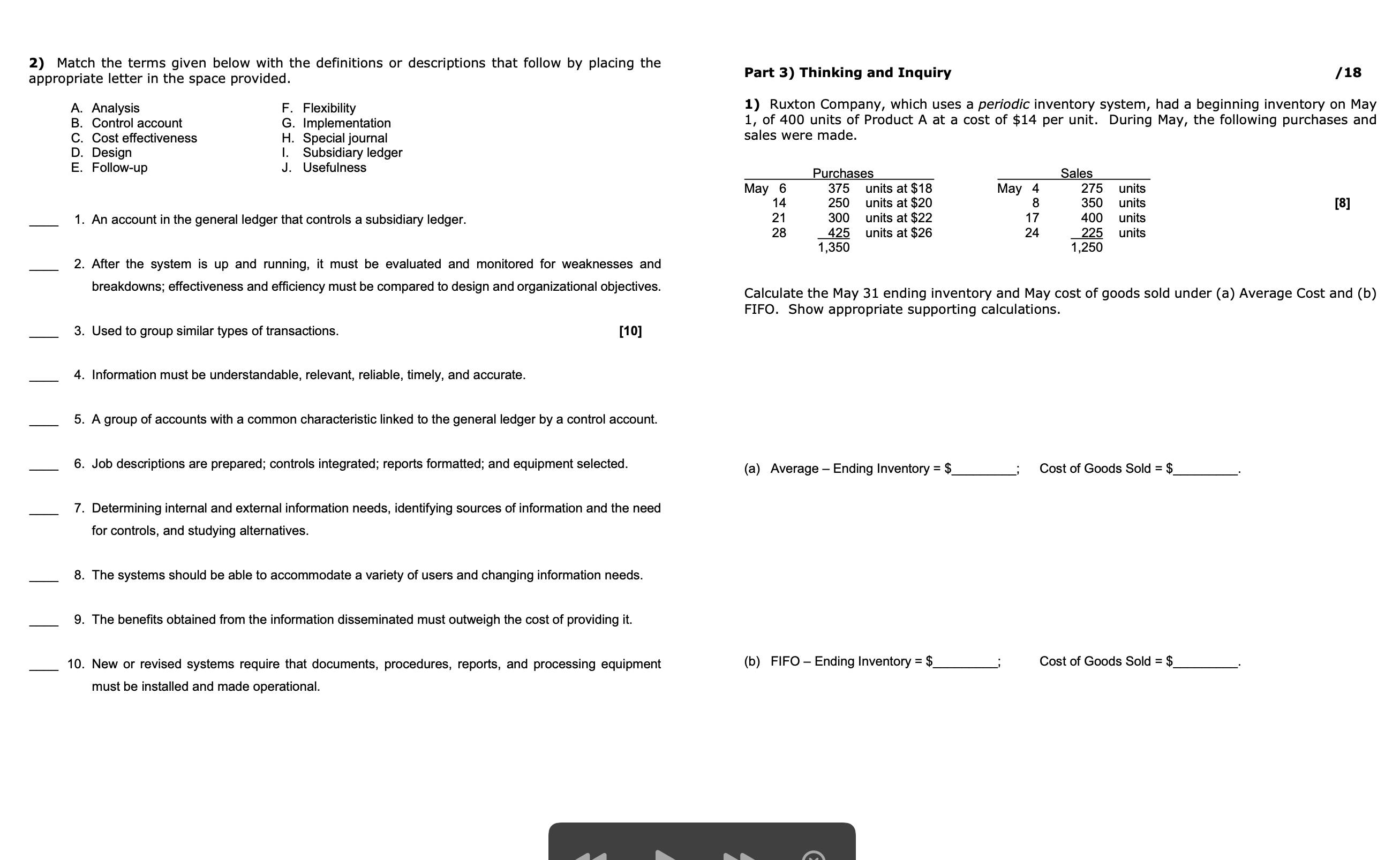
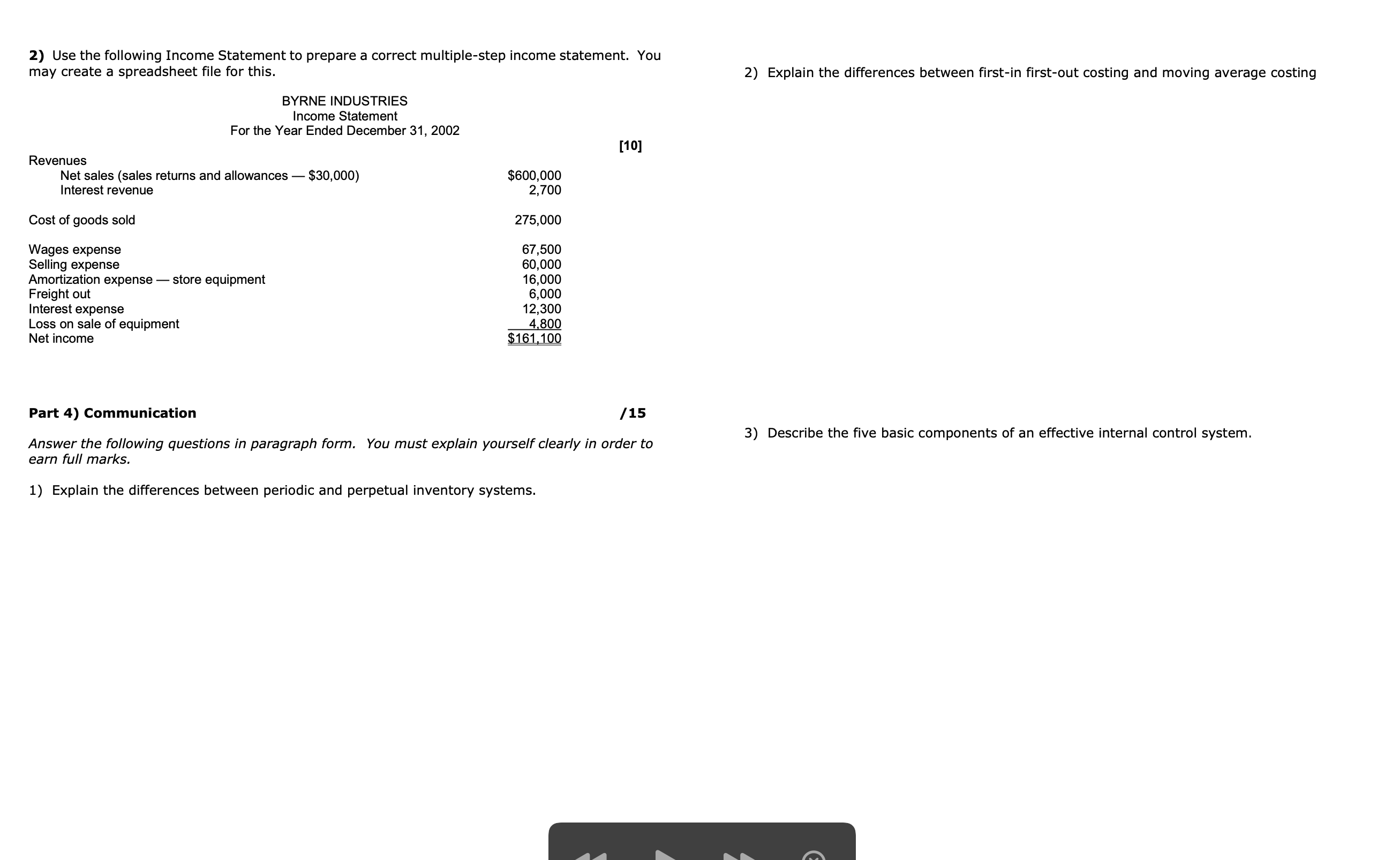
2) Match the terms given below with the denitions or descriptions that follow by placing the appropriate letter in the space provided. 10. meow? Analysis F. Flexibility Control account G. Implementation Cost effectiveness H. Special journal Design I. Subsidiaryledger Follow-up J. Usefulness . An account in the general ledger that controls a subsidiary ledger. . After the system is up and running, it must be evaluated and monitored for weaknesses and breakdowns; effectiveness and efciency must be compared to design and organizational objectives. Used to group similar types of transactions. [10] Information must be understandable, relevant, reliable, timely, and accurate. . A group of accounts with a common characteristic linked to the general ledger by a control account. Job descriptions are prepared; controls integrated; reports formatted; and equipment selected. Determining internal and external information needs, identifying sources of information and the need for controls, and studying alternatives. The systems should be able to accommodate a variety of users and changing information needs. The benets obtained from the information disseminated must outweigh the cost of providing it. New or revised systems require that documents, procedures. reports. and processing equipment must be installed and made operational. Part 3) Thinking and Inquiry [18 1) Ruxton Company, which uses a periodic inventory system, had a beginning inventory on May 1, of 400 units of Product A at a cost of $14 per unit. During May, the following purchases and sales were made. Purchases Sales May 6 375 units at $18 May 4 275 units 14 250 units at $20 8 350 units [8] 21 300 units at $22 17 400 units 28 425 units at $26 24 225 units 1,350 1,250 calculate the May 31 ending inventory and May cost of goods sold under (a) Average Cost and (b) FIFO. Show appropriate supporting calculations. (a) Average Ending Inventory = $ Cost of Goods Sold = $ (b) FIFO Ending Inventory = $ ; Cost of Goods Sold = $ 2) Use the following Income Statement to prepare a correct multiple-step income statement. You may create a spreadsheet le for this. 2) Explain the differences between rst-in rst-out costing and moving average costing BYRNE INDUSTRIES Income Statement For the Year Ended December 31, 2002 [10] Revenues Net sales (sales returns and allowances $30,000) $600,000 Interest revenue 2,700 Cost of goods sold 275,000 Wages expense 67,500 Selling expense 60,000 Amortization expense store equipment 16,000 Freight cut 6,000 Interest expense 12,300 Loss on sale of equipment 4 800 Net income 5% Part 4) Communication /15 . , , . , 3) Describe the ve basic components of an effective internal control system. Answer the followmg questions In paragraph form. You must explain yourself clearly In order to earn full marks. 1) Explain the differences between periodic and perpetual inventory systems
Step by Step Solution
There are 3 Steps involved in it
1 Expert Approved Answer
Step: 1 Unlock
Question Has Been Solved by an Expert!
Get step-by-step solutions from verified subject matter experts
Step: 2 Unlock
Step: 3 Unlock
Students Have Also Explored These Related Accounting Questions!









 Study Help