







Question: 2 Points Let's say we are using the union-find (UF) data structure to solve the dynamic connectivity problem with 10 sites and input pairs (1,
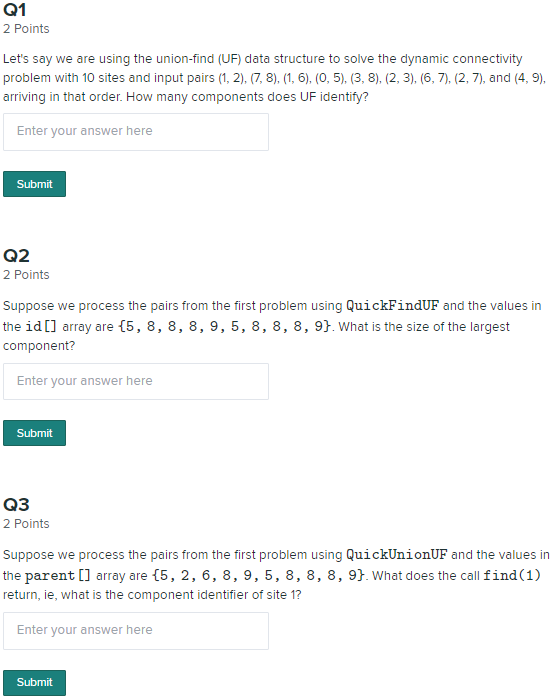
2 Points Let's say we are using the union-find (UF) data structure to solve the dynamic connectivity problem with 10 sites and input pairs (1, 2),(7, 8). (1, 6), (0, 5), (3, 8). (2, 3). (6,7),(2,7), and (4,9) ariving in that order How many components does UuF identiy Enter your answer here Submit Q2 2 Points Suppose we process the pairs from the first problem using QuickFindUF and the values in the id[] array are (5, 8, 8, 8, 9, 5, 8, 8, 8, 9J. What is the size of the largest component? Enter your answer here Submit Q3 2 Points Suppose we process the pairs from the first problem using QuickUnionUF and the values in the parent array are [5, 2, 6, 8, 9, 5, 8, 8, 8, 9} What does the call find (1) return, ie, what is the component identifier of site 1? Enter your answer here Submit 2 Points Let's say we are using the union-find (UF) data structure to solve the dynamic connectivity problem with 10 sites and input pairs (1, 2),(7, 8). (1, 6), (0, 5), (3, 8). (2, 3). (6,7),(2,7), and (4,9) ariving in that order How many components does UuF identiy Enter your answer here Submit Q2 2 Points Suppose we process the pairs from the first problem using QuickFindUF and the values in the id[] array are (5, 8, 8, 8, 9, 5, 8, 8, 8, 9J. What is the size of the largest component? Enter your answer here Submit Q3 2 Points Suppose we process the pairs from the first problem using QuickUnionUF and the values in the parent array are [5, 2, 6, 8, 9, 5, 8, 8, 8, 9} What does the call find (1) return, ie, what is the component identifier of site 1? Enter your answer here Submit
Step by Step Solution
There are 3 Steps involved in it

Get step-by-step solutions from verified subject matter experts
 Study Help