Question: 2. Problem Definition The problem analyzed in this project is to design a foundation for a multi-story office building with frame structure. The upper loads
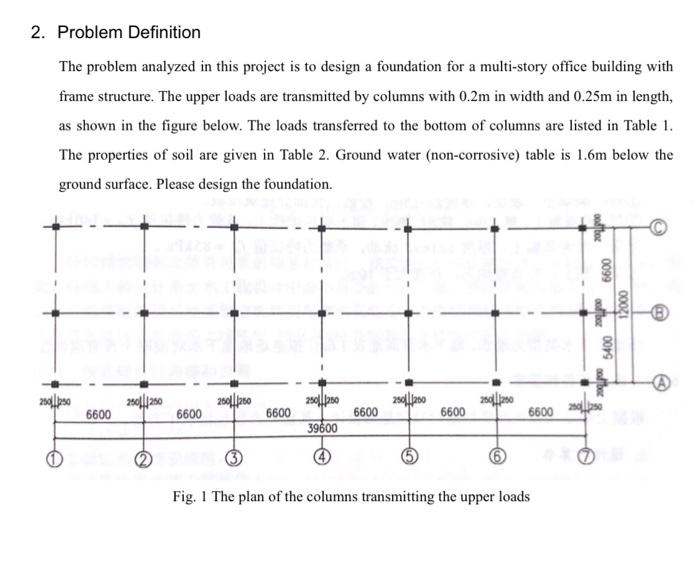
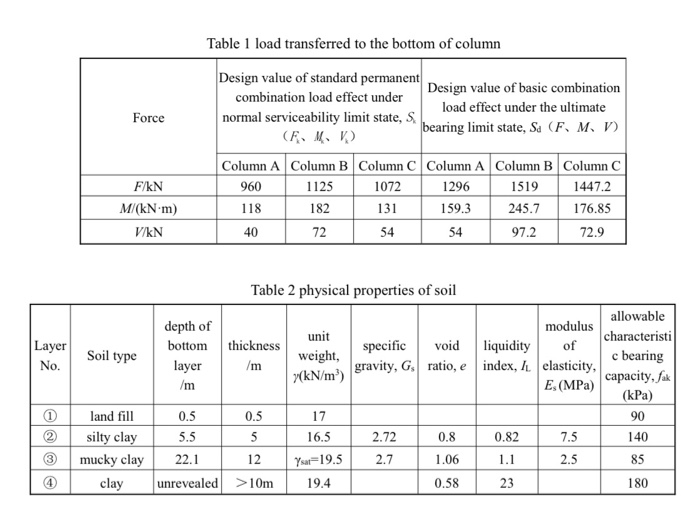
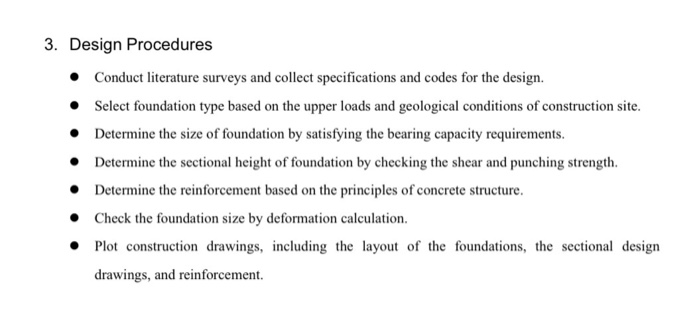
2. Problem Definition The problem analyzed in this project is to design a foundation for a multi-story office building with frame structure. The upper loads are transmitted by columns with 0.2m in width and 0.25m in length, as shown in the figure below. The loads transferred to the bottom of columns are listed in Table 1. The properties of soil are given in Table 2. Ground water (non-corrosive) table is 1.6m below the ground surface. Please design the foundation. obox 6600 other 12000 5400 2.po 2501|bso 250|||250 250/1250 250100200 250|||200 2001|280 250 6600 6600 6600 6600 6600 6600 39600 Fig. 1 The plan of the columns transmitting the upper loads Table 1 load transferred to the bottom of column Force Design value of standard permanent combination load effect under Design value of basic combination normal serviceability limit state, load effect under the ultimate (FMD bearing limit state, Sd (F. M. D) Column A Column B Column Column A Column B Column C 960 1125 1072 1296 1519 1447.2 118 182 131 159.3 245.7 176.85 40 72 54 54 97.2 72.9 F/kN M/(kN m) V/KN Layer No. Soil type Table 2 physical properties of soil allowable depth of modulus unit bottom thickness characteristi specific void liquidity of weight, c bearing layer /m gravity, Gratio, e index, I elasticity, W(kN/m) capacity, fak Es (MPa) (kPa) 0.5 0.5 17 90 5.5 5 16.5 2.72 0.8 0.82 7.5 140 22.1 12 Yu-19.5 2.7 1.06 1.1 2.5 85 unrevealed > 10m 19.4 0.58 23 180 land fill silty clay mucky clay clay 3 3. Design Procedures Conduct literature surveys and collect specifications and codes for the design. Select foundation type based on the upper loads and geological conditions of construction site. Determine the size of foundation by satisfying the bearing capacity requirements. Determine the sectional height of foundation by checking the shear and punching strength. Determine the reinforcement based on the principles of concrete structure. Check the foundation size by deformation calculation. Plot construction drawings, including the layout of the foundations, the sectional design drawings, and reinforcement 6. References [1] Code for design of concrete structures GB 50010-2010. National Standard of the People's Republic of China. (In Chinese). 2. Problem Definition The problem analyzed in this project is to design a foundation for a multi-story office building with frame structure. The upper loads are transmitted by columns with 0.2m in width and 0.25m in length, as shown in the figure below. The loads transferred to the bottom of columns are listed in Table 1. The properties of soil are given in Table 2. Ground water (non-corrosive) table is 1.6m below the ground surface. Please design the foundation. obox 6600 other 12000 5400 2.po 2501|bso 250|||250 250/1250 250100200 250|||200 2001|280 250 6600 6600 6600 6600 6600 6600 39600 Fig. 1 The plan of the columns transmitting the upper loads Table 1 load transferred to the bottom of column Force Design value of standard permanent combination load effect under Design value of basic combination normal serviceability limit state, load effect under the ultimate (FMD bearing limit state, Sd (F. M. D) Column A Column B Column Column A Column B Column C 960 1125 1072 1296 1519 1447.2 118 182 131 159.3 245.7 176.85 40 72 54 54 97.2 72.9 F/kN M/(kN m) V/KN Layer No. Soil type Table 2 physical properties of soil allowable depth of modulus unit bottom thickness characteristi specific void liquidity of weight, c bearing layer /m gravity, Gratio, e index, I elasticity, W(kN/m) capacity, fak Es (MPa) (kPa) 0.5 0.5 17 90 5.5 5 16.5 2.72 0.8 0.82 7.5 140 22.1 12 Yu-19.5 2.7 1.06 1.1 2.5 85 unrevealed > 10m 19.4 0.58 23 180 land fill silty clay mucky clay clay 3 3. Design Procedures Conduct literature surveys and collect specifications and codes for the design. Select foundation type based on the upper loads and geological conditions of construction site. Determine the size of foundation by satisfying the bearing capacity requirements. Determine the sectional height of foundation by checking the shear and punching strength. Determine the reinforcement based on the principles of concrete structure. Check the foundation size by deformation calculation. Plot construction drawings, including the layout of the foundations, the sectional design drawings, and reinforcement 6. References [1] Code for design of concrete structures GB 50010-2010. National Standard of the People's Republic of China. (In Chinese)










 Study Help