







Question: 2. Two hosts A and B are using TCP to send data to each other. Each segment may carry piggybacked ACKs in addition to data.
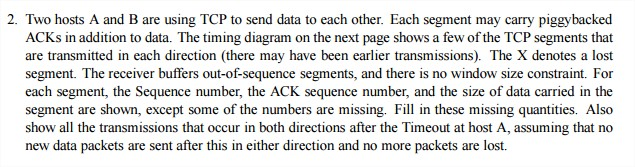
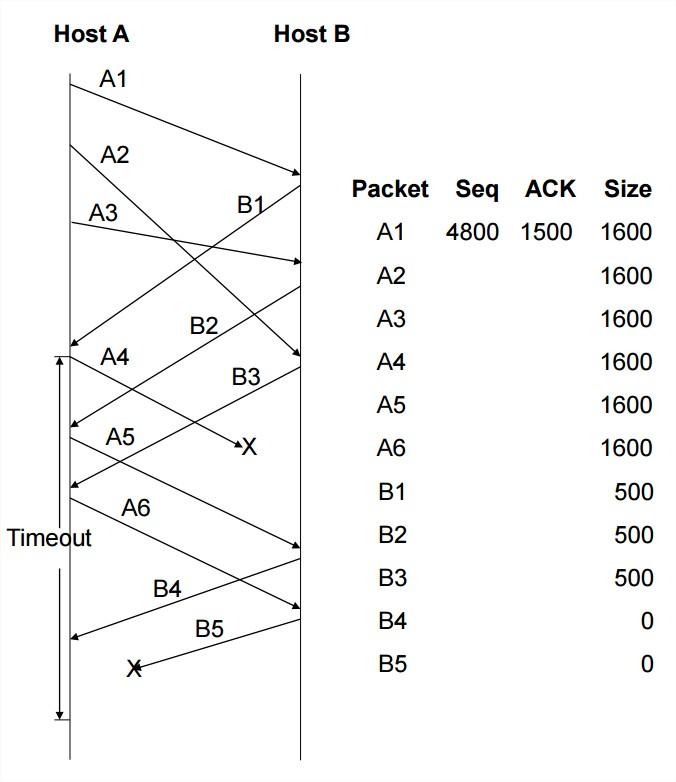
2. Two hosts A and B are using TCP to send data to each other. Each segment may carry piggybacked ACKs in addition to data. The timing diagram on the next page shows a few of the TCP segments that are transmitted in each direction (there may have been earlier transmissions). The X denotes a lost segment. The receiver buffers out-of-sequence segments, and there is no window size constraint. For each segment, the Sequence number, the ACK sequence number, and the size of data carried in the segment are shown, except some of the numbers are missing. Fill in these missing quantities. Also show all the transmissions that occur in both directions after the Timeout at host A, assuming that no new data packets are sent after this in either direction and no more packets are lost. 2. Two hosts A and B are using TCP to send data to each other. Each segment may carry piggybacked ACKs in addition to data. The timing diagram on the next page shows a few of the TCP segments that are transmitted in each direction (there may have been earlier transmissions). The X denotes a lost segment. The receiver buffers out-of-sequence segments, and there is no window size constraint. For each segment, the Sequence number, the ACK sequence number, and the size of data carried in the segment are shown, except some of the numbers are missing. Fill in these missing quantities. Also show all the transmissions that occur in both directions after the Timeout at host A, assuming that no new data packets are sent after this in either direction and no more packets are lost
Step by Step Solution
There are 3 Steps involved in it

Get step-by-step solutions from verified subject matter experts
 Study Help