







Question: 27. An individual employee will put on maximum effort for better performance when the individual employee perceived of the value of the rewards after performing
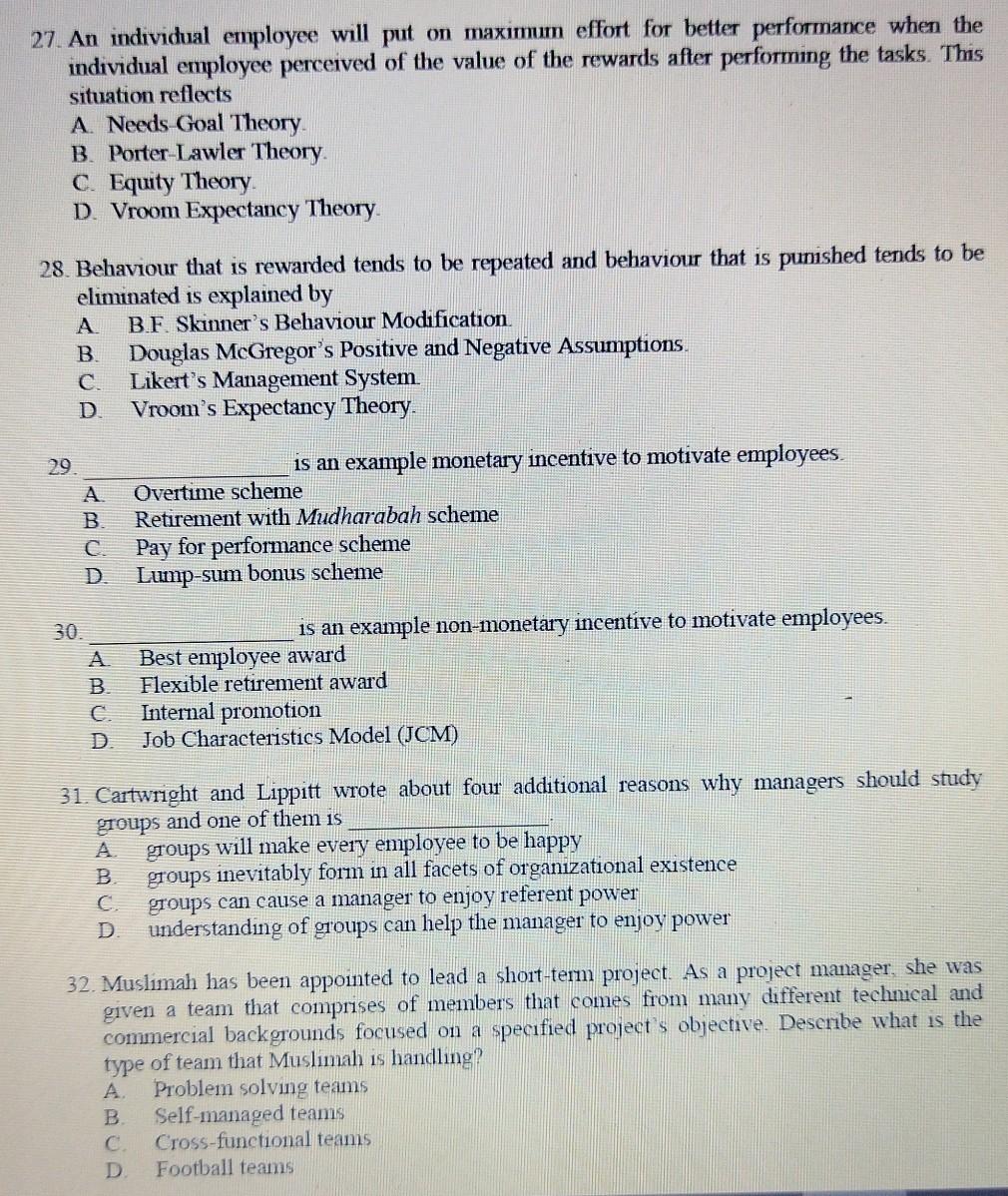
27. An individual employee will put on maximum effort for better performance when the individual employee perceived of the value of the rewards after performing the tasks. This situation reflects A Needs Goal Theory B. Porter-Lawler Theory C. Equity Theory D. Vroom Expectancy Theory. 28. Behaviour that is rewarded tends to be repeated and behaviour that is punished tends to be eliminated is explained by A BF Skinner's Behaviour Modification . Douglas McGregor's Positive and Negative Assumptions C. Likert's Management System. D Vroom's Expectancy Theory. 29 . is an example monetary incentive to motivate employees. Overtime scheme Retirement with Mudharabah scheme Pay for performance scheme Lump-sum bonus scheme C D 30. . . . is an example non-monetary incentive to motivate employees. Best employee award Flexible retirement award Internal promotion Job Characteristics Model (JCM) 31. Cartwright and Lippitt wrote about four additional reasons why managers should study groups and one of them is A groups will make every employee to be happy . groups inevitably form in all facets of organizational existence C groups can cause a manager to enjoy referent power understanding of groups can help the manager to enjoy power 32. Muslimah has been appointed to lead a short-term project. As a project manager, she was given a team that comprises of members that comes from many different technical and commercial backgrounds focused on a specified project's objective. Deserbe what is the type of team that Muslimah is handling? A. Problem solving teams . Self-managed teams . Cross-functional teams D Football teams
Step by Step Solution
There are 3 Steps involved in it
1 Expert Approved Answer
Step: 1 Unlock

Question Has Been Solved by an Expert!
Get step-by-step solutions from verified subject matter experts
Step: 2 Unlock
Step: 3 Unlock
 Study Help