







Question: This reflection discussion paper should be 5-6 paragraphs (minimum 500 words; maximum 1,000 words) and cover in-depth the assigned chapter reading above. Paper may take
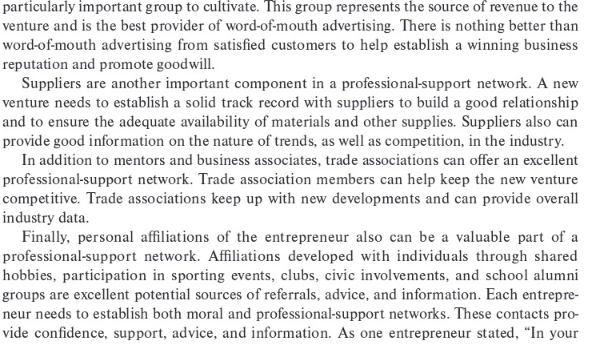
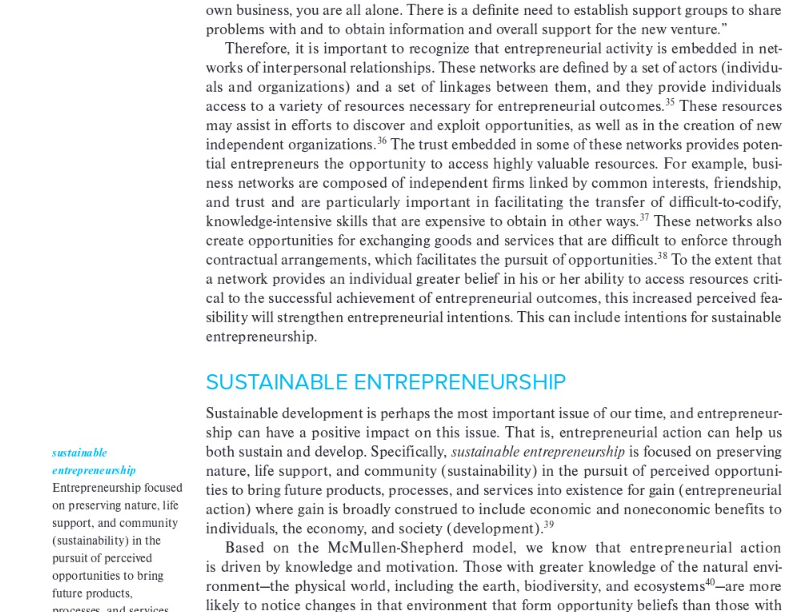
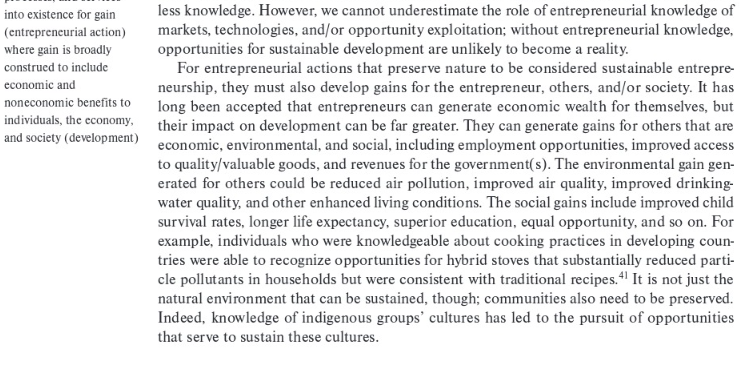
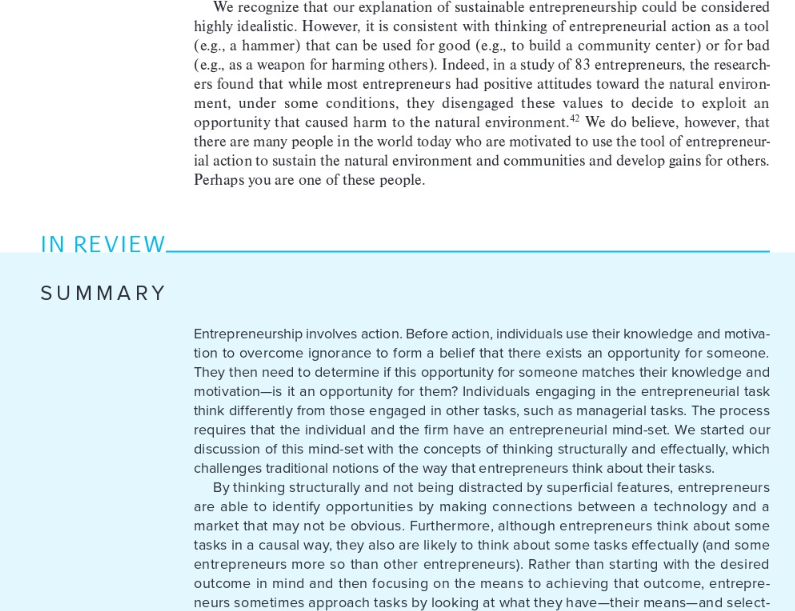
This reflection discussion paper should be 5-6 paragraphs (minimum 500 words; maximum 1,000 words) and cover in-depth the assigned chapter reading above.
Paper may take 1 or 2 topics and examine them deeply, or more topics examined in less detail
- When writing, consider the following:
- What have we studied that is interesting?
- What new things have you learned?
- How does your learning affect you view of the world and the universe?
- Will what you have learned change your behavior in the future?
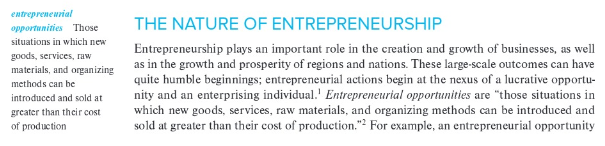
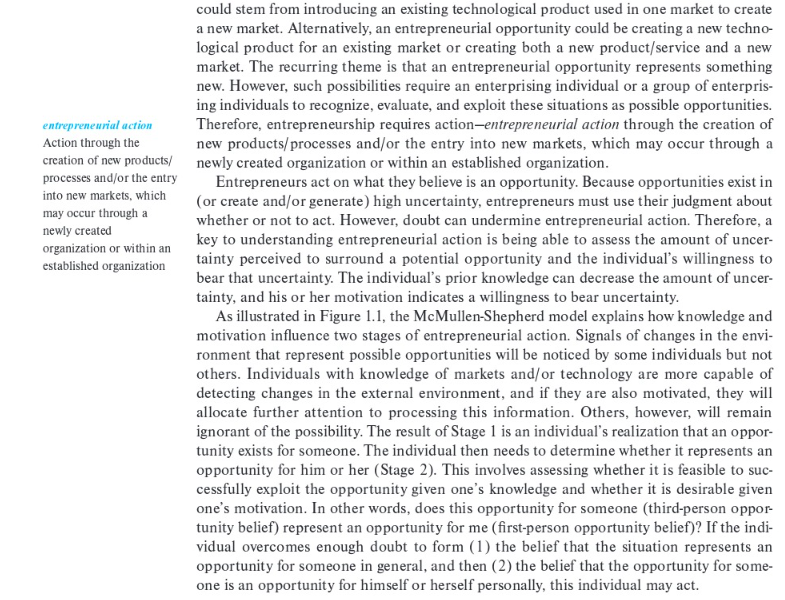
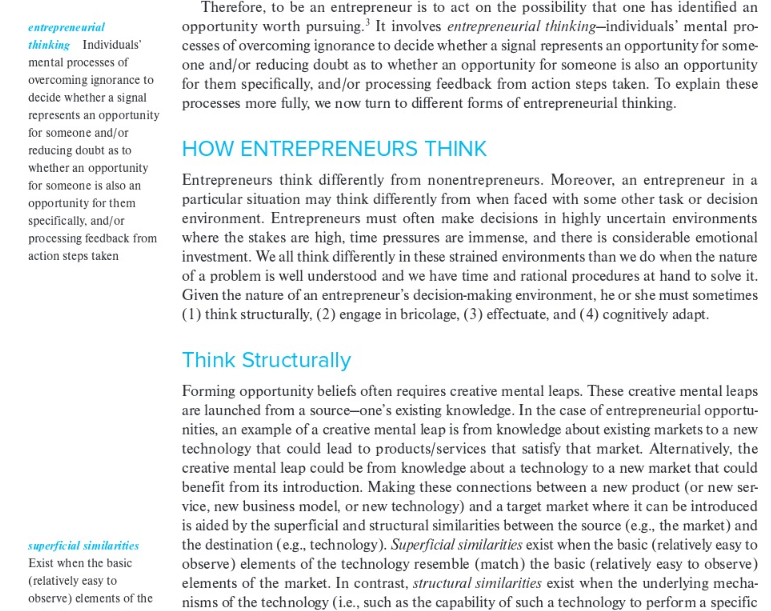
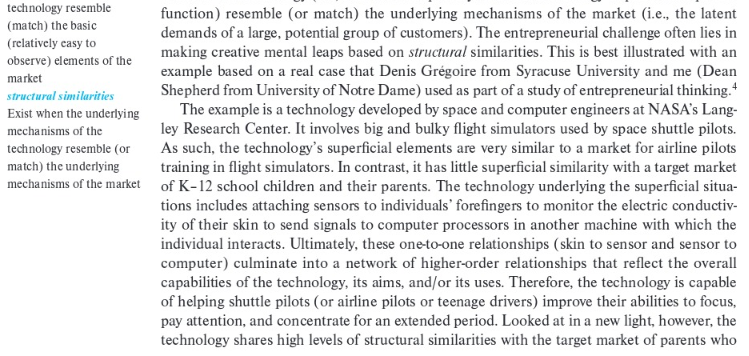
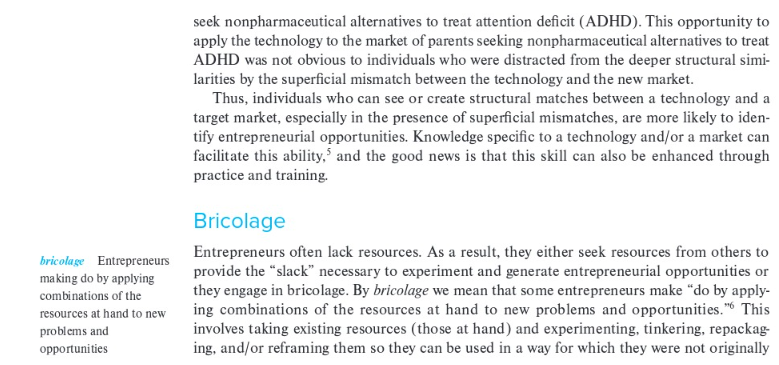
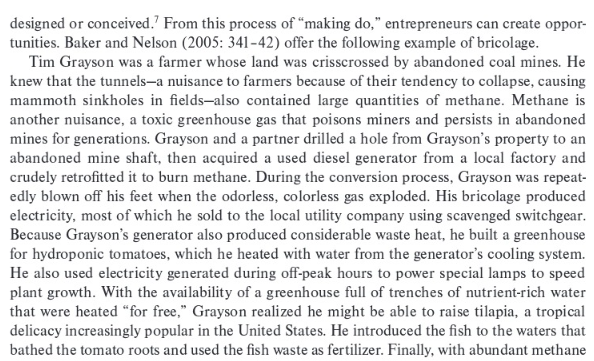
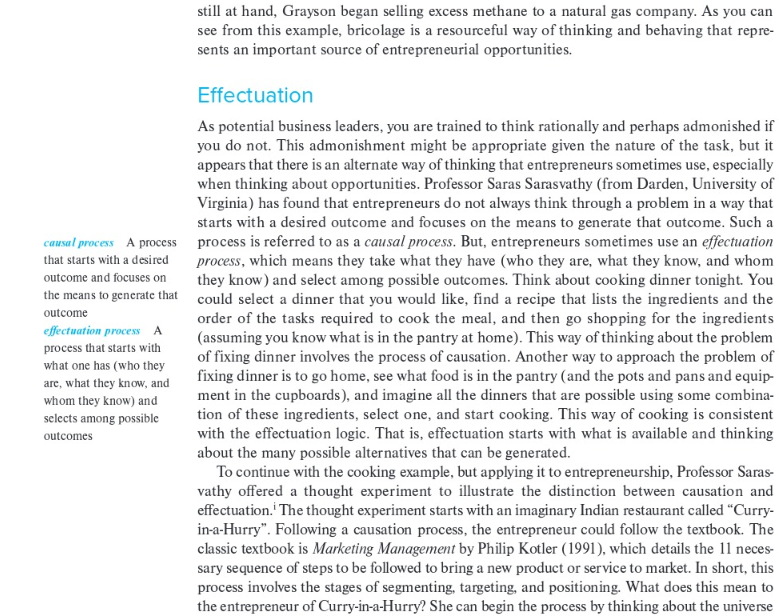
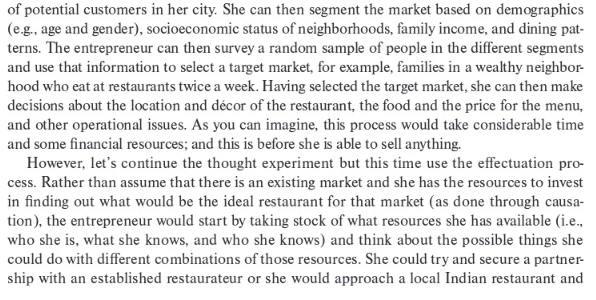
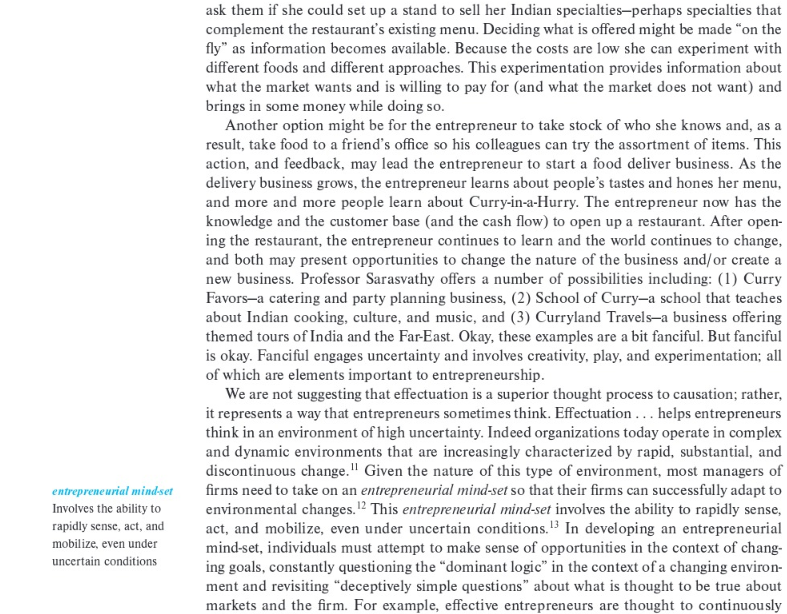
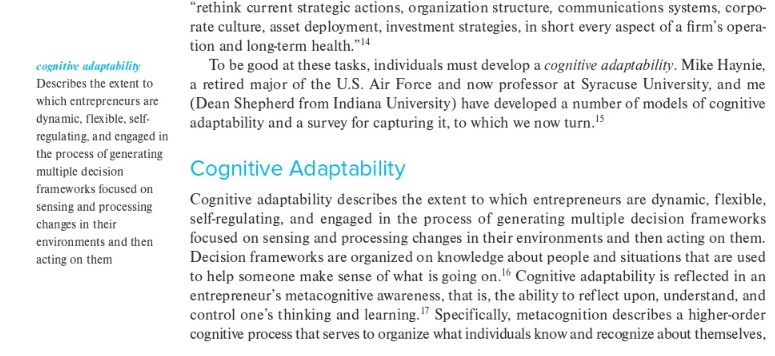
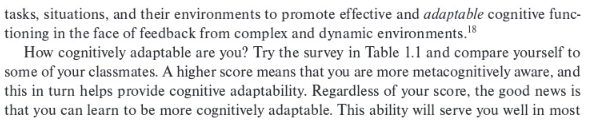
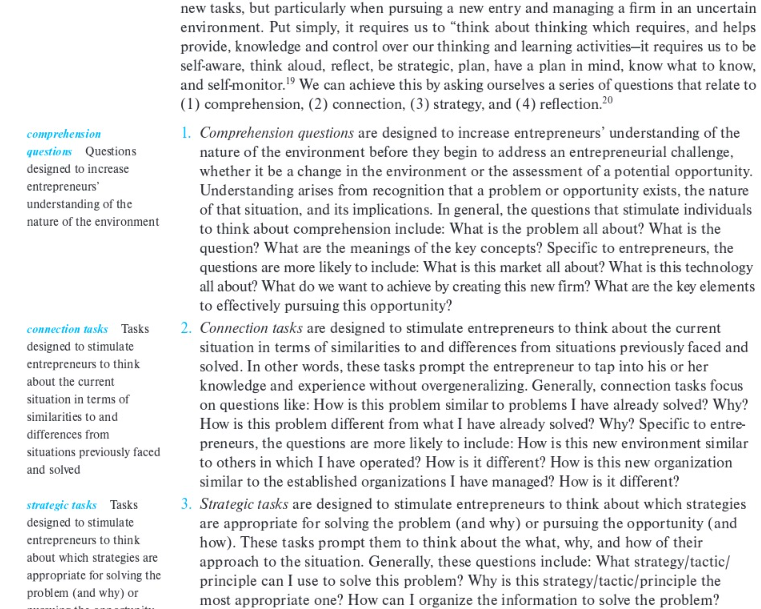
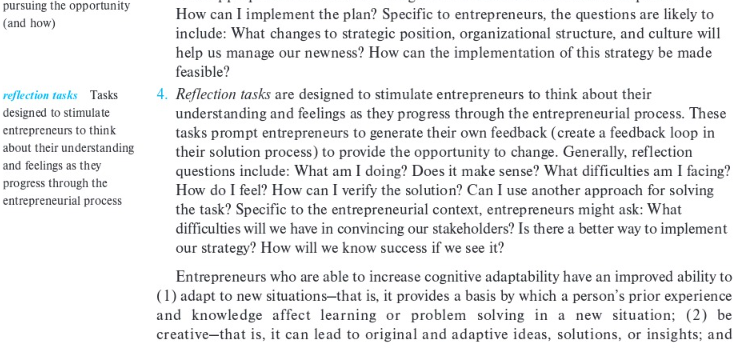
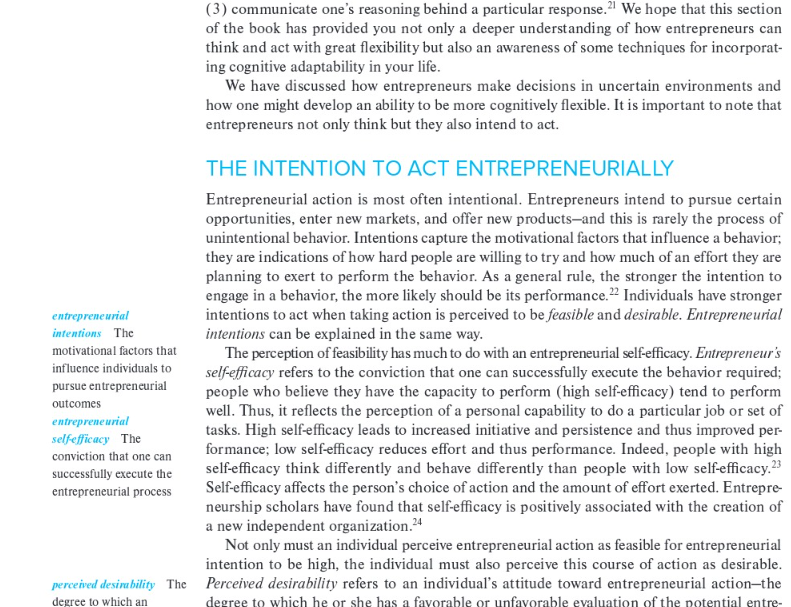
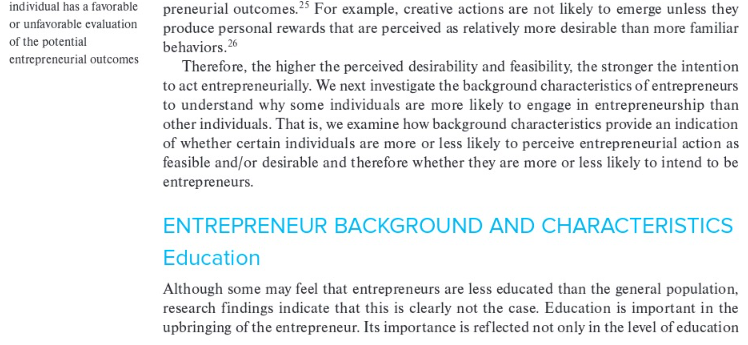
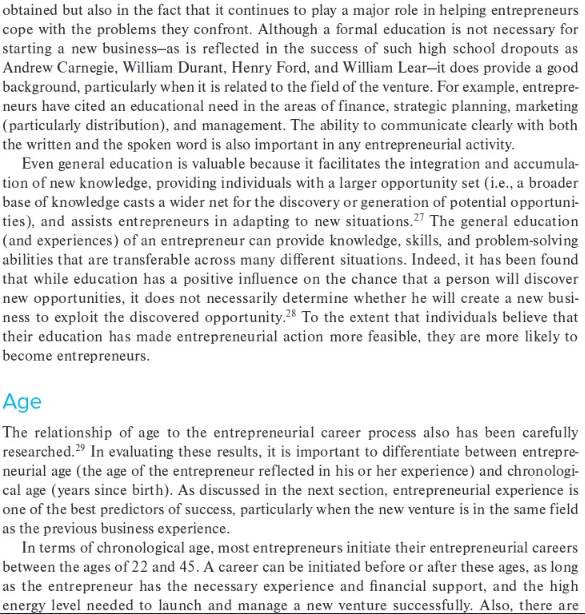
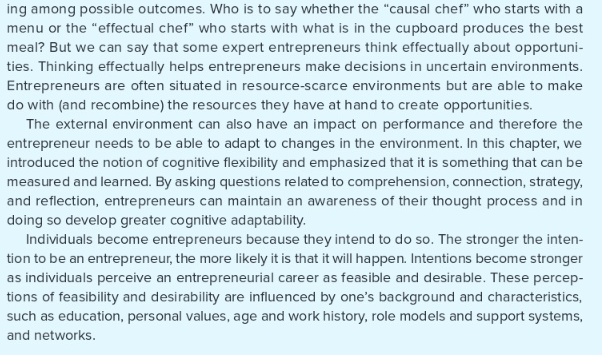
ial opportunities Those THE NATURE OF ENTREPRENEURSHIP situations in which new goods, services, raw Entrepreneurship plays an important role in the creation and growth of businesses, as well materials, and organizing as in the growth and prosperity of regions and nations. These large-scale outcomes can have methods can be quite humble beginnings; entrepreneurial actions begin at the nexus of a lucrative opportuintroduced and sold at nity and an enterprising individual. 1 Entrepreneurial opportunities are "those situations in greaterthantheircostofproductionwhichnewgoods,services,rawmaterials,andorganizingmethodscanbeintroducedandsoldatgreaterthantheircostofproduction."2Forexample,anentrepreneurialopportunity anewmarket.Alternatively,anentrepreneurialopportunitycouldbecreatinganewtechno-logicalproductforanexistingmarketorcreatingbothanewproduct/serviceandanewmarket.Therecurringthemeisthatanentrepreneurialopportunityrepresentssomethingnew.However,suchpossibilitiesrequireanenterprisingindividualoragroupofenterpris-ingindividualstorecognize,evaluate,andexploitthesesituationsaspossibleopportunities.Therefore,entrepreneurshiprequiresaction-entrepreneurialactionthroughthecreationofnentrepreneurialactioncreationofnewproducts/processesand/ortheentryintonewmarkets,whichmayoccurthroughanewlycreatedorganizationorwithinantaintyperceivedtosurroundapotentialopportunityandtheindividualswillingnesstobearthatuncertainty.Theindividualspriorknowledgecandecreasetheamountofuncer-AsillustratedinFigure1.1,theMcMullen-Shepherdmodelexplainshowknowledgeandmotivationinfluencetwostagesofentrepreneurialaction.Signalsofchangesintheenvi-ronmentthatrepresentpossibleopportunitieswillbenoticedbysocouldstemfromintroducinganexistingtechnologicalproductusedinonemarkettocreatenewproducts/processesand/ortheentryintonewmarkets,whichmayoccurthroughanewlycreatedorganizationorwithinanestablishedorganization.Entrepreneursactonwhattheybelieveisanopportunity.Becauseopportunitiesexistin(orcreateand/orgenerate)highuncertainty,entrepreneursmustusetheirjudgmentaboutwhetherornottoact.However,doubtcanundermineentrepreneurialaction.Therefore,akeytounderstandingentrepreneurialactionisbeingabletoassesstheamountofuncer-tainty,andhisorhermotivationindicatesawillingnesstobearuncertainty. Therefore, to be an entrepreneur is to act on the possibility that one has identified an entrepreneurialthinkingIndividualsopportunityworthpursuing.3Itinvolvesentrepreneurialthinking-individualsmentalpro-cessesofovercomingignorancetodecidewhetherasignalrepresentsanopportunityforsome- \begin{tabular}{ll} mental processes of & cesses of overcoming ignorance to decide whether a signal represents an opportunity for some- \\ \hline \end{tabular} overcoming ignorance to for them specifically, and/or processing feedback from action steps taken. To explain these decide whether a signal processes more fully, we now turn to different forms of entrepreneurial thinking. for someone and/or reducing doubt as to HOW ENTREPRENEURS THINK whether an opportunity for someone is also an Entrepreneurs think differently from nonentrepreneurs. Moreover, an entrepreneur in a opportunity for them particular situation may think differently from when faced with some other task or decision specifically,and/orprocessingfeedbackfromenvironment.Entrepreneursmustoftenmakedecisionsinhighlyuncertainenvironmentswherethestakesarehigh,timepressuresareimmense,andthereisconsiderableemotional processingfeedbackfromwherethestakesarehigh,timepressuresareimmense,andthereisconsiderableemotionalactionstepstakeninvestment.Weallthinkdifferentlyinthesestrainedenvironmentsthanwedowhenthenature of a problem is well understood and we have time and rational procedures at hand to solve it. Given the nature of an entrepreneur's decision-making environment, he or she must sometimes (1) think structurally, (2) engage in bricolage, (3) effectuate, and (4) cognitively adapt. Think Structurally Forming opportunity beliefs often requires creative mental leaps. These creative mental leaps are launched from a source-one's existing knowledge. In the case of entrepreneurial opportunities, an example of a creative mental leap is from knowledge about existing markets to a new technology that could lead to products/services that satisfy that market. Alternatively, the creative mental leap could be from knowledge about a technology to a new market that could benefit from its introduction. Making these connections between a new product (or new service, new business model, or new technology) and a target market where it can be introduced is aided by the superficial and structural similarities between the source (e.g., the market) and the destination (e.g., technology). Superficial similarities exist when the basic (relatively easy to ExuperficialsimilaritiesExhenthebasicobserve)elementsofthetechnologyresemble(match)thebasic(relativelyeasytoobserve) (relativelyeasytoobserve)elementsoftheelementsofthemarket.Incontrast,structuralsimilaritiesexistwhentheunderlyingmecha- observe) elements of the nisms of the technology (i.e., such as the capability of such a technology to perform a specific seek nonpharmaceutical alternatives to treat attention deficit (ADHD). This opportunity to apply the technology to the market of parents seeking nonpharmaceutical alternatives to treat ADHD was not obvious to individuals who were distracted from the deeper structural similarities by the superficial mismatch between the technology and the new market. Thus, individuals who can see or create structural matches between a technology and a target market, especially in the presence of superficial mismatches, are more likely to identify entrepreneurial opportunities. Knowledge specific to a technology and/or a market can facilitate this ability, 5 and the good news is that this skill can also be enhanced through practice and training. Bricolage bricolageEntrepreneursmakingdobyapplyingcombinationsoftheresourcesathandtonewproblemsandopportunitiesEntrepreneursoftenlackresources.Asaresult,theyeitherseekresourcesfromotherstoprovidethe"slack"necessarytoexperimentandgenerateentrepreneurialopportunitiesortheyengageinbricolage.Bybricolagewemeanthatsomeentrepreneursmake"dobyapply-ingcombinationsoftheresourcesathandtonewproblemsandopportunities."6Thisinvolvestakingexistingresources(thoseathand)andexperimenting,tinkering,repackag-ing,and/orreframingthemsotheycanbeusedinawayforwhichtheywerenotoriginally designed or conceived. 7 From this process of "making do," entrepreneurs can create opportunities. Baker and Nelson (2005: 341-42) offer the following example of bricolage. Tim Grayson was a farmer whose land was crisscrossed by abandoned coal mines. He knew that the tunnels-a nuisance to farmers because of their tendency to collapse, causing mammoth sinkholes in fields-also contained large quantities of methane. Methane is another nuisance, a toxic greenhouse gas that poisons miners and persists in abandoned mines for generations. Grayson and a partner drilled a hole from Grayson's property to an abandoned mine shaft, then acquired a used diesel generator from a local factory and crudely retrofitted it to burn methane. During the conversion process, Grayson was repeatedly blown off his feet when the odorless, colorless gas exploded. His bricolage produced electricity, most of which he sold to the local utility company using scavenged switchgear. Because Grayson's generator also produced considerable waste heat, he built a greenhouse for hydroponic tomatoes, which he heated with water from the generator's cooling system. He also used electricity generated during off-peak hours to power special lamps to speed plant growth. With the availability of a greenhouse full of trenches of nutrient-rich water that were heated "for free," Grayson realized he might be able to raise tilapia, a tropical delicacy increasingly popular in the United States. He introduced the fish to the waters that bathed the tomato roots and used the fish waste as fertilizer. Finally, with abundant methane still at hand, Grayson began selling excess methane to a natural gas company. As you can see from this example, bricolage is a resourceful way of thinking and behaving that represents an important source of entrepreneurial opportunities. of potential customers in her city. She can then segment the market based on demographics (e.g., age and gender), socioeconomic status of neighborhoods, family income, and dining patterns. The entrepreneur can then survey a random sample of people in the different segments and use that information to select a target market, for example, families in a wealthy neighborhood who eat at restaurants twice a week. Having selected the target market, she can then make decisions about the location and dcor of the restaurant, the food and the price for the menu, and other operational issues. As you can imagine, this process would take considerable time and some financial resources; and this is before she is able to sell anything. However, let's continue the thought experiment but this time use the effectuation process. Rather than assume that there is an existing market and she has the resources to invest in finding out what would be the ideal restaurant for that market (as done through causation), the entrepreneur would start by taking stock of what resources she has available (i.e., who she is, what she knows, and who she knows) and think about the possible things she could do with different combinations of those resources. She could try and secure a partnership with an established restaurateur or she would approach a local Indian restaurant and ask them if she could set up a stand to sell her Indian specialties-perhaps specialties that complement the restaurant's existing menu. Deciding what is offered might be made "on the fly" as information becomes available. Because the costs are low she can experiment with different foods and different approaches. This experimentation provides information about what the market wants and is willing to pay for (and what the market does not want) and brings in some money while doing so. Another option might be for the entrepreneur to take stock of who she knows and, as a result, take food to a friend's office so his colleagues can try the assortment of items. This action, and feedback, may lead the entrepreneur to start a food deliver business. As the delivery business grows, the entrepreneur learns about people's tastes and hones her menu, and more and more people learn about Curry-in-a-Hurry. The entrepreneur now has the knowledge and the customer base (and the cash flow) to open up a restaurant. After opening the restaurant, the entrepreneur continues to learn and the world continues to change, and both may present opportunities to change the nature of the business and/or create a new business. Professor Sarasvathy offers a number of possibilities including: (1) Curry Favors-a catering and party planning business, (2) School of Curry-a school that teaches about Indian cooking, culture, and music, and (3) Curryland Travels-a business offering themed tours of India and the Far-East. Okay, these examples are a bit fanciful. But fanciful is okay. Fanciful engages uncertainty and involves creativity, play, and experimentation; all of which are elements important to entrepreneurship. We are not suggesting that effectuation is a superior thought process to causation; rather, it represents a way that entrepreneurs sometimes think. Effectuation... helps entrepreneurs think in an environment of high uncertainty. Indeed organizations today operate in complex and dynamic environments that are increasingly characterized by rapid, substantial, and discontinuous change. 11 Given the nature of this type of environment, most managers of entrepreneurial mind-set firms need to take on an entrepreneurial mind-set so that their firms can successfully adapt to Involves the ability to environmental changes. 12 This entrepreneurial mind-set involves the ability to rapidly sense, mobilize,evenunderact,andmobilize,evenunderuncertainconditions.13Indevelopinganentrepreneurialmind-set,individualsmustattempttomakesenseofopportunitiesinthecontextofchang- uncertain conditions ing goals, constantly questioning the "dominant logic" in the context of a changing environment and revisiting "deceptively simple questions" about what is thought to be true about "rethink current strategic actions, organization structure, communications systems, corporate culture, asset deployment, investment strategies, in short every aspect of a firm's operation and long-term health." "14 cognitiveadaptabilityTobegoodatthesetasks,individualsmustdevelopacognitiveadaptability.MikeHaynie,tionandlong-termhealth."14 Describes the extent to a retired major of the U.S. Air Force and now professor at Syracuse University, and me which entrepreneurs are (Dean Shepherd from Indiana University) have developed a number of models of cognitive dynamic, flexible, self- regulating, and engaged in the process of generating multiple decision Cognitive Adaptability frameworks focused on Cognitive adaptability describes the extent to which entrepreneurs are dynamic, flexible, sensing and processing changes in their self-regulating, and engaged in the process of generating multiple decision frameworks environments and then focused on sensing and processing changes in their environments and then acting on them. acting on them Decision frameworks are organized on knowledge about people and situations that are used to help someone make sense of what is going on. 16 Cognitive adaptability is reflected in an entrepreneur's metacognitive awareness, that is, the ability to reflect upon, understand, and control one's thinking and learning. 17 Specifically, metacognition describes a higher-order cognitive process that serves to organize what individuals know and recognize about themselves, tasks, situations, and their environments to promote effective and adaptable cognitive functioning in the face of feedback from complex and dynamic environments. 18 How cognitively adaptable are you? Try the survey in Table 1.1 and compare yourself to some of your classmates. A higher score means that you are more metacognitively aware, and this in turn helps provide cognitive adaptability. Regardless of your score, the good news is that you can learn to be more cognitively adaptable. This ability will serve you well in most new tasks, but particularly when pursuing a new entry and managing a firm in an uncertain environment. Put simply, it requires us to "think about thinking which requires, and helps provide, knowledge and control over our thinking and learning activities-it requires us to be self-aware, think aloud, reflect, be strategic, plan, have a plan in mind, know what to know, and self-monitor. 19We can achieve this by asking ourselves a series of questions that relate to (1) comprehension, (2) connection, (3) strategy, and (4) reflection. 20 (3) communicate one's reasoning behind a particular response. 21 We hope that this section of the book has provided you not only a deeper understanding of how entrepreneurs can think and act with great flexibility but also an awareness of some techniques for incorporating cognitive adaptability in your life. We have discussed how entrepreneurs make decisions in uncertain environments and how one might develop an ability to be more cognitively flexible. It is important to note that entrepreneurs not only think but they also intend to act. THE INTENTION TO ACT ENTREPRENEURIALLY Entrepreneurial action is most often intentional. Entrepreneurs intend to pursue certain opportunities, enter new markets, and offer new products-and this is rarely the process of unintentional behavior. Intentions capture the motivational factors that influence a behavior; they are indications of how hard people are willing to try and how much of an effort they are planning to exert to perform the behavior. As a general rule, the stronger the intention to engage in a behavior, the more likely should be its performance. 22 Individuals have stronger intentions to act when taking action is perceived to be feasible and desirable. Entrepreneurial intentions can be explained in the same way. The perception of feasibility has much to do with an entrepreneurial self-efficacy. Entrepreneur's self-efficacy refers to the conviction that one can successfully execute the behavior required; people who believe they have the capacity to perform (high self-efficacy) tend to perform well. Thus, it reflects the perception of a personal capability to do a particular job or set of tasks. High self-efficacy leads to increased initiative and persistence and thus improved performance; low self-efficacy reduces effort and thus performance. Indeed, people with high self-efficacy think differently and behave differently than people with low self-efficacy. 23 Self-efficacy affects the person's choice of action and the amount of effort exerted. Entrepreneurship scholars have found that self-efficacy is positively associated with the creation of a new independent organization. 24 Not only must an individual perceive entrepreneurial action as feasible for entrepreneurial intention to be high, the individual must also perceive this course of action as desirable. Perceived desirability refers to an individual's attitude toward entrepreneurial action-the individual has a favorable preneurial outcomes. 25 For example, creative actions are not likely to emerge unless they or unfavorable evaluation produce personal rewards that are perceived as relatively more desirable than more familiar of the potential behaviors. 26 entrepreneurial outcomes Than rewards that are perceived as relatively more desirable than more familiar entrepreneurial outcomes Therefore, the higher the perceived desirability and feasibility, the stronger the intention to act entrepreneurially. We next investigate the background characteristics of entrepreneurs to understand why some individuals are more likely to engage in entrepreneurship than other individuals. That is, we examine how background characteristics provide an indication of whether certain individuals are more or less likely to perceive entrepreneurial action as feasible and/or desirable and therefore whether they are more or less likely to intend to be entrepreneurs. ENTREPRENEUR BACKGROUND AND CHARACTERISTICS Education Although some may feel that entrepreneurs are less educated than the general population, research findings indicate that this is clearly not the case. Education is important in the upbringing of the entrepreneur. Its importance is reflected not only in the level of education obtained but also in the fact that it continues to play a major role in helping entrepreneurs cope with the problems they confront. Although a formal education is not necessary for starting a new business-as is reflected in the success of such high school dropouts as Andrew Carnegie, William Durant, Henry Ford, and William Lear-it does provide a good background, particularly when it is related to the field of the venture. For example, entrepreneurs have cited an educational need in the areas of finance, strategic planning, marketing (particularly distribution), and management. The ability to communicate clearly with both the written and the spoken word is also important in any entrepreneurial activity. Even general education is valuable because it facilitates the integration and accumulation of new knowledge, providing individuals with a larger opportunity set (i.e., a broader base of knowledge casts a wider net for the discovery or generation of potential opportunities), and assists entrepreneurs in adapting to new situations. 27 The general education (and experiences) of an entrepreneur can provide knowledge, skills, and problem-solving abilities that are transferable across many different situations. Indeed, it has been found that while education has a positive influence on the chance that a person will discover new opportunities, it does not necessarily determine whether he will create a new business to exploit the discovered opportunity. 28 To the extent that individuals believe that their education has made entrepreneurial action more feasible, they are more likely to become entrepreneurs. Age The relationship of age to the entrepreneurial career process also has been carefully researched. 29 In evaluating these results, it is important to differentiate between entrepreneurial age (the age of the entrepreneur reflected in his or her experience) and chronological age (years since birth). As discussed in the next section, entrepreneurial experience is one of the best predictors of success, particularly when the new venture is in the same field as the previous business experience. In terms of chronological age, most entrepreneurs initiate their entrepreneurial careers between the ages of 22 and 45 . A career can be initiated before or after these ages, as long as the entrepreneur has the necessary experience and financial support, and the high energy level needed to launch and manage a new venture successfully. Also, there are milestone ages every five years (25,30,35,40, and 45) when an individual is more inclined to start an entrepreneurial career. As one entrepreneur succinctly stated, "I felt it was now or never in terms of starting a new venture when I approached 30 ." Generally, male entrepreneurs tend to start their first significant venture in their early 30s, while women entrepreneurs tend to do so in their middle 30s. However, an entrepreneurial career is quite popular later in life when the children have left home, there are fewer financial concerns, and individuals start to think about what they would really like to do with the rest of their lives. 30 Work History work history The past Work history can influence the decision to launch a new entrepreneurial venture, but it also work experience of an plays a role in the growth and eventual success of the new venture. While dissatisfaction individual with various aspects of one's job-such as a lack of challenge or promotional opportunities, as well as frustration and boredom-often motivates the launching of a new venture, previous technical and industry experience is important once the decision to launch has been made. Experience in the following areas is particularly important: financing, product or service development, manufacturing, and the development of distribution channels. preneurship is a social role embedded in a social context, it is important that an entrepreneur establish connections and eventually networks early in the new venture formation process. As initial contacts and connections expand, they form a network with similar properties prevalent in a social network-density (the extensiveness of ties between the two individuals) and centrality (the total distance of the entrepreneur to all other individuals and the total number of individuals in the network). The strength of the ties between the entrepreneur and any individual in the network is dependent upon the frequency, level, and reciprocity of the relationship. The more frequent, in-depth, and mutually beneficial a relationship, the stronger and more durable the network between the entrepreneur and the individual. 34 Although most networks are not formally organized, an informal network for moral and professional support still greatly benefits the entrepreneur. Moral-Support Network moral-supportnetworkpsychologicalsupporttoanentrepreneurItisimportantforeachentrepreneurtoestablishamoral-supportnetworkoffamilyandfriends-acheeringsquad.Thischeeringsquadplaysacriticalroleduringthemanydifficultandlonelytimesthatoccurthroughouttheentrepreneurialprocess.Mostentrepreneurs indicate that their spouses are their biggest supporters and allow them to devote the excessive amounts of time necessary to the new venture. Friends also play key roles in a moral-support network. Not only can friends provide advice that is of ten more honest than that received from other sources, but they also provide encouragement, understanding, and even assistance. Entrepreneurs can confide in friends without fear of criticism. Finally, relatives (children, parents, grandparents, aunts, and uncles) also can be strong sources of moral support, particularly if they are also entrepreneurs. As one entrepreneur stated, "The total family support I received was the key to my success. Having an understanding cheering squad giving me encouragement allowed me to persist through the many difficulties and problems." Professional-Support Network In addition to encouragement, the entrepreneur needs advice and counsel throughout the establishment of the new venture. This advice can be obtained from a mentor, business associates, trade associations, or personal affiliations-all members of a professional-support profersional-support associates, network Individuals who network. help the entrepreneur in Most entrepreneurs indicate that they have mentors. How does one find a mentor? This business activities task sounds much more difficult than it really is. Since a mentor is a coach, a sounding board, and an advocate-someone with whom the entrepreneur can share both problems and successes-the individual selected needs to be an expert in the field. An entrepreneur can start the "mentor-finding process" by preparing a list of experts in various fields-such as in the fundamental business activities of finance, marketing, accounting, law, or management-who can provide the practical "how-to" advice needed. From this list, an indi- vidual who can offer the most assistance should be identified and contacted. If the selected individual is willing to act as a mentor, he or she should be periodically apprised of the progress of the business so that a relationship can gradually develop. Another good source of advice can be cultivated by establishing a network of business associates. This group can be composed of self-employed individuals who have experienced starting a business; clients or buyers of the venture's product or service; experts such as consultants, lawyers, or accountants; and the venture's suppliers. Clients or buyers are a particularly important group to cultivate. This group represents the source of revenue to the venture and is the best provider of word-of-mouth advertising. There is nothing better than word-of-mouth advertising from satisfied customers to help establish a winning business reputation and promote goodwill. Suppliers are another important component in a professional-support network. A new venture needs to establish a solid track record with suppliers to build a good relationship and to ensure the adequate availability of materials and other supplies. Suppliers also can provide good information on the nature of trends, as well as competition, in the industry. In addition to mentors and business associates, trade associations can offer an excellent professional-support network. Trade association members can help keep the new venture competitive. Trade associations keep up with new developments and can provide overall industry data. Finally, personal affiliations of the entrepreneur also can be a valuable part of a professional-support network. Affiliations developed with individuals through shared hobbies, participation in sporting events, clubs, civic involvements, and school alumni groups are excellent potential sources of referrals, advice, and information. Each entrepreneur needs to establish both moral and professional-support networks. These contacts provide confidence, support, advice, and information. As one entrepreneur stated, "In your intoexistenceforgain(entrepreneurialaction)wheregainisbroadlyeonstruedtoincludenonomicandindividuals,theeconomy,andsociety(development)thatservetosustainthesecultures.lessknowledge.However,wecannotunderestimatetheroleofentrepreneurialknowledgeofmarkets,technologies,and/oropportunityexploitation;withoutentrepreneurialknowledge,opportunitiesforsustainabledevelopmentareunlikelytobecomeareality.Forentrepreneurialactionsthatpreservenaturetobeconsideredsustainableentrepre-neurship,theymustalsodevelopgainsfortheentrepreneur,others,and/orsociety.Ithaslongbeenacceptedthatentrepreneurscangenerateeconomicwealthforthemselves,buttheirimpactondevelopmentcanbefargreater.Theycangenerategainsforothersthatareeconomic,environmental,andsocial,includingemploymentopportunities,improvedaccesstoquality/valuablegoods,andrevenuesforthegovernment(s).Theenvironmentalgaingen-eratedforotherscouldbereducedairpollution,improvedairquality,improveddrinking-waterquality,andotherenhancedlivingconditions.Thesocialgainsincludeimprovedchildsurvivalrates,longerlifeexpectancy,superioreducation,equalopportunity,andsoon.Forexample,individualswhowereknowledgeableaboutcookingpracticesindevelopingcoun-trieswereabletorecognizeopportunitiesforhybridstovesthatsubstantiallyreducedparti-clepollutantsinhouseholdsbutwereconsistentwithtraditionalrecipes.41Itisnotjustthenaturalenvironmentthatcanbesustained,though;communitiesalsoneedtobepreserved.Indeed,knowledgeofindigenousgroupscultureshasledtothepursuitofopportunities ing among possible outcomes. Who is to say whether the "causal chef" who starts with a menu or the "effectual chef" who starts with what is in the cupboard produces the best meal? But we can say that some expert entrepreneurs think effectually about opportunities. Thinking effectually helps entrepreneurs make decisions in uncertain environments. Entrepreneurs are often situated in resource-scarce environments but are able to make do with (and recombine) the resources they have at hand to create opportunities. The external environment can also have an impact on performance and therefore the entrepreneur needs to be able to adapt to changes in the environment. In this chapter, we introduced the notion of cognitive flexibility and emphasized that it is something that can be measured and learned. By asking questions related to comprehension, connection, strategy, and reflection, entrepreneurs can maintain an awareness of their thought process and in doing so develop greater cognitive adaptability. Individuals become entrepreneurs because they intend to do so. The stronger the intention to be an entrepreneur, the more likely it is that it will happen. Intentions become stronger as individuals perceive an entrepreneurial career as feasible and desirable. These perceptions of feasibility and desirability are influenced by one's background and characteristics, such as education, personal values, age and work history, role models and support systems, and networks. ial opportunities Those THE NATURE OF ENTREPRENEURSHIP situations in which new goods, services, raw Entrepreneurship plays an important role in the creation and growth of businesses, as well materials, and organizing as in the growth and prosperity of regions and nations. These large-scale outcomes can have methods can be quite humble beginnings; entrepreneurial actions begin at the nexus of a lucrative opportuintroduced and sold at nity and an enterprising individual. 1 Entrepreneurial opportunities are "those situations in greaterthantheircostofproductionwhichnewgoods,services,rawmaterials,andorganizingmethodscanbeintroducedandsoldatgreaterthantheircostofproduction."2Forexample,anentrepreneurialopportunity anewmarket.Alternatively,anentrepreneurialopportunitycouldbecreatinganewtechno-logicalproductforanexistingmarketorcreatingbothanewproduct/serviceandanewmarket.Therecurringthemeisthatanentrepreneurialopportunityrepresentssomethingnew.However,suchpossibilitiesrequireanenterprisingindividualoragroupofenterpris-ingindividualstorecognize,evaluate,andexploitthesesituationsaspossibleopportunities.Therefore,entrepreneurshiprequiresaction-entrepreneurialactionthroughthecreationofnentrepreneurialactioncreationofnewproducts/processesand/ortheentryintonewmarkets,whichmayoccurthroughanewlycreatedorganizationorwithinantaintyperceivedtosurroundapotentialopportunityandtheindividualswillingnesstobearthatuncertainty.Theindividualspriorknowledgecandecreasetheamountofuncer-AsillustratedinFigure1.1,theMcMullen-Shepherdmodelexplainshowknowledgeandmotivationinfluencetwostagesofentrepreneurialaction.Signalsofchangesintheenvi-ronmentthatrepresentpossibleopportunitieswillbenoticedbysocouldstemfromintroducinganexistingtechnologicalproductusedinonemarkettocreatenewproducts/processesand/ortheentryintonewmarkets,whichmayoccurthroughanewlycreatedorganizationorwithinanestablishedorganization.Entrepreneursactonwhattheybelieveisanopportunity.Becauseopportunitiesexistin(orcreateand/orgenerate)highuncertainty,entrepreneursmustusetheirjudgmentaboutwhetherornottoact.However,doubtcanundermineentrepreneurialaction.Therefore,akeytounderstandingentrepreneurialactionisbeingabletoassesstheamountofuncer-tainty,andhisorhermotivationindicatesawillingnesstobearuncertainty. Therefore, to be an entrepreneur is to act on the possibility that one has identified an entrepreneurialthinkingIndividualsopportunityworthpursuing.3Itinvolvesentrepreneurialthinking-individualsmentalpro-cessesofovercomingignorancetodecidewhetherasignalrepresentsanopportunityforsome- \begin{tabular}{ll} mental processes of & cesses of overcoming ignorance to decide whether a signal represents an opportunity for some- \\ \hline \end{tabular} overcoming ignorance to for them specifically, and/or processing feedback from action steps taken. To explain these decide whether a signal processes more fully, we now turn to different forms of entrepreneurial thinking. for someone and/or reducing doubt as to HOW ENTREPRENEURS THINK whether an opportunity for someone is also an Entrepreneurs think differently from nonentrepreneurs. Moreover, an entrepreneur in a opportunity for them particular situation may think differently from when faced with some other task or decision specifically,and/orprocessingfeedbackfromenvironment.Entrepreneursmustoftenmakedecisionsinhighlyuncertainenvironmentswherethestakesarehigh,timepressuresareimmense,andthereisconsiderableemotional processingfeedbackfromwherethestakesarehigh,timepressuresareimmense,andthereisconsiderableemotionalactionstepstakeninvestment.Weallthinkdifferentlyinthesestrainedenvironmentsthanwedowhenthenature of a problem is well understood and we have time and rational procedures at hand to solve it. Given the nature of an entrepreneur's decision-making environment, he or she must sometimes (1) think structurally, (2) engage in bricolage, (3) effectuate, and (4) cognitively adapt. Think Structurally Forming opportunity beliefs often requires creative mental leaps. These creative mental leaps are launched from a source-one's existing knowledge. In the case of entrepreneurial opportunities, an example of a creative mental leap is from knowledge about existing markets to a new technology that could lead to products/services that satisfy that market. Alternatively, the creative mental leap could be from knowledge about a technology to a new market that could benefit from its introduction. Making these connections between a new product (or new service, new business model, or new technology) and a target market where it can be introduced is aided by the superficial and structural similarities between the source (e.g., the market) and the destination (e.g., technology). Superficial similarities exist when the basic (relatively easy to ExuperficialsimilaritiesExhenthebasicobserve)elementsofthetechnologyresemble(match)thebasic(relativelyeasytoobserve) (relativelyeasytoobserve)elementsoftheelementsofthemarket.Incontrast,structuralsimilaritiesexistwhentheunderlyingmecha- observe) elements of the nisms of the technology (i.e., such as the capability of such a technology to perform a specific seek nonpharmaceutical alternatives to treat attention deficit (ADHD). This opportunity to apply the technology to the market of parents seeking nonpharmaceutical alternatives to treat ADHD was not obvious to individuals who were distracted from the deeper structural similarities by the superficial mismatch between the technology and the new market. Thus, individuals who can see or create structural matches between a technology and a target market, especially in the presence of superficial mismatches, are more likely to identify entrepreneurial opportunities. Knowledge specific to a technology and/or a market can facilitate this ability, 5 and the good news is that this skill can also be enhanced through practice and training. Bricolage bricolageEntrepreneursmakingdobyapplyingcombinationsoftheresourcesathandtonewproblemsandopportunitiesEntrepreneursoftenlackresources.Asaresult,theyeitherseekresourcesfromotherstoprovidethe"slack"necessarytoexperimentandgenerateentrepreneurialopportunitiesortheyengageinbricolage.Bybricolagewemeanthatsomeentrepreneursmake"dobyapply-ingcombinationsoftheresourcesathandtonewproblemsandopportunities."6Thisinvolvestakingexistingresources(thoseathand)andexperimenting,tinkering,repackag-ing,and/orreframingthemsotheycanbeusedinawayforwhichtheywerenotoriginally designed or conceived. 7 From this process of "making do," entrepreneurs can create opportunities. Baker and Nelson (2005: 341-42) offer the following example of bricolage. Tim Grayson was a farmer whose land was crisscrossed by abandoned coal mines. He knew that the tunnels-a nuisance to farmers because of their tendency to collapse, causing mammoth sinkholes in fields-also contained large quantities of methane. Methane is another nuisance, a toxic greenhouse gas that poisons miners and persists in abandoned mines for generations. Grayson and a partner drilled a hole from Grayson's property to an abandoned mine shaft, then acquired a used diesel generator from a local factory and crudely retrofitted it to burn methane. During the conversion process, Grayson was repeatedly blown off his feet when the odorless, colorless gas exploded. His bricolage produced electricity, most of which he sold to the local utility company using scavenged switchgear. Because Grayson's generator also produced considerable waste heat, he built a greenhouse for hydroponic tomatoes, which he heated with water from the generator's cooling system. He also used electricity generated during off-peak hours to power special lamps to speed plant growth. With the availability of a greenhouse full of trenches of nutrient-rich water that were heated "for free," Grayson realized he might be able to raise tilapia, a tropical delicacy increasingly popular in the United States. He introduced the fish to the waters that bathed the tomato roots and used the fish waste as fertilizer. Finally, with abundant methane still at hand, Grayson began selling excess methane to a natural gas company. As you can see from this example, bricolage is a resourceful way of thinking and behaving that represents an important source of entrepreneurial opportunities. of potential customers in her city. She can then segment the market based on demographics (e.g., age and gender), socioeconomic status of neighborhoods, family income, and dining patterns. The entrepreneur can then survey a random sample of people in the different segments and use that information to select a target market, for example, families in a wealthy neighborhood who eat at restaurants twice a week. Having selected the target market, she can then make decisions about the location and dcor of the restaurant, the food and the price for the menu, and other operational issues. As you can imagine, this process would take considerable time and some financial resources; and this is before she is able to sell anything. However, let's continue the thought experiment but this time use the effectuation process. Rather than assume that there is an existing market and she has the resources to invest in finding out what would be the ideal restaurant for that market (as done through causation), the entrepreneur would start by taking stock of what resources she has available (i.e., who she is, what she knows, and who she knows) and think about the possible things she could do with different combinations of those resources. She could try and secure a partnership with an established restaurateur or she would approach a local Indian restaurant and ask them if she could set up a stand to sell her Indian specialties-perhaps specialties that complement the restaurant's existing menu. Deciding what is offered might be made "on the fly" as information becomes available. Because the costs are low she can experiment with different foods and different approaches. This experimentation provides information about what the market wants and is willing to pay for (and what the market does not want) and brings in some money while doing so. Another option might be for the entrepreneur to take stock of who she knows and, as a result, take food to a friend's office so his colleagues can try the assortment of items. This action, and feedback, may lead the entrepreneur to start a food deliver business. As the delivery business grows, the entrepreneur learns about people's tastes and hones her menu, and more and more people learn about Curry-in-a-Hurry. The entrepreneur now has the knowledge and the customer base (and the cash flow) to open up a restaurant. After opening the restaurant, the entrepreneur continues to learn and the world continues to change, and both may present opportunities to change the nature of the business and/or create a new business. Professor Sarasvathy offers a number of possibilities including: (1) Curry Favors-a catering and party planning business, (2) School of Curry-a school that teaches about Indian cooking, culture, and music, and (3) Curryland Travels-a business offering themed tours of India and the Far-East. Okay, these examples are a bit fanciful. But fanciful is okay. Fanciful engages uncertainty and involves creativity, play, and experimentation; all of which are elements important to entrepreneurship. We are not suggesting that effectuation is a superior thought process to causation; rather, it represents a way that entrepreneurs sometimes think. Effectuation... helps entrepreneurs think in an environment of high uncertainty. Indeed organizations today operate in complex and dynamic environments that are increasingly characterized by rapid, substantial, and discontinuous change. 11 Given the nature of this type of environment, most managers of entrepreneurial mind-set firms need to take on an entrepreneurial mind-set so that their firms can successfully adapt to Involves the ability to environmental changes. 12 This entrepreneurial mind-set involves the ability to rapidly sense, mobilize,evenunderact,andmobilize,evenunderuncertainconditions.13Indevelopinganentrepreneurialmind-set,individualsmustattempttomakesenseofopportunitiesinthecontextofchang- uncertain conditions ing goals, constantly questioning the "dominant logic" in the context of a changing environment and revisiting "deceptively simple questions" about what is thought to be true about "rethink current strategic actions, organization structure, communications systems, corporate culture, asset deployment, investment strategies, in short every aspect of a firm's operation and long-term health." "14 cognitiveadaptabilityTobegoodatthesetasks,individualsmustdevelopacognitiveadaptability.MikeHaynie,tionandlong-termhealth."14 Describes the extent to a retired major of the U.S. Air Force and now professor at Syracuse University, and me which entrepreneurs are (Dean Shepherd from Indiana University) have developed a number of models of cognitive dynamic, flexible, self- regulating, and engaged in the process of generating multiple decision Cognitive Adaptability frameworks focused on Cognitive adaptability describes the extent to which entrepreneurs are dynamic, flexible, sensing and processing changes in their self-regulating, and engaged in the process of generating multiple decision frameworks environments and then focused on sensing and processing changes in their environments and then acting on them. acting on them Decision frameworks are organized on knowledge about people and situations that are used to help someone make sense of what is going on. 16 Cognitive adaptability is reflected in an entrepreneur's metacognitive awareness, that is, the ability to reflect upon, understand, and control one's thinking and learning. 17 Specifically, metacognition describes a higher-order cognitive process that serves to organize what individuals know and recognize about themselves, tasks, situations, and their environments to promote effective and adaptable cognitive functioning in the face of feedback from complex and dynamic environments. 18 How cognitively adaptable are you? Try the survey in Table 1.1 and compare yourself to some of your classmates. A higher score means that you are more metacognitively aware, and this in turn helps provide cognitive adaptability. Regardless of your score, the good news is that you can learn to be more cognitively adaptable. This ability will serve you well in most new tasks, but particularly when pursuing a new entry and managing a firm in an uncertain environment. Put simply, it requires us to "think about thinking which requires, and helps provide, knowledge and control over our thinking and learning activities-it requires us to be self-aware, think aloud, reflect, be strategic, plan, have a plan in mind, know what to know, and self-monitor. 19We can achieve this by asking ourselves a series of questions that relate to (1) comprehension, (2) connection, (3) strategy, and (4) reflection. 20 (3) communicate one's reasoning behind a particular response. 21 We hope that this section of the book has provided you not only a deeper understanding of how entrepreneurs can think and act with great flexibility but also an awareness of some techniques for incorporating cognitive adaptability in your life. We have discussed how entrepreneurs make decisions in uncertain environments and how one might develop an ability to be more cognitively flexible. It is important to note that entrepreneurs not only think but they also intend to act. THE INTENTION TO ACT ENTREPRENEURIALLY Entrepreneurial action is most often intentional. Entrepreneurs intend to pursue certain opportunities, enter new markets, and offer new products-and this is rarely the process of unintentional behavior. Intentions capture the motivational factors that influence a behavior; they are indications of how hard people are willing to try and how much of an effort they are planning to exert to perform the behavior. As a general rule, the stronger the intention to engage in a behavior, the more likely should be its performance. 22 Individuals have stronger intentions to act when taking action is perceived to be feasible and desirable. Entrepreneurial intentions can be explained in the same way. The perception of feasibility has much to do with an entrepreneurial self-efficacy. Entrepreneur's self-efficacy refers to the conviction that one can successfully execute the behavior required; people who believe they have the capacity to perform (high self-efficacy) tend to perform well. Thus, it reflects the perception of a personal capability to do a particular job or set of tasks. High self-efficacy leads to increased initiative and persistence and thus improved performance; low self-efficacy reduces effort and thus performance. Indeed, people with high self-efficacy think differently and behave differently than people with low self-efficacy. 23 Self-efficacy affects the person's choice of action and the amount of effort exerted. Entrepreneurship scholars have found that self-efficacy is positively associated with the creation of a new independent organization. 24 Not only must an individual perceive entrepreneurial action as feasible for entrepreneurial intention to be high, the individual must also perceive this course of action as desirable. Perceived desirability refers to an individual's attitude toward entrepreneurial action-the individual has a favorable preneurial outcomes. 25 For example, creative actions are not likely to emerge unless they or unfavorable evaluation produce personal rewards that are perceived as relatively more desirable than more familiar of the potential behaviors. 26 entrepreneurial outcomes Than rewards that are perceived as relatively more desirable than more familiar entrepreneurial outcomes Therefore, the higher the perceived desirability and feasibility, the stronger the intention to act entrepreneurially. We next investigate the background characteristics of entrepreneurs to understand why some individuals are more likely to engage in entrepreneurship than other individuals. That is, we examine how background characteristics provide an indication of whether certain individuals are more or less likely to perceive entrepreneurial action as feasible and/or desirable and therefore whether they are more or less likely to intend to be entrepreneurs. ENTREPRENEUR BACKGROUND AND CHARACTERISTICS Education Although some may feel that entrepreneurs are less educated than the general population, research findings indicate that this is clearly not the case. Education is important in the upbringing of the entrepreneur. Its importance is reflected not only in the level of education obtained but also in the fact that it continues to play a major role in helping entrepreneurs cope with the problems they confront. Although a formal education is not necessary for starting a new business-as is reflected in the success of such high school dropouts as Andrew Carnegie, William Durant, Henry Ford, and William Lear-it does provide a good background, particularly when it is related to the field of the venture. For example, entrepreneurs have cited an educational need in the areas of finance, strategic planning, marketing (particularly distribution), and management. The ability to communicate clearly with both the written and the spoken word is also important in any entrepreneurial activity. Even general education is valuable because it facilitates the integration and accumulation of new knowledge, providing individuals with a larger opportunity set (i.e., a broader base of knowledge casts a wider net for the discovery or generation of potential opportunities), and assists entrepreneurs in adapting to new situations. 27 The general education (and experiences) of an entrepreneur can provide knowledge, skills, and problem-solving abilities that are transferable across many different situations. Indeed, it has been found that while education has a positive influence on the chance that a person will discover new opportunities, it does not necessarily determine whether he will create a new business to exploit the discovered opportunity. 28 To the extent that individuals believe that their education has made entrepreneurial action more feasible, they are more likely to become entrepreneurs. Age The relationship of age to the entrepreneurial career process also has been carefully researched. 29 In evaluating these results, it is important to differentiate between entrepreneurial age (the age of the entrepreneur reflected in his or her experience) and chronological age (years since birth). As discussed in the next section, entrepreneurial experience is one of the best predictors of success, particularly when the new venture is in the same field as the previous business experience. In terms of chronological age, most entrepreneurs initiate their entrepreneurial careers between the ages of 22 and 45 . A career can be initiated before or after these ages, as long as the entrepreneur has the necessary experience and financial support, and the high energy level needed to launch and manage a new venture successfully. Also, there are milestone ages every five years (25,30,35,40, and 45) when an individual is more inclined to start an entrepreneurial career. As one entrepreneur succinctly stated, "I felt it was now or never in terms of starting a new venture when I approached 30 ." Generally, male entrepreneurs tend to start their first significant venture in their early 30s, while women entrepreneurs tend to do so in their middle 30s. However, an entrepreneurial career is quite popular later in life when the children have left home, there are fewer financial concerns, and individuals start to think about what they would really like to do with the rest of their lives. 30 Work History work history The past Work history can influence the decision to launch a new entrepreneurial venture, but it also work experience of an plays a role in the growth and eventual success of the new venture. While dissatisfaction individual with various aspects of one's job-such as a lack of challenge or promotional opportunities, as well as frustration and boredom-often motivates the launching of a new venture, previous technical and industry experience is important once the decision to launch has been made. Experience in the following areas is particularly important: financing, product or service development, manufacturing, and the development of distribution channels. preneurship is a social role embedded in a social context, it is important that an entrepreneur establish connections and eventually networks early in the new venture formation process. As initial contacts and connections expand, they form a network with similar properties prevalent in a social network-density (the extensiveness of ties between the two individuals) and centrality (the total distance of the entrepreneur to all other individuals and the total number of individuals in the network). The strength of the ties between the entrepreneur and any individual in the network is dependent upon the frequency, level, and reciprocity of the relationship. The more frequent, in-depth, and mutually beneficial a relationship, the stronger and more durable the network between the entrepreneur and the individual. 34 Although most networks are not formally organized, an informal network for moral and professional support still greatly benefits the entrepreneur. Moral-Support Network moral-supportnetworkpsychologicalsupporttoanentrepreneurItisimportantforeachentrepreneurtoestablishamoral-supportnetworkoffamilyandfriends-acheeringsquad.Thischeeringsquadplaysacriticalroleduringthemanydifficultandlonelytimesthatoccurthroughouttheentrepreneurialprocess.Mostentrepreneurs indicate that their spouses are their biggest supporters and allow them to devote the excessive amounts of time necessary to the new venture. Friends also play key roles in a moral-support network. Not only can friends provide advice that is of ten more honest than that received from other sources, but they also provide encouragement, understanding, and even assistance. Entrepreneurs can confide in friends without fear of criticism. Finally, relatives (children, parents, grandparents, aunts, and uncles) also can be strong sources of moral support, particularly if they are also entrepreneurs. As one entrepreneur stated, "The total family support I received was the key to my success. Having an understanding cheering squad giving me encouragement allowed me to persist through the many difficulties and problems." Professional-Support Network In addition to encouragement, the entrepreneur needs advice and counsel throughout the establishment of the new venture. This advice can be obtained from a mentor, business associates, trade associations, or personal affiliations-all members of a professional-support profersional-support associates, network Individuals who network. help the entrepreneur in Most entrepreneurs indicate that they have mentors. How does one find a mentor? This business activities task sounds much more difficult than it really is. Since a mentor is a coach, a sounding board, and an advocate-someone with whom the entrepreneur can share both problems and successes-the individual selected needs to be an expert in the field. An entrepreneur can start the "mentor-finding process" by preparing a list of experts in various fields-such as in the fundamental business activities of finance, marketing, accounting, law, or management-who can provide the practical "how-to" advice needed. From this list, an indi- vidual who can offer the most assistance should be identified and contacted. If the selected individual is willing to act as a mentor, he or she should be periodically apprised of the progress of the business so that a relationship can gradually develop. Another good source of advice can be cultivated by establishing a network of business associates. This group can be composed of self-employed individuals who have experienced starting a business; clients or buyers of the venture's product or service; experts such as consultants, lawyers, or accountants; and the venture's suppliers. Clients or buyers are a particularly important group to cultivate. This group represents the source of revenue to the venture and is the best provider of word-of-mouth advertising. There is nothing better than word-of-mouth advertising from satisfied customers to help establish a winning business reputation and promote goodwill. Suppliers are another important component in a professional-support network. A new venture needs to establish a solid track record with suppliers to build a good relationship and to ensure the adequate availability of materials and other supplies. Suppliers also can provide good information on the nature of trends, as well as competition, in the industry. In addition to mentors and business associates, trade associations can offer an excellent professional-support network. Trade association members can help keep the new venture competitive. Trade associations keep up with new developments and can provide overall industry data. Finally, personal affiliations of the entrepreneur also can be a valuable part of a professional-support network. Affiliations developed with individuals through shared hobbies, participation in sporting events, clubs, civic involvements, and school alumni groups are excellent potential sources of referrals, advice, and information. Each entrepreneur needs to establish both moral and professional-support networks. These contacts provide confidence, support, advice, and information. As one entrepreneur stated, "In your intoexistenceforgain(entrepreneurialaction)wheregainisbroadlyeonstruedtoincludenonomicandindividuals,theeconomy,andsociety(development)thatservetosustainthesecultures.lessknowledge.However,wecannotunderestimatetheroleofentrepreneurialknowledgeofmarkets,technologies,and/oropportunityexploitation;withoutentrepreneurialknowledge,opportunitiesforsustainabledevelopmentareunlikelytobecomeareality.Forentrepreneurialactionsthatpreservenaturetobeconsideredsustainableentrepre-neurship,theymustalsodevelopgainsfortheentrepreneur,others,and/orsociety.Ithaslongbeenacceptedthatentrepreneurscangenerateeconomicwealthforthemselves,buttheirimpactondevelopmentcanbefargreater.Theycangenerategainsforothersthatareeconomic,environmental,andsocial,includingemploymentopportunities,improvedaccesstoquality/valuablegoods,andrevenuesforthegovernment(s).Theenvironmentalgaingen-eratedforotherscouldbereducedairpollution,improvedairquality,improveddrinking-waterquality,andotherenhancedlivingconditions.Thesocialgainsincludeimprovedchildsurvivalrates,longerlifeexpectancy,superioreducation,equalopportunity,andsoon.Forexample,individualswhowereknowledgeableaboutcookingpracticesindevelopingcoun-trieswereabletorecognizeopportunitiesforhybridstovesthatsubstantiallyreducedparti-clepollutantsinhouseholdsbutwereconsistentwithtraditionalrecipes.41Itisnotjustthenaturalenvironmentthatcanbesustained,though;communitiesalsoneedtobepreserved.Indeed,knowledgeofindigenousgroupscultureshasledtothepursuitofopportunities ing among possible outcomes. Who is to say whether the "ca
Step by Step Solution
There are 3 Steps involved in it
1 Expert Approved Answer
Step: 1 Unlock

Question Has Been Solved by an Expert!
Get step-by-step solutions from verified subject matter experts
Step: 2 Unlock
Step: 3 Unlock
 Study Help