







Question: 2.7-2 UDP server-side socket actions. Match the general server-side action stated with the specific UDP socket-related action that implements it. 1. Use the call socket
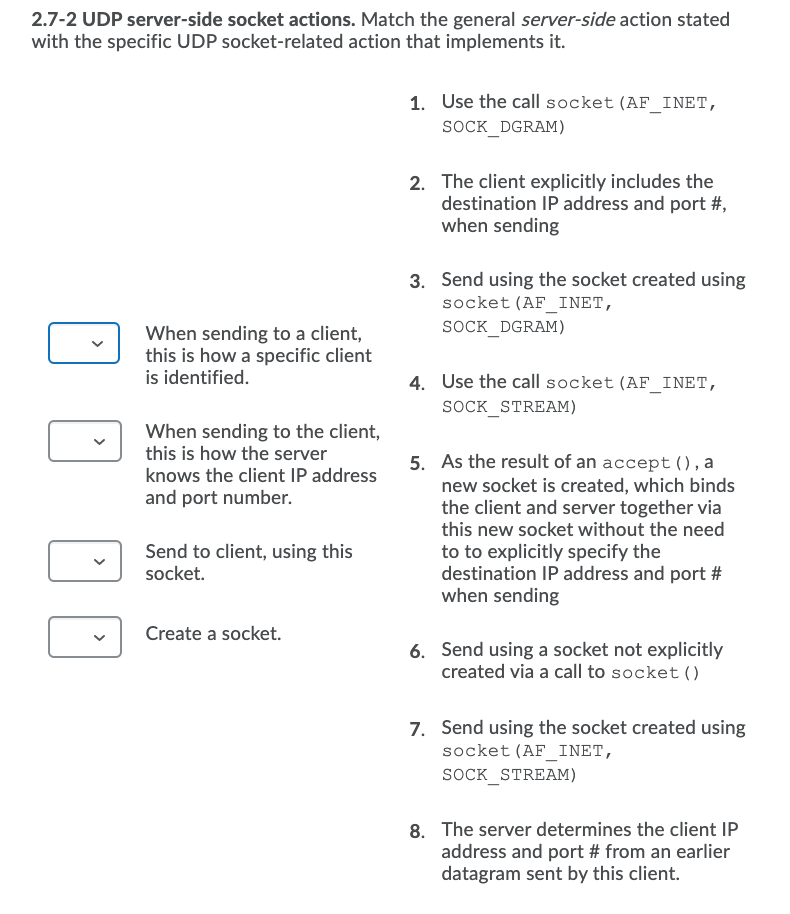
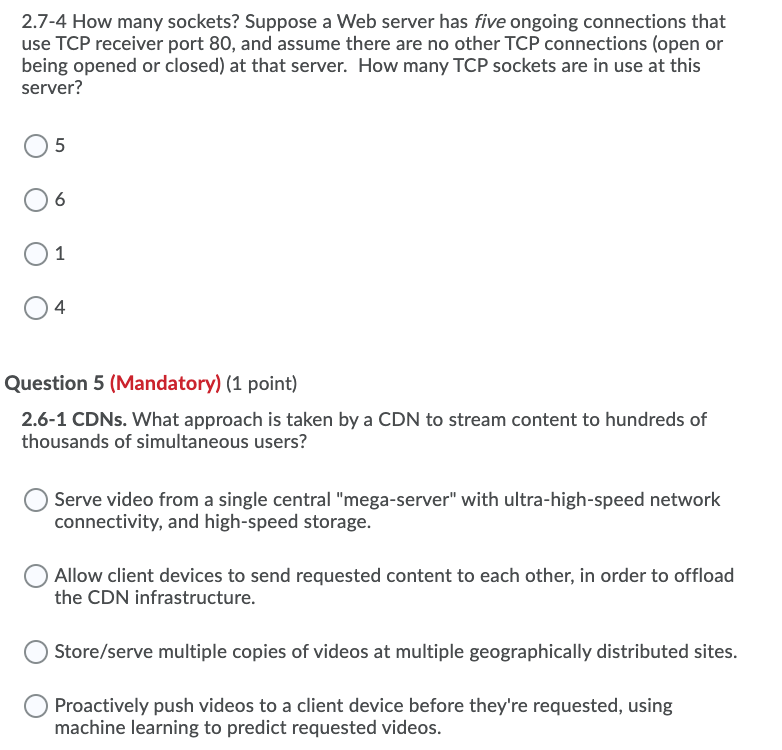
2.7-2 UDP server-side socket actions. Match the general server-side action stated with the specific UDP socket-related action that implements it. 1. Use the call socket (AF_INET, SOCK_DGRAM) 2. The client explicitly includes the destination IP address and port #, when sending 3. Send using the socket created using socket (AF_INET, SOCK_DGRAM) When sending to a client, this is how a specific client is identified. 4. Use the call socket (AF_INET, SOCK_STREAM) When sending to the client, this is how the server knows the client IP address and port number. 5. As the result of an accept(), a new socket is created, which binds the client and server together via this new socket without the need to to explicitly specify the destination IP address and port # when sending Send to client, using this socket. Create a socket. 6. Send using a socket not explicitly created via a call to socket() 7. Send using the socket created using socket (AF_INET, SOCK STREAM) 8. The server determines the client IP address and port # from an earlier datagram sent by this client. 2.7-4 How many sockets? Suppose a Web server has five ongoing connections that use TCP receiver port 80, and assume there are no other TCP connections (open or being opened or closed) at that server. How many TCP sockets are in use at this server? 5 6 1 04 Question 5 (Mandatory) (1 point) 2.6-1 CDNs. What approach is taken by a CDN to stream content to hundreds of thousands of simultaneous users? Serve video from a single central "mega-server" with ultra-high-speed network connectivity, and high-speed storage. Allow client devices to send requested content to each other, in order to offload the CDN infrastructure. Store/serve multiple copies of videos at multiple geographically distributed sites. Proactively push videos to a client device before they're requested, using machine learning to predict requested videos. 2.7-2 UDP server-side socket actions. Match the general server-side action stated with the specific UDP socket-related action that implements it. 1. Use the call socket (AF_INET, SOCK_DGRAM) 2. The client explicitly includes the destination IP address and port #, when sending 3. Send using the socket created using socket (AF_INET, SOCK_DGRAM) When sending to a client, this is how a specific client is identified. 4. Use the call socket (AF_INET, SOCK_STREAM) When sending to the client, this is how the server knows the client IP address and port number. 5. As the result of an accept(), a new socket is created, which binds the client and server together via this new socket without the need to to explicitly specify the destination IP address and port # when sending Send to client, using this socket. Create a socket. 6. Send using a socket not explicitly created via a call to socket() 7. Send using the socket created using socket (AF_INET, SOCK STREAM) 8. The server determines the client IP address and port # from an earlier datagram sent by this client. 2.7-4 How many sockets? Suppose a Web server has five ongoing connections that use TCP receiver port 80, and assume there are no other TCP connections (open or being opened or closed) at that server. How many TCP sockets are in use at this server? 5 6 1 04 Question 5 (Mandatory) (1 point) 2.6-1 CDNs. What approach is taken by a CDN to stream content to hundreds of thousands of simultaneous users? Serve video from a single central "mega-server" with ultra-high-speed network connectivity, and high-speed storage. Allow client devices to send requested content to each other, in order to offload the CDN infrastructure. Store/serve multiple copies of videos at multiple geographically distributed sites. Proactively push videos to a client device before they're requested, using machine learning to predict requested videos
Step by Step Solution
There are 3 Steps involved in it

Get step-by-step solutions from verified subject matter experts
 Study Help