



Question: 3. After you have collected your five (or more) sources, write a 4-5 page research report in which you do two things: a. Summarize each
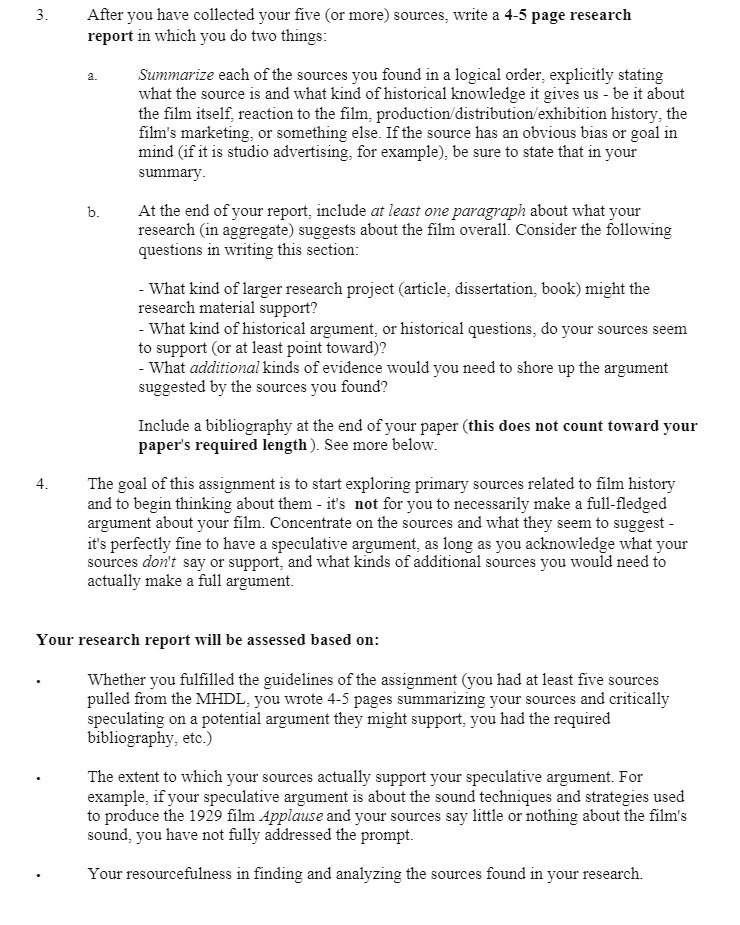
3. After you have collected your five (or more) sources, write a 4-5 page research report in which you do two things: a. Summarize each of the sources you found in a logical order, explicitly stating what the source is and what kind of historical knowledge it gives us - be it about the film itself, reaction to the film, production distribution exhibition history, the film's marketing, or something else. If the source has an obvious bias or goal in mind (if it is studio advertising, for example), be sure to state that in your summary. b. At the end of your report, include at least one paragraph about what your research (in aggregate) suggests about the film overall. Consider the following questions in writing this section: - What kind of larger research project (article, dissertation, book) might the research material support? - What kind of historical argument, or historical questions, do your sources seem to support (or at least point toward)? - What additional kinds of evidence would you need to shore up the argument suggested by the sources you found? Include a bibliography at the end of your paper (this does not count toward your paper's required length ). See more below. 4. The goal of this assignment is to start exploring primary sources related to film history and to begin thinking about them - it's not for you to necessarily make a full-fledged argument about your film. Concentrate on the sources and what they seem to suggest - it's perfectly fine to have a speculative argument, as long as you acknowledge what your sources don't say or support, and what kinds of additional sources you would need to actually make a full argument. Your research report will be assessed based on: Whether you fulfilled the guidelines of the assignment (you had at least five sources pulled from the MHDL, you wrote 4-5 pages summarizing your sources and critically speculating on a potential argument they might support, you had the required bibliography, etc.) The extent to which your sources actually support your speculative argument. For example, if your speculative argument is about the sound techniques and strategies used to produce the 1929 film Applause and your sources say little or nothing about the film's sound, you have not fully addressed the prompt. Your resourcefulness in finding and analyzing the sources found in your research
Step by Step Solution
There are 3 Steps involved in it

Get step-by-step solutions from verified subject matter experts