







Question: 3. Consider the following enterprise network that uses classless addressing: Addr: 128.14.15.7 Addr: 128.15.20.10 Addr: 128.31.208.5 Mask: 255.255.255.0 Mask: 255.255.0.0 Mask: 255.255.192.0 A B
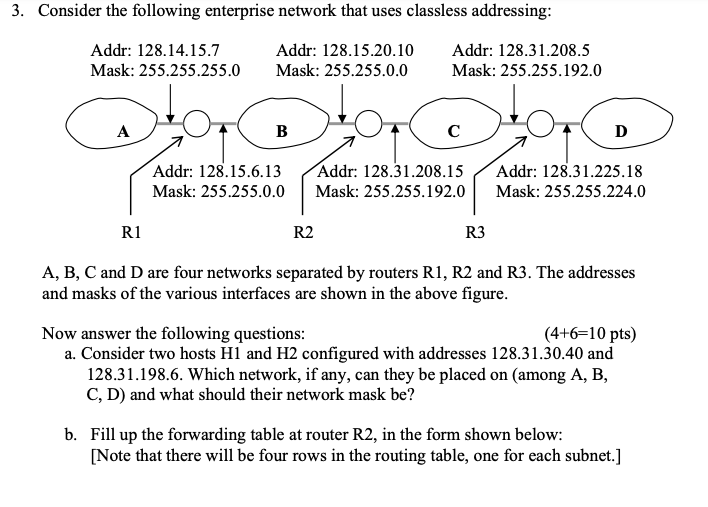
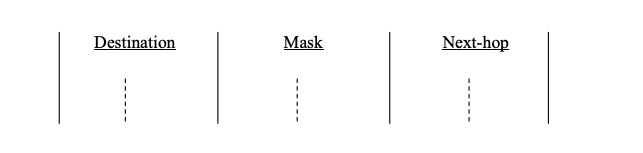
3. Consider the following enterprise network that uses classless addressing: Addr: 128.14.15.7 Addr: 128.15.20.10 Addr: 128.31.208.5 Mask: 255.255.255.0 Mask: 255.255.0.0 Mask: 255.255.192.0 A B Addr: 128.15.6.13 Mask: 255.255.0.0 Addr: 128.31.208.15 Mask: 255.255.192.0 Addr: 128.31.225.18 Mask: 255.255.224.0 R1 R2 R3 A, B, C and D are four networks separated by routers R1, R2 and R3. The addresses and masks of the various interfaces are shown in the above figure. Now answer the following questions: (4+6=10 pts) a. Consider two hosts H1 and H2 configured with addresses 128.31.30.40 and 128.31.198.6. Which network, if any, can they be placed on (among A, B, C, D) and what should their network mask be? b. Fill up the forwarding table at router R2, in the form shown below: [Note that there will be four rows in the routing table, one for each subnet.] Destination Mask Next-hop
Step by Step Solution
There are 3 Steps involved in it

Get step-by-step solutions from verified subject matter experts
 Study Help