



Question: 3- Joule Heating When current passes through a resistive element (for example a light bulb) power is dissipated (the light bulbs emits light). The
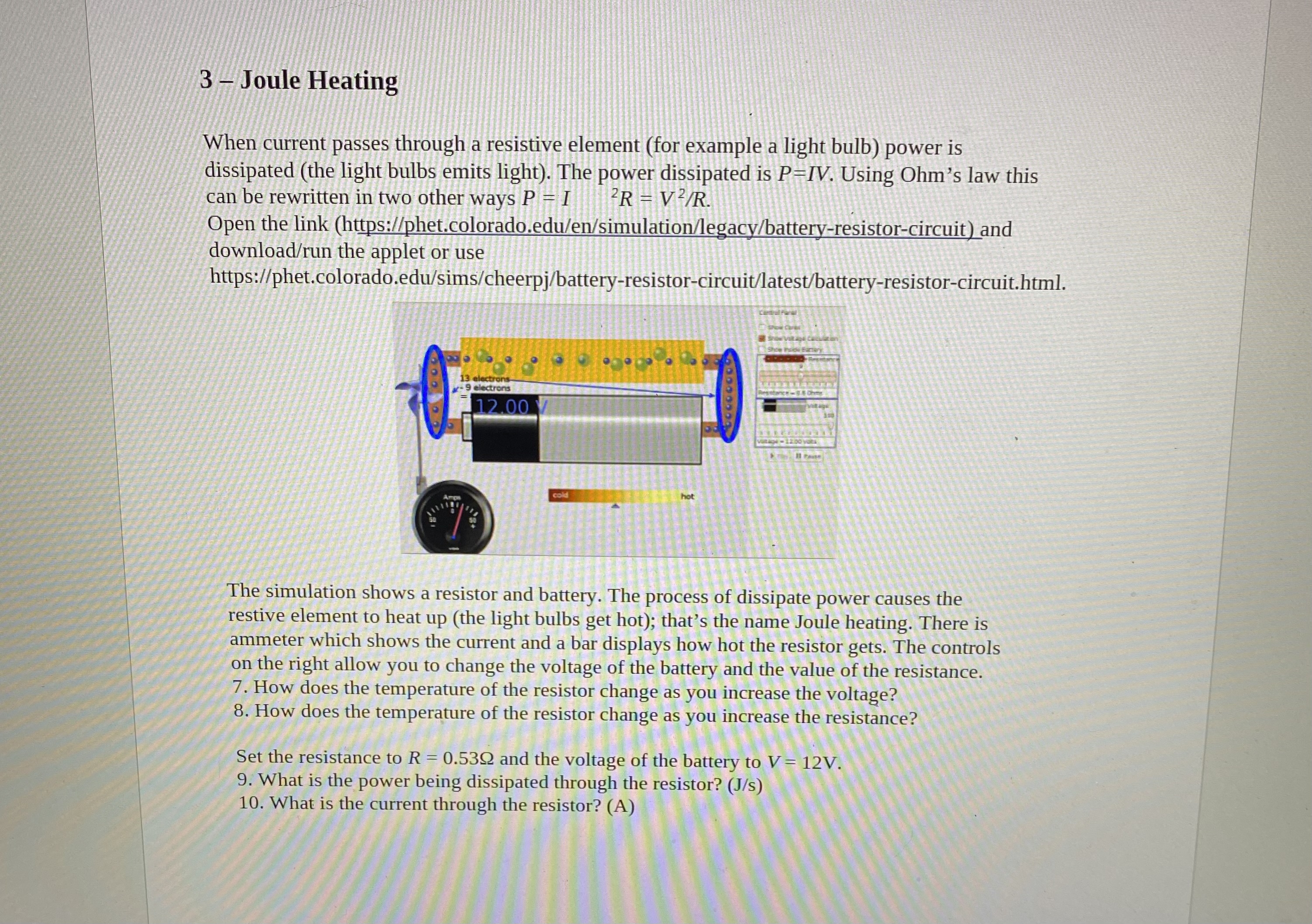
3- Joule Heating When current passes through a resistive element (for example a light bulb) power is dissipated (the light bulbs emits light). The power dissipated is P=IV. Using Ohm's law this can be rewritten in two other ways P = I 2R = V2/R. Open the link (https://phet.colorado.edu/en/simulation/legacy/battery-resistor-circuit) and download/run the applet or use https://phet.colorado.edu/sims/cheerpj/battery-resistor-circuit/latest/battery-resistor-circuit.html. 13 electrons -9 electrons 12.00 cold hot Amps 60000000 2:00 vats 11 Paste 300 The simulation shows a resistor and battery. The process of dissipate power causes the restive element to heat up (the light bulbs get hot); that's the name Joule heating. There is ammeter which shows the current and a bar displays how hot the resistor gets. The controls on the right allow you to change the voltage of the battery and the value of the resistance. 7. How does the temperature of the resistor change as you increase the voltage? 8. How does the temperature of the resistor change as you increase the resistance? Set the resistance to R = 0.5302 and the voltage of the battery to V = 12V. 9. What is the power being dissipated through the resistor? (J/s) 10. What is the current through the resistor? (A)
Step by Step Solution
There are 3 Steps involved in it

Get step-by-step solutions from verified subject matter experts