







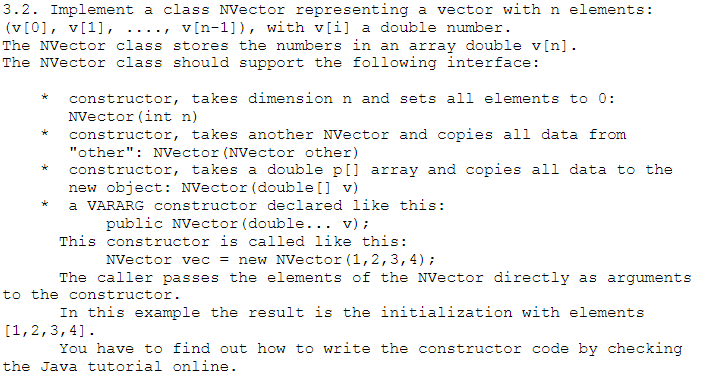
Question: 3.2. Implement a class NVector representing a vector with n elements: (v[0l, v[1], .. .., v[n-1]), with v[i] a double number. The NVector class stores
![(v[0l, v[1], .. .., v[n-1]), with v[i] a double number. The NVector](https://dsd5zvtm8ll6.cloudfront.net/si.experts.images/questions/2024/09/66f3cdef1848a_99866f3cdeea7f7c.jpg)
![class stores the numbers in an array double v[n]. The NVector class](https://dsd5zvtm8ll6.cloudfront.net/si.experts.images/questions/2024/09/66f3cdefacefd_99966f3cdef434e1.jpg)
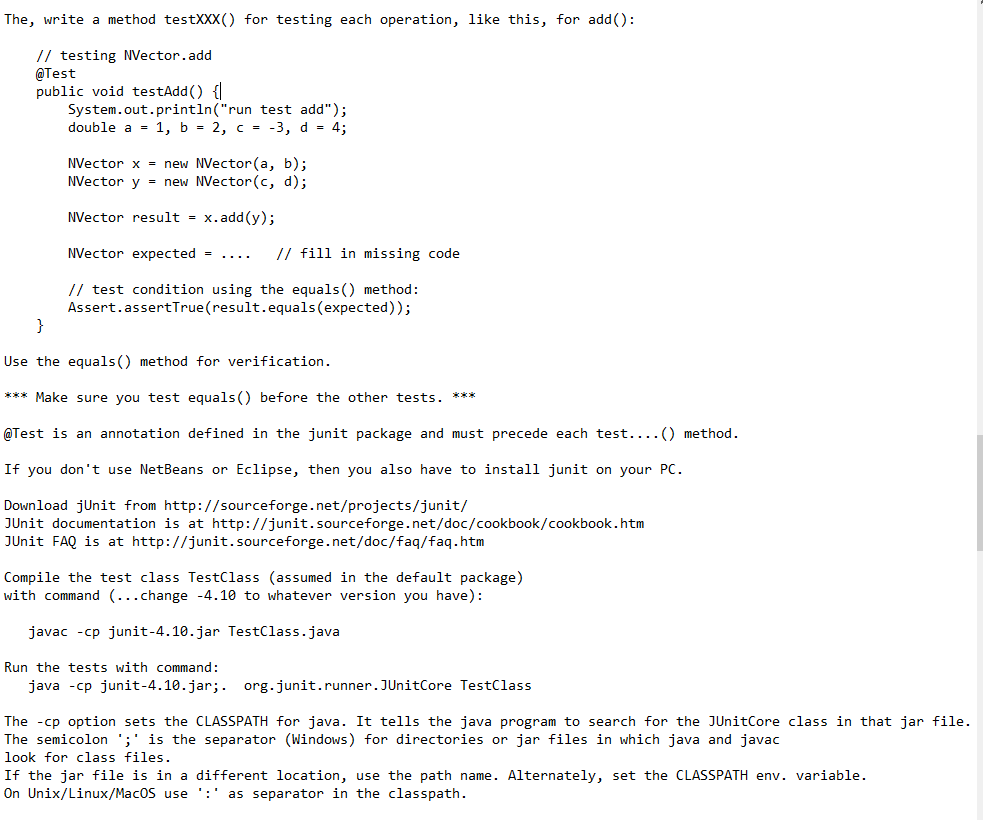
3.2. Implement a class NVector representing a vector with n elements: (v[0l, v[1], .. .., v[n-1]), with v[i] a double number. The NVector class stores the numbers in an array double v[n]. The NVector class should support the following interface: construct r, takes dimension n and sets all elements to 0: *constructor, takes another NVector and copies all data from *constructor, takes a double p[ array and copies all data to the * a VARARG constructor declared like this: NVector (int n) "other" NVector (NVector new object: NVector (double[] v) other) public NVector (double... v)i This constructor is called like this: The caller passes the elements of the NVector directly as arguments In this example the result is the initialization with elements You have t find ut h w t write the c nstructr cae by checking NVector vec = new NVector ( 1, 2, 3, 4) ; to the constructor. the Java tutorial online. 3.2. Implement a class NVector representing a vector with n elements: (v[0l, v[1], .. .., v[n-1]), with v[i] a double number. The NVector class stores the numbers in an array double v[n]. The NVector class should support the following interface: construct r, takes dimension n and sets all elements to 0: *constructor, takes another NVector and copies all data from *constructor, takes a double p[ array and copies all data to the * a VARARG constructor declared like this: NVector (int n) "other" NVector (NVector new object: NVector (double[] v) other) public NVector (double... v)i This constructor is called like this: The caller passes the elements of the NVector directly as arguments In this example the result is the initialization with elements You have t find ut h w t write the c nstructr cae by checking NVector vec = new NVector ( 1, 2, 3, 4) ; to the constructor. the Java tutorial online
Step by Step Solution
There are 3 Steps involved in it

Get step-by-step solutions from verified subject matter experts
 Study Help