



Question: 38 This question is about the orbits of two comets A and B around the Sun. Fig. 38.1 shows that comet A is in a
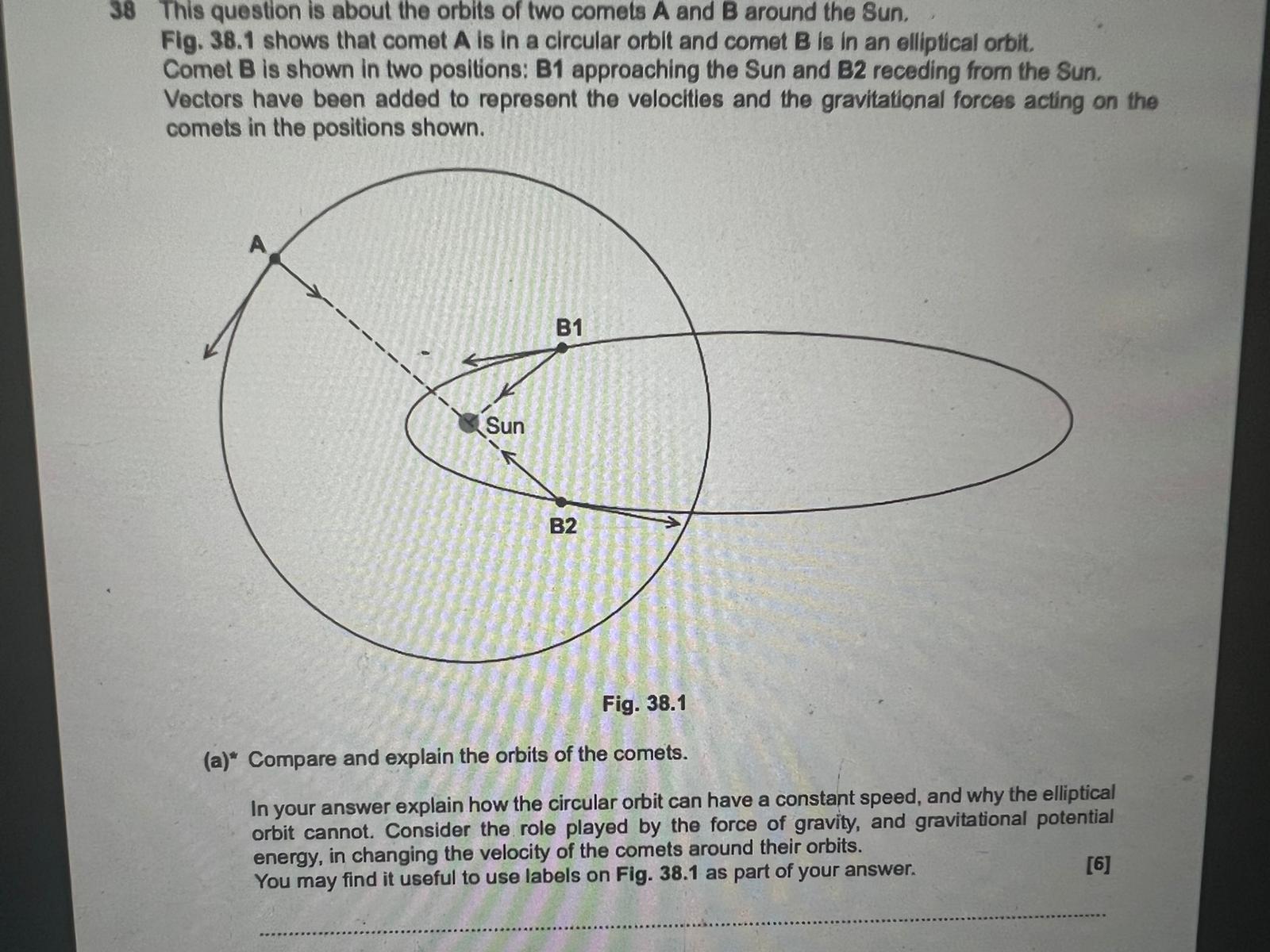
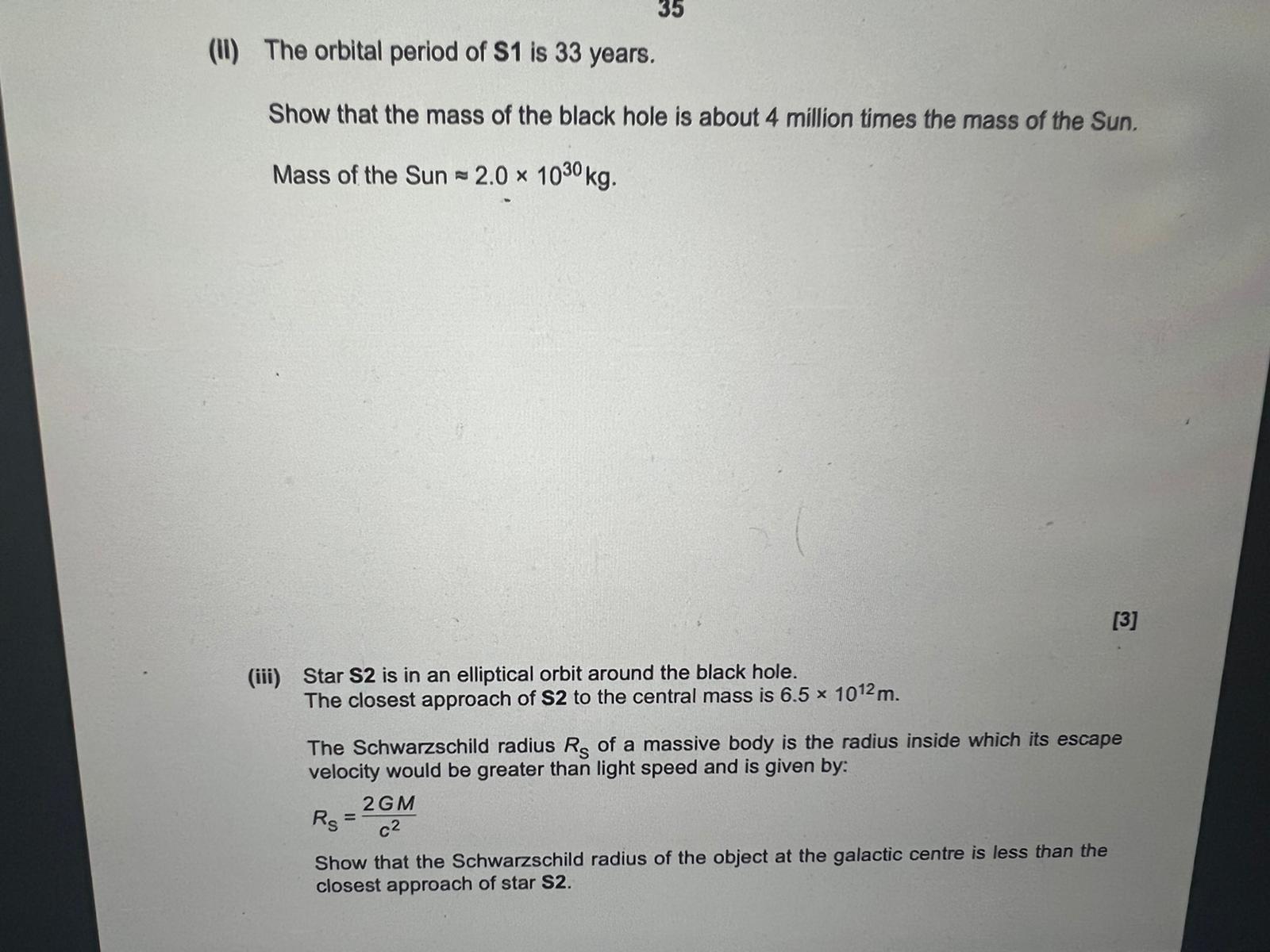
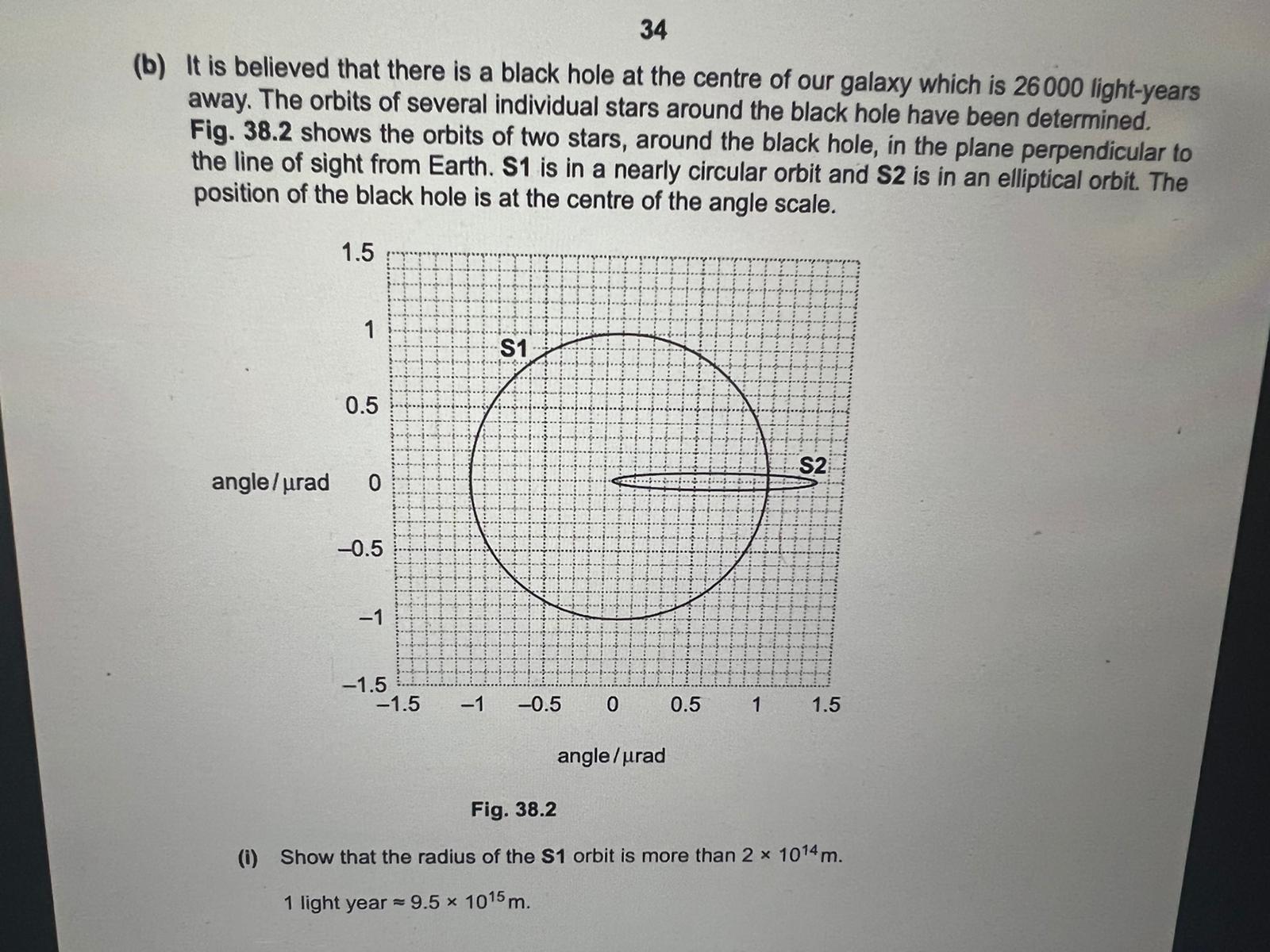
38 This question is about the orbits of two comets A and B around the Sun. Fig. 38.1 shows that comet A is in a circular orbit and comet B is in an elliptical orbit. Comet B is shown in two positions: B1 approaching the Sun and B2 receding from the Sun. Vectors have been added to represent the velocities and the gravitational forces acting on the comets in the positions shown. B1 Sun B2 Fig. 38.1 (a)* Compare and explain the orbits of the comets. In your answer explain how the circular orbit can have a constant speed, and why the elliptical orbit cannot. Consider the role played by the force of gravity, and gravitational potential energy, in changing the velocity of the comets around their orbits. You may find it useful to use labels on Fig. 38.1 as part of your answer. [6]35 (11) The orbital period of $1 is 33 years. Show that the mass of the black hole is about 4 million times the mass of the Sun. Mass of the Sun = 2.0 x 1030 kg. [3] (iii) Star S2 is in an elliptical orbit around the black hole. The closest approach of $2 to the central mass is 6.5 x 10¹²m. The Schwarzschild radius Rs of a massive body is the radius inside which its escape velocity would be greater than light speed and is given by: Re = 2GM C2 Show that the Schwarzschild radius of the object at the galactic centre is less than the closest approach of star S2.34 (b) It is believed that there is a black hole at the centre of our galaxy which is 26000 light-years away. The orbits of several individual stars around the black hole have been determined. Fig. 38.2 shows the orbits of two stars, around the black hole, in the plane perpendicular to the line of sight from Earth. S1 is in a nearly circular orbit and $2 is in an elliptical orbit. The position of the black hole is at the centre of the angle scale. 1.5 .....4.. 4..i-... ........ 0.5 -. ..... angle / urad C ...... S2 0.5 .guess. -1 14 . ... ... -1.5 -1 -0.5 0 0.5 1 1.5 angle / urad Fig. 38.2 (1) Show that the radius of the $1 orbit is more than 2 x 10¹⁴m. 1 light year = 9.5 x 10¹⁵m
Step by Step Solution
There are 3 Steps involved in it

Get step-by-step solutions from verified subject matter experts