



Question: 4. Specialization and trade When a country has a comparative advantage in the production of a good, it means that it can produce this good
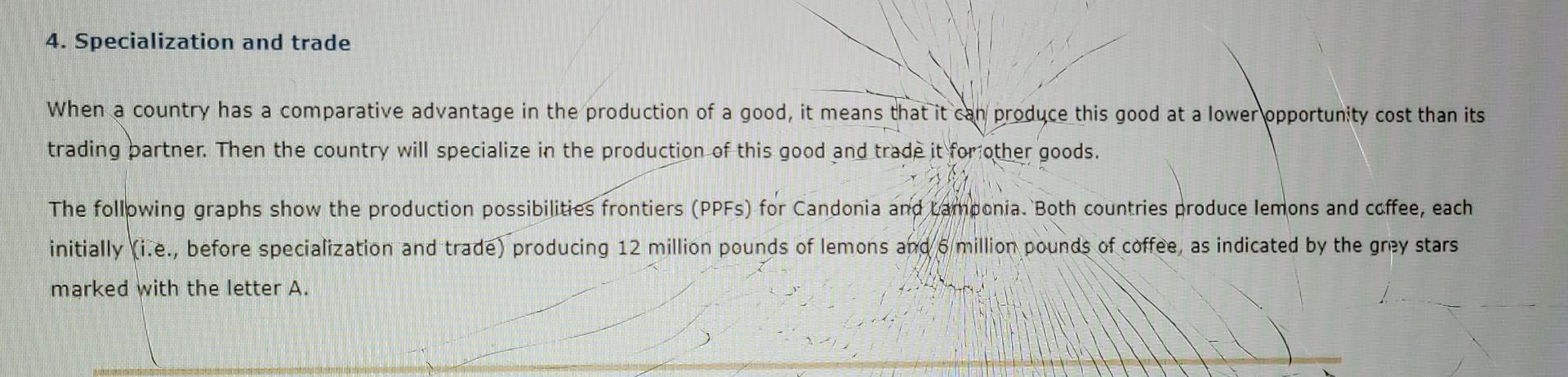
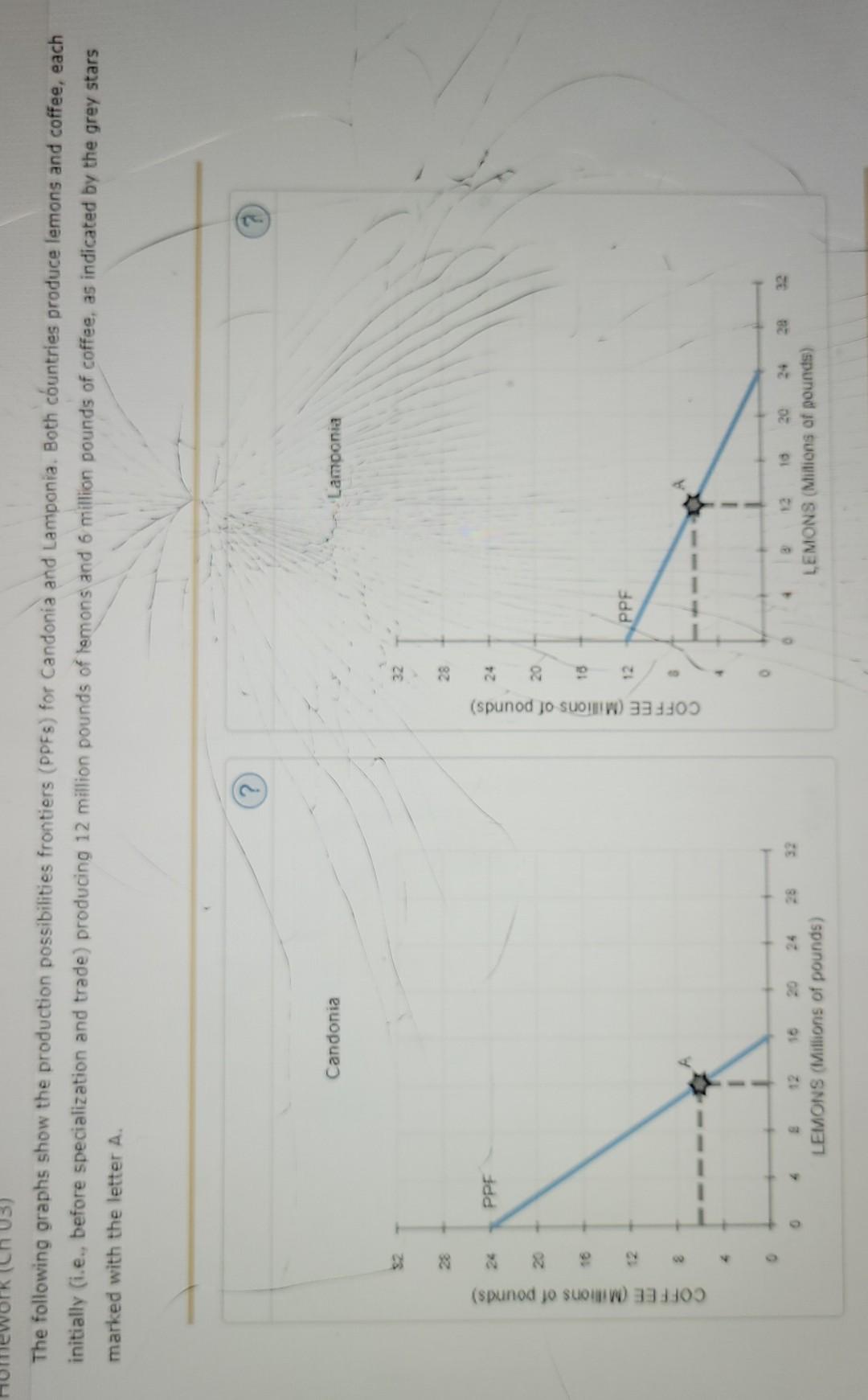
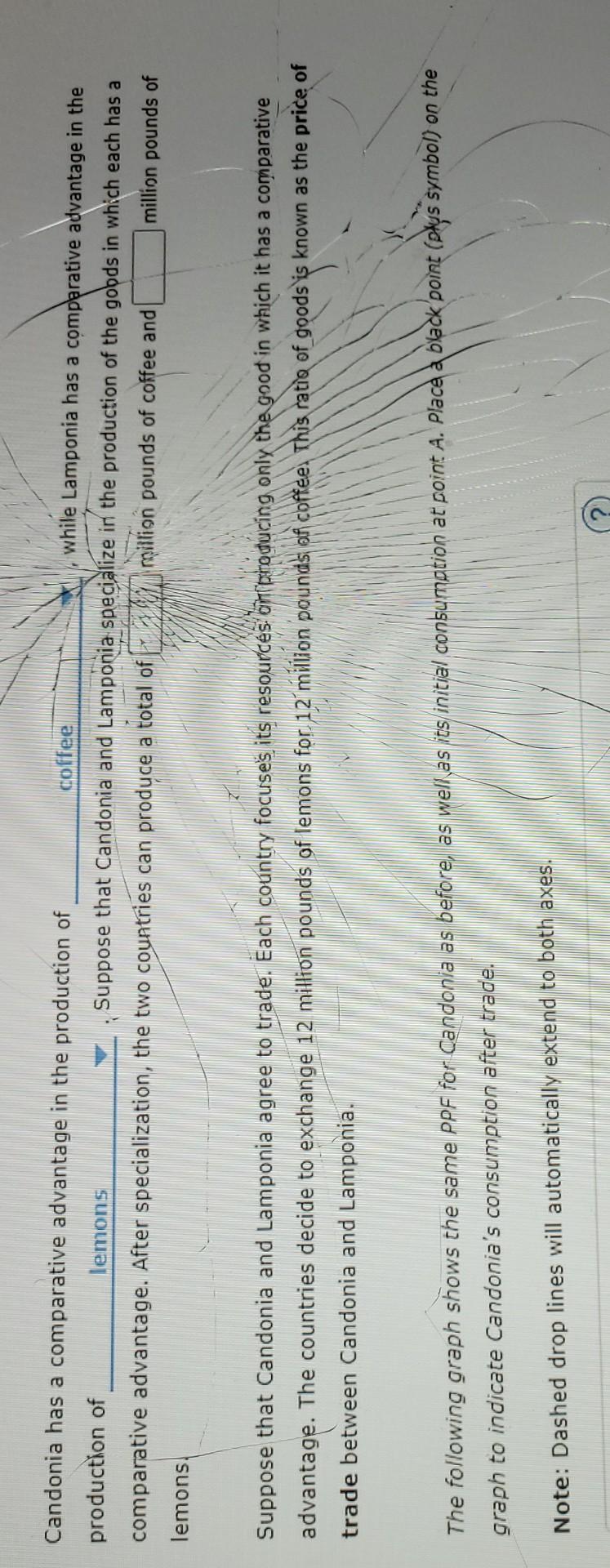
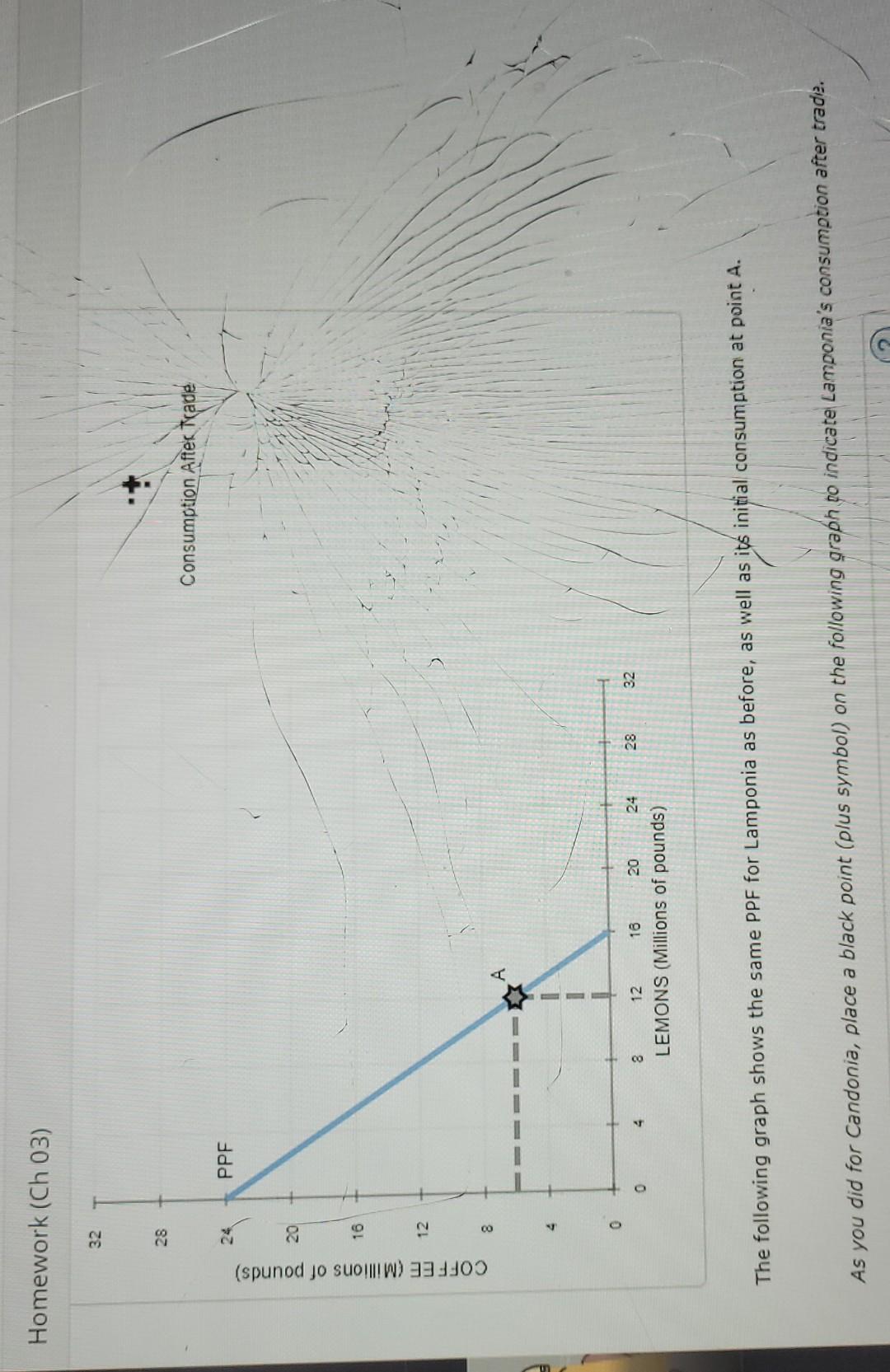
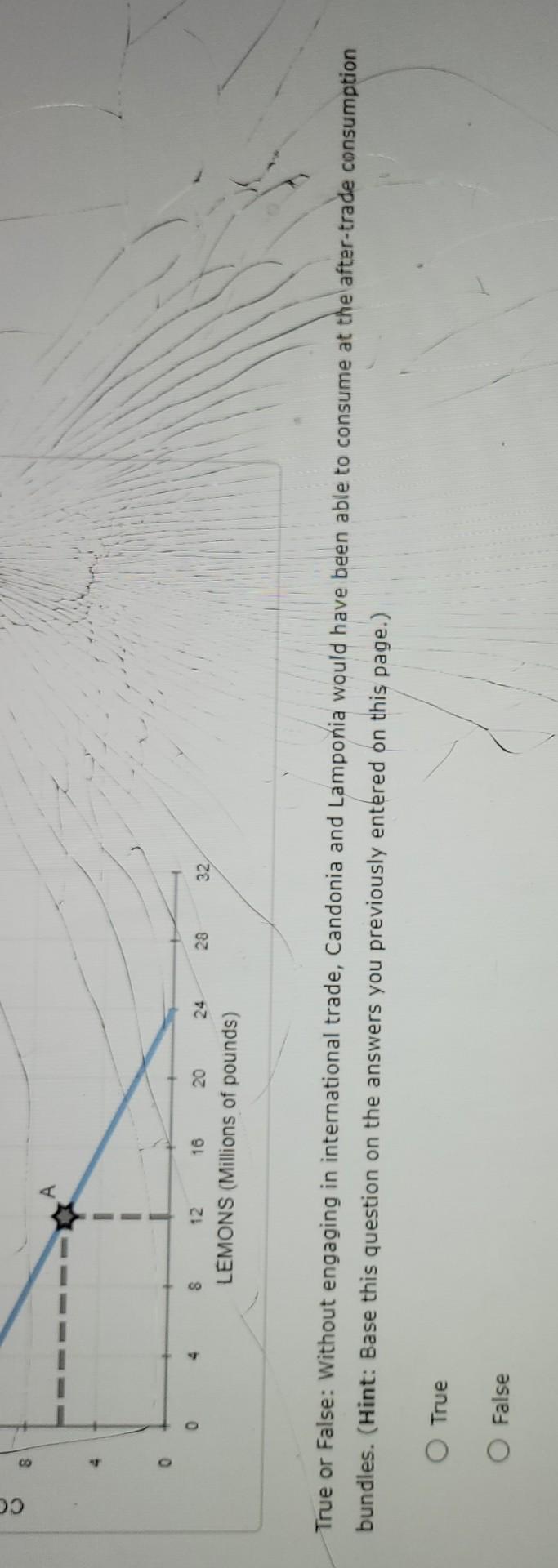
4. Specialization and trade When a country has a comparative advantage in the production of a good, it means that it can produce this good at a lower opportunity cost than its trading partner. Then the country will specialize in the production of this good and trade it for other goods. The following graphs show the production possibilities frontiers (PPFs) for Candonia and tamponia. Both countries produce lemons and coffee, each initially Vi.e., before specialization and trade) producing 12 million pounds of lemons and 6 million pounds of coffee, as indicated by the grey stars marked with the letter A. The following graphs show the production possibilities frontiers (PPF) for Candonia and Lamponia. Both countries produce lemons and coffee, each initially (i.e., before specialization and trade) producing 12 million pounds of lemons and 6 million pounds of coffee, as indicated by the grey stars marked with the letter A. ? Candonia Lamponia S2 32 28 28 PPF 24 20 20 16 COFFEE (Millions of pounds) 18 COFFEE (Millions of pounds) 12 PPF - 32 16 LEMONS (Millions of pounds) 10 20 LEMONS (Milions of pounds) Candonia has a comparative advantage in the production of coffee while Lamponia has a comparative advantage in the production of lemons Suppose that Candonia and Lamponia specialize in the production of the goods in which each has a comparative advantage. After specialization, the two countries can produce a total of 1 million pounds of coffee and million pounds of lemons Suppose that Candonia and Lamponia agree to trade. Each country focuses its resources on producing only the good in which it has a comparative advantage. The countries decide to exchange 12 million pounds of lemons for 12 million pounds of coffee. This ratio of goods is known as the price of trade between Candonia and Lamponia. The following graph shows the same PPF for Candonia as before, as well as its initial consumption at point A. Place a black point (plus symbol) on the graph to indicate Candonia's consumption after trade. Note: Dashed drop lines will automatically extend to both axes. Homework (Ch 03) 32 28 Consumption After Trade 24 PPF 20 COFFEE (Millions of pounds) 16 12 00 A 0 28 32 0 4 8 12 16 20 24 LEMONS (Millions of pounds) The following graph shows the same PPF for Lamponia as before, as well as its initial consumption at point A. As you did for Candonia, place a black point (plus symbol) on the following graph po indicate Lamponia's consumption after trade. CO - o 0 4 28 32 8 12 16 20 24 LEMONS (Millions of pounds) True or False: Without engaging in international trade, Candonia and Lamponia would have been able to consume at the after-trade consumption bundles. (Hint: Base this question on the answers you previously entered on this page.) O True False
Step by Step Solution
There are 3 Steps involved in it
1 Expert Approved Answer
Step: 1 Unlock

Question Has Been Solved by an Expert!
Get step-by-step solutions from verified subject matter experts
Step: 2 Unlock
Step: 3 Unlock