







Question: 5. (20 points) The Ricardian Model Go to https://www150. statcan.gc. ca/t1/tbli/en/cv . action?pid=1410020401#timeframe and find the average weekly earning in Mining, quarrying, and oil and
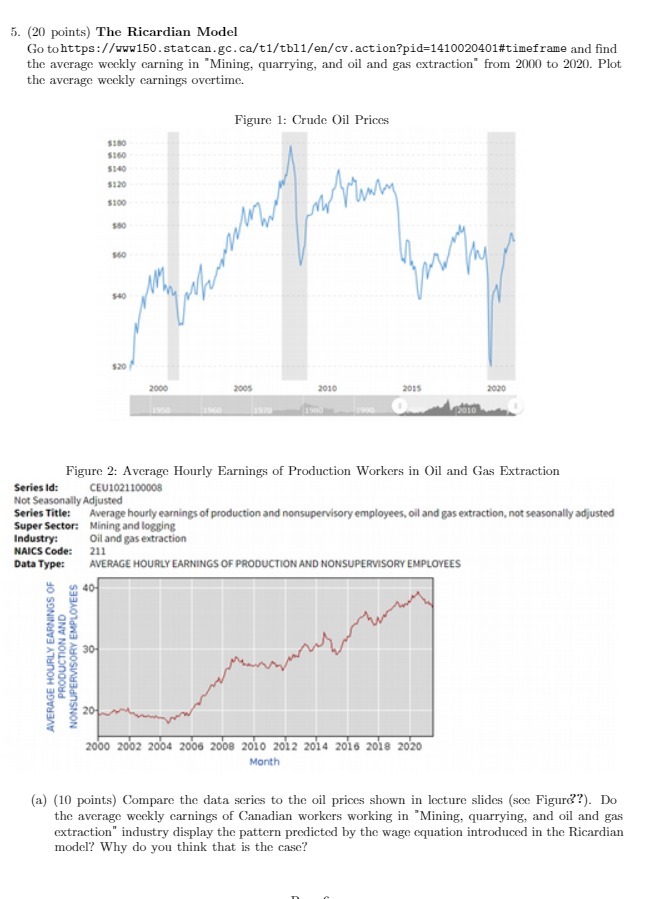
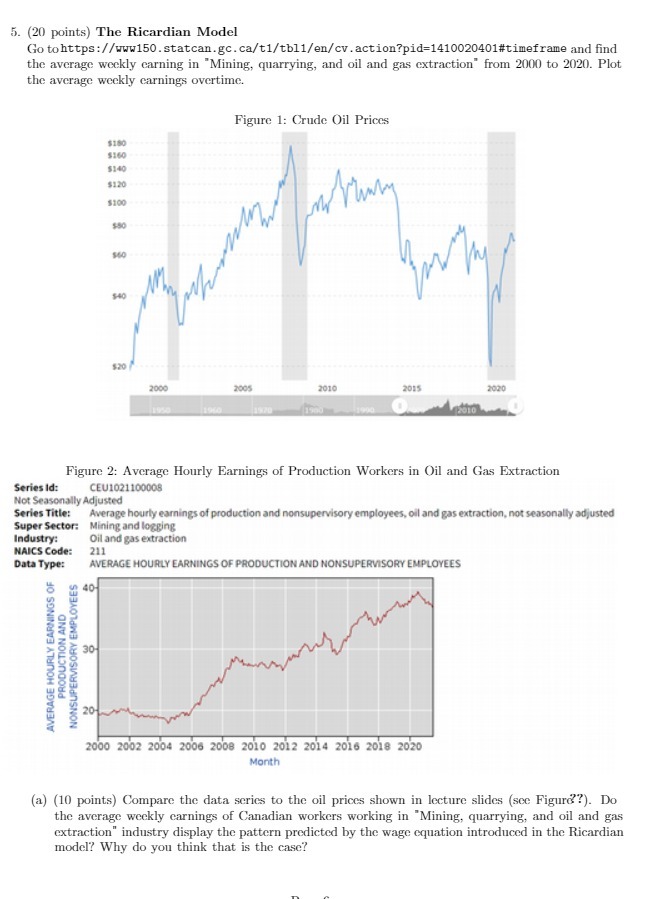
5. (20 points) The Ricardian Model Go to https://www150. statcan.gc. ca/t1/tbli/en/cv . action?pid=1410020401#timeframe and find the average weekly earning in "Mining, quarrying, and oil and gas extraction" from 2000 to 2020. Plot the average weekly carnings overtime. Figure 1: Crude Oil Prices $180 $160 $140 $120 $100 $40 2000 2005 2010 2015 2020 1960 O Figure 2: Average Hourly Earnings of Production Workers in Oil and Gas Extraction Series id: CEU1021 100008 Not Seasonally Adjusted Series Title: Average hourly earnings of production and nonsupervisory employees, oil and gas extraction, not seasonally adjusted Super Sector: Mining and logging Industry: Oil and gas extraction NAICS Code: 211 Data Type: AVERAGE HOURLY EARNINGS OF PRODUCTION AND NONSUPERVISORY EMPLOYEES 40 30 NONSUPERVISORY EMPLOYEES AVERAGE HOURLY EARNINGS OF PRODUCTION AND 20 2000 2002 2004 2006 2008 2010 2012 2014 2016 2018 2020 Month (a) (10 points) Compare the data series to the oil prices shown in lecture slides (see Figure?). Do the average weekly carnings of Canadian workers working in Mining, quarrying, and oil and gas extraction" industry display the pattern predicted by the wage equation introduced in the Ricardian model? Why do you think that is the case
Step by Step Solution
There are 3 Steps involved in it

Get step-by-step solutions from verified subject matter experts
 Study Help