







Question: 5 67% + 4. The formula for calculating compound interest is A = P(1 + i) , where... A is the amount of money with
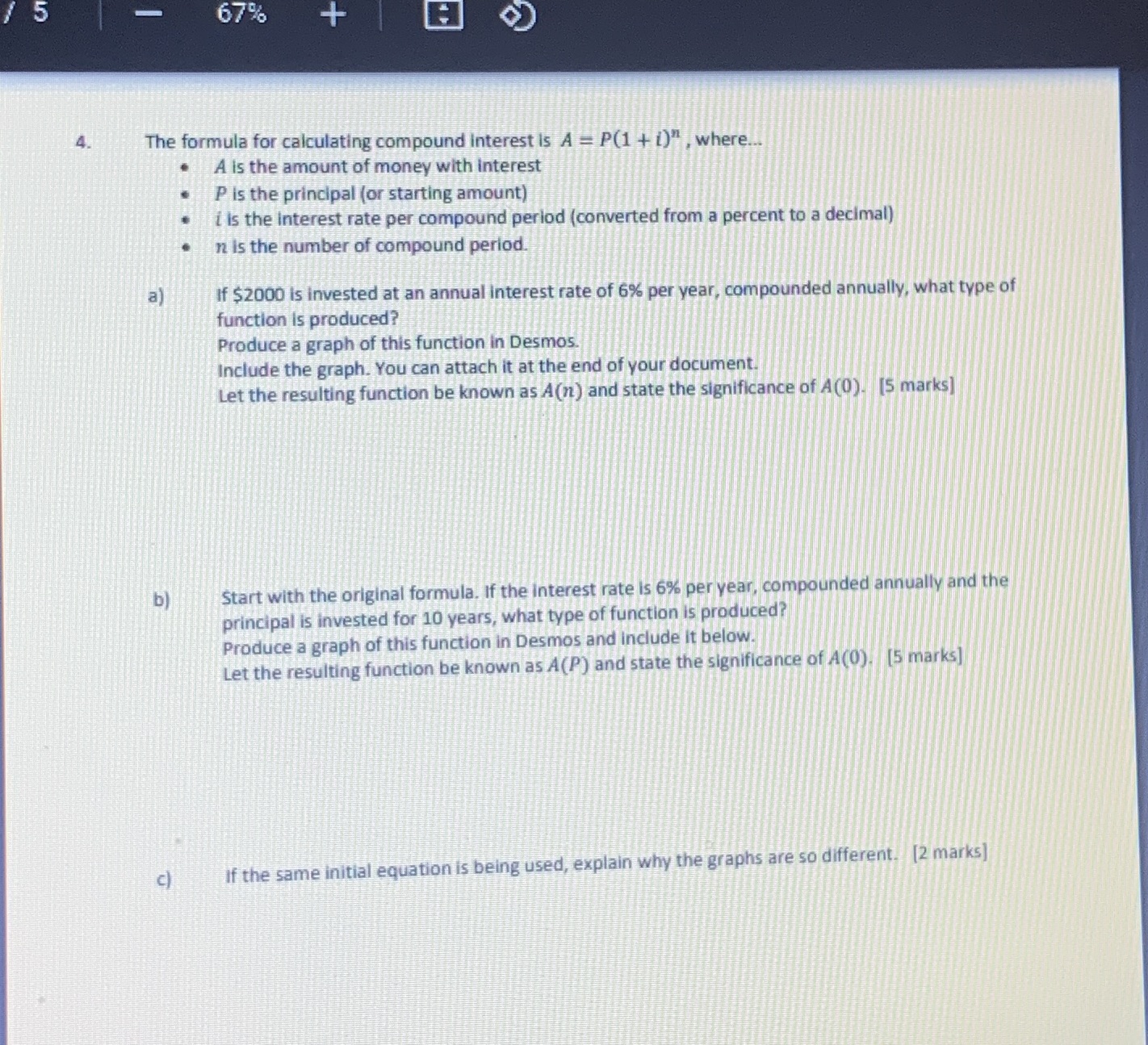
5 67% + 4. The formula for calculating compound interest is A = P(1 + i)" , where... A is the amount of money with interest P is the principal (or starting amount) i is the interest rate per compound period (converted from a percent to a decimal) n is the number of compound period. a) If $2000 is invested at an annual interest rate of 6% per year, compounded annually, what type of function is produced? Produce a graph of this function in Desmos. Include the graph. You can attach it at the end of your document. Let the resulting function be known as A(n) and state the significance of A(0). [5 marks] b) Start with the original formula. If the interest rate is 6% per year, compounded annually and the principal is invested for 10 years, what type of function is produced? Produce a graph of this function in Desmos and include it below. Let the resulting function be known as A(P) and state the significance of A(0). [5 marks] c) if the same initial equation is being used, explain why the graphs are so different. [2 marks]
Step by Step Solution
There are 3 Steps involved in it

Get step-by-step solutions from verified subject matter experts
 Study Help